Castelo de Vilalba
The Castelo de Vilalba is a significant medieval fortress located in the town of Vilalba, in the region of Galicia, Spain. Established in the 11th century by the noble Castro family, the castle occupies a strategic position at the crossroads of two important medieval routes: the Northern Way (Camiño do Norte), a key pilgrimage path, and an ancient royal road connecting the towns of Betanzos and A Coruña. This location granted the castle both military and commercial importance throughout the Middle Ages.
Early medieval origins and strategic significance
Constructed during the early medieval period, the castle's initial design capitalized on the natural elevation of a hill, classifying it as a hill castle. Its polygonal defensive enclosure was fortified with a robust wall and three towers, one of which was connected to the main wall by a drawbridge. This drawbridge was a critical defensive feature, allowing control over access to the fortress and enhancing its security during times of conflict.
The castle's construction utilized local materials, predominantly schist masonry for the main walls, chosen for its availability and resilience. Granite was employed for architectural details such as the battlements, or ameas, and the framing of doors and windows, providing both structural strength and aesthetic refinement.
14th century civil war and the rise of the andrade family
During the turbulent 14th century, the castle's ownership shifted amid the civil war between Henry II of Trastámara and Peter I of Castile. The fortress came under the control of Fernán Pérez de Andrade, known as "O Boo," a loyal supporter of Henry II. Andrade's pivotal role in sheltering Henry II at the fortress of La Rochelle contributed to Henry's eventual victory. As a reward, the Andrade family was granted the lordship of Vilalba, marking a significant transfer of power from the original Castro lineage.
The irmandiños uprising and 15th century reconstruction
The castle faced significant challenges during the 15th century when it became a target during the Irmandiños revolt, a popular uprising led by Nuno Freire de Andrade ("O Mao"). The rebels inflicted considerable damage on the fortifications. Following the suppression of the revolt, Diego de Andrade, elevated to the County of Vilalba by the Catholic Monarchs, Isabella and Ferdinand, oversaw the castle's reconstruction. This rebuilding restored both its defensive capabilities and residential functions, reflecting the architectural styles and military needs of the late medieval period.
Later history and architectural evolution
The castle's ownership later returned to the Castro family through the marriage of Teresa de Andrade, Diego's granddaughter, to Fernando Ruiz de Castro Osorio of the House of Lemos. This alliance reinforced the castle's status within Galicia's noble networks.
In the 18th century, the castle underwent further adaptations, demonstrating its continued use and modification over several centuries. The 20th century brought renewed recognition of its cultural significance, with official designation as a Cultural Interest Asset (Ben de Interese Cultural) beginning with a 1949 decree. This status has been maintained and reinforced by subsequent legal protections.
Modern adaptation as a parador hotel
During the 1960s, the castle was repurposed as a Parador hotel, a state-run luxury accommodation that integrates historic buildings. An annex was added to provide additional guest rooms, carefully designed to harmonize with the medieval structures and preserve the site's historic character. This adaptive reuse has allowed the castle to remain a vibrant part of Vilalba's urban fabric while maintaining its architectural integrity.
Architectural features and surviving remains
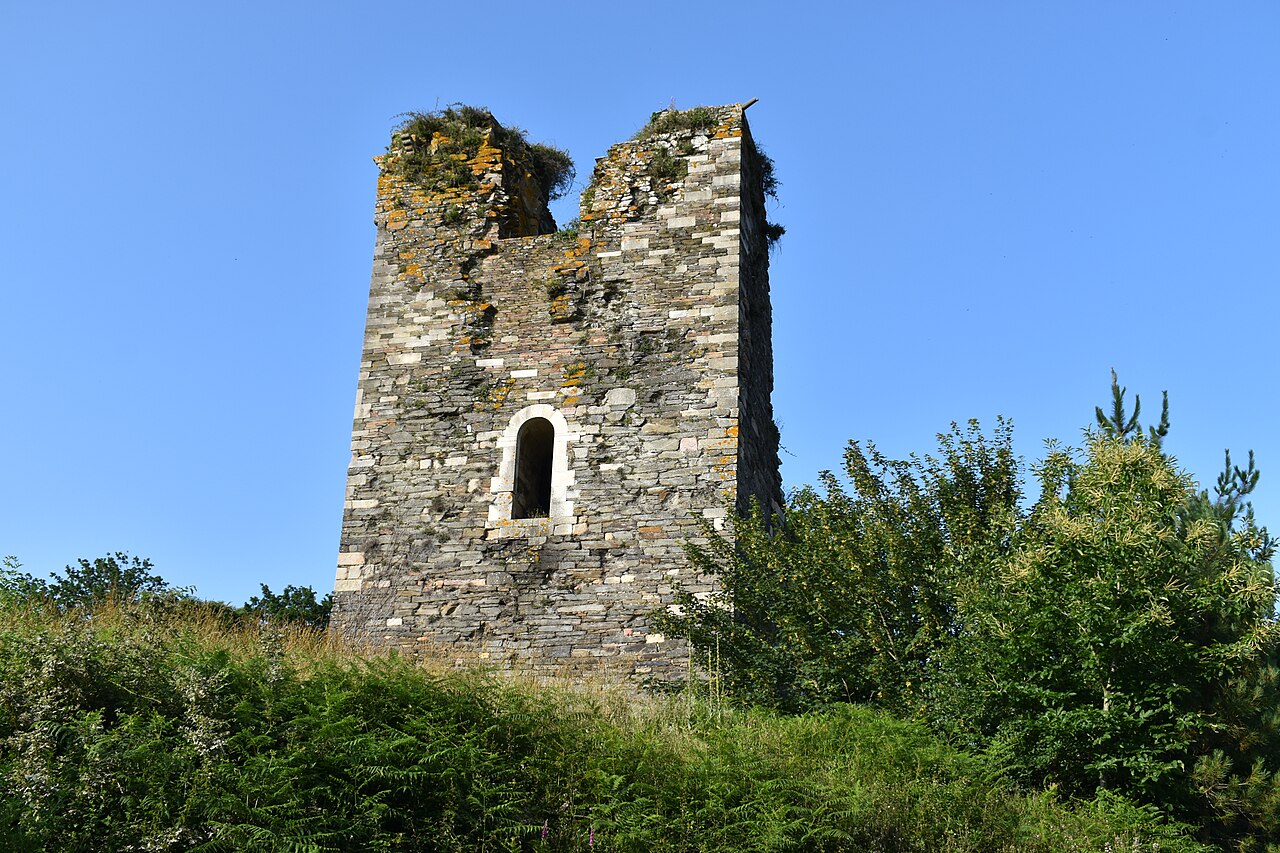
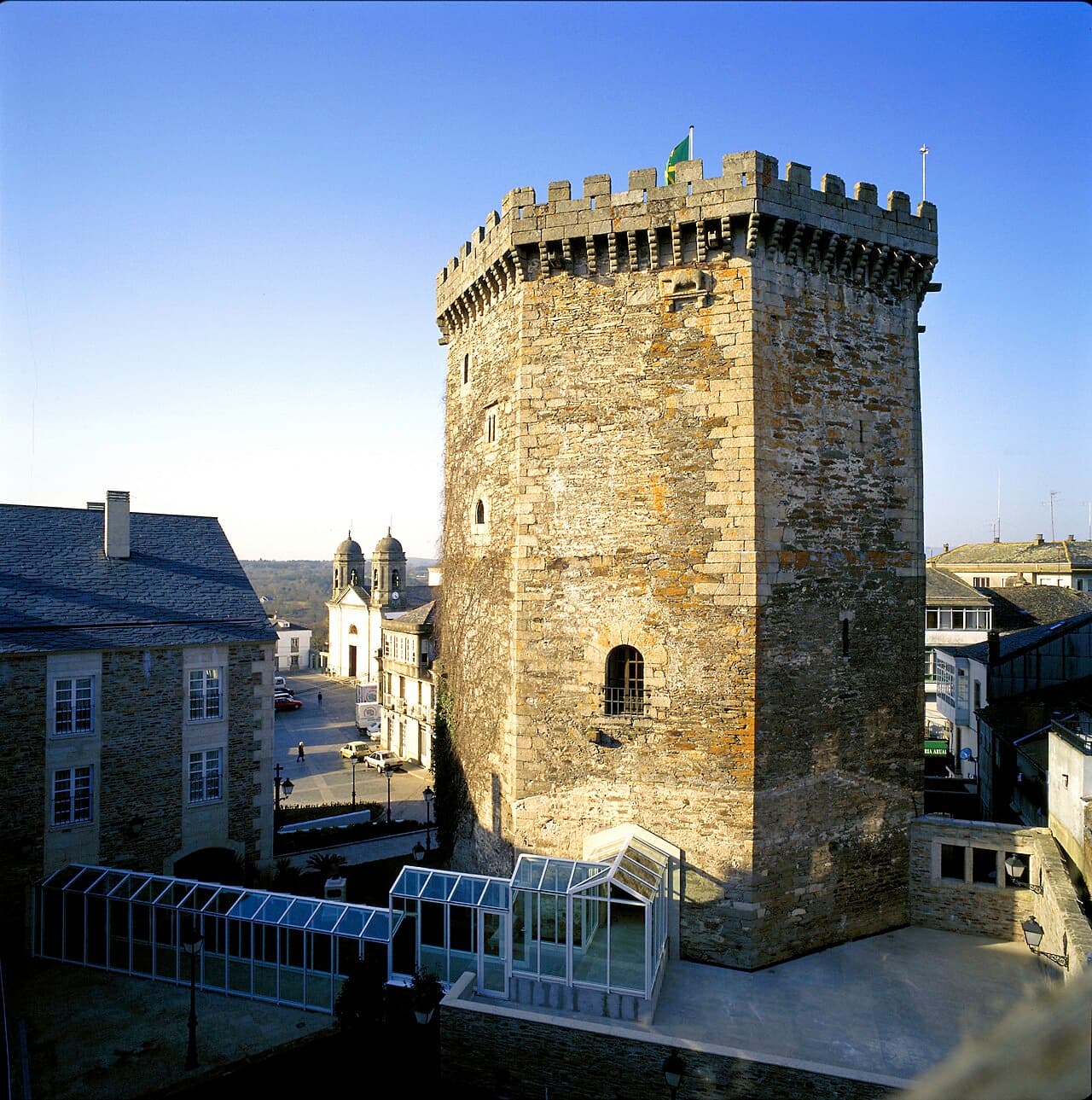
Today, the most prominent surviving element of Castelo de Vilalba is the octagonal keep tower, known locally as the "torre da homenaxe." This tower served as the castle's main defensive and residential structure, embodying medieval military architecture. Its robust construction with schist and granite highlights the practical and aesthetic considerations of medieval builders.
The polygonal enclosure walls and the original three towers, though partially ruined, outline the castle's former defensive perimeter. The drawbridge, once a vital feature, no longer survives, but its historical presence is well documented.
Located adjacent to Vilalba's main square and the Church of Santa María, the castle anchors the historic center of the town. Its integration into the urban environment illustrates the layering of history within Vilalba.
Cultural and historical significance
Castelo de Vilalba stands as a testament to the region's medieval history, noble power struggles, and architectural evolution. Its association with prominent families such as the Castros and Andrades, as well as its role in significant historical events like the 14th century civil war and the Irmandiños revolt, mark it as an important cultural landmark.
The castle's preservation and adaptive reuse as a hotel have ensured its continued relevance, allowing visitors to experience a tangible connection to Galicia's medieval past. Its architectural features offer insight into the defensive strategies and noble lifestyles of the period.
Visitor information and accessibility
As a functioning Parador hotel, Castelo de Vilalba offers unique accommodation within a historic setting. Visitors can explore the castle's exterior and appreciate its medieval architecture while enjoying modern amenities inside. Its central location in Vilalba makes it accessible for travelers interested in Galicia's history and culture.
Frequently asked questions (FAQ)
- How do I visit Castelo de Vilalba?
- Castelo de Vilalba is accessible to the public primarily as a Parador hotel. Visitors can explore the castle grounds and enjoy its historic architecture while staying at the hotel or visiting nearby.
- What is the historical significance of Castelo de Vilalba?
- The castle played a key role in medieval Galicia, associated with noble families like the Castros and Andrades, and was involved in significant events such as the 14th century civil war and the Irmandiños revolt.
- Can I stay overnight at Castelo de Vilalba?
- Yes, Castelo de Vilalba operates as a Parador hotel, offering guests the chance to stay within a historic castle setting with modern comforts.
- Is Castelo de Vilalba open year-round?
- As a hotel, Castelo de Vilalba is open year-round, but visitors should check availability and opening hours for specific facilities or tours.
- What architectural features are notable at Castelo de Vilalba?
- Notable features include the octagonal keep tower, polygonal defensive walls, and the historic use of schist masonry and granite for construction and decorative elements.
Photo gallery

Information
Sources & official resources
Verify the information above using these authoritative references.
Loading map...
Visitor reviews
No reviews yet. Been here? Write the first review and help other travelers!
Write the first reviewVisited this castle? Share your experience
Your review helps other travelers and adds first-hand knowledge to our encyclopedia.