Castle of Cabañas
The Castle of Cabañas, located in the municipality of Cabañas del Castillo in Spain, stands as a remarkable example of medieval military architecture with roots tracing back to the 12th century. This fortress was originally constructed during the period of Muslim rule in the Iberian Peninsula, built upon the remains of an earlier Muslim structure. Its strategic placement on a rocky ridge highlights the enduring importance of this site through successive cultural and political changes.
Historical context and evolution
The castle's origins during the Muslim period reflect the complex history of the region, which was a frontier zone between Muslim and Christian territories. Following the Christian Reconquista in the 14th century, the fortress underwent significant modifications to adapt it to the new military and administrative needs of the Christian rulers. It became administratively linked to the nearby town of Trujillo, a key stronghold in the region.
Ownership of the castle passed to the noble García Álvarez de Toledo, integrating it into the domains of the Lordship of Oropesa and later the Marquisate of Jarandilla. These changes in lordship reflect the shifting political landscape of medieval Spain, where fortresses like Cabañas played crucial roles in territorial control and defense.
Over time, the castle's military significance diminished, and it transitioned from an active fortress to a historical monument. Although there are no records of its participation in later military conflicts, the site has been recognized for its cultural and historical value, leading to heritage protection efforts in modern Spain.
Architectural features and site layout
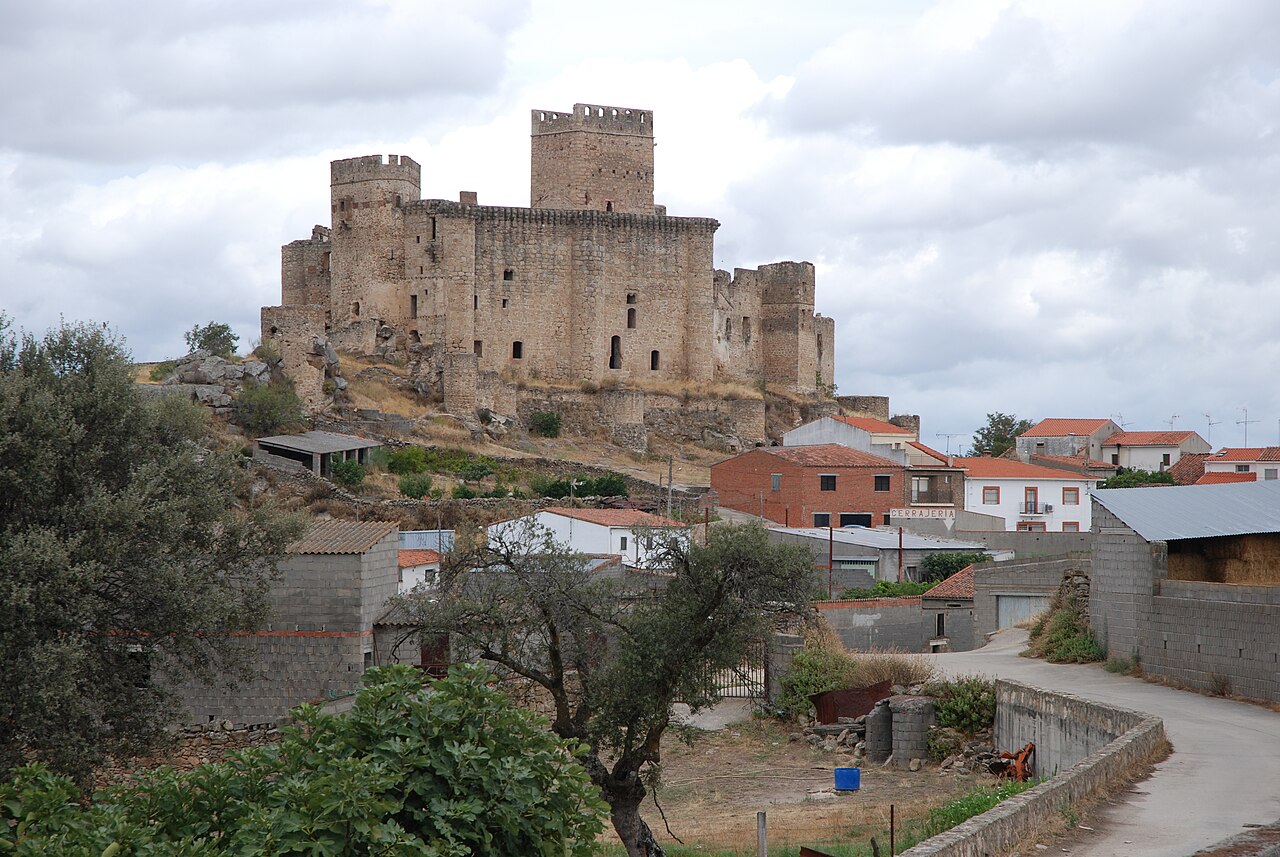
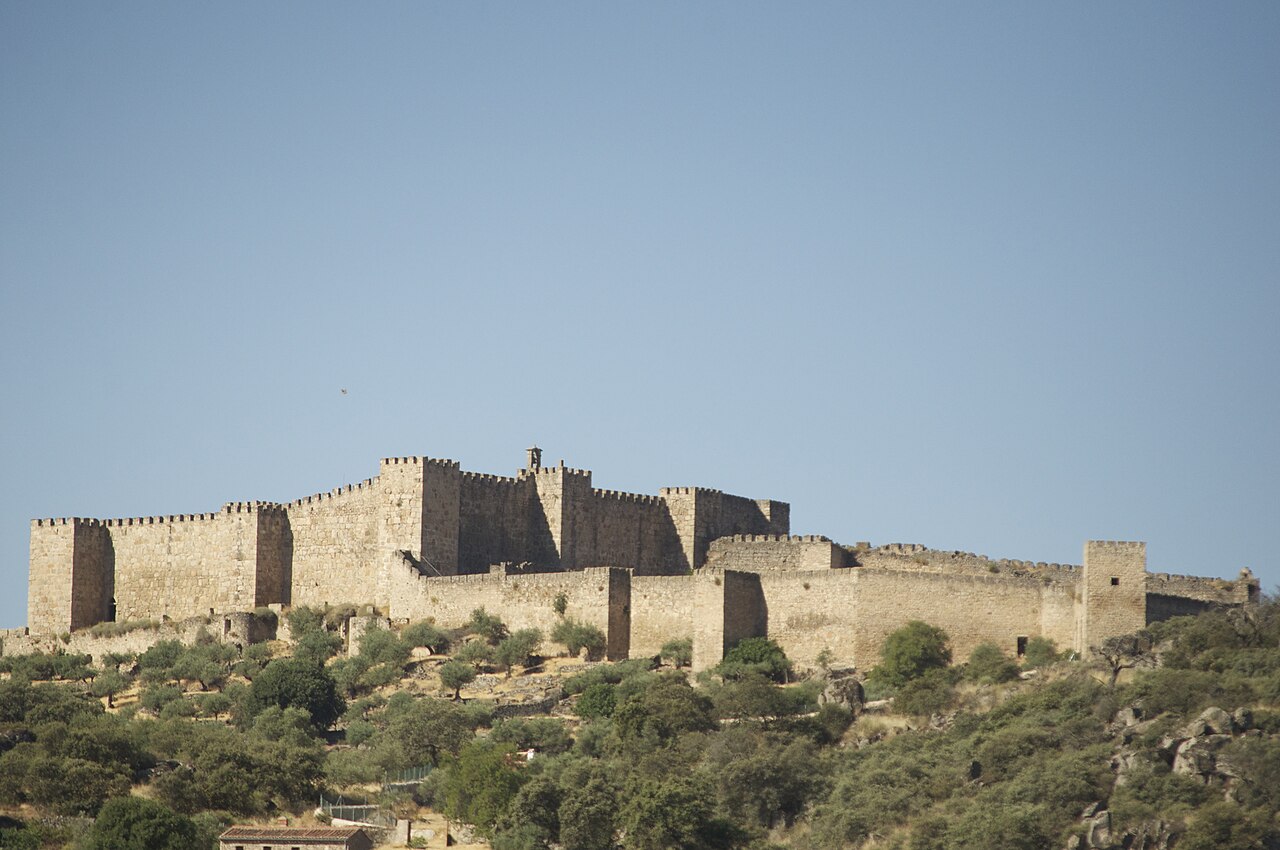
Perched on a rocky ridge, the Castle of Cabañas features an elongated and narrow plan that closely follows the natural contours of the hilltop. This design maximizes the defensive advantages provided by the terrain. The fortress walls are constructed using sillarejo masonry, consisting of roughly squared stones sourced locally from the rocky summit. This method of construction not only utilized readily available materials but also allowed the castle to blend harmoniously with its rugged environment.
The site is naturally fortified by steep, nearly vertical cliffs on several sides, which serve as formidable defensive barriers. This natural topography reduced the need for extensive artificial fortifications in certain areas, showcasing a strategic use of the landscape in medieval castle design.
Walls and towers
Several stretches of the original castle walls remain, revealing the robust construction techniques of the medieval builders. The walls enclose the narrow ridge and are punctuated by square towers located near the ends of the fortress. These towers are strategically positioned to provide overlapping fields of fire and observation.
The towers are characterized by their square shape and feature small openings on multiple floors. These apertures likely served dual functions: as defensive embrasures for archers or crossbowmen and as lookout points to monitor the surrounding landscape. The best-preserved towers at either end of the castle exemplify the military architectural style of the period, combining functionality with the imposing presence typical of medieval fortifications.
Access and preservation status
Today, visitors can access the castle ruins via a pathway starting near the village cemetery in Cabañas del Castillo. This connection between the historical site and the modern community underscores the castle's enduring cultural significance. Despite its condition as a ruin, the castle's remains offer valuable insights into the medieval fortification strategies employed in this part of Spain.
The Castle of Cabañas is protected under Spanish heritage laws, ensuring the preservation of its ruins for future generations. Archaeological studies have documented the site extensively, highlighting its importance as a witness to the layered history of military architecture from the Muslim period through the Christian reconquest.
Cultural and historical significance
This fortress stands as a testament to the turbulent history of the Iberian Peninsula during the Middle Ages. Its evolution from a Muslim stronghold to a Christian fortress encapsulates the broader narrative of conquest, adaptation, and resilience that shaped medieval Spain. The castle's strategic location and architectural features provide valuable evidence of the military and political dynamics of the time.
As a heritage site, the Castle of Cabañas not only attracts historians and archaeologists but also visitors interested in exploring the rich cultural tapestry of Spain's past. Its preservation allows for continued study and appreciation of medieval fortifications and the historical events they witnessed.
Frequently asked questions (FAQ)
- How do I get to the Castle of Cabañas from the village?
- The castle is accessible by a pathway starting near the village cemetery in Cabañas del Castillo, offering a scenic walk to the ruins.
- What is the historical significance of the Castle of Cabañas?
- The castle reflects the military and political changes in medieval Spain, transitioning from a Muslim fortress to a Christian stronghold after the Reconquista.
- What architectural features are notable at the Castle of Cabañas?
- Notable features include the elongated hilltop layout, sillarejo masonry walls, square defensive towers with small openings, and natural cliff defenses.
Information
Loading map...
Visitor reviews
No reviews yet. Been here? Write the first review and help other travelers!
Write the first reviewVisited this castle? Share your experience
Your review helps other travelers and adds first-hand knowledge to our encyclopedia.