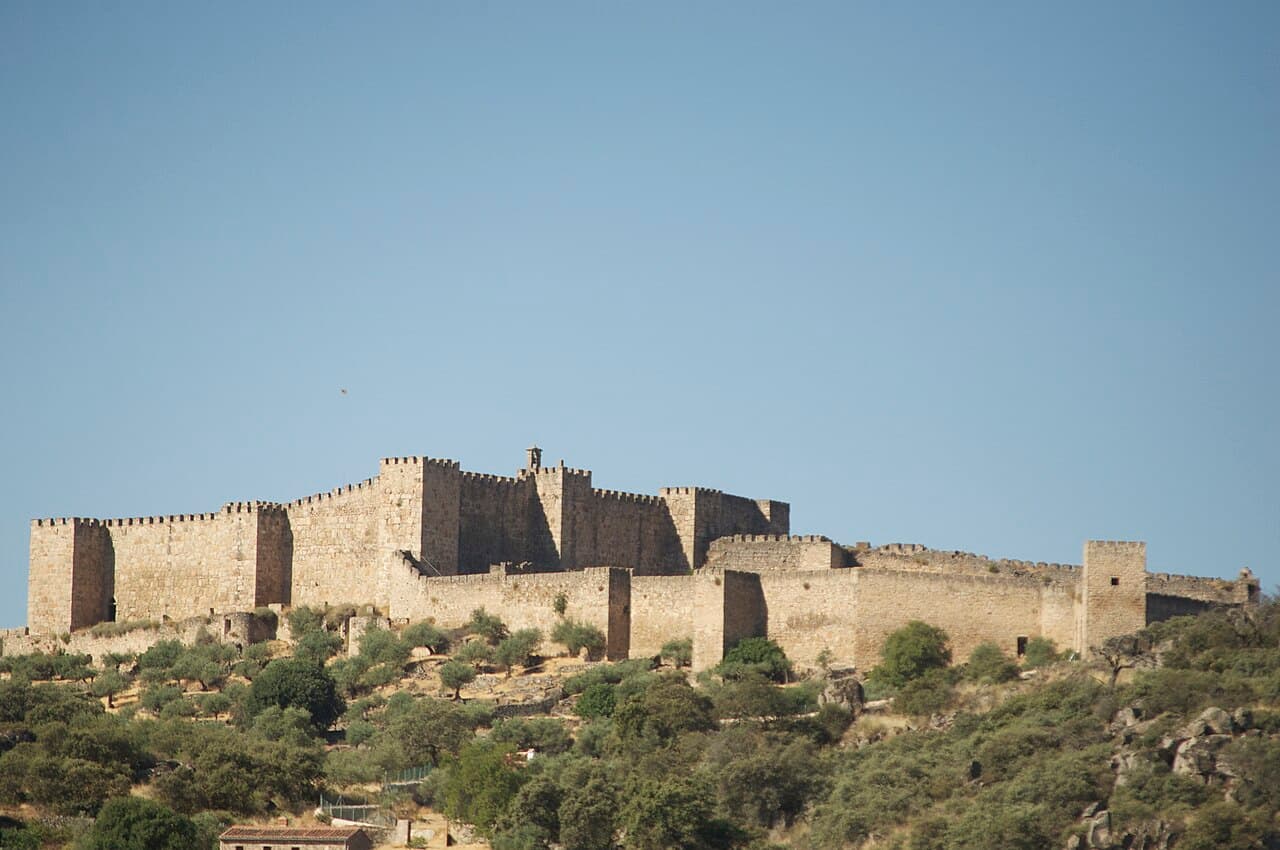
Castle of Trujillo
Historical background and significance
The castle of Trujillo played a crucial role in the military and political history of the region. It was a key defensive stronghold during the centuries-long conflicts between Muslim and Christian kingdoms. After the Reconquista, the castle became a symbol of Christian power and was used by various noble families. Its strategic location on a hill made it an ideal fortress to control the surrounding plains and trade routes.
Architectural features and layout
The castle exhibits typical characteristics of a hill castle, with robust defensive walls and a commanding position. Its construction features a combination of Islamic military architecture and later Christian medieval fortifications. The castle's walls are made of stone and include several towers and battlements designed for defense and surveillance. The main keep, or donjon, stands as the central stronghold within the complex.
Defensive structures
The castle is surrounded by thick curtain walls with crenellations and arrow slits, allowing defenders to repel attackers effectively. Several towers punctuate the walls, providing vantage points and flanking fire. The entrance is fortified with a gatehouse, which historically would have been protected by a drawbridge and possibly a moat, typical of castles designed for hilltop defense.
Interior and living quarters
Inside the walls, the castle contains remains of residential quarters, including a great hall used for gatherings and administrative functions. There are also chapels and storage areas, reflecting the castle’s role as both a military fortress and a noble residence. Some parts of the castle have been preserved or restored to showcase the living conditions of medieval nobility.
Restoration and current condition
Today, the castle of Trujillo is well preserved and serves as a popular tourist attraction. Restoration efforts have focused on maintaining the structural integrity of the walls and towers while preserving the historical authenticity of the site. Visitors can explore the castle grounds, climb the towers for panoramic views, and learn about the castle’s history through exhibits and guided tours.
Visitor information and cultural importance
The castle is located in the town of Trujillo, within the autonomous community of Extremadura. It is accessible to the public with regular visiting hours and offers educational programs that highlight its architectural and historical significance. The castle is a cultural landmark, representing the complex history of the region and the architectural evolution from Islamic to Christian rule in medieval Spain.
Its commanding position and well-preserved structures make the castle of Trujillo an important example of medieval military architecture in Spain, attracting historians, architects, and tourists alike.
Frequently asked questions (FAQ)
- What is the historical significance of the Castle of Trujillo?
- The Castle of Trujillo is a prominent fortress that dates back to the 9th century and played a crucial role in the defense against the Moors during the Reconquista. It stands as a symbol of the town's rich medieval heritage and offers insights into Spain's turbulent history.
- When was the Castle of Trujillo built?
- The construction of the Castle of Trujillo began in the 9th century, with significant modifications and expansions occurring in the following centuries. Its architecture reflects various styles due to these changes, showcasing the castle's evolution over time.
- What are the opening hours for the Castle of Trujillo?
- The Castle of Trujillo is generally open to visitors from 10 AM to 7 PM during the spring and summer months, with reduced hours in the fall and winter. It is advisable to check the official website for any seasonal changes or special closures before planning your visit.
- Can I access the Castle of Trujillo with a wheelchair?
- The Castle of Trujillo has some accessibility features, but due to its historical architecture, certain areas may be challenging to navigate for wheelchair users. It is recommended to contact the castle administration prior to your visit to inquire about specific accommodations.
- Is it possible to take guided tours of the Castle of Trujillo?
- Yes, guided tours of the Castle of Trujillo are available and offer a deeper understanding of its history and architecture. These tours typically provide insights from knowledgeable guides and can enhance your overall experience at the castle.
- What is the best time to visit the Castle of Trujillo?
- The best time to visit the Castle of Trujillo is during the spring and early fall when the weather is mild and pleasant. Additionally, visiting during weekdays can help avoid larger crowds, allowing for a more intimate experience.
- Are there any nearby attractions to the Castle of Trujillo?
- Yes, visitors to the Castle of Trujillo can also explore the charming old town, which features other historical sites such as the Plaza Mayor and numerous palaces. The region is rich in history, offering a variety of attractions that complement your visit to the castle.
- How much does it cost to enter the Castle of Trujillo?
- Ticket prices for the Castle of Trujillo are typically very affordable, with discounts available for students and seniors. It is wise to check the official website for the most current pricing and any special offers that may be available during your visit.
Photo gallery

Information
Loading map...
Visitor reviews
No reviews yet. Been here? Write the first review and help other travelers!
Write the first reviewVisited this castle? Share your experience
Your review helps other travelers and adds first-hand knowledge to our encyclopedia.



