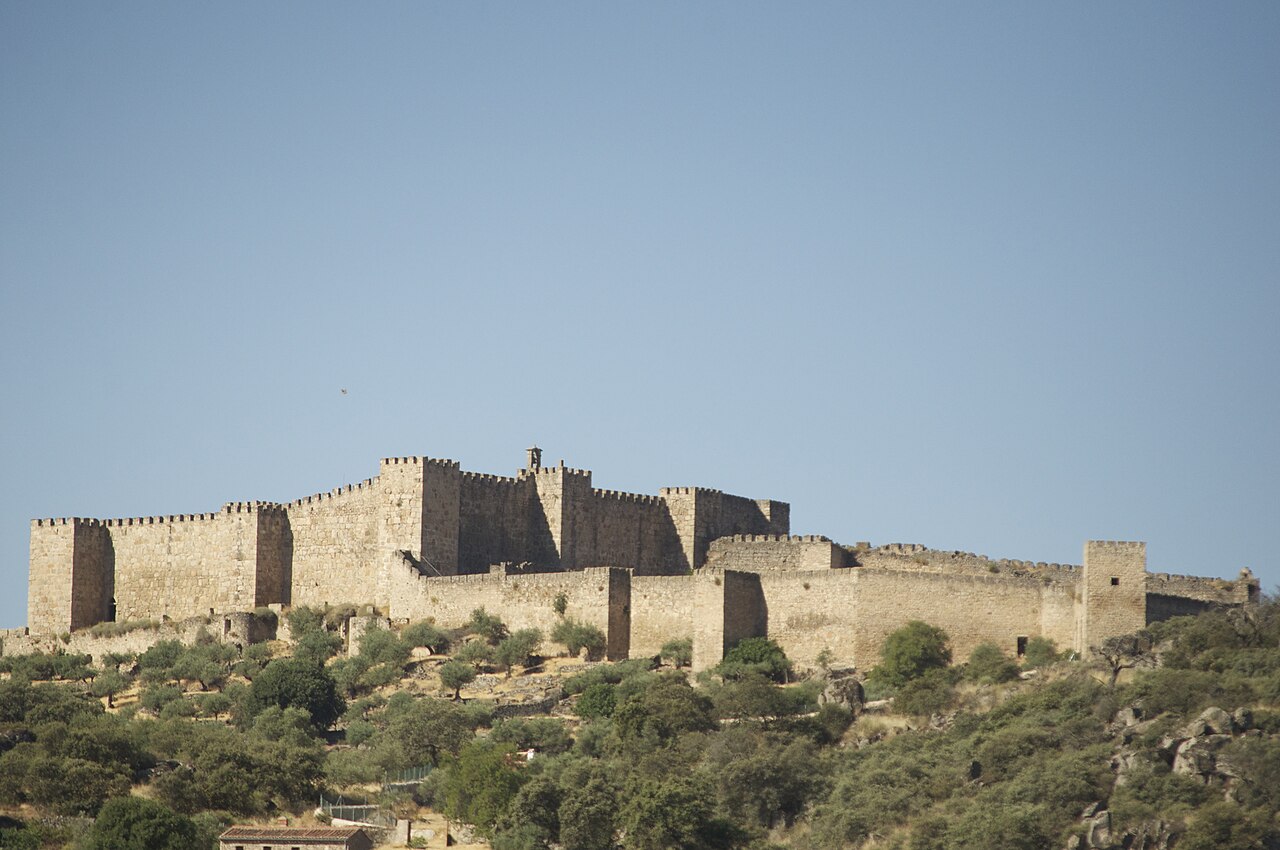
Castillo de Trujillo
The Castillo de Trujillo stands as a commanding hill castle perched atop the highest point of the town of Trujillo, Spain, on a hill historically known as Cabeza del Zorro. This fortress is a remarkable example of layered medieval architecture, blending Islamic military design with later Christian fortifications. Its origins date back to the 9th century, during the Early Medieval period, when it was initially constructed by Arab builders under Muslim rule in the Iberian Peninsula.
Historical development and significance
The Castle of Trujillo was originally established as a Moorish fortress between the 9th and 12th centuries, serving as a strategic defensive stronghold controlling the surrounding territory. The fortress’s position on the hill, overlooking the town and the plains beyond, offered vital military advantages. Following the Christian reconquest of the region in the 13th century, the castle underwent extensive modifications and expansions to suit the new rulers' military and administrative needs.
During the 15th century, a significant enhancement was the construction of a second enclosure wall, known as an albacara, which provided an additional layer of defense. This outer wall enclosed the old quarter of Trujillo, demonstrating the castle’s role not only as a military fortress but also as a protector of the growing town. The castle’s gates and walls were also renovated during the 15th and 16th centuries, reflecting advances in military architecture and the need to maintain strong defenses in changing political circumstances.
The castle holds cultural importance as well, symbolized by the image of the Virgin of Victory (Virgen de la Victoria) placed above the main entrance. This religious icon reflects the fortress’s connection to local traditions and the town’s patron saint, embodying the intertwining of military and spiritual life in medieval Spain.
Architectural features and layout
Fortress structure and materials
The Castillo de Trujillo is primarily constructed from granite ashlar blocks and masonry, materials that give the fortress its robust and enduring presence. The castle complex includes a central fortress surrounded by a ring of defensive walls, known as an alcazaba, which encloses the historic part of the town.
Towers, gates, and defensive elements
The fortress is punctuated by several square towers, a hallmark of Islamic military architecture. Two prominent towers flank the main entrance, which features a distinctive horseshoe arch, characteristic of Moorish design. Above this entrance is the revered image of the Virgin of Victory, symbolizing protection and faith.
The outer walls include seventeen rectangular towers and battlements called almenas, which provided elevated defensive positions for guards and archers. Originally, the fortress had seven gates, but today only four remain: San Andrés, Santiago, Coria, and Triunfo. These gates were refurbished during the 15th and 16th centuries to enhance security and functionality.
Water management and internal structures
Within the castle, two Arab cisterns or aljibes survive as some of the oldest elements. These cisterns were essential for collecting and storing water, ensuring the fortress could withstand prolonged sieges. The presence of a barracks courtyard within the complex highlights its ongoing military use throughout history.
Preservation and restoration efforts
The Castillo de Trujillo has been the focus of various restoration projects, especially during the 20th century, aimed at preserving its structural integrity and historical significance. These efforts have allowed the fortress to remain a visible and accessible monument, contributing to the cultural heritage of the region.
Today, the castle is well-preserved, offering visitors a tangible connection to the Early Medieval period and the successive layers of history that shaped this part of Spain. Its combination of Islamic and Christian architectural elements provides valuable insight into the military and cultural transitions of the Iberian Peninsula.
Visiting the castle and its surroundings
Visitors to the Castillo de Trujillo can explore its extensive walls, towers, and gates, appreciating the craftsmanship of both Moorish and later medieval builders. The castle’s elevated position affords panoramic views of the town of Trujillo and the surrounding landscapes, enhancing its appeal as a historical and scenic destination.
The castle is also closely linked to the town’s heritage, with nearby landmarks and historic buildings that complement the visit. The presence of the Virgin of Victory image at the entrance invites reflection on the fusion of religious faith and military power in medieval Spain.
Historical context and regional importance
As a fortress built during the Early Medieval period under Muslim rule and later expanded by Christian forces, the Castillo de Trujillo embodies the complex history of the Iberian Peninsula. It played a crucial role in controlling territory, defending against invasions, and administering the region throughout the Middle Ages.
The castle’s strategic location in the province of Cáceres made it a key military asset during the Reconquista and subsequent periods. Its preservation today offers historians and visitors alike a window into the architectural and cultural transformations that occurred over several centuries.
Frequently asked questions (FAQ)
- How do I get to Castillo de Trujillo?
- You can reach Castillo de Trujillo by taking a train or bus to Trujillo, which is well-connected to major cities in Spain. Once in Trujillo, the castle is within walking distance from the town center, and signs will guide you to this historic site.
- What is the historical significance of Castillo de Trujillo?
- Castillo de Trujillo is a historic castle that dates back to the 13th century and played a crucial role in the defense of Trujillo against various invasions. It is a symbol of the town's rich history and heritage, showcasing the architectural styles of the period.
- When was Castillo de Trujillo built?
- Construction of Castillo de Trujillo began in the late 9th century and continued into the 13th century, reflecting the military architecture of its time. The castle has undergone several modifications throughout the centuries, making it a fascinating example of medieval fortifications.
- Can I explore the castle interior?
- Yes, visitors can explore certain areas of Castillo de Trujillo, including the towers and walls, which offer stunning views of the surrounding landscape. While some parts may be restricted, there are guided tours available that provide insight into the castle's history and architecture.
- Why is Castillo de Trujillo a popular tourist destination?
- Castillo de Trujillo attracts tourists due to its impressive architecture, rich history, and panoramic views of the region. The castle's strategic location and well-preserved structure make it a must-visit for history enthusiasts and photographers alike.
- Is it possible to visit Castillo de Trujillo year-round?
- Yes, Castillo de Trujillo is open to visitors throughout the year, but it's advisable to check for any seasonal hours or special events that may affect access. The weather can also influence your experience, so consider visiting during the spring or fall for pleasant conditions.
- What are the ticket prices for Castillo de Trujillo?
- Admission to Castillo de Trujillo is generally affordable, with discounted rates available for students and seniors. It's best to check the official website or local tourist information for the most current pricing and any special promotions.
- What are the opening hours for Castillo de Trujillo?
- Castillo de Trujillo typically opens at 10 AM and closes at 6 PM, but these hours may vary depending on the season. Always verify the opening times before your visit to ensure you have ample time to explore.
- What nearby attractions can I visit while in Trujillo?
- While in Trujillo, you can also visit the Plaza Mayor, the Convent of San Francisco, and the Church of Santa María la Mayor. These attractions, along with Castillo de Trujillo, provide a comprehensive view of the town's historical and cultural significance.
Information
Website
Visit websiteSources & official resources
Verify the information above using these authoritative references.
Loading map...
Visitor reviews
No reviews yet. Been here? Write the first review and help other travelers!
Write the first reviewVisited this castle? Share your experience
Your review helps other travelers and adds first-hand knowledge to our encyclopedia.