Castle of Belver
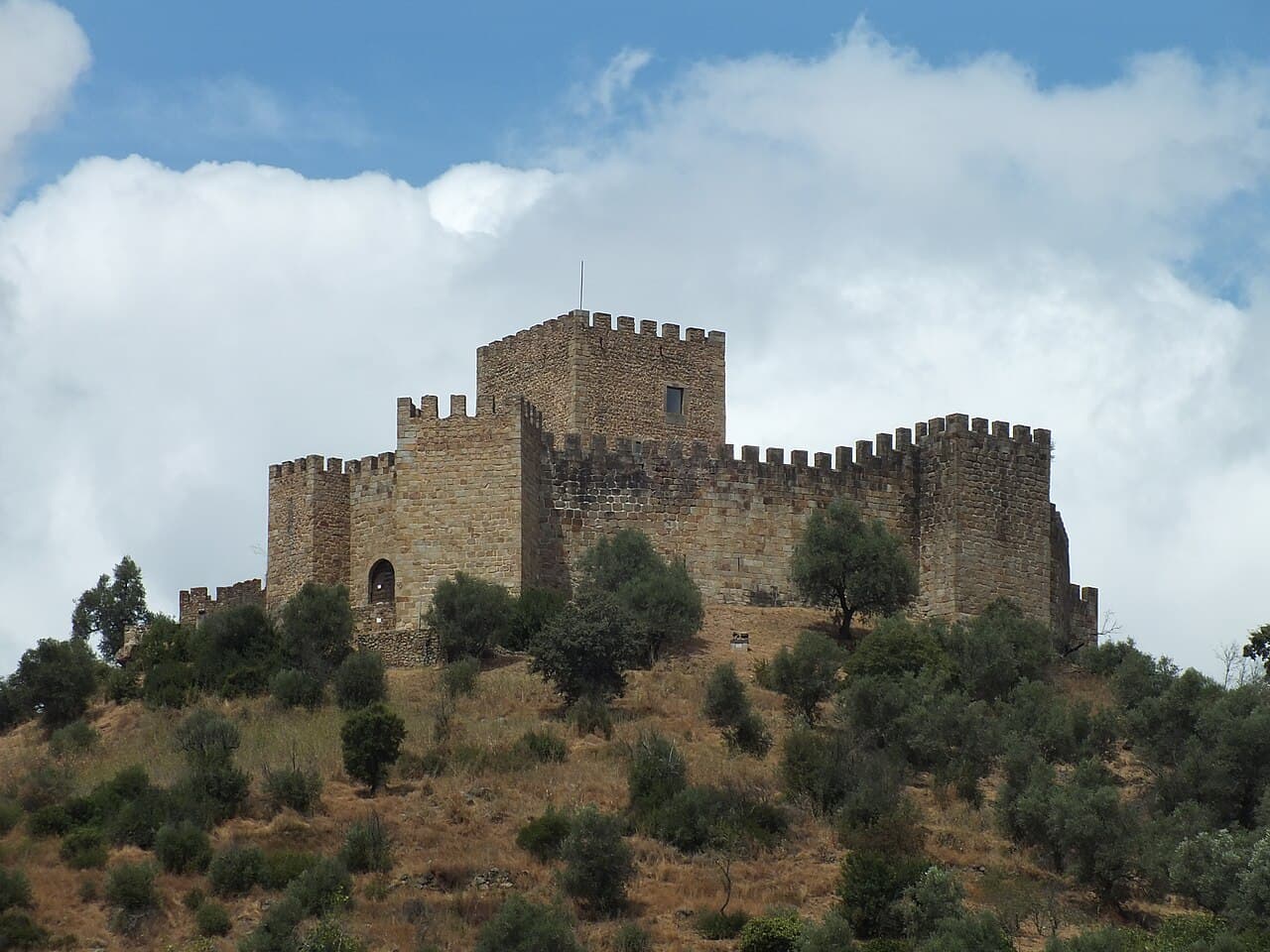
Castle of Belver stands as a remarkable example of high medieval military architecture in Portugal, strategically positioned on a granite hilltop overlooking the Tagus River. Constructed in the 12th century by the Knights Hospitaller, this hill castle was the first and most significant fortress built by the order in Portugal, designed to secure the vital access route along the Tagus and stabilize the Christian-Muslim frontier during the Reconquista period.
The castle’s origins trace back to 1194 when King Sancho I granted the site to Afonso Paes, the prior of the Hospitallers, on the condition that a fortress be erected to fortify the border. Construction began shortly thereafter and was sufficiently advanced by 1210 to allow permanent occupation, with completion by 1212. The castle’s strategic importance was underscored by its mention in King Sancho I’s testament as one of the six national treasure repositories, a testament to its military and symbolic value despite its remote frontier location.
Historical significance and military role
Throughout its history, the castle of belver played a pivotal role in the defense and administration of the region. Between 1336 and 1341, it emerged as one of the most important hospitaller commanderies in Portugal, although it never served as the order’s main seat, which was based at Leça do Balio and later Flor da Rosa. The castle’s military relevance was renewed during the reign of King John I (1385–1433), who commissioned expansions and repairs around 1390 to strengthen defenses amid ongoing conflicts with Castile. These works were overseen by the famed military leader Nuno Álvares Pereira, highlighting the castle’s continued strategic value.
In the late 16th century, the castle complex was enhanced by the addition of the Chapel of São Brás, reflecting the site’s evolving role not only as a military fortress but also a religious center. During the 17th century, further fortifications were added by the architect Cosmander during the Portuguese Restoration War, aimed at reinforcing the castle against potential Spanish incursions.
The castle also served a residential function, notably housing Princess Joana in the 16th century. Local tradition associates the site with the imprisonment of the renowned Portuguese poet Luís de Camões in 1553, although this remains a legend without documentary evidence.
The devastating 1755 Lisbon earthquake marked the beginning of the castle’s decline, leading to neglect and partial ruin. In 1846, the fortress was repurposed as a cemetery, a significant departure from its original military use. The 1909 earthquake caused additional damage, prompting major restoration efforts in the 20th century, notably between 1939 and 1946 by the Directorate-General for National Buildings and Monuments (DGEMN). Further repairs focused on the walls, roofs, chapel, and the main keep, preserving the castle’s structural integrity.
Architectural features and layout
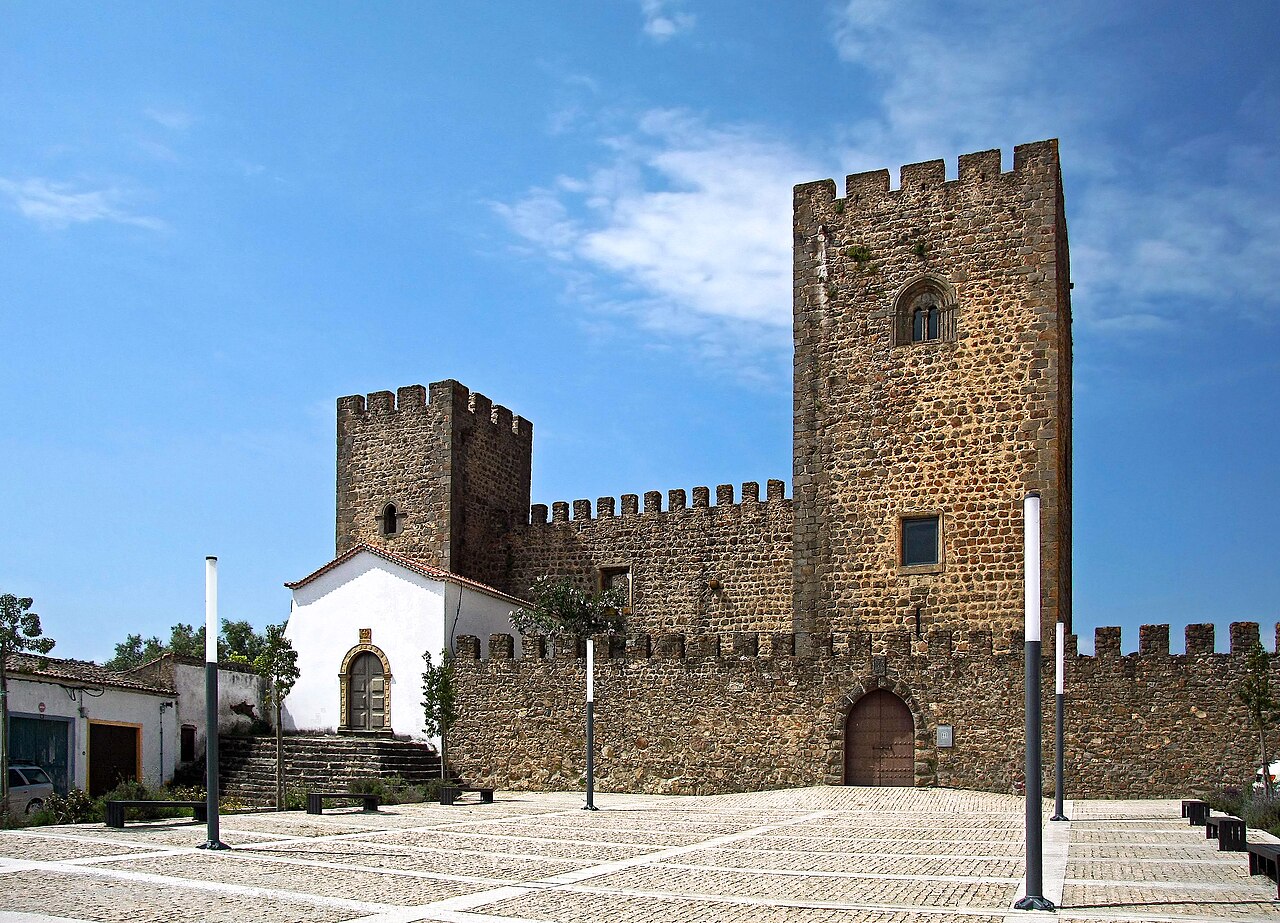
The castle of belver occupies an isolated granite hilltop at the confluence of the Ribeiro de Belver and the Tagus River. Its roughly oval layout centers on a large rectangular keep (donjon) with formidable walls approximately four meters thick on the first floor, designed to withstand siege warfare. Surrounding the keep are defensive curtain walls equipped with parapets, battlements, turrets, and cubicle towers strategically placed to maximize defensive coverage.
The main entrance, located on the south side, is accessed via a granite masonry staircase and flanked by two towers whose design influenced later royal constructions under King Denis. Beyond the gate, visitors encounter a triple rounded-arch doorway leading into the castle’s inner courtyard. The keep’s first floor features a grated access to the dungeons and a rectangular window, while an internal staircase connects to the second floor, which includes a similar window, an arched doorway opening onto the remains of a veranda, and another arched door providing access to the roof battlements. The battlements are characterized by narrow crenellations and a surrounding walkway for patrols.
The castle walls form a semi-circular oval around the keep, reinforced by parapets, turrets, and cubicle towers positioned at cardinal points. A secondary entrance, known as the Traitor’s Gate, is located on the cliff side and guarded by a round tower, providing a discreet exit or entry point during sieges.
Remnants of the alcaide’s residence and garrison buildings occupy the south-east, south, and south-west sections of the castle, identifiable by three archways. To the north lies a cistern constructed during the 1390 remodeling led by Nuno Álvares Pereira, featuring two round openings on its west side to collect and store rainwater, essential for sustaining the garrison during prolonged sieges.
Chapel of são brás and religious elements
Near the keep on the eastern side stands the Renaissance-era Chapel of São Brás, added in the late 16th century. The chapel’s interior houses a high altar adorned with busts and reliquaries from Palestine, gifts from the Great Prior of Crato to Prince Luís, son of King Manuel I. This highlights the castle’s religious significance and its connection to the wider Christian world during the Renaissance.
Preservation and modern use
Despite its frontier origins and centuries of military use, the castle of belver remains well-preserved today, thanks to extensive restoration efforts throughout the 20th century. The castle’s defensive walls, towers, and keep are largely intact and accessible to visitors, offering a vivid glimpse into medieval fortification techniques and the military history of Portugal.
The upper floors of the keep have been adapted for cultural events, integrating the castle into contemporary community life while preserving its historical fabric. The castle’s location, overlooking the Tagus River, provides striking panoramic views, enhancing its appeal as a tourist destination and heritage site.
Today, the castle is managed by the Portuguese Institute of Architectural Heritage (IPPAR), which continues to oversee its conservation and promote its historical and cultural significance. Visitors can explore the castle’s architectural features, including the battlements, towers, chapel, and interior chambers, gaining insight into the complex history of the Hospitaller order and the turbulent medieval frontier of Portugal.
Frequently asked questions (FAQ)
- What is the historical significance of the Castle of Belver?
- The Castle of Belver, built in the 13th century, is a remarkable example of medieval military architecture in Portugal. It served as a strategic fortress during conflicts and played a vital role in the defense against invasions. Today, it stands as a testament to the region's rich history and is a popular site for visitors interested in medieval heritage.
- When was the Castle of Belver constructed?
- The Castle of Belver was constructed in the 13th century, specifically during the reign of King Afonso III of Portugal. Over the centuries, it has undergone various renovations and restorations, preserving its historical features while enhancing its structural integrity. This long history adds to its charm and significance as a cultural landmark.
- Can I visit the Castle of Belver year-round?
- Yes, the Castle of Belver is open to visitors throughout the year. However, it is recommended to check the specific opening hours and any seasonal events before planning your visit. This ensures that you can make the most of your trip to this historical site.
- What are the opening hours for the Castle of Belver?
- The Castle of Belver typically opens to visitors from 9 AM to 5 PM, but these hours may vary depending on the season. It’s advisable to check the official website or contact local tourism offices for the most current information before your visit. This way, you can plan your visit accordingly and enjoy a full experience.
- Is it possible to access the Castle of Belver with mobility issues?
- While the Castle of Belver provides stunning views and a glimpse into history, the accessibility for visitors with mobility challenges may be limited due to its medieval structure and terrain. It is advisable to contact the site in advance to inquire about specific accommodations that may be available for visitors with disabilities. This will help ensure a more enjoyable visit.
- What is the best time to visit the Castle of Belver?
- The best time to visit the Castle of Belver is during the spring and fall when the weather is mild and pleasant for exploring. These seasons also tend to have fewer tourists, allowing for a more relaxed experience. Additionally, the surrounding scenery is particularly beautiful during these times, adding to the overall charm of your visit.
- Are there any nearby attractions to the Castle of Belver?
- Yes, there are several nearby attractions that complement a visit to the Castle of Belver. The beautiful town of Belver itself offers scenic views and local culture, while the nearby River Tagus provides opportunities for outdoor activities. Exploring the surrounding area can enhance your experience and provide a broader understanding of the region's heritage.
- What are the ticket prices for the Castle of Belver?
- The ticket prices for the Castle of Belver are generally quite affordable, with discounts available for children, seniors, and groups. As prices may change, it's best to check the official website for the latest information before your visit. This will help you budget for your trip and enjoy all that the castle has to offer.
Photo gallery

Information
Website
Visit websiteSources & official resources
Verify the information above using these authoritative references.
Loading map...
Visitor reviews
No reviews yet. Been here? Write the first review and help other travelers!
Write the first reviewVisited this castle? Share your experience
Your review helps other travelers and adds first-hand knowledge to our encyclopedia.