Amieira do Tejo Castle
Amieira do Tejo Castle, locally known as Castelo da Amieira do Tejo, stands as a remarkable example of Portuguese Renaissance military architecture in the Alentejo Central region of Portugal. This historic fortress occupies a strategic position on a modest hill in the town of Amieira do Tejo, overlooking the surrounding landscape south of the Tagus River. Its origins date back to the early 13th century, when the lands were granted to the Knights Hospitaller by King Sancho II in 1232, marking the beginning of its connection to one of the most influential medieval military orders.
The castle was constructed primarily between 1350 and 1370, under the guidance of notable figures such as Dom Frei Álvaro Gonçalves Pereira and later his brother Dom Pedro Pereira. Although the initial donation occurred in the early 13th century, the building of the fortress was delayed until the mid-14th century, reflecting the evolving military and political needs of the region. The castle formed a crucial part of the Tagus Line (Linha do Tejo), a defensive frontier established to protect Portugal from incursions by the Almohads and other adversaries across the river.
Historical context and construction
The territory of Amieira do Tejo was an important borderland during the medieval period, and its fortification was essential for securing the southern frontier of the Portuguese kingdom. The Knights Hospitaller, a powerful Christian military order, were entrusted with this responsibility. The castle's construction began around 1350, with significant progress made by 1362, although some sources suggest completion by 1370. The fortress was visited by King Peter I of Portugal during its construction, underscoring its strategic importance.
During the 1383–1385 Portuguese succession crisis, the castle initially supported the claim of Dona Beatrice but later shifted allegiance under the influence of Dom Nuno Álvares Pereira, a key military leader and son of Dom Frei Álvaro Gonçalves Pereira. This period of political instability was critical in shaping the castle's role in regional defense, although it did not endure direct attacks during the crisis.
Military engagements and political significance
The only recorded military engagement involving Amieira do Tejo Castle occurred in 1440 during a conflict between supporters of Queen Eleanor of Aragon and Peter, Duke of Coimbra. The castle was besieged by Castilian forces allied with the Hospitallers but surrendered without resistance. This event marked the end of a brief period of insubordination in the region and led to the reassertion of royal authority.
Following this episode, the castle's administration passed to Pedro Rodrigues de Castro, who became its mayor. The fortress continued to serve as a defensive stronghold and later took on additional functions, including use as a prison during the reigns of Kings John II and Manuel I in the late 15th and early 16th centuries. The castle was modernized several times in this period to adapt to changing military technologies and needs.
Architectural features and layout
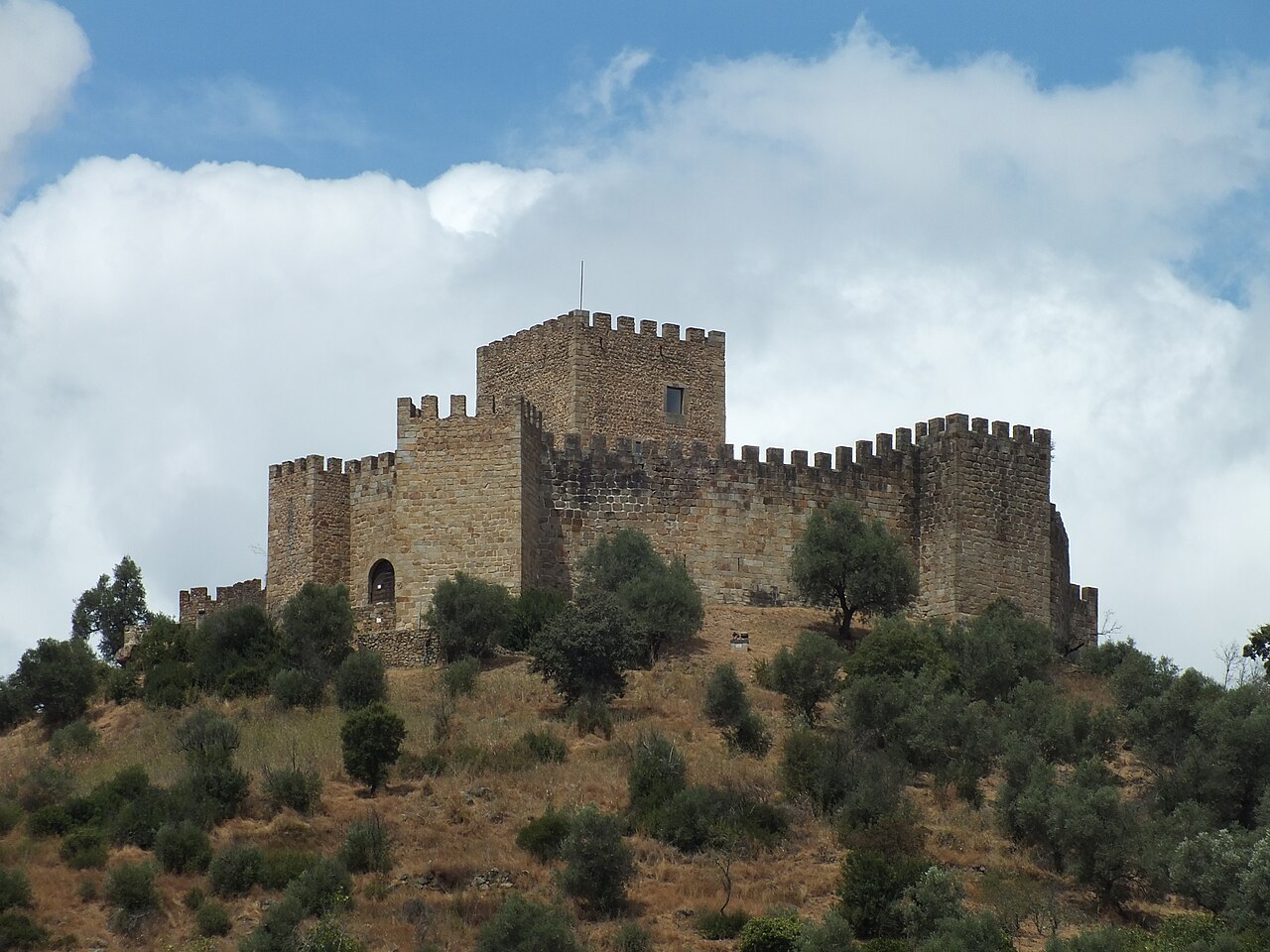
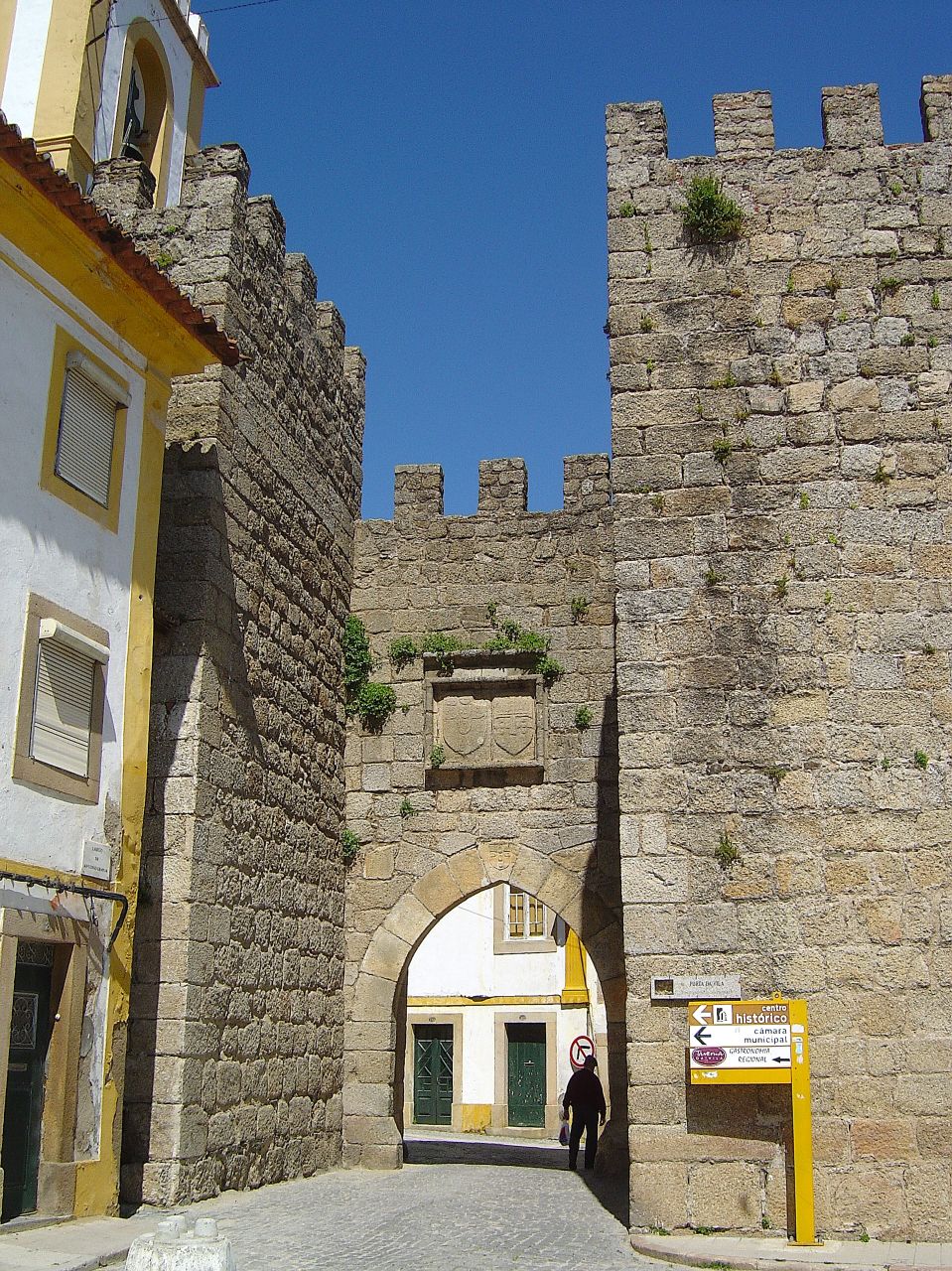
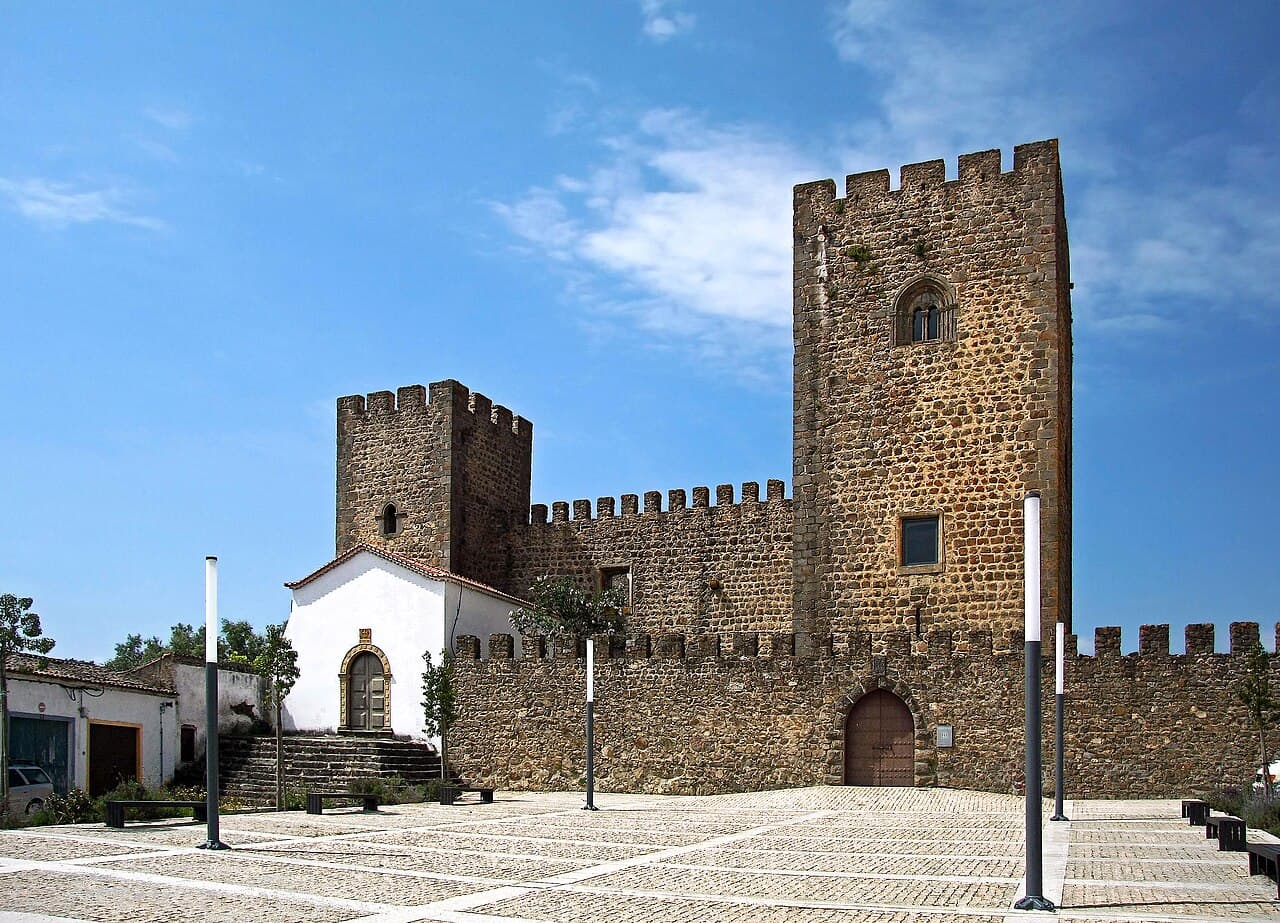
Amieira do Tejo Castle exemplifies the Portuguese Gothic military style with a compact rectangular plan and robust defensive elements. The fortress is enclosed by thick stone walls topped with crenellated battlements, designed to protect defenders during combat. Four large towers anchor the corners, providing elevated vantage points for surveillance and defense.
The most prominent feature is the quadrangular keep tower, which dominates the rear of the castle and protects the barbican gate, a fortified outpost serving as a secondary line of defense. The keep features distinctive Gothic windows, including twin openings and pointed arches with rounded moldings, highlighting the architectural sophistication of the period.
The castle was originally surrounded by a moat, enhancing its defensive capabilities, although this has since been filled in. Inside, the spacious central courtyard served as a parade ground and area for troop movements, reflecting the castle’s military function.
Chapel of saint john the baptist
Adjacent to the castle, but outside the main walls, stands the Chapel of Saint John the Baptist, built in 1556. This religious structure features a round-arched entrance composed of finely shaped voussoirs and a richly decorated coffered vault ceiling adorned with grotesque motifs. Inside, a late Renaissance altarpiece honors the chapel’s patron saint, adding cultural and artistic significance to the site.
Later history and restoration
From the 17th century onward, the castle’s military importance declined, and it began to serve more domestic and civic functions. Residential buildings were constructed within the walls, although these were severely damaged by the catastrophic 1755 Lisbon earthquake. By the mid-18th century, the castle had fallen into disrepair, and its use shifted towards more utilitarian purposes.
In the 19th century, the courtyard was repurposed as a graveyard following legal restrictions on burials within church grounds. This function continued until the early 20th century, when the castle was recognized as a National Monument in 1922. Subsequent restoration efforts, particularly in the 1940s, focused on preserving the keep and other key structures, ensuring that the castle remains well-preserved today.
Current status and visitor information
Today, Amieira do Tejo Castle stands as a testament to Portugal’s medieval military heritage. The castle is well-maintained and accessible to visitors, offering a unique glimpse into the architectural and historical legacy of the Knights Hospitaller. The surrounding gardens and parking facilities integrate the fortress into the modern village setting, making it a popular destination for tourists interested in history and architecture.
Visitors can explore the castle’s imposing walls, towers, and courtyard, as well as the adjacent chapel, which offers insight into the spiritual life associated with the fortress. The castle’s location in the Alentejo Central region also provides opportunities to explore other historic sites along the Tagus River defensive line.
Architectural significance
The castle’s design reflects the transitional period between medieval fortifications and Renaissance military architecture, incorporating features that address evolving warfare techniques while maintaining traditional Gothic elements. Its compact layout, strong defensive towers, and integration with the surrounding landscape exemplify the strategic thinking of the Knights Hospitaller during the 14th century.
Amieira do Tejo Castle remains an important cultural landmark, illustrating the complex history of Portugal’s border defenses and the role of military orders in shaping the nation’s heritage.
Frequently asked questions (FAQ)
- How do I get to Amieira do Tejo Castle?
- Amieira do Tejo Castle is located in the town of Amieira do Tejo, Alentejo Central, Portugal. It is accessible by car and public transport from nearby cities such as Nisa and Portalegre.
- What are the opening hours of the castle?
- The castle is open to visitors daily from 10:00 to 16:00. It is recommended to check for any seasonal changes or special closures before planning your visit.
- Is there an entrance fee to visit the castle?
- Yes, there is a modest entrance fee of €3 for adults and €1.5 for children, which helps support the maintenance and preservation of the site.
- What architectural style is Amieira do Tejo Castle built in?
- The castle is primarily built in the Gothic style, featuring characteristic elements such as pointed arches, crenellated battlements, and a quadrangular keep tower.
- Can I visit the chapel inside the castle grounds?
- Yes, visitors can explore the Chapel of Saint John the Baptist adjacent to the castle. The chapel features a Renaissance altarpiece and a coffered vault ceiling with decorative motifs.
- What is the historical significance of the castle?
- Amieira do Tejo Castle was built by the Knights Hospitaller as part of the Tagus defensive line to protect Portugal's southern border. It played a role in medieval conflicts and served various functions including a prison and later a burial ground.
Photo gallery

Information
Opening hours
10:00-16:00, daily
Ticket prices
€3 adult, €1.5 child
Current owner
State museum
Address
Praça de Nun'Álvares, Portugal
Loading map...
Visitor reviews
No reviews yet. Been here? Write the first review and help other travelers!
Write the first reviewVisited this castle? Share your experience
Your review helps other travelers and adds first-hand knowledge to our encyclopedia.