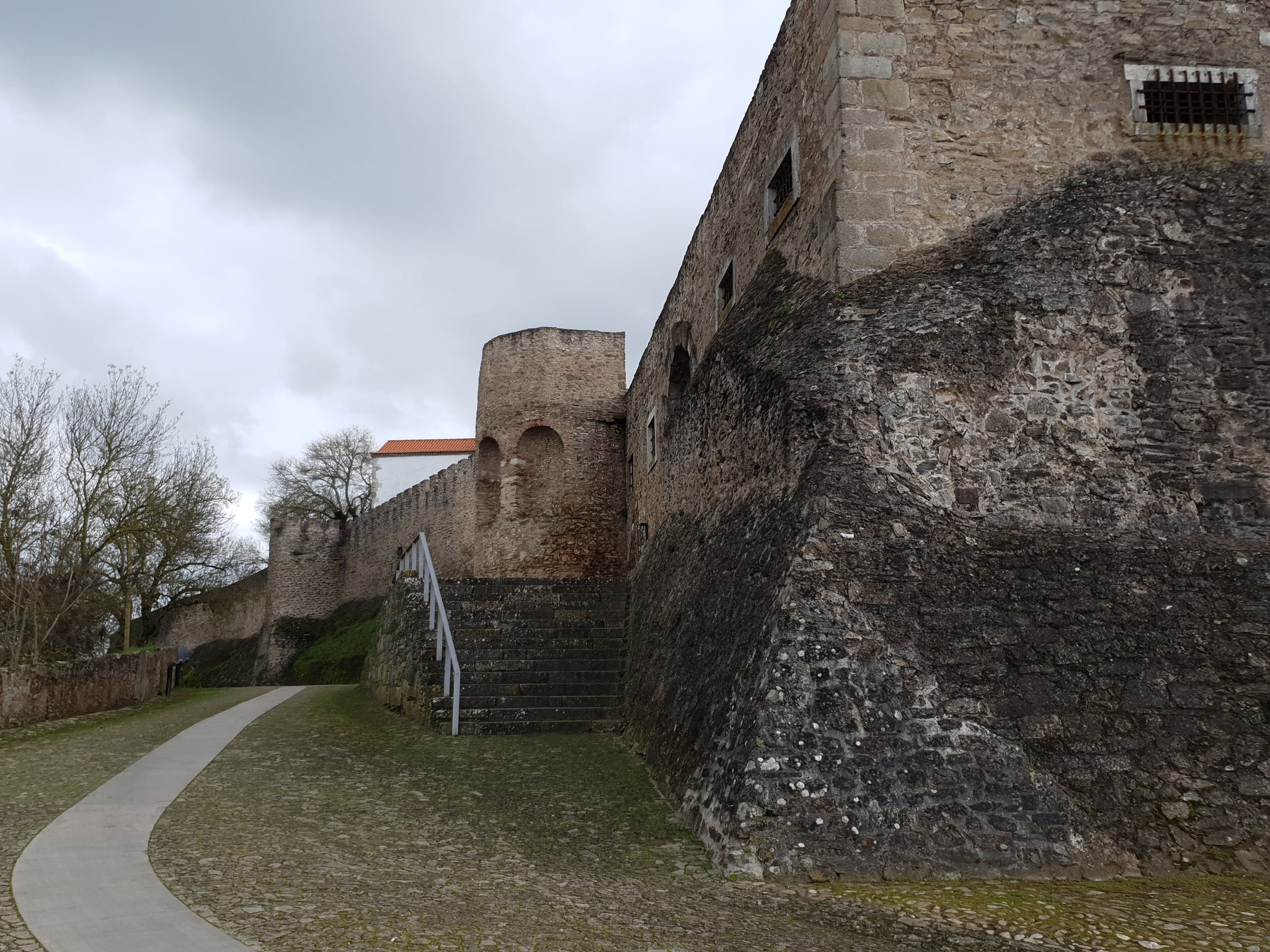
Abrantes Castle
Abrantes Castle, locally known as Castelo de Abrantes, is a significant medieval fortress located in the town of Abrantes in the Médio Tejo region of Portugal. Situated on a flat hilltop overlooking the right bank of the Tagus River, the castle commands extensive views over the town and its surrounding landscape, highlighting its strategic importance throughout history.
Early origins and strategic location
Archaeological and historical evidence suggests that the site of Abrantes Castle may have originally been a Lusitanian hillfort before the Roman conquest of the Iberian Peninsula. The Romans are believed to have taken control of this location around 130 B.C., utilizing it as a fortification to secure their territorial gains. Subsequently, the site was occupied by various groups including the Alans, Visigoths, and Moors, each contributing to its layered history.
Medieval construction and the Reconquista
During the first half of the 12th century, in the context of the Reconquista, the Christian forces led by Afonso I of Portugal captured the town of Abrantes from the Moors. This victory positioned the castle on the frontier between Christian and Islamic territories, making it a critical defensive site. The castle was then rebuilt and fortified, becoming part of the defensive Tagus Line, a series of fortifications along the river designed to repel incursions by the Almohad Caliphate.
Role of the Military Order of Saint James of the Sword
Following its reconstruction, the castle was granted to the Military Order of Saint James of the Sword, a religious and military order instrumental in the defense and expansion of Christian territories during the Reconquista. Their stewardship helped to maintain Abrantes Castle as a key military stronghold.
Enhancements under Afonso III and royal patronage
Between 1250 and 1303, under the reign of Afonso III of Portugal, significant efforts were made to strengthen the castle's defenses. This included reinforcing walls and improving fortifications to secure the frontier. Afonso III also donated the castle to his wife, initiating a tradition of royal patronage by the Queens of Portugal, which underscored the castle's importance within the kingdom.
Decline and damage in the 16th century
As the Reconquista advanced southward, the strategic importance of the Tagus Line and Abrantes Castle diminished. By the second half of the 16th century, the castle began to fall into disrepair. This decline was exacerbated by the devastating 1531 Lisbon earthquake, which severely damaged the structure, including the destruction of the top two floors of the medieval keep.
Restoration and modernization during the Portuguese Restoration War
The castle regained military significance in the late 17th century during the Portuguese Restoration War, when Portugal sought to reassert its independence from Spanish rule. King Peter II of Portugal ordered extensive reconstruction of the castle and the town's defenses, transforming Abrantes into a modern fortress with Vauban-style ramparts. This modernization involved lowering and strengthening the medieval walls to adapt to contemporary military technology and artillery warfare.
Architectural transformation
The introduction of Vauban-style fortifications marked a significant architectural shift from the medieval castle design. The star-shaped bastions and angled ramparts enhanced the defensive capabilities against cannon fire, reflecting the evolution of military architecture in the 17th century.
18th-century adaptations and military use
In the 18th century, Abrantes Castle was repurposed to serve as barracks, housing a regiment of the Royal Cavalry. During the 1790s, the barracks were expanded to accommodate a legion commanded by the Marquess of Alorna. These adaptations reflect the castle's ongoing military relevance even as its defensive role evolved.
Role in the Peninsular War and later military functions
During the Peninsular War (early 19th century), Abrantes Castle was occupied twice by French forces, in 1807 and again in 1810, illustrating its continued strategic importance. Following these events, the castle's barracks were eventually deactivated, and the medieval keep was converted into a military prison, marking a shift from active defense to incarceration.
Present-day status and visitor information
Today, Abrantes Castle is accessible to visitors during daytime hours without an entrance fee, allowing exploration of its extensive exterior fortifications and commanding views. However, the interior of the old keep, which once served as a prison, appears to be permanently closed to the public. Visitors interested in the local heritage can also visit the nearby church, though this requires an admission fee.
Architectural highlights for visitors
While the interior spaces are limited in access, the castle's medieval walls, Vauban-style ramparts, and the overall layout provide insight into the evolution of Portuguese military architecture from the High Middle Ages through the Early Modern period. The location on the Tagus River remains a striking feature, emphasizing the castle's historical role as a defensive bastion.
Historical significance in Portuguese heritage
Abrantes Castle embodies the complex history of Portugal's border defenses, reflecting layers of occupation from ancient times through medieval and early modern periods. Its transformation from a Lusitanian fortification to a medieval stronghold, and later into a Vauban-style fortress, illustrates the adaptation of military architecture to changing political and technological contexts. The castle's connection to royal patronage and military orders further underscores its importance in Portuguese history.
Frequently asked questions (FAQ)
- How do I get to Abrantes Castle?
- Abrantes Castle is easily accessible by car and public transport. If you're driving, take the A23 motorway and follow the signs to Abrantes. For public transport, regional trains and buses connect Abrantes to major cities in Portugal.
- What is the historical significance of Abrantes Castle?
- Abrantes Castle, dating back to the 12th century, is a key historical landmark that showcases Portugal's medieval architecture. It played a vital role in the defense against Moorish invasions and later became essential during the Portuguese Restoration War. The castle offers a glimpse into the rich history of the region.
- When was Abrantes Castle built?
- Construction of Abrantes Castle began in the late 12th century, under the reign of the first king of Portugal, Afonso I. It was strategically built to enhance the defensive capabilities of the region and has undergone several renovations throughout its history. The castle's design reflects the architectural styles of different periods.
- Can I enter Abrantes Castle?
- Yes, visitors can enter Abrantes Castle and explore its historic walls and towers. The castle offers guided tours, which provide insights into its history and architecture. Be sure to check the opening hours before your visit to ensure you have enough time to explore.
- Why is Abrantes Castle a popular tourist destination?
- Abrantes Castle attracts visitors due to its stunning views of the Tejo River and the surrounding landscape. The combination of historical significance, architectural beauty, and picturesque scenery makes it a must-see for history enthusiasts and nature lovers alike. Additionally, it serves as a fantastic backdrop for photography.
- Is it possible to have a guided tour of the castle?
- Yes, guided tours are available at Abrantes Castle, offering a deeper understanding of its history and architecture. These tours are led by knowledgeable guides who can answer your questions and provide fascinating insights. It's recommended to book in advance, especially during peak tourist seasons.
- What are the opening hours of Abrantes Castle?
- Abrantes Castle is typically open to visitors from 9 AM to 6 PM, but hours may vary seasonally. It’s advisable to check the official website or contact the castle for the most up-to-date information before your visit. This ensures you can plan your trip accordingly.
- What are the ticket prices for Abrantes Castle?
- Ticket prices for Abrantes Castle are quite reasonable, generally ranging from 3 to 5 euros for adults. Discounts are often available for students, seniors, and children. Be sure to check for any special promotions or family packages when planning your visit.
- What are some nearby attractions to visit after exploring the castle?
- After visiting Abrantes Castle, you can explore the beautiful historic center of Abrantes, which features charming streets and local shops. Additionally, consider visiting the nearby Church of São Vicente and the scenic Parque da Cidade. These attractions complement your castle visit and enhance your experience in the area.
Information
Address
R. Dom Francisco de Almeida, Portugal
Loading map...
Visitor reviews
No reviews yet. Been here? Write the first review and help other travelers!
Write the first reviewVisited this castle? Share your experience
Your review helps other travelers and adds first-hand knowledge to our encyclopedia.