Castle of Barisciano
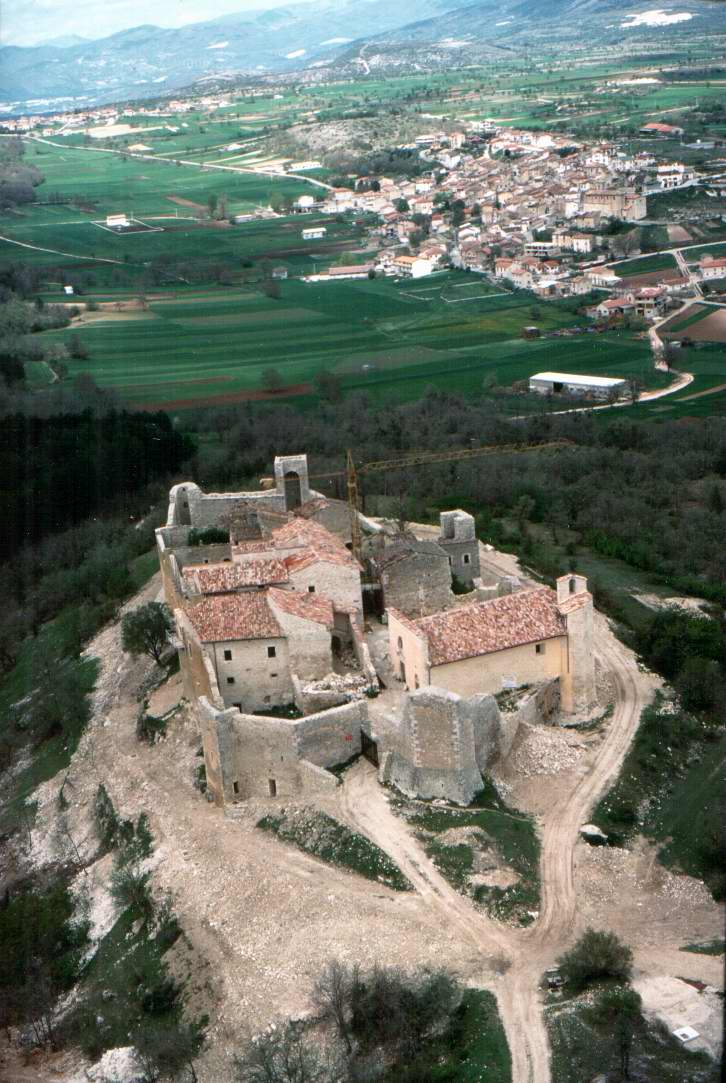
The Castle of Barisciano is a significant early medieval hill castle located in the municipality of Barisciano, within the province of L'Aquila, in the Abruzzo region of southern Italy. Perched strategically on Monte Costa Castello, its elevated position provided a commanding view of the surrounding landscape, which was crucial for defense and surveillance in a turbulent historical context. The castle's origins trace back to the 8th century, when local communities constructed it as a refuge and protective stronghold against invasions and hostile forces.
Throughout the Middle Ages, the castle evolved from a simple fortified refuge into a more complex defensive structure. By the 13th century, it was transformed into a castle-recinto, a fortified enclosure designed to shelter the local population during attacks. This transformation underscored its strategic importance within the region, particularly in connection with the foundation and defense of the nearby city of L’Aquila. The castle's fortifications were integral to the broader network of defenses that protected the area from external threats.
Architectural features and layout
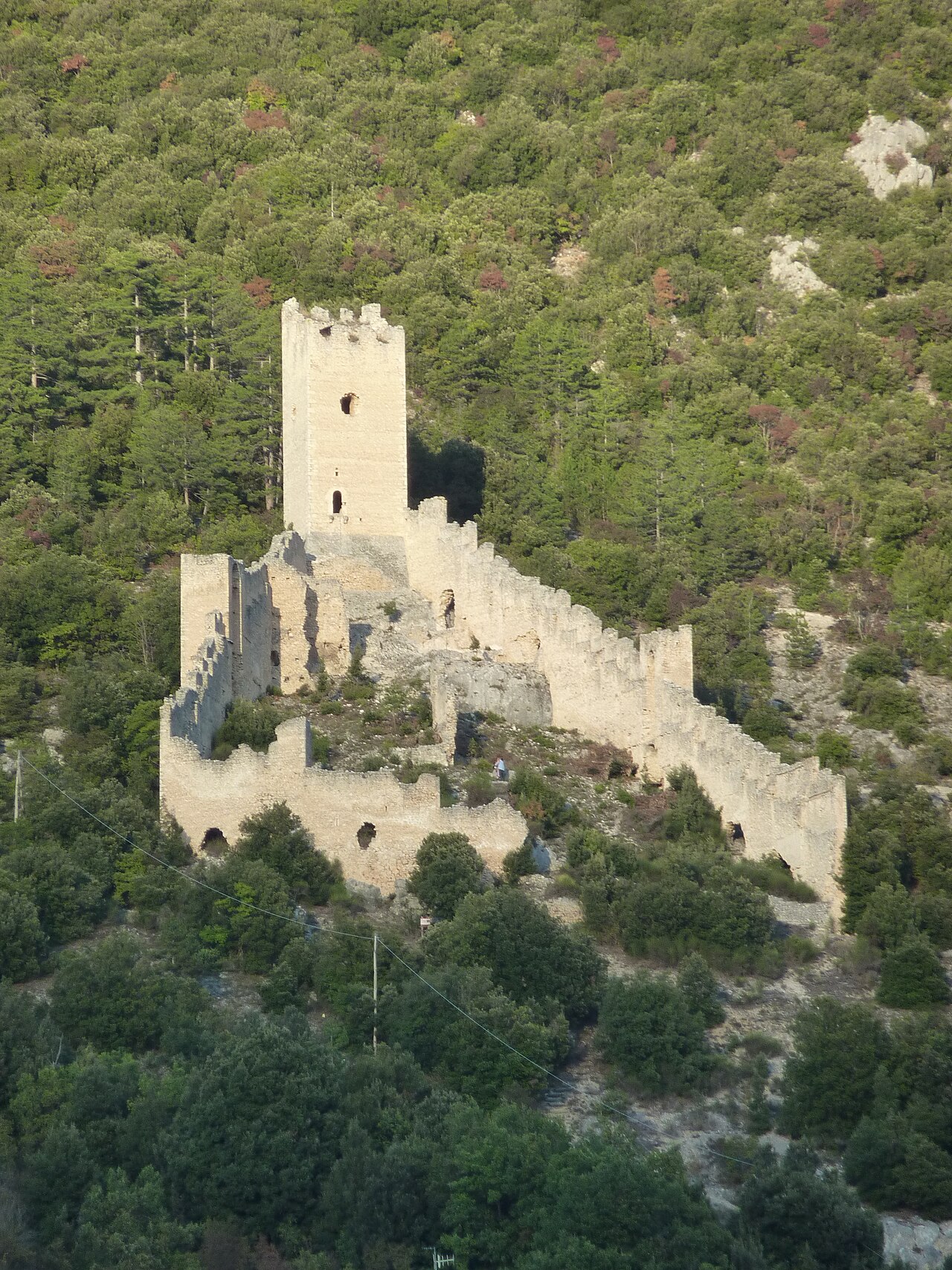
The Castle of Barisciano features a roughly rectangular perimeter, enclosing approximately one kilometer of defensive walls. These walls were constructed primarily for protection rather than habitation, reflecting the castle’s role as a communal refuge. The fortifications include a pentagonal main keep (mastio) positioned at the highest point of the enclosure, serving as the last line of defense and a symbol of authority within the castle complex.
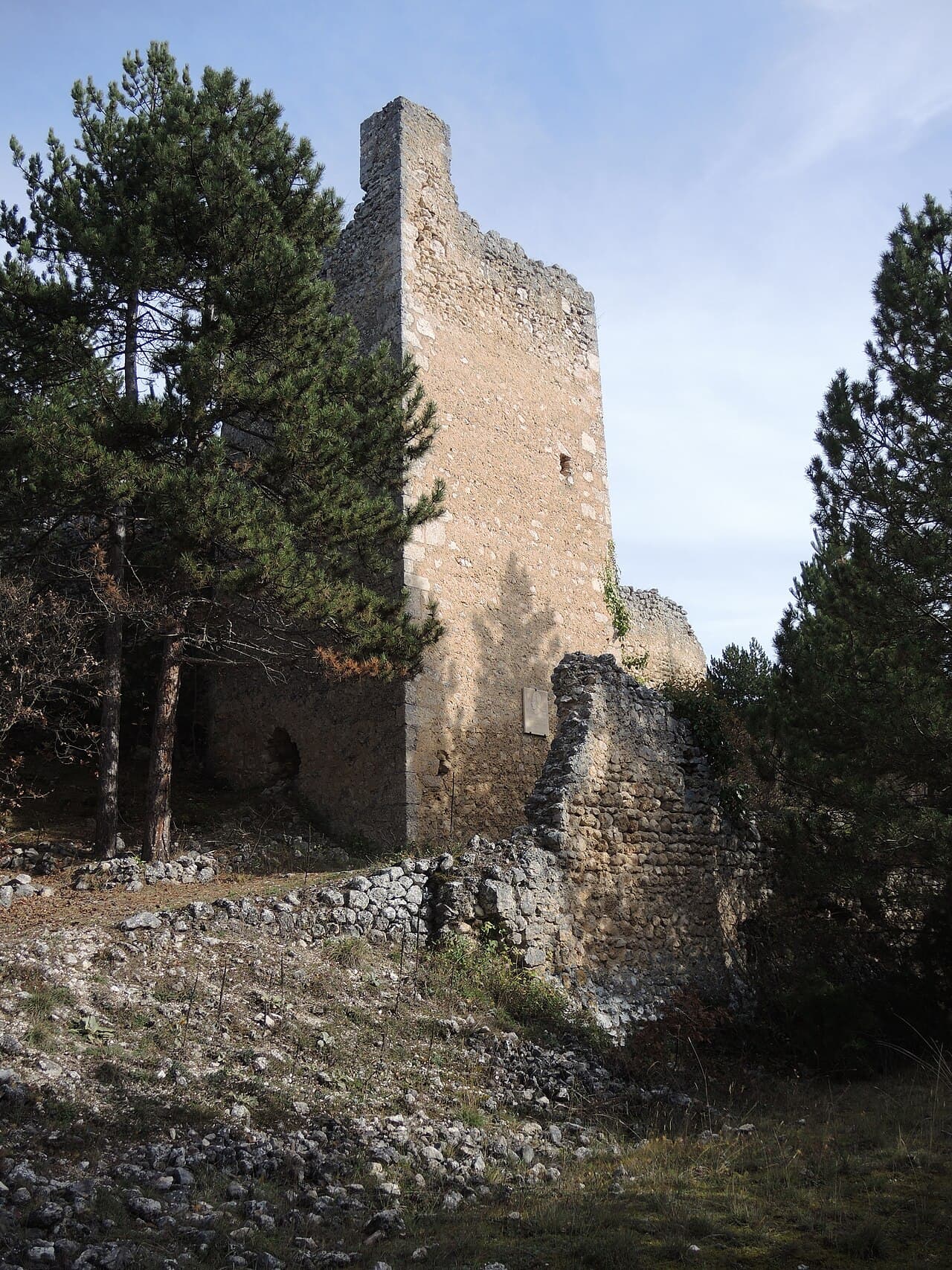
Along the curtain walls, eight towers are strategically placed to provide comprehensive flanking fire and surveillance coverage. These towers allowed defenders to monitor and repel attackers from multiple angles, enhancing the castle’s defensive capabilities. The internal area within the walls contains the remains of several buildings, which were likely used for military and refuge purposes rather than permanent residence. These structures further emphasize the castle’s primary function as a defensive stronghold.
Church of san rocco
Adjacent to the castle stands the Church of San Rocco, constructed in the late 16th century in response to the 1526 plague epidemic. This modest religious building features a simple hut-like design with a sloping gable roof and a small bell gable. Notably, one of the castle’s towers was repurposed to serve as the church’s bell tower, physically linking the sacred space with the older military fortifications.
The church’s interior is modest, consisting of a single nave with a barrel vault ceiling. It houses important 16th-century frescoes depicting scenes from the life of Saint Roch, the patron saint invoked for protection against the plague. A wooden statue of Saint Roch is also preserved inside, serving as a focal point for religious devotion. The church’s façade has undergone minimal restoration, leaving much of its original simplicity intact.
Historical significance and events
The castle’s history is marked by periods of conflict and transformation. In 1424, during the siege of L’Aquila, the fortress was attacked and largely destroyed by the condottiero Braccio da Montone, a prominent military leader of the time. Despite this destruction, the castle remained under the jurisdiction of L’Aquila until 1529, when control shifted to various aristocratic families. This transition reflected a broader change from communal defense to noble ownership and diminished military importance.
By the 16th century, the castle’s military role had largely ended, leading to gradual abandonment. The adjacent Church of San Rocco, built shortly after the plague epidemic, illustrates the community’s shift toward spiritual protection during times of crisis. Over subsequent centuries, the castle suffered significant damage from natural disasters and human activity. The 1703 earthquake inflicted structural damage, weakening the fortifications, while the removal of stones for local construction further contributed to its decline.
More recently, the 2009 earthquake caused the collapse of the castle’s well-preserved western tower and the bell tower of the Church of San Rocco, underscoring the vulnerability of these historic structures to seismic activity in the region.
Cultural heritage and preservation
Today, the Castle of Barisciano stands as an important cultural and historical landmark, reflecting the military, social, and religious history of Abruzzo. Its remaining walls, towers, and the adjoining church provide valuable insights into medieval defensive architecture and the interplay between martial and spiritual concerns in small communities.
Preservation efforts have been challenged by the castle’s exposure to earthquakes and centuries of neglect. However, the site continues to attract interest for its architectural features and its role in the region’s history. Visitors can explore the ruins, gaining an understanding of medieval fortification strategies, communal defense mechanisms, and the historical context of Abruzzo’s development.
The castle’s layout, with its extensive curtain walls and strategically placed towers, exemplifies typical early medieval hill castle design adapted to local topography. The integration of the Church of San Rocco within the castle’s precinct highlights the multifaceted nature of such sites, serving both defensive and religious functions.
Architectural style and period
The castle’s construction and modifications primarily reflect early medieval military architecture, with later adaptations during the high and late medieval periods. The fortress’s design emphasizes functionality, with minimal decorative elements, characteristic of defensive structures intended to protect communities rather than serve as noble residences.
Visiting information
While the castle is in a partially preserved state, visitors can access the site to view the remaining walls, towers, and the Church of San Rocco. The site offers an evocative glimpse into medieval fortification and community life in Abruzzo. Due to ongoing preservation challenges, visitors should check local resources for current access information and any guided tours available.
Frequently asked questions (FAQ)
- How do I get to the Castle of Barisciano?
- The Castle of Barisciano is located in the charming town of Barisciano, Italy. You can reach it by car or public transportation from nearby cities like L'Aquila. Parking is available near the castle, making it easily accessible for visitors.
- What is the historical significance of the Castle of Barisciano?
- The Castle of Barisciano dates back to the medieval period and served as a strategic fortification in the region. It played an essential role in defending against invasions and has witnessed numerous historical events. Today, it stands as a testament to the rich history of the Abruzzo region.
- When was the Castle of Barisciano built?
- The construction of the Castle of Barisciano began in the 13th century, with various renovations and expansions occurring over the centuries. Its architecture reflects the typical defensive structures of the medieval era. The castle has been preserved to showcase its historical importance and architectural beauty.
- Can I enter the Castle of Barisciano?
- Yes, visitors can enter the Castle of Barisciano and explore its fascinating interior. Guided tours are often available, allowing guests to learn more about its history and architecture. Be sure to check for any special events or exhibitions that may be taking place during your visit.
- Why is the Castle of Barisciano a popular tourist attraction?
- The Castle of Barisciano is popular due to its stunning architecture and panoramic views of the surrounding landscape. It offers a glimpse into Italy's medieval past and is a perfect spot for history enthusiasts and photographers alike. Additionally, its proximity to other attractions in Abruzzo makes it a convenient stop for travelers.
- Is it possible to visit the Castle of Barisciano year-round?
- Yes, the Castle of Barisciano is open to visitors year-round, although hours may vary by season. It's best to check the official website for the current opening hours before planning your visit. Keep in mind that winter weather may affect accessibility, so plan accordingly.
- What are the ticket prices for the Castle of Barisciano?
- Ticket prices for the Castle of Barisciano are generally affordable, with discounts available for students and seniors. Children under a certain age may enter for free. Always check the latest pricing information on the official website or at the entrance before your visit.
- What is the best time to visit the Castle of Barisciano?
- The best time to visit the Castle of Barisciano is during the spring and early fall when the weather is mild and pleasant. These seasons also offer beautiful scenery as the surrounding landscapes come to life. Summer may attract more tourists, so visiting during off-peak times can provide a more relaxed experience.
- Are there any attractions near the Castle of Barisciano?
- Yes, there are several attractions near the Castle of Barisciano, including the picturesque town of L'Aquila and the stunning Gran Sasso National Park. Both locations offer opportunities for hiking, sightseeing, and cultural experiences. Exploring these nearby attractions can enhance your visit to the castle.
Photo gallery

Information
Loading map...
Visitor reviews
No reviews yet. Been here? Write the first review and help other travelers!
Write the first reviewVisited this castle? Share your experience
Your review helps other travelers and adds first-hand knowledge to our encyclopedia.