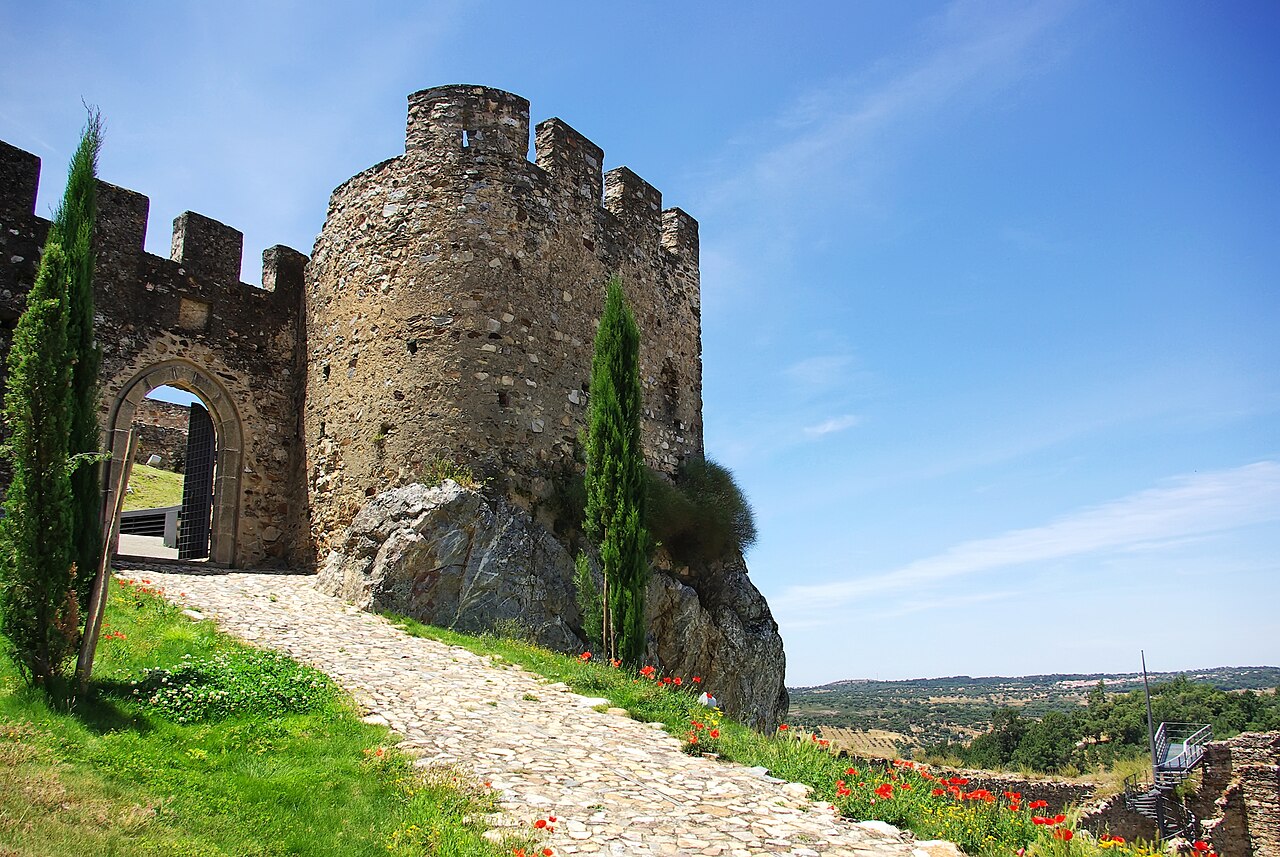
Castle of Arronches
The Castle of Arronches is a significant medieval fortress located in the municipality of Arronches, Portugal. This hill castle played a crucial role in the turbulent history of the Iberian Peninsula, particularly during the Reconquista period when Christian and Muslim forces vied for control of the region. Its strategic position atop a hill allowed it to serve as a formidable defensive stronghold overseeing the surrounding landscape.
Originally constructed by medieval Portuguese builders, the castle's history is marked by repeated changes in control between Christian and Muslim armies. It was first seized by forces loyal to King Afonso Henriques in 1166, but the site was contested for decades. The castle was definitively retaken by Christian troops under Paio Peres Correia in 1242, securing it as a permanent Christian possession.
Medieval origins and royal patronage
Following its consolidation under Christian rule, the town of Arronches was granted a formal foral (charter) by King Afonso III in 1255, reaffirmed in 1272. This legal status helped establish municipal governance and encouraged settlement and development around the castle. Later, King Dinis placed the castle under direct Crown control in 1310 and ordered significant rebuilding efforts. These renovations enhanced the castle's fortifications, adapting it to the evolving military technologies and threats of the time.
The castle's importance continued into the late medieval period. During the 1383-1385 Crisis, a dynastic struggle involving Portugal and Castile, the renowned military leader Nuno Álvares Pereira recaptured the fortress in 1384, reinforcing its strategic role in defending Portuguese sovereignty.
Political significance and ecclesiastical control
Arronches gained political prominence as the site of the first Cortes (assembly) in 1475, highlighting its role in the governance of the realm. King Manuel I issued a renewed foral in 1512, further regulating the town's administration and legal framework.
In 1549, the castle and its lands were granted to the masters of the Bishopric of Portalegre by King John III, placing the fortress under ecclesiastical administration. This transition reflected broader shifts in the political and religious landscape of Portugal during the Renaissance.
Military role during the portuguese restoration war
The castle's military significance was renewed during the Portuguese Restoration War (1640-1668), a conflict aimed at restoring Portuguese independence from Spanish rule. Arronches formed part of Portugal's foremost defensive line against Spanish incursions. It was captured by John of Austria in 1661, but suffered severe damage in 1663 when an explosion destroyed its powder magazine.
Following the explosion, Spanish forces began dismantling the fortifications, weakening the castle's defenses. Despite this, King Afonso VI reaffirmed Arronches' municipal privileges with another foral in 1678, underscoring its continued importance to the region.
The castle endured further military action during a Castilian assault in 1712 and saw engagement in the 1801 campaign, reflecting its ongoing strategic relevance into the modern era.
Architectural features and defensive structures
The original castle enclosed the entire village within a defensive wall, constructed mainly using a dry stone technique where stones were carefully fitted without mortar. This method contributed to the durability of the walls, which have withstood centuries of conflict and natural disasters.
Surviving elements include fragments of the northeastern section, notably a medieval tower and an adjoining corbel, a projecting stone support integral to the structure. These features exemplify the castle's early military architecture.
The defensive perimeter includes several named bulwarks or bastions added or reinforced over time. The Bulwark of the Elvas Gate is distinguished by prismatic corbels topped with pyramidal caps. Similar architectural details are present on the Bulwark of Santo António and the Bulwark of Espírito Santo. Other notable fortifications include the Bulwark of Clérgios and the Bulwark of Nossa Senhora da Luz, the latter reflecting later adaptations.
Major rebuilding around 1310 under King Dinis is documented in the early 16th-century Livro das Fortalezas (Book of Fortresses) by Duarte de Armas, which recorded the castle's layout and defenses. At that time, governance was under Diogo de Sequeira, the alcaide-pequeno (minor governor) from 1496 to 1514.
During the 17th century, the castle's defenses were modernized to counter artillery threats. This included the addition of masonry bastions and corner guardhouses known as guaritas, enhancing resistance to cannon fire.
Damage, preservation, and current state
The complete circuit of the castle walls no longer exists, largely due to extensive damage from the 1755 Lisbon earthquake, one of the most devastating seismic events in Portuguese history. Subsequent urban development also led to the integration of parts of the walls into residential buildings, further reducing the visible remains.
Despite these losses, several ruins remain visible today, including a single surviving medieval tower and various bastions. Conservation efforts from 1975 to 1987 focused on restoring defensive structures such as bastions and walls, preserving the castle's historical legacy.
The Castle of Arronches stands as a testament to the evolution of military architecture from the medieval period through the early modern era, reflecting the region's complex history of conflict, governance, and cultural change. Its enduring remains offer valuable insight into the defensive strategies and architectural innovations that shaped Portuguese fortifications over centuries.
Frequently asked questions (FAQ)
- What is the historical significance of the Castle of Arronches?
- The Castle of Arronches is a medieval fortress that dates back to the 12th century, playing a crucial role in the Christian Reconquista of the Iberian Peninsula. It stands as a testament to the region's rich history and architectural evolution, showcasing influences from various periods of Portuguese history.
- When was the Castle of Arronches built?
- The construction of the Castle of Arronches began in the 12th century, around the time when Portugal was establishing itself as a kingdom. Over the centuries, it underwent numerous renovations, reflecting changes in military architecture and local needs.
- Can I visit the Castle of Arronches?
- Yes, the Castle of Arronches is open to visitors who wish to explore its historical grounds. It offers a glimpse into the past, and you can enjoy panoramic views of the surrounding landscape from its towers.
- What are the opening hours for the Castle of Arronches?
- The Castle of Arronches is typically open to the public from 9 AM to 6 PM, but it's advisable to check for seasonal changes or specific holidays that might affect these hours. Planning your visit during daylight will enhance your experience as the views are particularly stunning.
- Is it possible to access the Castle of Arronches with mobility issues?
- While the Castle of Arronches has some pathways that are accessible, the terrain can be uneven due to its historical nature. Visitors with mobility issues are encouraged to contact local tourism services for guidance on accessibility options and assistance available.
- What is the best time to visit the Castle of Arronches?
- The best time to visit the Castle of Arronches is during the spring and fall when the weather is mild and comfortable for exploring. Additionally, these seasons often have fewer tourists, allowing for a more enjoyable experience.
- What are the ticket prices for the Castle of Arronches?
- Ticket prices for the Castle of Arronches are generally affordable, with discounts available for students and seniors. It's recommended to check the official website or local tourist information for the most current pricing and any special offers that may be available.
- Are there any nearby attractions to the Castle of Arronches?
- Yes, the Castle of Arronches is located near several other attractions, including the picturesque village of Arronches itself, known for its charming streets and local cuisine. Additionally, the surrounding region features beautiful natural landscapes perfect for hiking and outdoor activities.
Information
Loading map...
Visitor reviews
No reviews yet. Been here? Write the first review and help other travelers!
Write the first reviewVisited this castle? Share your experience
Your review helps other travelers and adds first-hand knowledge to our encyclopedia.