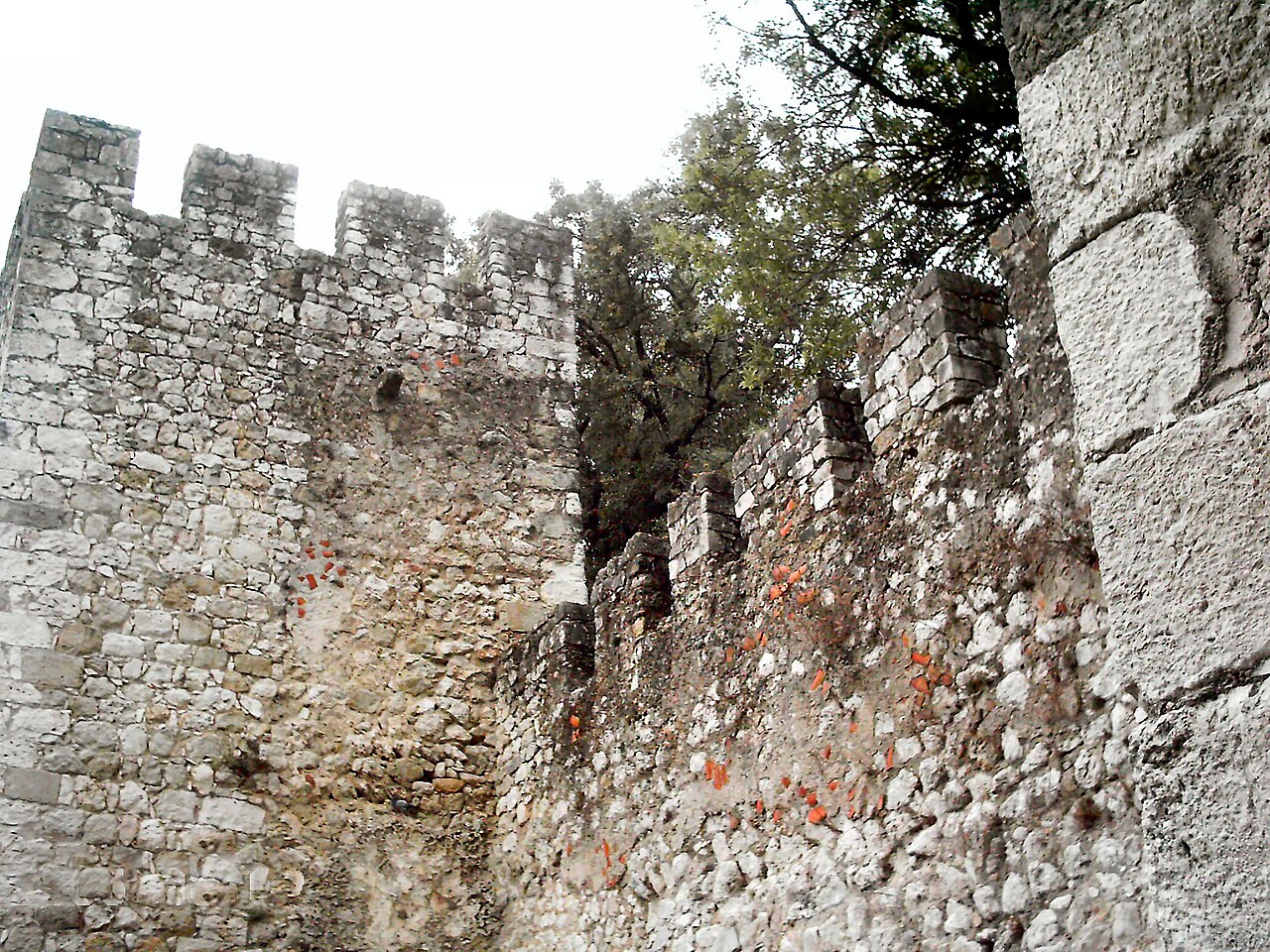
Alcanede Castle
Alcanede Castle, locally known as Castelo de Alcanede, is an evocative medieval fortress perched on a solitary hilltop in the village of Alcanede, within the Lezíria do Tejo region of Portugal. This castle is a significant historical monument, reflecting a layered past that spans from ancient times through the medieval era and into modern restoration efforts. Its strategic location and architectural features tell a compelling story of military defense, cultural shifts, and regional power struggles.
The site of Alcanede Castle was originally occupied by a castro, an Iron Age fortified settlement typical of the Iberian Peninsula, indicating the area's early importance in regional defense and habitation. The Romans later established control over the site around 49 B.C., integrating it into their provincial system and likely enhancing its fortifications. Subsequent occupations by the Alans and then the Moors further shaped the castle's early development, reflecting the dynamic history of conquest and cultural exchange in this part of Portugal.
Medieval conquest and military orders
The castle's medieval history is marked by its role in the Reconquista, the Christian reconquest of the Iberian Peninsula. In 1091, it was captured from the Moors by the forces of Henry, Count of Portugal, though it was briefly retaken by Muslim forces. The fortress was definitively secured by Afonso I of Portugal around 1147, coinciding with his campaigns to consolidate Portuguese territory.
During the late 12th century, the castle was granted to the Order of Calatrava, a Spanish military order, which underscores its strategic importance on the frontier. By 1187, ownership had shifted to the Knights Templar, another influential military order, confirmed by King Dinis in 1300. Shortly after, in 1318, control passed to the Order of Aviz, a Portuguese military order that played a pivotal role in the nation's history.
The Order of Aviz undertook significant fortification work, including the construction of the castle's imposing keep tower in the early 14th century. This tower, crowned with crenellated merlons, served as both a defensive stronghold and a symbol of the order's authority. The castle's curtain walls and battlements were enhanced to withstand the threats of the period, reflecting the military architectural styles and technologies of the High Medieval era.
Role in the 1383-1385 crisis
Alcanede Castle played an active role during the 1383-1385 crisis, a civil war over the Portuguese throne. The castle's defenders supported the Master of Aviz, who eventually became King John I of Portugal. The alcalde of Alcanede, Álvaro Vasques, died fighting in this conflict, highlighting the castle's involvement in national political and military struggles.
Architectural features and layout
The castle is characterized by an oval plan that encloses a central courtyard known as the praça de armas or troop square. This space was essential for assembling defenders and organizing the castle's military functions. Surrounding the courtyard are curtain walls that have been restored to approximate their medieval appearance, reinforced by towers and battlements.
The keep tower, positioned at the eastern end of the castle, is the most prominent architectural feature. Constructed of stone, it features vaulted ceilings inside, demonstrating medieval construction techniques. The battlements are topped with distinctive merlons, providing defensive cover for archers and lookouts. Modern restorations have added a stone staircase to facilitate visitor access while preserving the tower's historical integrity.
The castle's barbican, a fortified outwork protecting the main gate, was also reconstructed during 20th-century restoration efforts. The curtain walls and towers were rebuilt and reinforced between 1941 and 1949, with further repairs to parapets in the 1950s and 1970s to maintain structural stability and preserve the castle's silhouette.
Decline, earthquake damage, and restoration
The castle suffered significant damage during the 1531 Lisbon earthquake, which compromised its structural integrity and ended its military function. Following the earthquake, the fortress was abandoned and gradually fell into ruin over the subsequent centuries. Its strategic importance diminished as military technology and political boundaries evolved.
Rediscovered and recognized for its historical value in the 20th century, Alcanede Castle underwent extensive restoration beginning in 1941 under the direction of the General Directorate for National Buildings and Monuments (DGEMN). These efforts aimed to stabilize the ruins, reconstruct key defensive elements, and make the site accessible for public visitation.
The castle was officially classified as a Property of Public Interest in 1943, reflecting its cultural and heritage significance. Since 1992, regional cultural authorities have managed the site, ensuring ongoing preservation and archaeological research. Today, Alcanede Castle stands as a well-preserved example of a High Medieval hill castle with strong ties to Portugal's military orders and medieval history.
Visiting alcanede castle
Visitors to Alcanede Castle can freely explore its grounds, enjoying the panoramic views from its hilltop location and the evocative atmosphere of a fortress that has witnessed centuries of Iberian history. The castle's accessible layout, restored walls, and keep tower provide a tangible connection to medieval military architecture and the complex history of Portugal's Reconquista and nation-building.
The surrounding village of Alcanede and the broader Lezíria do Tejo region offer additional cultural and historical attractions, making the castle a worthwhile destination for travelers interested in medieval fortifications and Portuguese heritage.
Frequently asked questions (FAQ)
- What is the historical significance of Alcanede Castle?
- Alcanede Castle, dating back to the 12th century, played a crucial role in the defense against Moorish invasions during the Reconquista. Its strategic location allowed it to oversee the surrounding countryside, making it a key fortification in the region.
- When was Alcanede Castle built?
- Alcanede Castle was constructed in the late 12th century, around the time when the area was being fortified to protect against invasions. The castle's architecture reflects the military needs of the period as well as the Romanesque style prevalent in Portugal at the time.
- What are the opening hours for Alcanede Castle?
- Alcanede Castle is generally open to visitors from 10 AM to 6 PM, though hours may vary seasonally. It is advisable to check the official website or contact local tourism for the most accurate information before planning your visit.
- Is it possible to visit Alcanede Castle with children?
- Yes, Alcanede Castle is a family-friendly destination. The site offers ample space for children to explore, and its historical context provides an educational experience for young visitors.
- Can I take photographs inside Alcanede Castle?
- Photography is allowed at Alcanede Castle, making it a great place to capture stunning views and historical architecture. However, be mindful of any signage indicating restricted areas where photography may not be permitted.
- What is the best time to visit Alcanede Castle?
- The best time to visit Alcanede Castle is during the spring and fall months when the weather is mild and pleasant. This allows for a comfortable exploration of the castle grounds and nearby scenic views.
- Are there any nearby attractions to Alcanede Castle?
- Yes, visitors can explore the beautiful town of Alcanede, which offers charming streets and local cuisine. Additionally, the region boasts several hiking trails and natural parks, perfect for those looking to enjoy the outdoors.
- What are the ticket prices for Alcanede Castle?
- Ticket prices for Alcanede Castle are typically low, often around €2 per person. Discounts may be available for students and seniors, making it an affordable option for groups and families.
- How do I get to Alcanede Castle?
- Alcanede Castle is easily accessible by car and is located just a short drive from the town center. Public transportation options may also be available, but checking local schedules and routes in advance is recommended.
Information
Address
Largo Padre António Augusto Gonçalves Diogo, Portugal
Loading map...
Visitor reviews
No reviews yet. Been here? Write the first review and help other travelers!
Write the first reviewVisited this castle? Share your experience
Your review helps other travelers and adds first-hand knowledge to our encyclopedia.