Castelo de Óbidos

Castelo de Óbidos: a Manueline medieval fortress in Portugal
Óbidos, Leiria, Portugal
High Medieval (11th–13th c.)
Restored

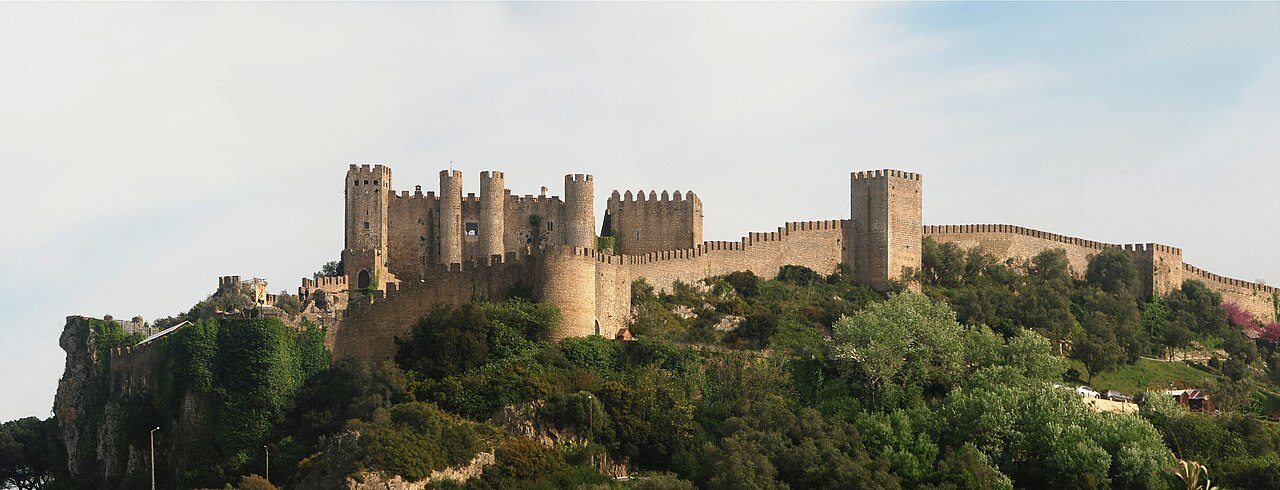
Castelo de Óbidos stands as a striking example of a Manueline style castle crowning the historic town of Óbidos in the Leiria region of Portugal. This castle, with its imposing walls and well-preserved fortifications, offers visitors a glimpse into the rich medieval and Renaissance heritage of the area. Originally constructed as a formidable military fortress, Castelo de Óbidos has evolved over centuries to become a luxurious accommodation destination, while retaining much of its historical character and architectural grandeur.

The medieval origins and strategic importance

The castle's origins trace back to the early medieval period, with significant fortifications developed after the Reconquista. In 1148, the castle was famously retaken from the Moors by Portuguese forces led by the king, who according to tradition, used a clever ruse involving disguises as cherry trees to gain entry. This event marked a turning point in the castle's history, establishing it firmly under Christian rule and initiating centuries of military and administrative use.

Situated on a hilltop, Castelo de Óbidos served as a critical defensive stronghold controlling access to the surrounding region and protecting the approaches to Lisbon. Its thick walls, battlements, and towers were designed to withstand sieges and attacks, reflecting the turbulent times of medieval Portugal.

Architectural features and Manueline style

The castle's architecture prominently features the Manueline style, a uniquely Portuguese late Gothic style named after King Manuel I. This style is characterized by intricate stonework, maritime motifs, and ornate detailing that blend Gothic, Moorish, and Renaissance elements. Visitors can admire the castle's robust ramparts, the ornately tiled gateway that provides access to the inner areas, and the well-maintained towers that offer panoramic views of the town and countryside.

The castle complex also includes residential quarters that have been transformed into luxurious guest rooms, allowing visitors to experience the ambiance of a medieval fortress with modern comforts. The preservation and restoration efforts, especially after the extensive damage caused by the 1755 Lisbon earthquake, have ensured that the castle remains a prominent cultural and architectural landmark.

Renaissance heritage and Igreja de Santa Maria

Within the walls of Óbidos lies the Igreja de Santa Maria, a Renaissance church of notable historical and artistic significance. This church is renowned as the site where Prince Afonso V married his cousin at a very young age, an event reflecting the dynastic alliances of the time.

The church interior is richly decorated with 17th-century azulejos (traditional Portuguese tiles) that adorn the walls, adding vibrant color and intricate patterns to the sacred space. It also houses exquisite Renaissance tombs and paintings by Josefa d’Óbidos, a prominent local artist whose works contribute to the cultural richness of the site.

The town of Óbidos and visitor experience

The castle's ramparts can be explored by visitors who enter through the beautifully tiled gateway, leading into the charming medieval town. The narrow, winding streets of Óbidos are largely free from vehicular traffic, making it an ideal place for leisurely strolls. In spring, the town is especially picturesque, with houses and walkways adorned with a vibrant display of flowers cascading in colorful abundance.

Óbidos is also known for its traditional crafts, local delicacies, and specialty liqueurs. The famous Ginginha, a sweet cherry brandy, is a local favorite and widely available in the shops lining the main street. These cultural offerings complement the historical ambiance, providing visitors with a full sensory experience of Portugal’s heritage.

Preservation and cultural significance

Today, Castelo de Óbidos is recognized as a restored monument of great historical and architectural value. It stands as a testament to Portugal’s medieval past, the artistic achievements of the Renaissance, and the enduring legacy of the Manueline style. The castle and town together form a protected heritage site that attracts scholars, tourists, and history enthusiasts from around the world.

The ongoing maintenance and sensitive restoration work ensure that Castelo de Óbidos remains a vibrant cultural asset, blending its military origins with its role as a center for tourism and education. Its combination of architectural beauty, historical depth, and lively local culture make it a must-visit destination for those interested in Portugal’s rich past.

Frequently asked questions (FAQ)

How do I get to Castelo de Óbidos?
Castelo de Óbidos is easily accessible by car or public transportation. If you are traveling from Lisbon, you can take a bus from the Sete Rios bus terminal, which takes approximately 1.5 hours. Once in Óbidos, the castle is a short walk from the town center.
What is the historical significance of Castelo de Óbidos?
Castelo de Óbidos is a well-preserved medieval castle that dates back to the 12th century. It was strategically important during the Reconquista and has served as a royal residence. Today, it stands as a symbol of Portuguese heritage and a popular tourist destination.
When was Castelo de Óbidos built?
The origins of Castelo de Óbidos date back to the 12th century, with significant renovations and expansions occurring in the following centuries. The castle was fortified during the reign of King Dinis in the 14th century, reflecting the architectural styles of that period. Its enduring structure showcases the rich history of medieval Portugal.
Can I enter Castelo de Óbidos with a wheelchair?
While efforts have been made to improve accessibility at Castelo de Óbidos, the castle's historic nature means that some areas may be challenging for wheelchair users. However, there are accessible paths around the perimeter and some ground-level areas that visitors can enjoy. It is advisable to check in advance for the most current accessibility options.
Why is Castelo de Óbidos a popular tourist attraction?
Castelo de Óbidos attracts visitors for its stunning architecture, rich history, and picturesque views of the surrounding landscape. The castle is also part of the charming medieval town, which offers shops, cafes, and cultural events. Its annual medieval market and chocolate festival further enhance its appeal.
Is it possible to take guided tours of the castle?
Yes, guided tours of Castelo de Óbidos are available and provide insightful information about the castle's history and architecture. Tours are typically offered in multiple languages and can enhance your understanding of the site's significance. It is recommended to check the official website for tour schedules and availability.
What are the opening hours for Castelo de Óbidos?
Castelo de Óbidos is generally open to visitors daily, with opening hours varying by season. Typically, the castle opens around 9 AM and closes at 6 PM in the winter and 8 PM in the summer months. Checking the official website before your visit is advised to confirm current hours.
What are the ticket prices for visiting Castelo de Óbidos?
Ticket prices for Castelo de Óbidos are quite reasonable, with discounts available for children, students, and seniors. As of the latest updates, general admission costs around €2, while children under 12 may enter for free. Special events may have different pricing, so it's best to check ahead.
What is the best time to visit Castelo de Óbidos?
The best time to visit Castelo de Óbidos is during the spring (March to May) and fall (September to November) when the weather is mild and the tourist crowds are smaller. These seasons also coincide with various cultural events and festivals which enhance the experience. Summer can be quite hot and crowded, so plan accordingly.
Are there any nearby attractions to explore after visiting the castle?
Yes, after visiting Castelo de Óbidos, you can explore the charming town itself, which features narrow cobblestone streets, traditional shops, and delicious local cuisine. Nearby attractions include the picturesque beaches of Foz do Arelho and the medieval village of Obidos, which are perfect for a day trip. The region is also known for its wine and culinary experiences.

Information

Hill Castle

Loading map...

Visitor reviews

No reviews yet. Been here? Write the first review and help other travelers!

Write the first review

Visited this castle? Share your experience

Your review helps other travelers and adds first-hand knowledge to our encyclopedia.
Write a review

(5/5)

0/2000 characters

Your review will be visible after admin approval

Nearby castles

1 km
Castle of Obidos — Portugal castle

Castle of Obidos

Óbidos, Portugal

The Castle of Óbidos stands as a remarkable example of a medieval hill castle in the Leiria region of Portugal. Its origins trace back to prehistoric times, with the area first inhabited by the Lusitanians in the 4th century BC. The site later became a Roman settlement known as Eburobrittium in the 1st century AD, referenced by Pliny the Elder, highlighting its early strategic importance. Following the Roman period, the castle's location was controlled by the Visigoths during the 5th and 6th centuries, who maintained its defensive role. In the 8th century, Muslim forces fortified the town, enhancing its defenses and laying the groundwork for the castle's medieval structure. The castle's significance grew during the Christian Reconquista. In 1148, forces under King Afonso I of Portugal captured the settlement through a clever ruse, marking the beginning of Christian control. However, the castle was not fully secured until the reign of King Sancho I in 1195, who strengthened the fortifications and converted the Albarra tower into a jail. Subsequent monarchs continued to enhance the castle's defenses: King Denis expanded the dungeons and added barbicans near the main gate, fortifying the castle against siege warfare. Historical significance and royal connections In 1210, King Afonso II granted the castle and town to Queen Urraca, cementing its status as a royal possession. Throughout the 13th century, the castle remained loyal to the Portuguese crown during succession crises, earning the title "very noble and ever loyal", which is proudly displayed on the municipal coat-of-arms. From the reign of King Denis until 1834, the castle and town were part of the dowry for Portuguese queens, linking the site intimately with the monarchy. One queen commissioned the construction of the Torre de D. Fernando, a keep tower that physically connected the dungeons to the nearby Church of Santiago. During the turbulent 1383–1385 succession crisis, the castle's governor initially sided with John I of Castile, but the fortress was ultimately surrendered to John I of Portugal following the decisive Battle of Aljubarrota. Architectural features and structural layout The Castle of Óbidos occupies a trapezoidal plan on the northwest edge of the walled town, situated approximately 79 meters above sea level. Its walls extend roughly 1,565 meters and are reinforced by a combination of square and cylindrical towers, some rising to 13 meters in height. The battlements feature square merlons atop crenellated walls, enclosing an irregular triangular courtyard that once served as the castle's inner bailey. Defensive elements include three corbels on the northern side, both semi-circular and rectangular, designed for enhanced protection. The eastern and western walls are fortified with rectangular towers named after King Denis and King Fernando. The southern wall features two semi-circular corbels, one equipped with machicolations—openings through which defenders could drop projectiles on attackers. Barbicans protect the northern and western sides, adding an extra layer of defense. The Albarrã tower, a rectangular corbel dividing two courtyards, was transformed into a clocktower in the 19th century, reflecting the castle's evolving use over time. Architectural styles and influences The castle's architecture is a blend of Romanesque, Gothic, Manueline (a uniquely Portuguese late Gothic style), and Baroque elements. These styles are evident in the Castelejo area, now functioning as a historic hotel, and in the intramural district within the castle walls. The Manueline style is particularly notable in the ornate windows and decorative stonework. A significant engineering feat associated with the castle is the 3-kilometer aqueduct built by Queen Catherine of Austria, which channels water from the Usseira mountains to the town's fountains, demonstrating the importance of sustaining the settlement's water supply. The palace of the alcaides and internal structures Within the castle's walls, the Palace of the Alcaides (Paço dos Alcaides) occupies the north face of the old wall. This U-shaped building features a tiled roof and a three-story central wing. The ground floor is characterized by Gothic-arched doors, while the upper floors display rectangular friezes and Manueline windows. The northern façade aligns with the exterior wall and is supported by corbels. The palace's internal layout was designed for both service and reception. The first floor housed service areas, the second floor contained reception rooms and a bar, and the third floor included formal dining and living rooms, a kitchen, and bedrooms. Two towers on the southern side—the Torre de D. Fernando with pentagonal merlons and the Torre de D. Dinis with pyramidal merlons—were adapted into guest rooms. A passageway above the door connecting two courtyards links the palace to the Church of Santiago, illustrating the integration of religious and residential functions. Fortifications and surrounding defenses The western walls of the castle follow the natural cliffs and include several gates such as the Cerca Gate and Talhada Gate. The watchtower of Jogo da Bola and the Facho Tower in the southwest mark the extent of the fortifications in this area. The castle's defensive features reflect centuries of military adaptation, including the addition of machicolations, barbicans, and a combination of tower shapes to optimize defense against siege tactics. The well-preserved structures provide insight into the evolution of medieval military architecture in Portugal. Later history and restoration efforts The 1755 Lisbon earthquake caused damage to the castle, necessitating repairs and modifications in subsequent centuries. During the Peninsular War, Óbidos's fortifications played a role in firing the first artillery shots at the Battle of Roliça in 1808, marking the first defeat of Napoleonic forces in Portugal. In the 19th century, the Albarrã tower was converted into a clocktower in 1842, and an external staircase was added to the D. Fernando Tower in 1869, reflecting changing functional needs. Starting in 1932, restoration efforts were undertaken by the Directorate-General for National Monuments and Buildings to preserve the castle's historical and architectural integrity. Between 1948 and 1950, the castle was transformed into a historic hotel, with interior design contributions from notable architects and artisans. In 1951, the castle and its surrounding urban area were declared a National Monument, ensuring its protection and recognition as a cultural heritage site. Today, the Castle of Óbidos remains one of Portugal's best-preserved medieval castles, attracting visitors with its rich history, architectural diversity, and scenic hilltop location overlooking the town and surrounding landscape.

High Medieval (11th–13th c.)
Details
17.9 km
Fort of Paimogo — Portugal castle

Fort of Paimogo

Lourinhã, Portugal

The Fort of Paimogo, formally known as the Fort of Our Lady of the Angels of Paimogo (Forte de Nossa Senhora dos Anjos de Paimogo), is a significant example of 17th-century military architecture located on the scenic Paimogo beach near the town of Lourinhã in the Lisbon District of Portugal. Built in 1674 during the Renaissance period, this bastioned fortress was designed for coastal defense against maritime threats during a time when Portugal was strengthening its fortifications along its extensive coastline. Historical context and strategic importance The construction of the Fort of Paimogo came at a time when Portugal was consolidating its defenses following the restoration of its independence from Spain in 1640. The fort was part of a broader network of fortifications intended to protect the coastline from potential invasions and pirate attacks, particularly during the turbulent 17th century when European powers vied for control of maritime routes. Located on a commanding position overlooking the Atlantic Ocean, the fort's placement on Paimogo beach allowed for surveillance of naval movements and provided a defensive stronghold to safeguard the nearby settlements and maritime approaches. Its proximity to the town of Lourinhã made it a critical point in the coastal defense system of the Lisbon District. Architectural features and design The Fort of Paimogo is an exemplary model of a bastioned fortress, a style that became prominent in the Renaissance as military architects adapted to the increasing use of artillery. The fort features angular bastions designed to provide overlapping fields of fire, minimizing blind spots and enhancing defensive capabilities against attackers. Constructed primarily from local stone and masonry, the fort's walls are thick and robust, built to withstand cannon fire. The layout is compact but functional, with a central courtyard surrounded by defensive walls and bastions. Unlike many coastal fortifications, the Fort of Paimogo has remained remarkably unchanged since its original construction, offering a rare glimpse into the military engineering practices of the 17th century. The fort includes a main gate, ramparts with parapets, and firing positions that allowed defenders to repel assaults from both sea and land. Inside, the fort would have contained barracks, storage rooms for ammunition and supplies, and possibly a chapel dedicated to Our Lady of the Angels, reflecting the religious dedication indicated in its name. Military use and decline Throughout its active use, which lasted until 1834, the Fort of Paimogo served as a coastal defense post. However, advances in military technology and changes in strategic priorities eventually rendered such small coastal forts obsolete. After its decommissioning, the fort ceased to have a military function and entered a period of neglect. Conservation challenges and current status Today, the Fort of Paimogo faces significant challenges from coastal erosion, which threatens its structural integrity. The fort's location on the beach exposes it to the relentless forces of the Atlantic Ocean, including waves and storms that gradually wear away at its foundations and walls. Despite these threats, the fort remains an important cultural and historical monument. Its status as an almost untouched example of a 17th-century bastioned fortress adds to its value as a heritage site. Efforts to preserve and protect the fort are crucial to maintaining this link to Portugal's military and architectural past. Visiting the fort and its surroundings Visitors to the Fort of Paimogo can appreciate its robust architectural features and the dramatic coastal landscape that surrounds it. The fort's setting provides insight into the strategic considerations of its builders and offers panoramic views of the Atlantic Ocean. The nearby town of Lourinhã and the broader Lisbon District region offer additional historical and cultural attractions, making the fort a worthwhile destination for those interested in military history, architecture, and coastal scenery.

Renaissance (15th–17th c.)
Details
18.1 km
Fort of Consolation Beach — Portugal castle

Fort of Consolation Beach

Peniche, Portugal

The Fort Nossa Senhora da Consolação, commonly known as the Fort of Consolation Beach (Forte da Praia da Consolação), is a significant 17th-century Renaissance bastioned fortress located on the Atlantic coast of Portugal. It stands in the parish of Atouguia da Baleia, within the municipality of Peniche, in the Leiria District. This fortification is an important example of coastal defense architecture developed during a turbulent period in Portuguese history.Constructed in 1645, the fort was built amid the Portuguese Restoration War (1640–1668), a conflict that ended 60 years of Spanish rule and restored Portuguese independence. The initiative for its construction came from D. Jerónimo de Ataíde, the 6th Count of Atouguia and Lord of Peniche, who recognized the strategic necessity of fortifying the coastline against potential Spanish naval attacks and piracy.Historical context and strategic importanceThe Portuguese Restoration War was a crucial period that saw the reestablishment of Portugal’s sovereignty. Coastal defenses like the Fort of Consolation Beach were vital in protecting the nation’s shores from maritime incursions. The fort's location on the Atlantic coast near Peniche was particularly strategic, as this area was vulnerable to enemy fleets approaching Lisbon and other key ports.The fort was part of a broader network of fortifications along the western coast of Portugal designed to secure maritime routes and safeguard local fishing communities and trade. Its presence helped to deter enemy landings and provided a defensive stronghold to control the surrounding waters.Architectural features and designThe Fort of Consolation Beach exemplifies the Renaissance military architecture style, characterized by its bastioned fortress design. This design was influenced by the Italian school of fortification, which emphasized angular bastions and low, thick walls to better resist artillery fire.The fort's layout includes angular bastions that project outward from the main walls, allowing defenders to cover adjacent walls with crossfire, eliminating blind spots. The walls are constructed from local stone and are notably thick to absorb cannonballs and resist bombardment.A moat or ditch likely surrounded the fortress, enhancing its defensive capabilities by impeding direct assaults on the walls. The entrance was fortified with a gatehouse, possibly equipped with a drawbridge or heavy wooden doors to control access.Internal structuresInside the fort, there would have been casemates or vaulted chambers used to house troops and store ammunition. The fort also contained barracks for the garrison and magazines for gunpowder. The design prioritized functionality and defense, with limited ornamental features, consistent with military architecture of the Renaissance period.Role and evolution through historyFollowing its construction, the Fort of Consolation Beach served as a coastal defense point for several centuries. It was garrisoned by soldiers tasked with monitoring the sea and protecting the coastline from enemy fleets and pirates. The fort's artillery would have included cannons positioned on the bastions to cover the approaches by sea.Over time, as military technology evolved and the threat of naval invasion changed, the fort's strategic importance diminished. However, it remains a valuable cultural and historical monument, reflecting the military engineering of its era.Later modifications and preservationThroughout its history, the fort may have undergone repairs and modifications to adapt to new military needs, although its core Renaissance bastioned structure has been preserved. Today, the fort is recognized for its historical significance and is part of the cultural heritage of the Peniche region.Visiting the fort and cultural significanceThe Fort of Consolation Beach is accessible to visitors interested in military history and Renaissance architecture. Its coastal location offers scenic views of the Atlantic Ocean and the surrounding landscape. The fort is an important landmark for understanding Portugal’s maritime defense system during the 17th century.Visitors can explore the remaining walls, bastions, and internal chambers, gaining insight into the defensive strategies employed during the Portuguese Restoration War. The site also serves as a reminder of the region's historical resilience and the efforts made to secure Portugal’s independence.Nearby attractions include the historic town of Peniche, known for its fishing industry and maritime heritage, as well as other coastal fortifications that together illustrate the extensive network of defenses along Portugal's western shore.

Renaissance (15th–17th c.)
Details