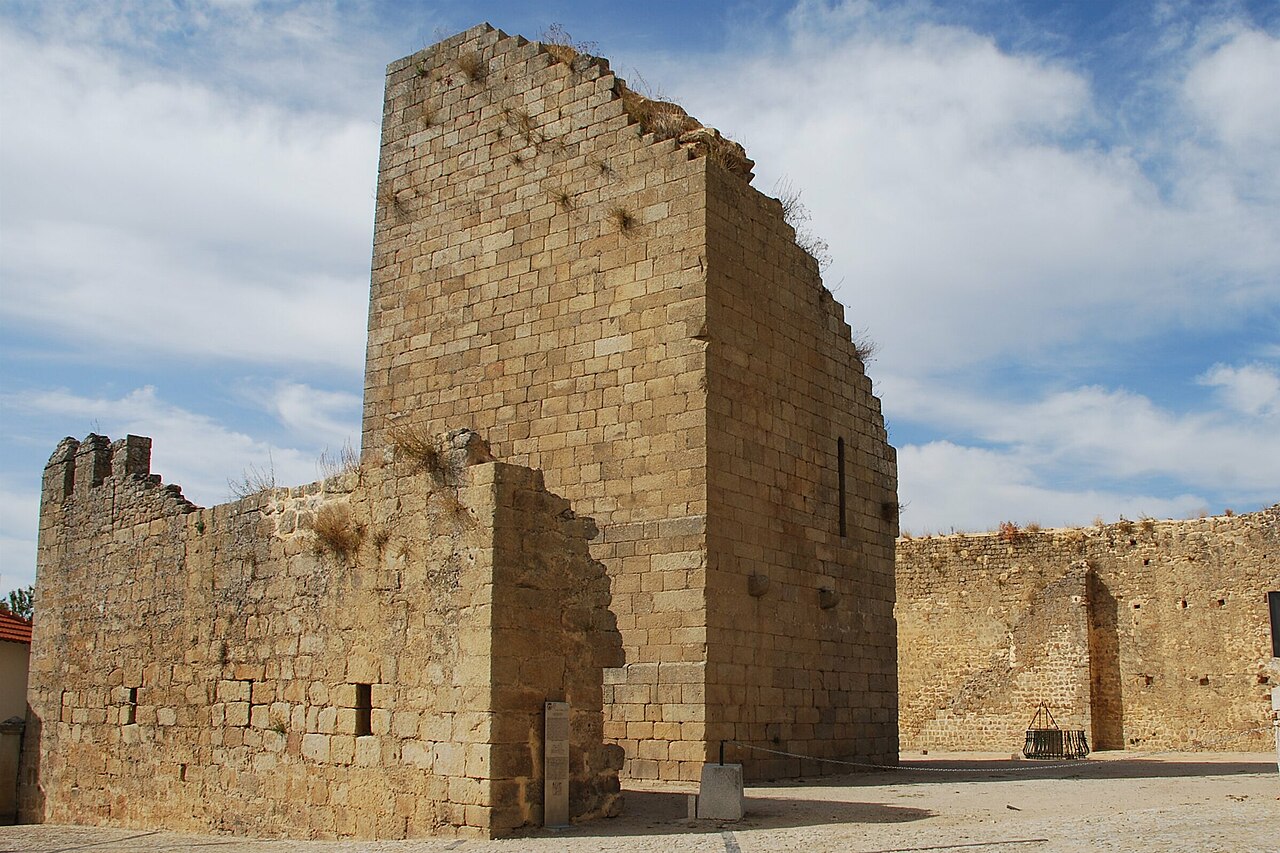
The Castle of Alba de Aliste is a significant medieval fortress situated on a rocky hill overlooking the Aliste River and the Retael stream near Losacino, Spain. Built primarily in the 12th century, it played a crucial role in the turbulent border dynamics between the Christian kingdoms of León, Castilla, and Portugal during the High Medieval period. Today, the castle lies in ruins but remains a testament to the region's rich military and political history.
Early origins and medieval strategic importance
The site of the Castle of Alba de Aliste has origins dating back to at least the 10th century, as documented in a 960 donation by King Sancho I of León referring to "Alba Castello." Its strategic location overseeing routes between Castrotorafe and Portugal made it a vital military stronghold. The fortress likely underwent early revitalization under Alfonso III of Asturias, emphasizing its importance in regional defense.
In the late 12th century, the castle had established governors such as García López and Pedro Fernández de Castro “El Castellano.” During the reign of Fernando II of León, the castle was significantly fortified amid ongoing tensions with Portugal, reflecting the need for strong border defenses. The castle's location made it a focal point in the territorial disputes that characterized the Iberian Peninsula during this era.
Ownership and military role in the 13th and 14th centuries
During the reign of Alfonso IX of León, the castle was central to military campaigns involving León, Portugal, and Castilla. The fortress also symbolized political alliances, notably through Alfonso IX’s marriages to Teresa of Portugal and Berenguela of Castilla. In 1196, Alfonso VIII of Castilla captured the castle, demonstrating its contested nature.
The 1206 Treaty of Cabreros assigned the castle to Infante Fernando of León, resolving some frontier disputes. Subsequently, Alfonso IX pledged the castle to the Knights Templar in 1211, a transfer finalized in 1220. The Templars maintained control for approximately ninety years, during which they likely enhanced the castle's fortifications, including the construction of the prominent 13th-century square torreón with its distinctive pyramid-shaped roof and arrow slits.
Following the suppression of the Templar order in the early 14th century, ownership passed to the Order of Saint John. Throughout the 14th century, the castle changed hands among various nobles, reflecting its ongoing strategic and political significance.
15th century renovations and noble ownership
In the 15th century, the castle underwent renovations that retained some original medieval elements such as walls and towers while adapting to evolving defensive needs. Notable owners included Don Álvaro de Luna in 1434 and later Admiral Alonso Enríquez. The Enríquez family was honored in 1459 when Enrique Enríquez received the title Count of Alba, establishing the castle as the seat of the Counts of Alba de Aliste.
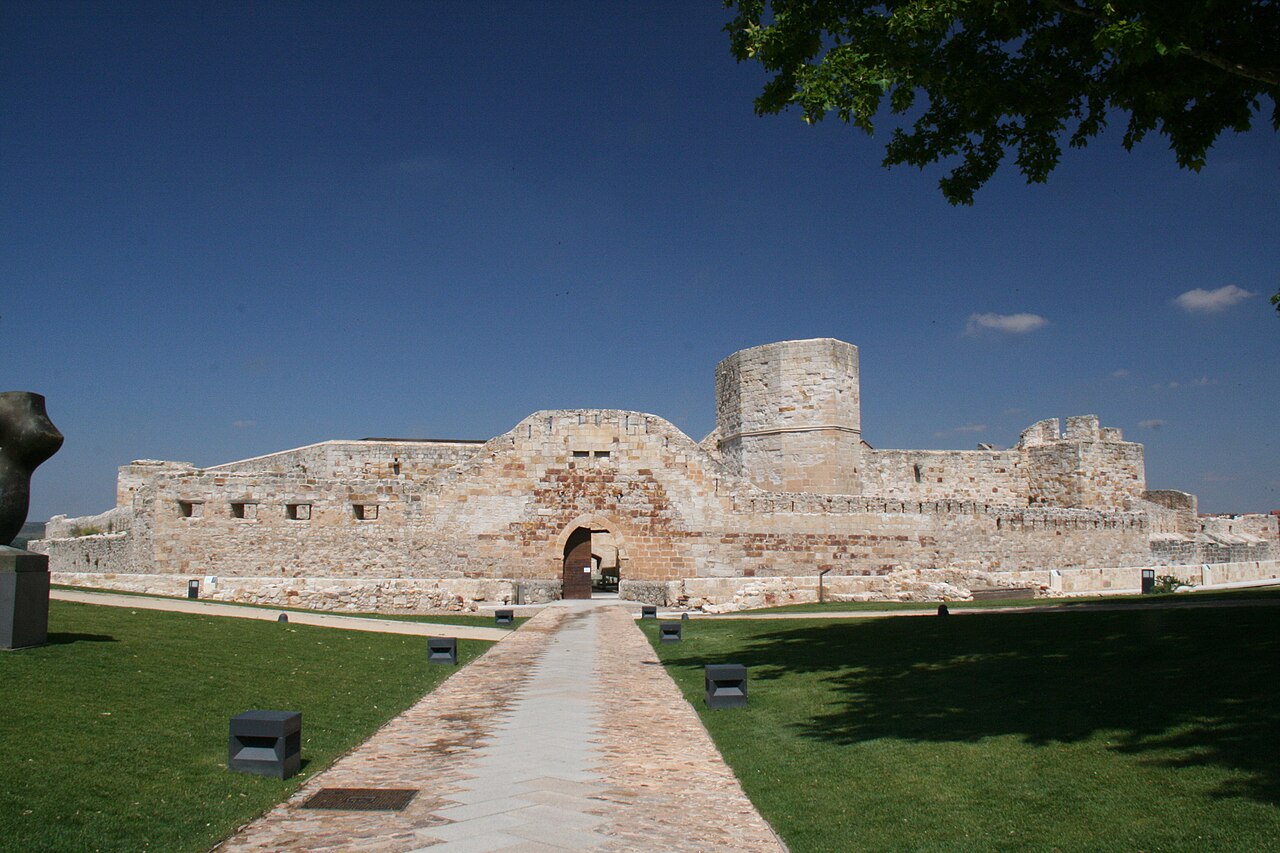
The castle featured an irregular plan approximately 30 meters wide and 70 meters long, with four towers, a barbican, and crenellated walls, typical of medieval military architecture designed for layered defense. These features underscore the castle's role as a fortified noble residence and military stronghold.
Military engagements and decline
The castle's last known military engagement occurred during the Portuguese Restoration War in 1640 when it was captured by Portuguese forces. This event marked the end of its active military role. Subsequently, the castle gradually lost strategic importance and fell into disrepair, leading to its current state as a ruin.
Architectural features and current remains
The castle was constructed primarily from stone, employing typical medieval defensive techniques. The surviving square torreón is the most prominent remnant, showcasing 13th-century military architectural style with its pyramid-shaped roof and narrow arrow slits designed for defense.
Fragments of the surrounding walls remain, hinting at the castle's original perimeter. The site’s elevated position provided commanding views over key routes, enhancing its defensive capabilities. However, modern changes such as the construction of the Ricobayo dam have altered the landscape and reduced the castle's visibility.
No decorative inscriptions or artifacts have been documented within the surviving structures, emphasizing the castle's primarily military function. Today, the ruins stand as a historical monument reflecting centuries of border conflicts and noble power in medieval Spain.
Cultural and historical significance
The Castle of Alba de Aliste is a valuable cultural heritage site that illustrates the complex history of medieval Spain, particularly the interactions and conflicts among the Christian kingdoms and Portugal. Its association with the Knights Templar and later noble families like the Enríquez adds layers of historical intrigue.
Though in ruins, the castle remains a focal point for understanding medieval military architecture and the socio-political landscape of the Iberian Peninsula during the High Medieval period. It attracts historians, archaeologists, and visitors interested in medieval fortifications and Spanish history.
Visiting information
The castle is accessible near the village of Castillo de Alba, though visitors should be prepared for limited facilities and the site's ruined condition. Its remote location and partial preservation offer a unique opportunity to explore an authentic medieval fortress ruin surrounded by natural landscapes.
Frequently asked questions (FAQ)
- How do I get to the Castle of Alba de Aliste?
- The Castle of Alba de Aliste is located near the village of Castillo de Alba in Losacino, Castile and León, Spain. Visitors typically reach the site by car, as public transportation options are limited. It is advisable to check local maps and road conditions before traveling.
- What is the historical significance of the Castle of Alba de Aliste?
- The castle played a key role in medieval border conflicts between the kingdoms of León, Castilla, and Portugal. It was controlled by the Knights Templar and later noble families, reflecting its strategic and political importance in the Iberian Peninsula during the High Medieval period.
- Can I explore the ruins of the castle?
- Yes, visitors can explore the ruins of the Castle of Alba de Aliste. While the site is largely in ruins with limited facilities, it offers a unique glimpse into medieval military architecture and the turbulent history of the region.
- When was the castle built and by whom?
- The castle was originally built in the 12th century, likely on the remains of an earlier Vetton fort. It was controlled by the Knights Templar from the early 13th century and later passed to the Order of Saint John after the Templars' suppression.
- Is the castle accessible for people with limited mobility?
- Due to its ruined condition and hillside location, the Castle of Alba de Aliste may present challenges for visitors with limited mobility. The terrain is uneven, and there are no modern accessibility facilities on site.
Information
Loading map...
Visitor reviews
No reviews yet. Been here? Write the first review and help other travelers!
Write the first reviewVisited this castle? Share your experience
Your review helps other travelers and adds first-hand knowledge to our encyclopedia.