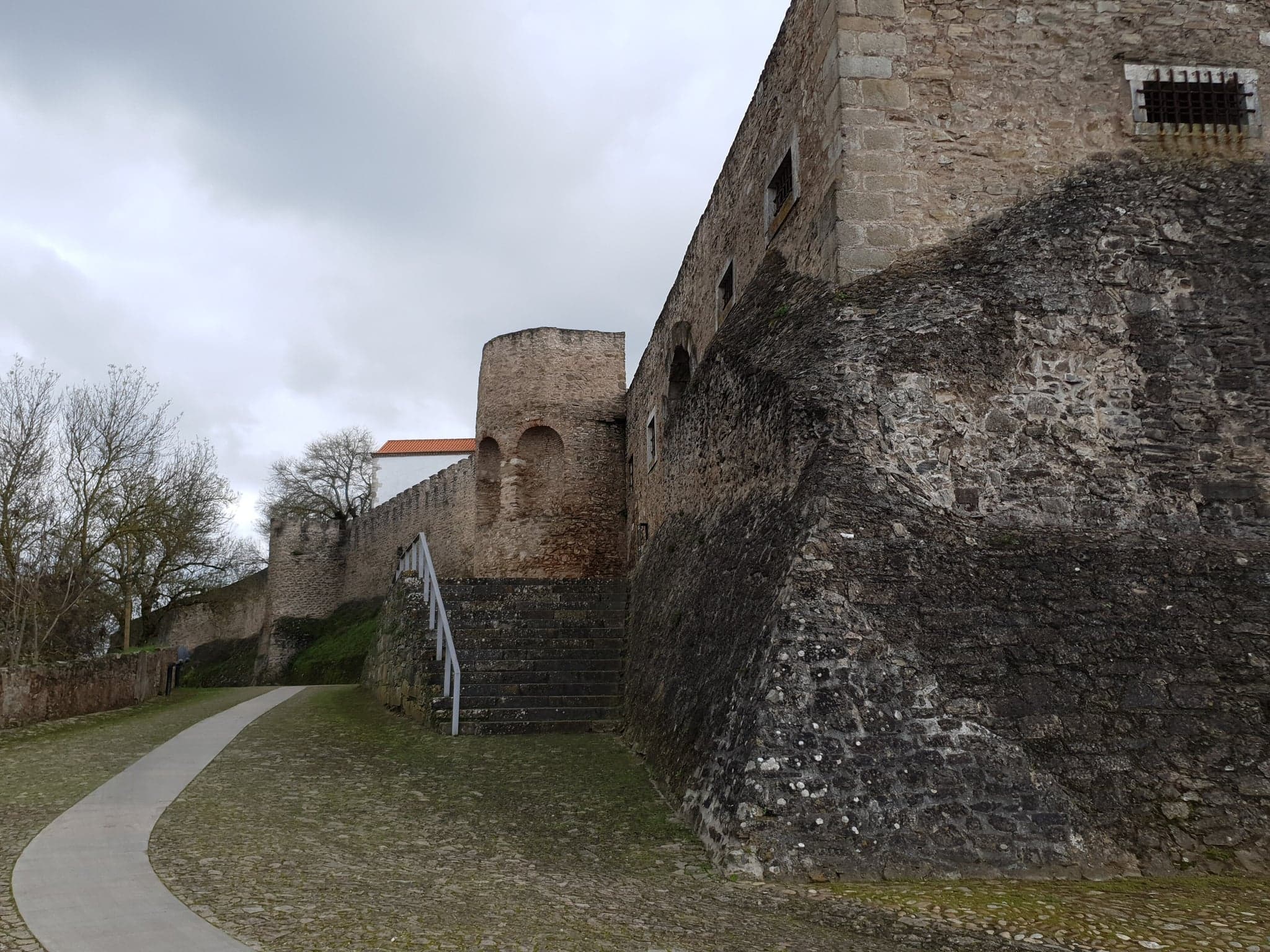
Castle of Abrantes
The Castle of Abrantes is a striking medieval fortress perched atop a 197-meter-high plateau overlooking the Tagus River in central Portugal. Its commanding position on the right bank of the river offers strategic views of the surrounding landscape and the town below, making it a classic example of a hill castle designed to maximize natural defenses. The castle's origins reach back to ancient times, evolving through various historical periods and military adaptations, reflecting the complex history of the region.
Originally, the site was a Lusitanian castro, a fortified settlement predating Roman conquest. Around 130 BC, Roman forces under Consul Decimus Junius Brutus captured and expanded the site, establishing it as a significant military outpost. After the fall of Rome, the fortress saw successive control by the Alans in 411, the Visigoths in 492, and later the Moors in 716, each recognizing the strategic importance of the location.
During the Christian Reconquista, the castle was captured by Afonso Henriques, Portugal's first king, between 1112 and 1185. He reinforced the castle to secure the territory and encourage Christian settlement. In 1172, the castle and its lands were granted to the Order of Santiago, a military-religious order responsible for protecting pilgrims on the Way of Saint James. The castle was also integrated into the Linha do Tejo, or Tagus Line, a series of fortifications established by the Knights Templar to defend the reconquered lands along the Tagus River.
Medieval military significance and royal patronage
In 1179, the castle successfully resisted an Almohad attack led by Abem Jacob, an event that secured a royal charter (foral) and led to rebuilding efforts. However, in 1191, the Almohad Caliph Abu Yusuf Ya’qub al-Mansur launched a campaign south of the Tagus and recaptured the castle, with the exception of Évora. Defensive improvements resumed under King Afonso III starting in 1250, including the construction of a prison block and expansion of the walls. These works were completed between 1300 and 1303 during the reign of King Dinis.
Afonso III also donated Abrantes to Queen Elizabeth of Portugal, marking the beginning of royal patronage by Portuguese queens. The castle played a pivotal role during the Portuguese Interregnum (1383–1385), supporting the Master of Aviz, who became King John I. It further contributed to the defense during the Battle of Aljubarrota in 1385, a decisive conflict securing Portuguese independence.
King Manuel I granted a new foral in 1510, reaffirming the town’s privileges. However, the 1531 Lisbon earthquake caused significant damage, destroying the upper two floors of the prison block. Despite this, the castle remained an important military and administrative center for centuries.
Early modern transformations and vauban fortifications
The castle's military importance declined in the late 16th century, particularly during the 1580 succession crisis when Portugal fell under Spanish rule. In the late 17th century, King Peter II ordered extensive reconstruction of the fortress following the Vauban style, a modern fortification method emphasizing bastions, lower and thicker walls, and angular designs to better withstand artillery attacks. By 1704, medieval walls were lowered and reinforced, and new secondary walls and bastions were constructed, adapting the fortress to contemporary military needs.
During this period, the palace of the Marquess of Abrantes was built within the castle complex, enhancing its role as a key stronghold in the Estremadura region. The 18th century saw further military use with the castle housing a Royal Cavalry regiment. Between 1792 and 1799, the fortress underwent additional expansions under the Marquess of Alorna.
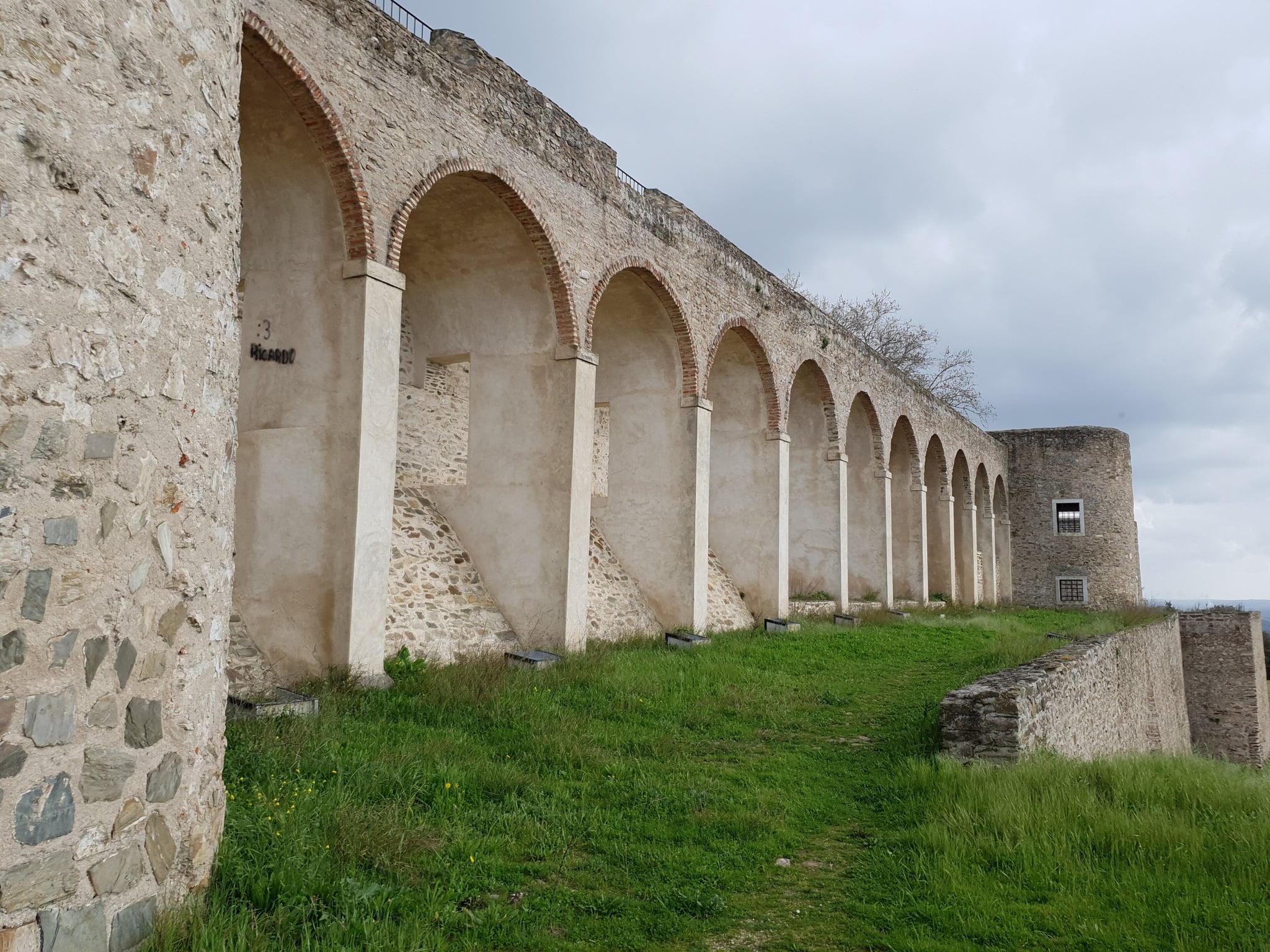
Photo by GualdimG • CC BY-SA 4.0
Napoleonic wars and later military use
During the Peninsular War, the castle was occupied twice by Napoleonic forces: first in 1807 under General Jean-Andoche Junot, and again in 1810 under Marshal André Masséna, who destroyed the Marquess’s palace. Prior to Masséna's occupation, Portuguese engineer Manuel de Sousa Ramos improved the fortifications in 1809 in anticipation of the French invasion.
Following the Napoleonic invasions, the castle ceased to serve as an active military quarter and was converted into a military prison. This change led to structural alterations, including repairs to the prison block ordered in 1860 by the Baron of Batalhã. The castle's military function diminished, and it became more of a historical monument.
Architectural features and current state
The Castle of Abrantes features an irregular polygonal layout, primarily constructed of masonry rock. It takes full advantage of the natural steep cliffs on its northeast side, providing formidable natural defenses. The southern, southeastern, and eastern sections are reinforced with bastions and curtain walls, characteristic of the Vauban-style fortifications added in the 17th and 18th centuries.
Among the medieval remains is a rectangular detention block near the center of the castle grounds. Originally three stories tall, the upper two floors were destroyed in the 1531 earthquake and later altered during 19th-century renovations, which modified the façade and changed its medieval appearance. The castle's first line of walls includes cylindrical towers and vertical openings designed for defense and observation.
The western side of the complex contains the ruins of the Paço dos Condes de Abrantes (Residence of the Counts of Abrantes). Construction began around 1530 under Diogo Fernandes de Almeida, integrating the palace with the castle walls. It was substantially modified in the 18th century by Rodrigo Anes de Sá Almeida e Menezes, the first Marquess of Abrantes.
A distinctive architectural feature is the Baroque loggia, an arcade composed of eleven perfectly aligned arches arranged in two cylindrical tiers. This elegant element stands out for its symmetry and style within the fortress complex.
Within the castle grounds is the Gothic Church of Santa Maria do Castelo, which has been converted into a museum. The museum houses Roman sculptures, funerary artifacts from the 15th and 16th centuries, and decorative azulejos, or painted ceramic tiles, highlighting the cultural heritage preserved at the site. The military square and surrounding bastions reflect the castle's layered history, illustrating its evolution from a medieval stronghold to an early modern bastioned fortress.
Tourism and cultural significance
Today, the Castle of Abrantes is part of the Tourist Region of the Templars, attracting visitors interested in Portugal's medieval and military history. The castle's well-preserved fortifications, combined with its museum and historical architecture, provide a rich cultural experience. Restoration efforts since the mid-20th century have helped conserve the site, making it accessible for public visits and educational purposes.
The castle's location offers panoramic views of the Tagus River and the surrounding Santarém region, enhancing its appeal as a tourist destination. Visitors can explore the castle walls, bastions, and the museum housed in the former church, gaining insight into the strategic importance and architectural evolution of this historic fortress.
Frequently asked questions (FAQ)
- What is the historical significance of the Castle of Abrantes?
- The Castle of Abrantes has a rich history dating back to the 12th century, serving as a strategic military stronghold during the Reconquista. It played a crucial role in the defense against invasions and has witnessed numerous battles throughout the centuries, reflecting the turbulent history of Portugal.
- When was the Castle of Abrantes built?
- Construction of the Castle of Abrantes began in the 12th century, with significant modifications and expansions occurring in subsequent centuries. Its current structure showcases a blend of architectural styles, primarily Gothic and Manueline, which illustrate the evolution of military architecture in Portugal.
- Can I visit the Castle of Abrantes year-round?
- Yes, the Castle of Abrantes is open to visitors throughout the year. However, it's advisable to check the specific opening hours for each season, as they may vary, especially during holidays or special events.
- What are the opening hours for the Castle of Abrantes?
- The Castle of Abrantes typically opens at 9 AM and closes at 6 PM, although these hours may vary depending on the season or local holidays. Visitors are encouraged to verify the current schedule on the official website before planning their visit.
- Is the Castle of Abrantes accessible for visitors with mobility challenges?
- The Castle of Abrantes has made efforts to improve accessibility; however, due to its historical nature and uneven terrain, some areas may be challenging to navigate for those with mobility issues. It's recommended to contact the castle management in advance to inquire about specific accommodations.
- When is the best time to visit the Castle of Abrantes?
- The best time to visit the Castle of Abrantes is during the spring and fall months when the weather is mild and pleasant. This allows for a more enjoyable experience while exploring the castle and its surroundings without the summer crowds.
- What are the ticket prices for the Castle of Abrantes?
- Ticket prices for the Castle of Abrantes are generally affordable, with discounts available for students, seniors, and children. It's a good idea to check the official website for the most current pricing and any special promotions that may be available during your visit.
- Are there any nearby attractions to visit while at the Castle of Abrantes?
- Yes, the Castle of Abrantes is surrounded by several attractions, including the beautiful Tagus River, the historic town center of Abrantes, and the Church of São Vicente. These sites offer additional insights into the region's history and culture, making them great complements to your visit to the castle.
Photo gallery


Information
Website
Visit websiteSources & official resources
Verify the information above using these authoritative references.
Loading map...
Visitor reviews
No reviews yet. Been here? Write the first review and help other travelers!
Write the first reviewVisited this castle? Share your experience
Your review helps other travelers and adds first-hand knowledge to our encyclopedia.


