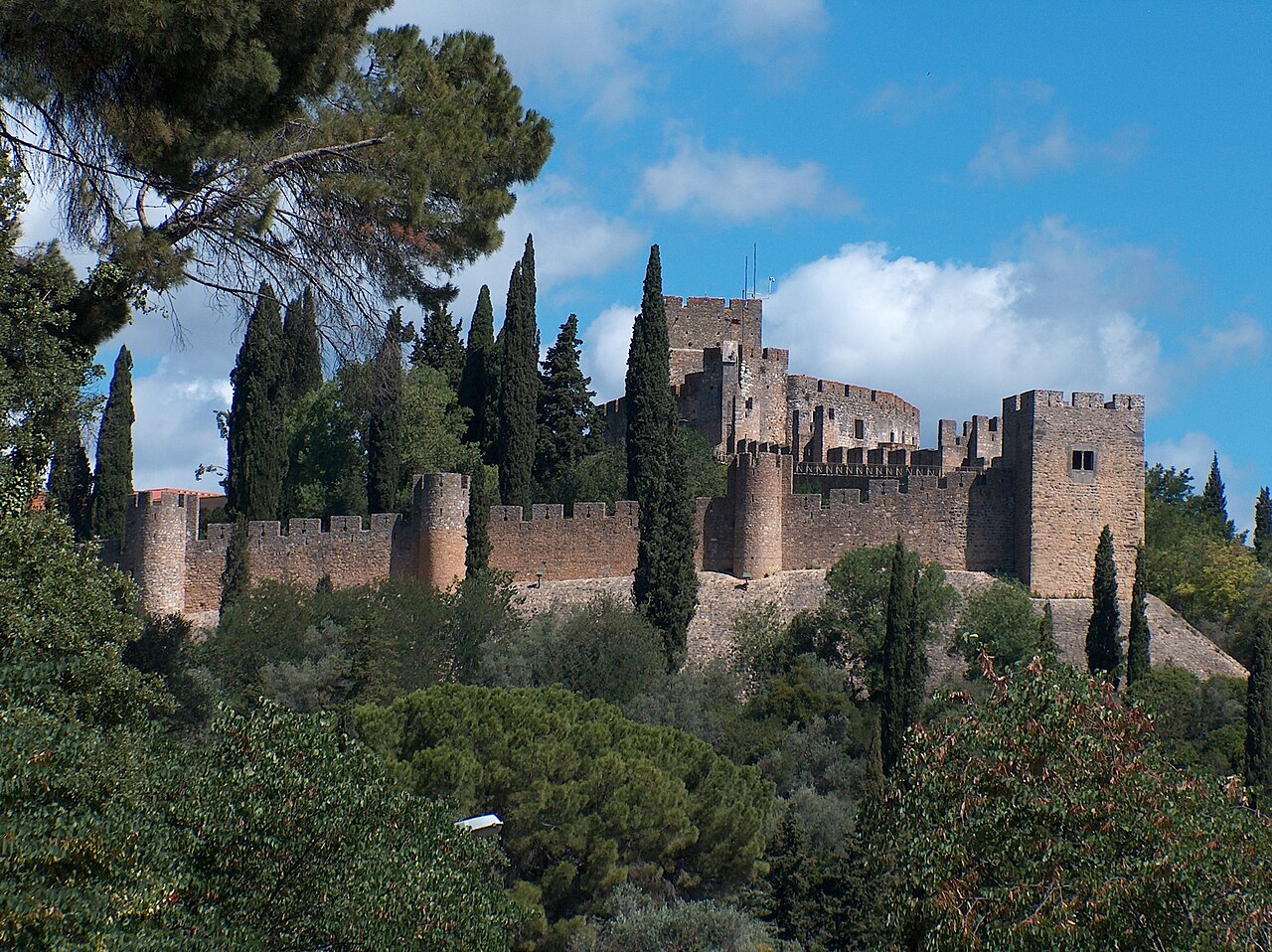
Almourol Castle

Almourol castle: iconic medieval fortress on the tagus river
Centro Region, Santarem, Portugal
Restored

Almourol Castle stands as a striking symbol of Portugal's medieval history, perched on a small island in the middle of the River Tagus. This hill castle is renowned for its picturesque setting and its significant role during the Christian reconquest of the Iberian Peninsula. Its strategic location on an island made it a formidable defensive stronghold, controlling river crossings and protecting the surrounding territory.

The castle's origins trace back to before the 12th century, with historical records indicating it was known as Almorolan when the Christian forces arrived in 1129. It was soon incorporated into the lands governed by the Knights Templar, a powerful military order tasked with defending newly reclaimed Christian territories. Under the leadership of Gualdim Pais, the Templar Master, Almourol underwent significant reconstruction beginning in 1171, as confirmed by an inscription at the castle's entrance.

Architectural features and layout

The castle exemplifies medieval military architecture with its compact, robust design suited for island defense. Its stone curtain walls encompass a roughly circular plan, punctuated by towers strategically placed for optimal defense and surveillance of the river approaches. The walls are crowned with battlements and merlons, allowing defenders to repel attackers while remaining protected.

The main entrance is accessed via a narrow bridge or causeway connecting the island to the riverbank, emphasizing the castle's defensive isolation. Inside, the castle contains a keep or donjon, which served as the last refuge during sieges and housed the lord's residence and garrison quarters. The interior spaces are modest but functional, reflecting the castle's primary military purpose.

Defensive innovations

Almourol's island location provided natural protection, surrounded by water on all sides. The thick walls and towers offered strong resistance to siege engines and infantry assaults. The castle's position along the River Tagus was part of a wider network of fortifications including the castles of Tomar, Zêzere, and Cardiga, forming a defensive line that secured the river frontier during the turbulent Middle Ages.

Historical significance and medieval context

The castle's history is deeply intertwined with the Reconquista, the centuries-long Christian effort to reclaim Iberian lands from Muslim rule. Almourol was a critical military post after its capture by Christian forces in 1129, marking the consolidation of Portuguese territory under Christian control.

The Knights Templar played a pivotal role in the castle's development and defense. As a military and religious order, they were entrusted with protecting frontier castles and establishing Christian dominance. Almourol served not only as a fortress but also as a symbol of Templar influence in Portugal.

Following the dissolution of the Knights Templar in the early 14th century, Almourol's strategic importance declined. The castle gradually fell into disuse and was abandoned, reflecting the changing political and military landscape of Portugal as borders stabilized.

Romantic restoration and modern preservation

Almourol Castle experienced a revival in the 19th century during the Romantic movement, which celebrated medieval architecture and history. The castle was restored to reflect its medieval appearance, emphasizing its dramatic location and evocative ruins.

Today, Almourol is classified as a restored castle and is a popular tourist attraction in the Santarem region of Portugal's Centro Region. Visitors can explore its battlements, towers, and inner courtyard while enjoying panoramic views of the River Tagus and surrounding countryside.

Visitor experience and cultural importance

The castle is accessible by boat or via a small footbridge, enhancing the sense of adventure and historical immersion. Its romantic silhouette against the river landscape has inspired artists, writers, and historians alike, contributing to Portugal's rich cultural heritage.

Almourol Castle remains a testament to medieval military engineering, the legacy of the Knights Templar, and the enduring allure of Portugal's historic fortifications.

Frequently asked questions (FAQ)

What is the historical significance of Almourol Castle?
Almourol Castle is a medieval castle that dates back to the Templar period in the 12th century. It played a crucial role in the Christian Reconquista, serving as a strategic stronghold along the Tagus River. Its historical architecture and picturesque location make it a significant symbol of Portugal's medieval heritage.
When was Almourol Castle built?
Almourol Castle was originally built in the early 12th century, around the year 1160. It was constructed by the Knights Templar during the period of the Christian Reconquista to defend against Moorish incursions. Over the centuries, it has undergone several restorations, preserving its historical charm.
Can I visit Almourol Castle?
Yes, Almourol Castle is open to visitors who wish to explore its rich history and stunning views. Access to the castle is via a short boat ride across the Tagus River, which adds to the unique experience. Be sure to check the opening hours before your visit.
What are the opening hours for Almourol Castle?
Almourol Castle is typically open to visitors from 10:00 AM to 5:30 PM, but hours may vary seasonally. It's advisable to verify the current schedule on the official website or local tourism resources before planning your visit. This ensures that you have the most accurate and up-to-date information.
Is it possible to get to Almourol Castle by public transport?
While public transport options are limited, you can reach the nearby town of Tancos by train or bus and then take a taxi or arrange a tour to the castle. Alternatively, many visitors choose to drive to the nearest access point, where boat services operate. Planning ahead is key to ensuring a smooth journey.
What is the best time to visit Almourol Castle?
The best time to visit Almourol Castle is during the spring (April to June) and fall (September to October) when the weather is mild and pleasant. These seasons also attract fewer tourists compared to the summer months, allowing for a more enjoyable experience. Early mornings or late afternoons are ideal for avoiding crowds.
Are there any nearby attractions to visit?
Yes, there are several attractions near Almourol Castle, including the picturesque town of Tancos and the historic city of Abrantes. The surrounding landscape, with its lush hills and river views, offers opportunities for hiking and photography. Exploring these areas can enhance your visit to the castle.
What are the ticket prices for Almourol Castle?
As of now, tickets to visit Almourol Castle are relatively affordable, usually around €2 per person. Children and students often enjoy discounted rates, while family tickets might also be available. It is best to check the official website for the most current pricing and any available promotions.

Information

Hill Castle

Loading map...

Visitor reviews

No reviews yet. Been here? Write the first review and help other travelers!

Write the first review

Visited this castle? Share your experience

Your review helps other travelers and adds first-hand knowledge to our encyclopedia.
Write a review

(5/5)

0/2000 characters

Your review will be visible after admin approval

Nearby castles

13.6 km
Torres Novas Castle — Portugal castle

Torres Novas Castle

Torres Novas, Portugal

Torres Novas Castle, locally known as Castelo de Torres Novas, stands prominently on a hill overlooking the town of Torres Novas in the Médio Tejo region of Portugal. This high medieval fortress has a rich history marked by strategic military importance, architectural evolution, and cultural significance that spans centuries. Its position commanding the surrounding landscape and the nearby Almonda River made it a key defensive stronghold in the region. The castle's origins trace back to the 12th century, during a period of intense conflict between Christian and Muslim forces in the Iberian Peninsula. Initially, the site was a Muslim settlement known as "Turris" in Christian chronicles, reflecting its strategic importance. The settlement changed hands multiple times before definitively falling under Christian control in 1148, following the conquests of King Afonso Henriques during the Reconquista, particularly after the fall of Santarém and Lisbon. Early history and military significance The name "Torres Novas," meaning "New Towers," was first recorded in 1179 to distinguish it from another settlement called Torres Vedras ("Old Towers") near Lisbon. The castle and town were repeatedly contested during the late 12th century. In 1184, the fortifications were destroyed during a siege by the Almohad caliph Abu Yaqub Yusuf I. Shortly thereafter, King Sancho I of Portugal initiated the reconstruction or new construction of the castle, aiming to strengthen defenses in this volatile border region. Despite these efforts, the castle was again besieged in 1190 by Almohad forces, who captured it after a ten-day siege and left a garrison. However, King Sancho I reclaimed the castle later that year, granting the town its first charter and continuing to rebuild its fortifications to secure Portuguese control and encourage settlement. Architectural development and fortification enhancements The castle features a roughly circular plan with numerous rectangular towers integrated into its defensive walls. Notably, it appears to have lacked a traditional keep or donjon, which is somewhat unusual for castles of this period. Inside the castle, a partly subterranean stairway leads to a postern gate, providing a discreet secondary exit or entry point. During the late 14th century, following conflicts with the Kingdom of Castile, King Ferdinand I ordered extensive reconstruction and strengthening of Torres Novas Castle between 1374 and 1376. This work was part of the broader Tagus Line, a defensive network of castles along the Tagus River, including Almourol, Abrantes, Belver, and Tomar. Inscriptions found on the castle walls commemorate this phase of expansion and fortification. The Tagus line and strategic importance The Tagus Line was a critical defensive measure to protect Portuguese territory from Castilian incursions. Torres Novas Castle's inclusion in this line underscores its military significance during the late medieval period. In 1384, during the Portuguese interregnum crisis, Castilian forces occupied the castle after an unsuccessful siege of Lisbon but were expelled the following year by the forces of John I of Portugal, solidifying Portuguese sovereignty. Later history and decline After the 14th century, the castle's military importance gradually diminished. The devastating 1755 Lisbon earthquake severely damaged the structure, causing the collapse of four towers and significant portions of the walls. Subsequently, the castle was abandoned as a fortification. In the 19th century, the castle grounds served various civic functions, including use as a municipal graveyard from 1835 until 1938 and housing the district jail until 1961. These adaptations reflect the site's changing role within the community as its defensive purpose waned. Archaeological remains and restoration efforts Today, Torres Novas Castle is a well-preserved hill castle exhibiting typical medieval stone construction with surviving walls and towers that reveal its historical defensive layout. The castle's roughly rectangular enclosure originally featured nine towers surrounding the inner courtyard, known as the praça de armas. Although the original gates have been lost, sections of the eastern wall survive, providing insight into the town's former fortifications. The Alcaidaria, or governor's residence, remains a notable restored building within the castle grounds, having undergone conservation in the 1970s. Modern restoration efforts have focused on stabilizing the stone masonry, cleaning surfaces, and removing vegetation to preserve the castle's structural integrity. Recent projects aim to enhance visitor access and experience, including plans approved in 2022 to construct an elevator designed to blend with the historic site, improving movement around the steep terrain. This elevator will feature modern materials mimicking natural stone, illuminated entrance chambers, and LED lighting integrated into metal walkways, demonstrating a sensitive balance between preservation and accessibility. Cultural heritage and visitor experience Torres Novas Castle today serves as a municipal park and cultural landmark open to the public during specified visiting hours. Visitors can explore the castle's walls, towers, and courtyard while enjoying panoramic views of the town and surrounding landscape. The castle's layered history, from its early medieval origins through its role in regional conflicts and eventual decline, offers an engaging narrative of Portugal's medieval past. The castle's integration into the town's urban fabric and its adaptive reuse over centuries highlight its enduring significance. It stands as a testament to the resilience and strategic importance of medieval fortifications in Portugal's history.

High Medieval (11th–13th c.)
Details
16 km
Tomar Castle — Portugal castle

Tomar Castle

Tomar, Portugal

Tomar Castle, also known as Castelo de Tomar, is a remarkable medieval fortress located in the town of Tomar, in the Médio Tejo region of Portugal. Founded in the 12th century by the Knights Templar, the castle played a pivotal role in the military and religious history of Portugal during the High Medieval period. It stands as a testament to the strategic and architectural ingenuity of the Templars and later the Order of Christ, reflecting centuries of Portuguese history and culture. The castle's origins trace back to the early efforts of the Knights Templar in the Iberian Peninsula, where they initially held the castles of Soure and Longrovia. After Soure Castle was destroyed in 1144 during a Muslim offensive, the Templars contributed to the capture of Santarém in 1147. As a reward, they were granted the ruined castle of Ceras in 1159, with the mission to rebuild and repopulate the area. However, the Templar Master in Portugal, Gualdim Pais, opted to construct a new fortress on a more strategically advantageous hill near the Nabão River, close to the ancient Roman settlement of Sellium. Construction began in March 1160, marking the establishment of Tomar Castle. Architectural design and defensive innovations Tomar Castle was designed with an irregular polygonal ground plan, featuring an inner castle with a keep and outer walls that enclosed the early intramural town and a parade ground. This layout was innovative for Portugal at the time, introducing defensive elements such as the battered base talus on the outer walls, which helped deflect projectiles and resist undermining, and the keep within the inner castle, a feature uncommon in Portuguese fortifications before this period. The castle's position on a hill overlooking the Nabão River provided a commanding view of the surrounding plain, enhancing its defensive capabilities. The fortification was part of the Tagus Line, a series of castles including Abrantes, Almourol, Belver, and Torres Novas, established to defend against incursions by the Almohad Caliphate. The blood gate and the 1190 siege One of the castle's most dramatic historical episodes occurred in 1190 when the Almohad caliph Yaqub al-Mansur launched a major offensive during the Reconquista. After retaking the Algarve and advancing northward, the Almohads crossed the Tagus Line, besieging Santarém and capturing Abrantes and Torres Novas. They then laid siege to Tomar Castle for six days. Despite breaching one of the outer gates, fierce resistance from the Templar defenders prevented the castle's capture. The breached gate became known as the Blood Gate in memory of the intense fighting that took place there. The convent of christ and later history During the 13th century, the castle's defensive oratory and the round church in the northwest corner evolved into the Convent of Christ, a significant religious complex that expanded over the centuries. Following the dissolution of the Knights Templar in 1312, the castle and its lands were transferred to the Portuguese Crown. King Denis of Portugal founded the Order of Christ in 1319, which inherited the Templars' properties and made Tomar Castle its headquarters. Subsequent monarchs, including King Manuel I and King John III, commissioned restorations and expansions of the castle and convent, particularly in the 16th century. These works led to the relocation of the intramural population to the town near the river. Over time, the castle's military significance waned, and it gradually fell into disuse, while the convent remained active until the 19th century and served as a military hospital in the 20th century. Architectural features of the convent and castle The Convent of Christ is renowned for its unique blend of architectural styles, including Romanesque, Gothic, Manueline, and Renaissance elements. The original round church, or Charola, is a rare example of Templar ecclesiastical architecture, inspired by the Church of the Holy Sepulchre in Jerusalem. The castle's walls, towers, and gates exhibit typical medieval military architecture, with later modifications reflecting Renaissance influences. Preservation and visitor information Today, Tomar Castle is classified as a National Monument and forms part of the UNESCO World Heritage Site that includes the Convent of Christ. The castle is well preserved, though the inner castle with the keep is not accessible to visitors. The surrounding town of Tomar offers additional historical attractions and amenities for tourists. The castle grounds are open to the public during daytime hours, providing visitors with the opportunity to explore its imposing walls, gates, and courtyards. The Convent of Christ can be visited for a fee, offering access to its richly decorated chapels, cloisters, and museums. Together, the castle and convent offer a comprehensive glimpse into Portugal's medieval military and religious history. Restoration efforts and historical significance Restoration work has been carried out periodically, including significant projects in the 20th century to preserve the walls and structural integrity of the castle. These efforts have ensured that Tomar Castle remains a vital cultural and historical landmark, illustrating the legacy of the Knights Templar and the evolution of Portuguese fortifications.

High Medieval (11th–13th c.)
Details
16.1 km

Castle of Tomar

Tomar, Portugal

The Castle of Tomar stands as a remarkable testament to the military and architectural prowess of the Knights Templar in medieval Portugal. Located in the historic city of Tomar, within the Santarém region, this fortress is an integral part of the Convent of Christ complex, a UNESCO World Heritage site since 1983. The castle's strategic hilltop position overlooking the Nabão River provided a formidable defense point during the turbulent period of the Reconquista. Founded in the early 12th century, the castle was constructed under the direction of Gualdim Pais, the Grand Master of the Templar Order in Portugal. Its design reflects the military innovations brought by the Templars from their experiences in Normandy and Brittany, notably the introduction of the keep tower and round towers in the outer walls, which enhanced defensive capabilities against siege warfare. The castle's architecture reveals a blend of Romanesque, Gothic, Manueline, and Renaissance styles, reflecting its continuous evolution over several centuries. Historical significance and foundation The Castle of Tomar was established on March 1, 1160, replacing the earlier Castle of Cera as the headquarters of the Knights Templar in Portugal. Its location on a hill near the Nabão River was chosen for its defensive advantages and control over the surrounding region. The castle played a crucial role in the Reconquista, serving as a key fortress in the defensive "Linha do Tejo" or Line of the Tagus, a network of fortifications protecting Christian territories from Muslim forces. In 1190, the castle famously endured a six-day siege by the Almohad forces. Despite the southern gate, later known as the Porta do Sangue or "Gate of Blood," being breached, the defenders successfully repelled the attackers, underscoring the castle's strategic importance and robust fortifications. Architectural features and military innovations Keep tower and defensive walls The castle's centerpiece is the Torre de Menagem or keep tower, the oldest example of this architectural feature in Portugal, introduced by the Templars. This rectangular tower served both residential and defensive functions and is divided into three floors. A Latin inscription on the second floor commemorates the commencement of construction in 1160, highlighting its historical significance. Surrounding the keep is a complex system of double defensive walls forming irregular polygonal shapes. The walls incorporate a sloped base known as an alambor, designed to thwart siege towers and mining attempts. The outer walls are reinforced by a series of semi-circular and quadrangular towers, a design inspired by Eastern fortifications such as those at Saphyum and the Hospitaller fortress in Hom. This combination of defensive elements made the castle highly resilient during sieges. Gates and access points The castle features several gates, each with historical and defensive significance. The main entrance, Porta de Santiago, provided controlled access to the fortress. Other notable gates include the Porta do Sol, Porta do Sangue (Gate of Blood), and Porta de São Martinho. These gates were strategically positioned to manage entry and exit while maximizing defensive capabilities. The convent of christ and later developments Adjacent to the castle is the Convent of Christ, founded by the Templars and expanded over several centuries. The convent's architectural styles range from Romanesque and Gothic to the ornate Manueline and Renaissance, reflecting its evolving religious and cultural significance. After the suppression of the Templar Order in 1312 by Pope Clement V, King Dinis of Portugal established the Order of Christ in 1321, which inherited the Templar properties including the castle. By around 1338, the castle became the residence of Prince Henry the Navigator, linking it to Portugal's era of maritime exploration and expansion. In the 16th century, restoration and expansion works were undertaken under Kings Manuel I and João III, including enlarging the convent and relocating the population from the castle walls to the riverside town in 1499. The northwest tower was demolished in 1618 to widen the entrance, adapting the fortress to changing military and urban needs. Preservation and cultural heritage The Castle of Tomar was declared a National Monument in Portugal in 1910, recognizing its historical and architectural importance. Restoration efforts throughout the 20th century, notably in 1973 and 1986, have helped preserve the castle's fabric and maintain its status as one of Portugal's most authentic medieval fortresses. Embedded within the castle walls are decorative plaques with Visigothic or Mozarabic motifs, likely sourced from the nearby Santa Maria dos Olivais site. These elements hint at earlier Roman and Islamic military influences in the region, enriching the castle's historical narrative. Today, the castle and the Convent of Christ attract visitors worldwide, offering insight into medieval military architecture, the legacy of the Templar Order, and Portugal's rich cultural heritage. Its well-preserved structures and complex layout continue to fascinate historians, architects, and tourists alike.

High Medieval (11th–13th c.)
Details