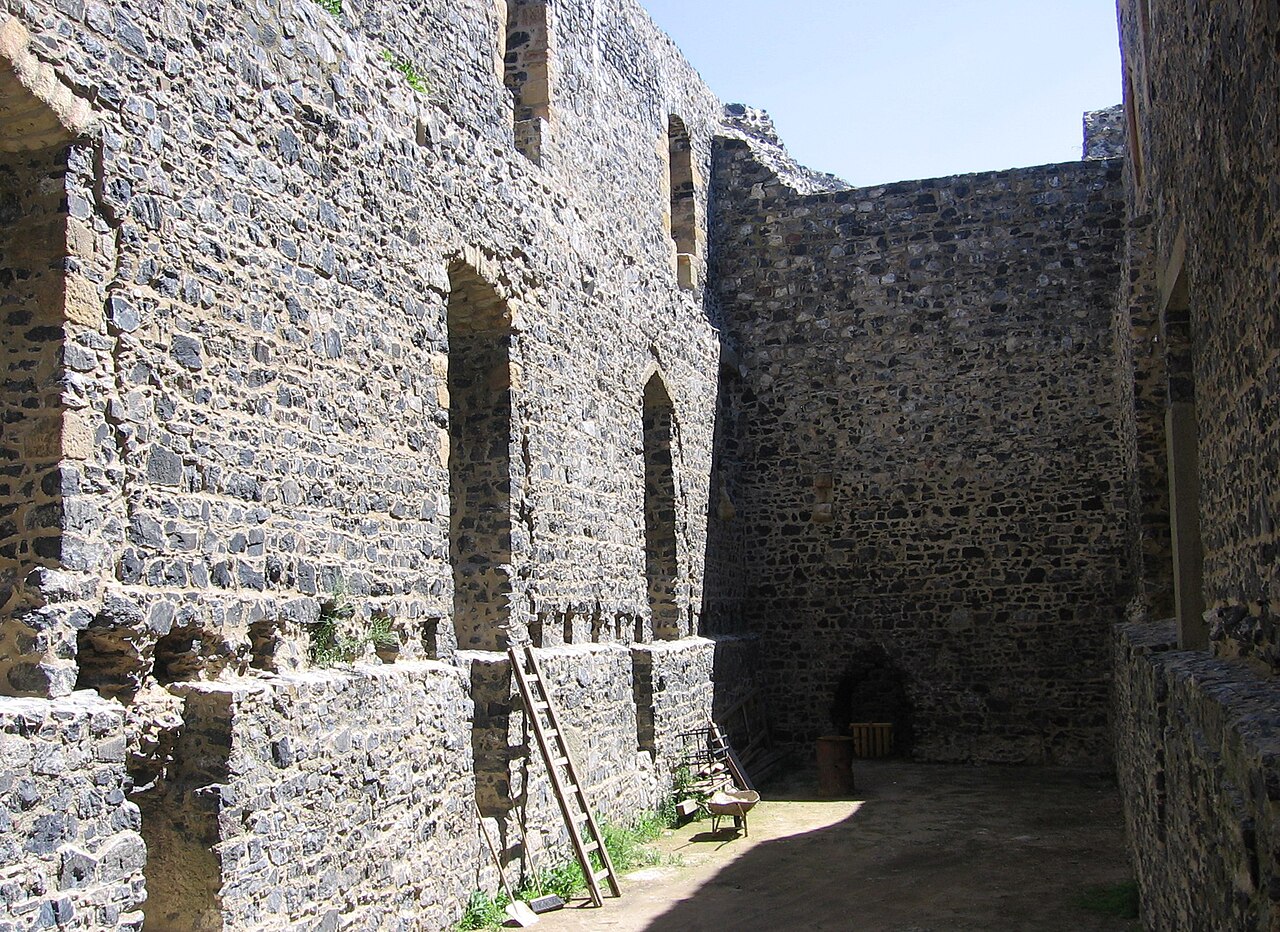
Castle Litice
Castle Litice stands as a remarkable example of a medieval hill castle in the Czech Republic, located near the city of Plzeň. This historic site is distinguished not only by its medieval remains but also by evidence of human occupation dating back to the Eneolithic period. The castle's strategic placement on a promontory overlooking the confluence of the Litický stream and the Radbuza River highlights its military and administrative importance through centuries.
Early settlement and prehistoric origins
The site of Castle Litice reveals a deep historical layering, beginning with prehistoric communities that inhabited the area during the Eneolithic period. Archaeological findings associate the early hilltop settlement with the Schussenried and Chams cultures, known for their distinctive pottery and settlement patterns across Central Europe. This prehistoric occupation evolved into a fortified hillfort during the Late Bronze Age, which persisted until the end of the Hallstatt period.
This early fortification was characterized by earthen ramparts and wooden palisades, typical of hillfort construction in the region. The eventual dismantling or destruction of this Bronze Age fort likely paved the way for the medieval castle's construction, marking a significant transition in the site's defensive architecture.
Medieval origins and architectural development
The drslavic family's wooden stronghold
In the early 13th century, the influential Drslavic family, regional officials connected to the nearby Plzeň Castle, established the first known fortification on the site—a wooden stronghold. Historical records mention Oldřich of Litice in 1212, who may have resided in a manor house before the wooden castle was erected. This wooden fortification served as a precursor to the stone castle that would soon follow.
Transition to stone fortress and bergfried
By the mid-13th century, the wooden structure was replaced by a more durable stone fortress. The centerpiece of this new castle was a massive bergfried, a tall, thick-walled defensive tower typical of early Bohemian noble castles. This bergfried functioned as the last refuge during sieges and symbolized the lord's power and status.
The castle's layout incorporated a bailey, an enclosed courtyard surrounded by defensive walls, protected further by an earthen rampart and a complex system of moats. The double moat system was particularly notable, with the moat separating the inner castle from the outer areas measuring approximately 10 meters deep and 30 meters wide, underscoring the emphasis on strong fortifications.
Historical ownership and political significance
Ownership of Castle Litice shifted through several prominent hands during the medieval period. In 1304, King Wenceslaus II acquired half of the castle, reflecting its strategic importance. However, in 1318, the fortress was seized by forces loyal to John of Luxembourg amid political conflicts involving the castle's owners, Rous and Racek.
By 1367, financial difficulties forced the owners to sell the castle and the adjacent village to the Premonstratensian monks of Chotěšov monastery. The monks managed the estate by leasing it to various tenants but ultimately abandoned the castle itself following the upheavals of the Hussite Wars in the early 15th century.
Later history and decline
The dissolution of the Chotěšov monastery in 1782 under the reforms of Emperor Joseph II transferred the castle site to the Religious Fund. In 1822, Prince Karel Alexandr Thurn-Taxis purchased the former monastic estate, including Castle Litice. By the 1840s, the castle ruins were systematically dismantled, with stones repurposed for the construction of local village houses, marking the castle's transition from a military stronghold to a source of building materials.
Architectural remains and cultural significance
Today, Castle Litice exists primarily as ruins, with only portions of the eastern walls and the deep moat still visible. The remnants of the bergfried and the defensive earthworks testify to the castle's medieval military architecture and strategic design. The site has been recognized as a cultural monument by the Czech Republic, preserving its historical legacy.
The castle's location on a hilltop promontory exemplifies typical medieval defensive planning, utilizing natural terrain to enhance fortifications. The double moat system and the massive bergfried highlight the castle's role as both a military bastion and a noble residence.
Strategic location and defensive features
The castle's position above the Litický stream and Radbuza River provided natural defensive advantages, controlling key waterways and trade routes in the region. The deep moats and earthen ramparts augmented these natural defenses, creating a formidable obstacle for any attacking force.
Legacy and preservation
While much of Castle Litice has been lost to time and human intervention, the surviving ruins offer valuable insights into medieval castle construction in Bohemia. The reuse of castle stones in local buildings symbolizes the changing fortunes of the site and its integration into the surrounding community's fabric.
Today, Castle Litice attracts visitors interested in medieval history, archaeology, and castle architecture, serving as a tangible link to the region's past and a testament to the enduring legacy of medieval fortifications in Central Europe.
Frequently asked questions (FAQ)
- What is the historical significance of Castle Litice?
- Castle Litice is a medieval fortress that dates back to the 13th century, serving as a strategic stronghold in the region. It played a crucial role in the defense against invasions and has witnessed numerous historical events throughout the centuries, making it an important cultural landmark in Czechia.
- When was Castle Litice built?
- Castle Litice was established in the mid-13th century, with its construction likely commencing around 1250. It underwent several modifications and expansions over the years, reflecting the architectural styles and military needs of different periods.
- Can I visit Castle Litice year-round?
- Yes, Castle Litice is open to visitors throughout the year, with guided tours available during the peak tourist season. However, it’s advisable to check the castle's official website for any seasonal closures or specific hours of operation.
- What are the opening hours for Castle Litice?
- Castle Litice typically opens at 9 AM and closes at 5 PM during the tourist season, with shorter hours in the off-season. It’s recommended to confirm the exact hours before your visit, as they may vary on holidays or special events.
- Is it possible to access Castle Litice with limited mobility?
- While Castle Litice is a historical site, it may pose challenges for visitors with limited mobility due to its medieval architecture and uneven terrain. There are some areas that can be accessed with assistance, but it’s best to contact the castle staff in advance for specific accessibility information.
- What is the best time to visit Castle Litice?
- The best time to visit Castle Litice is during the spring and early autumn months when the weather is pleasant, and the surrounding landscape is in full bloom. Additionally, visiting during the summer months allows you to enjoy various cultural events and activities hosted at the castle.
- Are there any nearby attractions to explore around Castle Litice?
- Yes, there are several attractions near Castle Litice, including the picturesque Plzeň city known for its famous breweries, as well as beautiful natural parks and hiking trails in the vicinity. Exploring the surrounding area can enrich your visit and provide a deeper understanding of the region's history and culture.
- How much do tickets cost to enter Castle Litice?
- Ticket prices for Castle Litice are generally affordable, with discounts available for students and seniors. It’s advisable to check the official website for the most current pricing information and any special promotions that may be available during your visit.
Information
Current owner
State
Loading map...
Visitor reviews
No reviews yet. Been here? Write the first review and help other travelers!
Write the first reviewVisited this castle? Share your experience
Your review helps other travelers and adds first-hand knowledge to our encyclopedia.