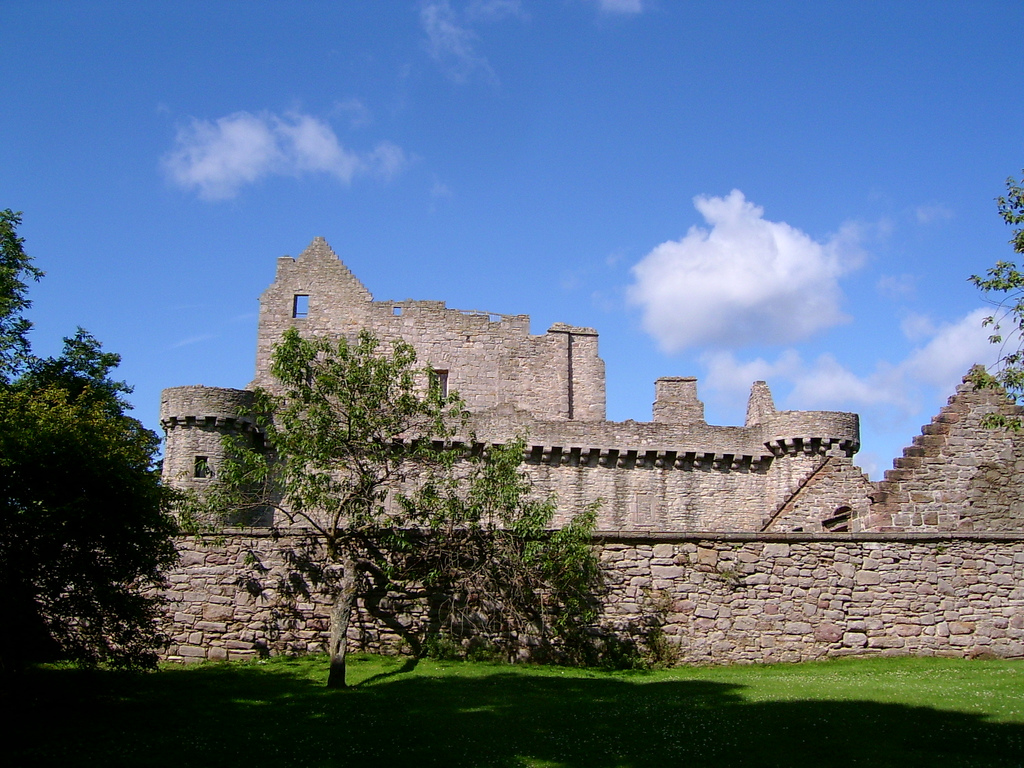
Liberton Tower
Liberton Tower stands prominently in Liberton, a suburb of Edinburgh, Scotland, as a remarkable example of a 15th-century Scottish fortified tower house. This four-storey stone structure exemplifies the typical fortified homes built by the Scottish nobility during the Late Medieval period. Its enduring presence offers a tangible connection to Scotland's turbulent history and architectural heritage.
Historical background and ownership
The earliest documented ownership of Liberton Tower dates back to the mid-15th century, with the Dalmahoy family recorded as proprietors from at least 1453. The Dalmahoys were a prominent Scottish family, and their legacy is visibly preserved through a carved panel displaying their family coat of arms on the tower's south wall. This heraldic emblem serves as a lasting testament to their influence and connection to the site.
Subsequently, the estate transitioned to a branch of the Forrester family of Corstorphine, reflecting the common practice of land and property transfers among Scottish gentry during the period. In the late 16th century, ownership passed to William Little, who notably served twice as Provost of Edinburgh in 1586 and 1591. Little's tenure marked a shift in the tower's residential use, as he constructed the nearby Liberton House and abandoned the tower as a noble residence by 1610.
Following this change, Liberton Tower was repurposed for agricultural use, illustrating a significant transformation from a defensive noble dwelling to a functional farm building. This adaptation reflects broader socio-economic changes in Scotland during the early modern period.
Military significance and 17th-century conflict
The tower's history is further marked by its involvement in the Anglo-Scottish War during the mid-17th century. Around 1650, during Oliver Cromwell's invasion of Edinburgh, evidence suggests that Liberton Tower was caught in the conflict. Archaeological findings such as cannonballs in the surrounding fields, charcoal deposits within the structure, and visible damage to the building indicate its role in the military actions of the time.
One notable consequence of the conflict was the removal of the tower's original parapets, the low protective walls that once lined the roof, likely damaged or dismantled during or after the siege. These physical scars bear witness to the turbulent history that the tower endured during this period of civil and military unrest.
Architectural features and preservation
Liberton Tower is characterized by its compact rectangular footprint, measuring approximately 10.6 meters east to west and 7.9 meters north to south. The tower rises four storeys high, constructed from robust masonry typical of Scottish tower houses of the 15th century. Its walls are coated with traditional yellow harling, a lime-based render that provides weatherproofing and a distinctive, austere appearance.
The tower's fenestration is notably asymmetrical, with small windows strategically placed primarily for defense rather than illumination. This design reflects the dual role of such structures as both homes and fortifications. The south wall's carved panel bearing the Dalmahoy coat of arms remains a unique decorative element amid the otherwise plain exterior, linking the building directly to its historical owners.
Internally, the tower's layout would have included a great hall, private chambers, and storage spaces typical of Scottish tower houses, though much of the interior detail has been lost or altered through centuries of use and adaptation.
Restoration and current condition
Despite centuries of change, Liberton Tower remains well preserved, thanks largely to restoration efforts, most notably those undertaken in 1994. These works have maintained the tower's medieval form and character, preserving its historical fabric and architectural integrity.
The tower is recognized as a Category A listed building since 1966, a designation reserved for structures of national or international importance. This status ensures ongoing protection and highlights the tower's cultural and heritage significance within Scotland.
Liberton tower in context
Liberton Tower stands as a significant example of the hill castle typology in Scotland, situated on a slight elevation that provided strategic advantage and visibility over the surrounding landscape. Its construction and evolution mirror the broader historical trends in Scottish noble residences, from fortified homes in the Late Medieval period to agricultural repurposing in the early modern era.
The tower's story is intertwined with notable historical figures and events, including the Dalmahoy family, the Forresters, and William Little, as well as the military conflicts of the 17th century. Its survival and preservation offer valuable insights into Scottish architectural and social history.
Visiting liberton tower
Today, Liberton Tower is a protected historic monument accessible to visitors interested in Scotland's medieval architecture and history. While it no longer functions as a residence or defensive structure, its imposing stone walls and heraldic carvings provide a compelling glimpse into the past.
Visitors can appreciate the tower's exterior features, including the harled walls and the Dalmahoy coat of arms, and explore the surrounding landscape that once bore witness to significant historical events. The tower's preservation ensures that it remains an important cultural landmark within the Edinburgh region.
Frequently asked questions (FAQ)
- How do I get to Liberton Tower?
- Liberton Tower is located in the United Kingdom, easily accessible by public transport and car. If you’re coming by bus, several routes service the area, and there is parking available nearby for those driving. We recommend checking local transport websites for the most up-to-date information on routes and schedules.
- What is the historical significance of Liberton Tower?
- Liberton Tower dates back to the 15th century and is an important example of medieval architecture in Scotland. It was originally built as a defensive structure and has served various purposes throughout its history, including a residence. Today, it stands as a testament to the rich history of the region and is a popular site for visitors interested in Scotland's past.
- When was Liberton Tower built?
- Liberton Tower was constructed in the late 15th century, specifically around 1480. It was built by the prominent Lauder family and has been a significant landmark in the area ever since. The tower is one of the few remaining examples of its kind, showcasing the architectural styles of its time.
- Can I visit Liberton Tower?
- Yes, Liberton Tower is open to the public for visits. However, it is advisable to check the opening hours and any special events or tours that might be available. Guided tours can provide deeper insights into its history and architecture.
- Why is Liberton Tower an important architectural site?
- Liberton Tower is an important architectural site due to its well-preserved structure and representation of late medieval Scottish tower houses. Its design reflects the defensive needs of the period, combined with residential features. The tower's unique architectural elements make it a valuable resource for understanding historical building practices in Scotland.
- Is it possible to visit Liberton Tower year-round?
- Liberton Tower typically has seasonal opening hours, so it’s best to check ahead for specific visiting times throughout the year. While the tower is open in the warmer months, winter visits might be limited. Always verify the current schedule before planning your trip to ensure a smooth visit.
- What are the ticket prices for visiting Liberton Tower?
- Entry to Liberton Tower is generally free, but donations are appreciated to help with maintenance and preservation efforts. Occasionally, special events or guided tours may have a fee, so it's best to check the official website for the latest pricing information. This ensures you have the most accurate details before your visit.
- What is the best time to visit Liberton Tower?
- The best time to visit Liberton Tower is during the spring and summer months when the weather is pleasant and the surrounding gardens are in full bloom. This period also offers more frequent tours and events. However, autumn can provide a beautiful backdrop of changing leaves, making it a lovely time to explore as well.
- Are there any nearby attractions to visit after Liberton Tower?
- Yes, there are several nearby attractions to explore after visiting Liberton Tower. The historic city of Edinburgh is just a short distance away, offering numerous museums, parks, and the iconic Edinburgh Castle. Additionally, local parks and walking trails provide opportunities for outdoor activities in the beautiful Scottish landscape.
Information
Loading map...
Visitor reviews
No reviews yet. Been here? Write the first review and help other travelers!
Write the first reviewVisited this castle? Share your experience
Your review helps other travelers and adds first-hand knowledge to our encyclopedia.