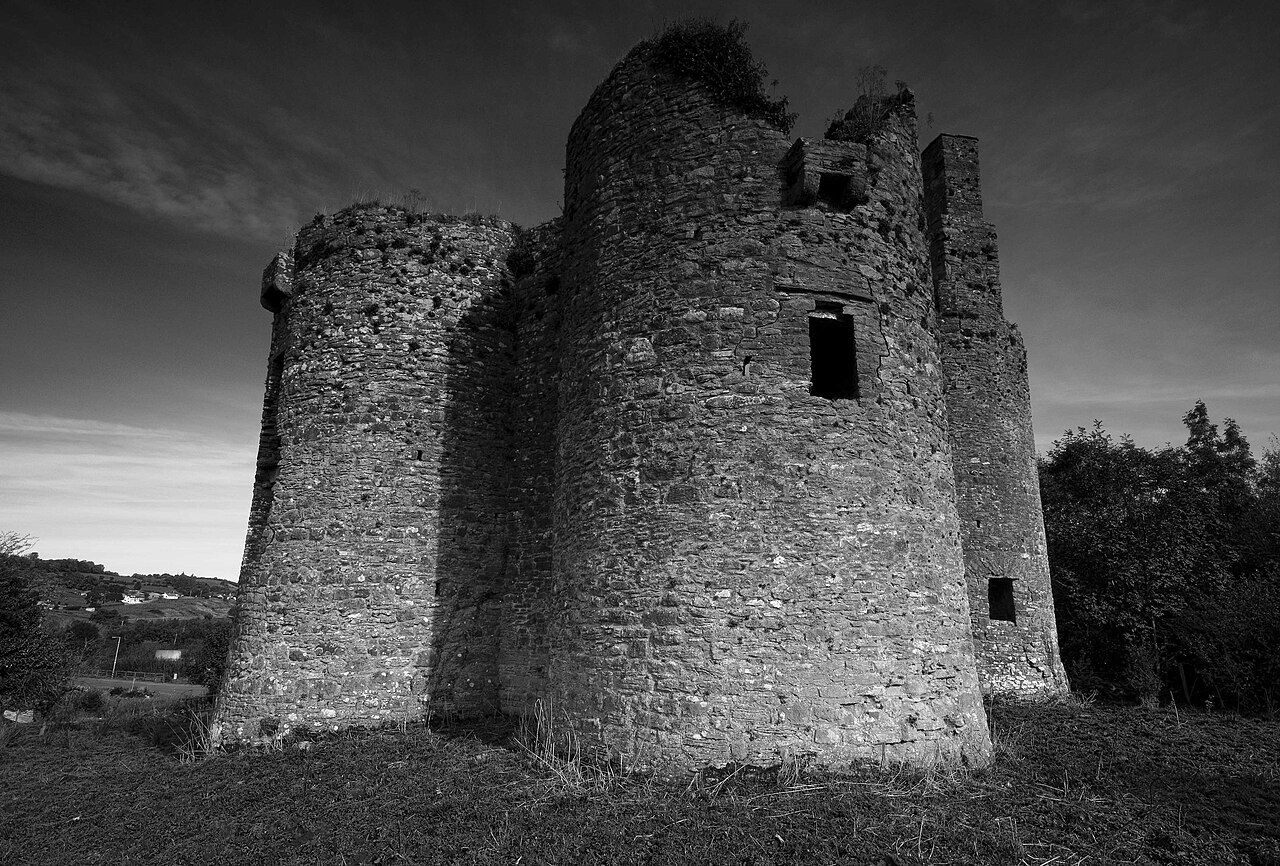
Castle Island on Lough Key

Castle Island on Lough Key: historic forest park and island castle in Roscommon
Early Medieval (5th–10th c.)
Archaeological Site

Castle Island on Lough Key is situated within one of Ireland's most extensive and picturesque forest parks, located in Boyle, County Roscommon, in the province of Connacht. This site is notable for its blend of rich natural beauty and historic significance, encompassing approximately 350 hectares of mixed woodland, a large freshwater lake, and several islands. The park offers visitors a unique combination of cultural heritage and natural landscapes, making it a popular destination for both history enthusiasts and nature lovers.

Historical background and significance

Lough Key and its islands have a long history tied to the Gaelic chieftains and medieval Irish nobility. The island known as Castle Island contains the ruins of a medieval castle, which once served as a stronghold and residence for local rulers. While detailed historical records about the castle's exact construction date and original builders are limited, the site is recognized as an important example of early medieval Irish fortifications. The castle's presence reflects the strategic importance of the lake and its islands in controlling the surrounding territory.

Architectural features of Castle Island

The castle ruins on Castle Island are characteristic of early medieval defensive architecture found in Ireland. The remains include fragments of stone walls and foundations that suggest a compact, fortified structure designed to withstand local conflicts and raids. The castle likely featured battlements, arrow slits, and possibly a keep or central tower, although much of the structure has not survived intact.

Surrounding the island, the natural water barrier of Lough Key provided an additional layer of defense, typical of water castles that utilized their aquatic environment for protection. The island's location within the lake allowed for control over water routes and visibility over approaching threats.

Lough Key forest park and visitor experience

Beyond the historical ruins, Lough Key forest park is renowned for its extensive amenities and natural attractions. The park features well-maintained nature trails that wind through mixed woodland, offering opportunities for hiking, birdwatching, and enjoying the diverse flora and fauna of the region.

Visitors can explore a variety of unique park features, including an observation tower that provides panoramic views of the lake and surrounding landscape, an ice house used historically for food preservation, and a bog garden showcasing native peatland plants. The park also includes an intriguing wishing chair and a network of underground tunnels, adding to the site's cultural interest.

Facilities such as a caravan and camping park make Lough Key a convenient base for extended visits, combining outdoor recreation with historical exploration.

Conservation and current status

Castle Island and the surrounding forest park are managed to balance preservation of the natural environment with protection of the historic ruins. The castle remains are classified as archaeological ruins, with ongoing efforts to maintain their integrity and prevent further deterioration.

The site is accessible to the public, with interpretive signage and guided tours available at times to enhance visitor understanding of the castle's historical context and architectural features.

Accessibility and visitor information

Lough Key forest park and Castle Island are open to visitors year-round, with facilities designed to accommodate families, hikers, and history enthusiasts. The park's location in Boyle, County Roscommon, is easily reachable by road, and ample parking is available.

Visitors are encouraged to respect the delicate archaeological remains and natural habitats while exploring the area. The combination of scenic beauty, historical intrigue, and recreational amenities makes Castle Island on Lough Key a distinctive destination in Ireland's cultural landscape.

Frequently asked questions (FAQ)

How do I get to Castle Island on Lough Key?
Castle Island is accessible by boat from the main visitor center at Lough Key Forest Park. There are regular ferry services that operate during the visitor season, making it easy for you to reach the island and explore its historical treasures.
What is the historical significance of Castle Island?
Castle Island is home to the remains of a 12th-century castle, which played a crucial role in the region's history. It was strategically important during the medieval period and offers insights into the era's architectural styles and defensive structures.
When was Castle Island built?
The castle on Castle Island was constructed in the 12th century, reflecting the Norman influence in Ireland. Over the centuries, it has undergone various phases of construction and restoration, contributing to its historical richness.
Can I visit Castle Island year-round?
Castle Island is typically open to visitors during the spring and summer months, with specific operating hours varying by season. It is best to check the Lough Key Forest Park website for the latest updates on opening times and visitor access.
Why is the architecture of Castle Island noteworthy?
The architecture of Castle Island showcases the defensive features typical of Norman castles, including thick stone walls and a strategic layout. The ruins provide a fascinating glimpse into medieval construction techniques and the lifestyle of its inhabitants.
Is it possible to access Castle Island with limited mobility?
Access to Castle Island is primarily via boat, and while the island itself has some paths, they may not be fully accessible for those with limited mobility. It's advisable to contact the visitor center in advance to inquire about specific accessibility options and assistance.
What is the best time to visit Castle Island?
The best time to visit Castle Island is during the late spring and summer months when the weather is typically milder and the surrounding natural beauty is at its peak. This is also when the ferry services operate more frequently, allowing for a more enjoyable visit.
Are there any nearby attractions to explore?
Yes, the Lough Key Forest Park offers a variety of attractions, including walking trails, a tree canopy walk, and a visitor center with informative displays. Additionally, the charming town of Boyle is nearby, featuring historical sites and local shops.
What are the ticket prices for visiting Castle Island?
Ticket prices for visiting Castle Island are generally included with the ferry service from the Lough Key Forest Park. It’s best to check the official website for the most current prices and any special offers that may be available for families or groups.
What are the opening hours for Castle Island?
Castle Island's opening hours vary throughout the year, with extended hours typically during peak season. For the most accurate and up-to-date information, consult the Lough Key Forest Park's official website before planning your visit.

Information

Water Castle

Loading map...

Visitor reviews

No reviews yet. Been here? Write the first review and help other travelers!

Write the first review

Visited this castle? Share your experience

Your review helps other travelers and adds first-hand knowledge to our encyclopedia.

Write a review

(5/5)

0/2000 characters

Your review will be visible after admin approval

Nearby castles

1.9 km

McDermott’s Castle

, United Kingdom

McDermott’s Castle is a historically significant fortress located on Castle Island in Lough Key, within the municipality of Rockingham Demesne, County Roscommon, Ireland. This castle served as the royal residence of the Gaelic Mac Diarmada clan, rulers of the Magh Luirg region from the 10th century onward. The site’s strategic and cultural importance is reflected in its long history, architectural evolution, and archaeological findings. The early history and medieval significance The castle’s recorded history dates back to at least the 12th century. In 1184, a devastating lightning strike caused a fire that led to the deaths of several nobles, including members of the Mac Diarmada family, an event chronicled in the Annals of Loch Cé. By the early 13th century, McDermott’s Castle had become a key stronghold during the Anglo-Norman expansion into Connacht. In 1235, the fortress was besieged by Richard Mór de Burgh, who employed innovative siege tactics such as raft-mounted catapults and fire ships. Despite valiant resistance, the reigning king, Cormac MacDermott, surrendered the castle, marking a significant moment in the castle’s military history. Despite this temporary loss, the Mac Diarmada clan regained control, maintaining the castle as an important seat through the 15th century. The castle also became entwined with local folklore, notably the legend of the Hag of Lough Key, who is said to have lived at the castle for a year. This tale symbolizes the clan’s enduring connection to the site and the cultural traditions surrounding hospitality and sovereignty. Architectural features and structural evolution McDermott’s Castle occupies a small island of approximately 0.23 hectares (0.57 acres) in the southeastern part of Lough Key. The island’s defenses are marked by stone enclosure walls encircling the perimeter. Excavations have revealed multiple phases of fortification, including an earlier, thicker wall beneath the visible medieval enclosure, indicating a complex sequence of construction efforts over time. At the core of the site stands a late medieval tower house, a multi-story stone building that served as both a fortified residence and a defensive structure. This tower features characteristic arrow slits for archery defense and medieval windows on its western face. The tower remains the principal surviving medieval structure, representing the castle’s defensive and domestic heart. In the early 19th century, the renowned architect John Nash undertook a redevelopment of the site, transforming the medieval remains into a summer house or folly. Nash added wings flanking the tower and a kitchen area on the eastern side, as well as new windows that blended with the medieval fabric. He also modified parts of the northern enclosure wall to create scenic vantage points overlooking the lake. A description from 1832 by Isaac Weld details two large vertically stacked rooms within the building, each measuring approximately 36 by 22 feet (11.0 by 6.7 meters) with thick walls around 2.3 meters wide, though it remains unclear how much of this space was original medieval fabric versus Nash’s additions. Additional medieval buildings and archaeological discoveries Archaeological excavations have uncovered additional medieval buildings on the northern part of Castle Island, situated above earlier defensive structures. These buildings likely served specialized functions independent of the main enclosure wall, highlighting the complexity of the castle’s occupation and use. Excavations also revealed a rich assemblage of Gaelic artifacts, including silver pins indicative of high-status personal adornment and gaming pieces that suggest leisure activities took place within the castle. Large quantities of butchered animal bones—primarily cattle, boar, and sheep—point to the castle’s role as a noble residence with substantial food preparation and consumption, underscoring its status as a center of power and domestic life in medieval Ireland. Later history and current condition By the late 16th century, specifically in 1586, the Mac Diarmada clan lost possession of McDermott’s Castle and Castle Island. Over the subsequent centuries, the castle gradually fell into ruin. The early 19th-century intervention by John Nash was largely a romanticized reinterpretation rather than a strict restoration, intended for leisure and aesthetic enjoyment rather than defense. Unfortunately, Nash’s summer house was destroyed by fire in the mid-20th century, leaving the site primarily as archaeological ruins today. Despite this, the castle’s remains, including the medieval tower house and enclosure walls, continue to provide valuable insights into Gaelic lordship and medieval fortification in Ireland. Archaeological significance and cultural heritage The 2019 archaeological investigations on Castle Island have been instrumental in revealing the castle’s layered history. The multiple construction phases and occupation levels unearthed demonstrate the site’s prolonged importance from the medieval period through later centuries. The discovery of high-status Gaelic objects enriches understanding of the cultural and social life of the Mac Diarmada clan. McDermott’s Castle remains a symbol of Gaelic heritage and medieval architecture in Ireland. Although privately owned and not generally open to the public, its historical and archaeological significance attracts scholarly interest and contributes to the cultural landscape of County Roscommon.

Late Medieval (14th–15th c.)
Details
6.1 km

Ballinafad Castle

Castle View, United Kingdom

Ballinafad Castle is a notable example of a 16th-century Elizabethan blockhouse located in the scenic region of Northern Ireland, near the village of Ballinafad. Constructed during the turbulent Nine Years' War (1593–1603), it was strategically positioned to control a vital mountain pass through the Curlew Hills overlooking Lough Arrow. This fortress reflects the military architecture and political struggles of the late Renaissance period in Ireland. The castle was built in 1590 by Captain John St. Barbe, an English soldier granted the land by King James VI and I. Its primary function was to secure English control over this strategic route during a period of intense conflict between English forces and Irish Gaelic lords. The small garrison of about ten men maintained a presence here, underscoring the castle's role as a tactical outpost rather than a large-scale fortress. Historical context and military significance The construction of Ballinafad Castle came at a time when English authorities were consolidating power in Ireland. The Nine Years' War was a defining conflict pitting Gaelic Irish chieftains, notably Hugh Roe O'Donnell, against English expansion. In 1595, the castle was partially destroyed during an assault led by O'Donnell, highlighting its strategic importance and the fierce resistance it faced. Later, during the Wars of the Three Kingdoms in 1641–1642, Ballinafad Castle was besieged again amid widespread unrest across Ireland, Scotland, and England. The defenders endured a siege that ultimately forced surrender due to lack of water. Following these events, the castle gradually fell into disuse and was abandoned by around 1680, marking the end of its active military role. Architectural features and layout Ballinafad Castle exemplifies the design of Elizabethan blockhouses of the late 16th century, characterized by a compact, defensible plan. The fortress is built around a small courtyard enclosed by four massive corner towers. These towers are distinctive for their rounded exterior walls that curve inward toward the courtyard, creating a unique inward-facing shape uncommon in other contemporary fortifications. The castle originally rose to three stories, with three of the corner towers housing square chambers for various practical uses. The northern tower was uniquely designed with a round interior and contained a wooden spiral staircase providing access to the roof and upper defensive positions. The main entrance was located on the first-floor level of the northwestern wall, a defensive feature that complicated direct assault by attackers. Constructed primarily from local stone, the castle's walls remain largely intact despite centuries of decay. Visitors today can view the interior through openings in the walls, which have been secured with iron grilles to protect the ruins. The castle sits atop a hill, offering commanding views of the surrounding landscape, including Lough Arrow and the marshy Carrick-na-Shannon area, emphasizing its original role in controlling the surrounding territory. Current condition and visitor information Today, Ballinafad Castle stands as a ruined fortress and a designated National Monument in Ireland. The ruins are accessible year-round, with no entrance fees or guided tours available. Visitors can park in a small car park at the foot of the hill and follow a pathway leading to the castle entrance, which is secured by an iron gate. While entry into the castle interior is not permitted for safety reasons, the structure can be appreciated from the exterior and through the iron-grilled breaches in the walls. Interpretive signage near the site provides historical context for visitors, enhancing the educational experience of this evocative military relic. The legacy of Ballinafad Castle Ballinafad Castle remains a poignant symbol of the Elizabethan military presence in Ireland and the broader geopolitical struggles of the late 16th and early 17th centuries. Its architectural form offers valuable insights into Renaissance military design adapted to the Irish landscape and the challenges of frontier warfare. As a preserved ruin, the castle continues to attract historians, architects, and visitors interested in Ireland's turbulent past and the evolution of fortification architecture. Its commanding hilltop location and distinctive blockhouse design make it a notable example of defensive construction during a formative period in Irish history. Visitors to Ballinafad Castle not only encounter the physical remnants of a bygone era but also gain an appreciation for the complex history of English-Irish relations and the enduring legacy of conflict and cultural exchange that shaped the region.

Renaissance (15th–17th c.)
Details
6.1 km
Ballinafad Castle — Ireland castle

Ballinafad Castle

Ballinafad, Ireland

Ballinafad Castle, also known as the Castle of the Curlews, is a significant historical ruin located in the south of County Sligo, Ireland. Situated near the village of Ballinafad on the eastern side of the N4 road, the castle commands a strategic position overlooking Lough Arrow. This location provided both defensive advantages and control over the surrounding landscape during its active use in the late 16th and early 17th centuries. Historical background and construction The castle was constructed as an Elizabethan blockhouse during the turbulent period of the Nine Years' War (1594–1603), a conflict between Gaelic Irish chieftains and English rule. It was built by Captain John St. Barbe on land granted to him by King James VI and I, reflecting the English crown's efforts to establish fortified outposts in Ireland to assert control. Ballinafad Castle was designed as a compact, fortified residence typical of the Elizabethan military architecture in Ireland, characterized by its blockhouse form—a robust, rectangular stone structure with thick walls and limited openings to withstand attacks. The castle was garrisoned by a small force of ten men under the command of St. Barbe, emphasizing its role as a defensive outpost rather than a large-scale fortress. Military significance and sieges During the Nine Years' War, Ballinafad Castle was a target of Gaelic Irish forces seeking to reclaim territory. In 1595, it was partially destroyed by Red Hugh O'Donnell, a prominent Irish chieftain and leader of the resistance against English expansion. This assault demonstrated the castle's strategic importance and the intensity of the conflict in the region. The castle later suffered further damage during the Irish Confederate Wars, particularly in 1642 when it was sacked amid widespread unrest and rebellion. By 1680, Ballinafad Castle had fallen out of use, marking the end of its military function and the beginning of its decline into ruin. Architectural features and current condition The castle's remains today consist mainly of the stone walls of the blockhouse, which are partially preserved but show clear signs of the damage sustained during its sieges. The interior is inaccessible to visitors for safety reasons, but it can be viewed through breaches in the walls that are secured by iron fences. The site is classified as archaeological ruins and is maintained as a historical monument. Visitors can access the castle grounds year-round without an entry fee. A small car park at the base of the hill provides convenient parking, and an interpretive sign offers historical context for those exploring the site. Access to the castle is via a path leading up the hill through a small iron gate, allowing visitors to appreciate the castle's elevated position and commanding views of the surrounding countryside and Lough Arrow. Visitor information and cultural heritage Ballinafad Castle is an important cultural landmark reflecting the Elizabethan military presence in Ireland and the conflicts that shaped the region's history. Although there are no guided tours or on-site staff, the castle remains a popular destination for history enthusiasts and those interested in Ireland's martial past. The castle's ruins provide insight into late 16th-century defensive architecture and the impact of the Nine Years' War on local communities. Its preservation as a ruin allows visitors to connect with the historical landscape and appreciate the strategic considerations of castle construction during this period.

Late Medieval (14th–15th c.)
Details