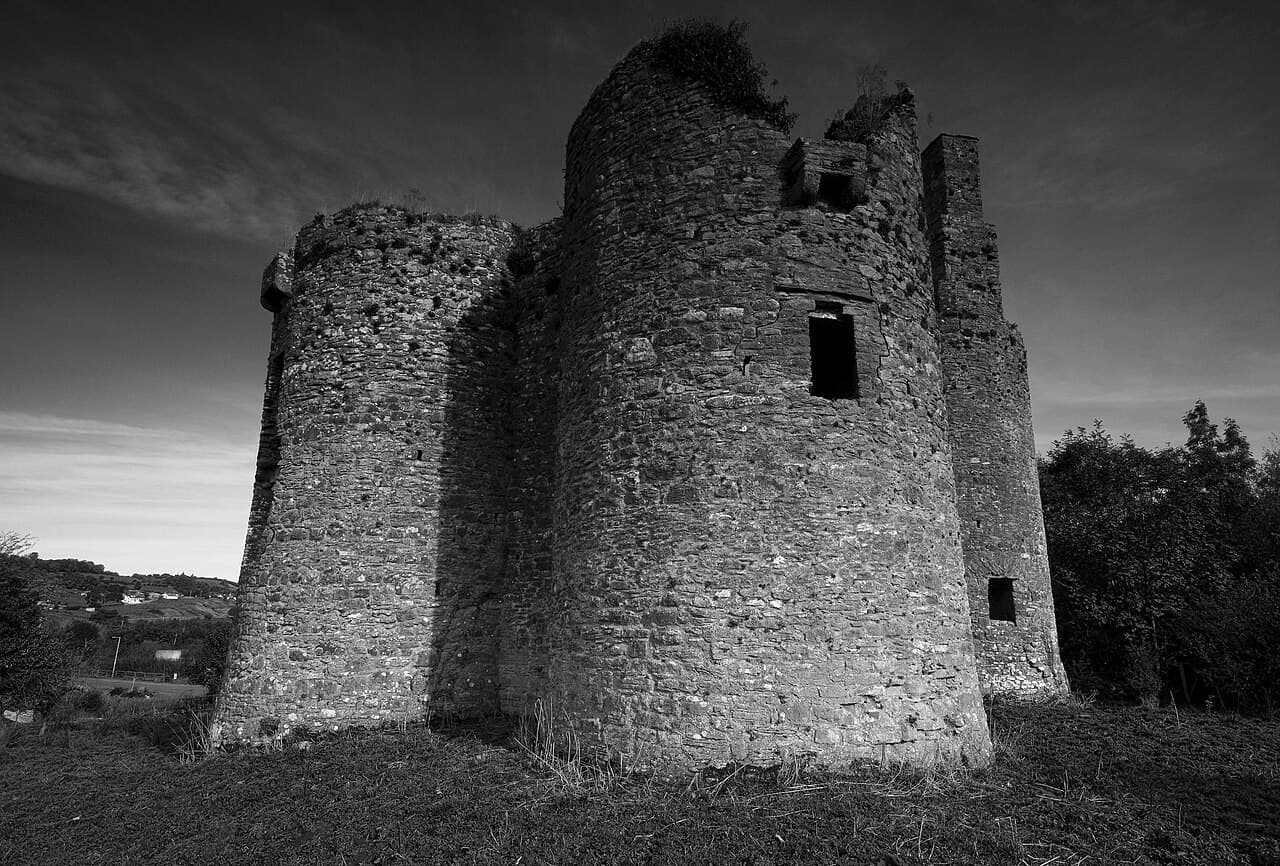
Ballinafad Castle
Ballinafad Castle, also known as the Castle of the Curlews, is a significant historical ruin located in the south of County Sligo, Ireland. Situated near the village of Ballinafad on the eastern side of the N4 road, the castle commands a strategic position overlooking Lough Arrow. This location provided both defensive advantages and control over the surrounding landscape during its active use in the late 16th and early 17th centuries.
Historical background and construction
The castle was constructed as an Elizabethan blockhouse during the turbulent period of the Nine Years' War (1594–1603), a conflict between Gaelic Irish chieftains and English rule. It was built by Captain John St. Barbe on land granted to him by King James VI and I, reflecting the English crown's efforts to establish fortified outposts in Ireland to assert control.
Ballinafad Castle was designed as a compact, fortified residence typical of the Elizabethan military architecture in Ireland, characterized by its blockhouse form—a robust, rectangular stone structure with thick walls and limited openings to withstand attacks. The castle was garrisoned by a small force of ten men under the command of St. Barbe, emphasizing its role as a defensive outpost rather than a large-scale fortress.
Military significance and sieges
During the Nine Years' War, Ballinafad Castle was a target of Gaelic Irish forces seeking to reclaim territory. In 1595, it was partially destroyed by Red Hugh O'Donnell, a prominent Irish chieftain and leader of the resistance against English expansion. This assault demonstrated the castle's strategic importance and the intensity of the conflict in the region.
The castle later suffered further damage during the Irish Confederate Wars, particularly in 1642 when it was sacked amid widespread unrest and rebellion. By 1680, Ballinafad Castle had fallen out of use, marking the end of its military function and the beginning of its decline into ruin.
Architectural features and current condition
The castle's remains today consist mainly of the stone walls of the blockhouse, which are partially preserved but show clear signs of the damage sustained during its sieges. The interior is inaccessible to visitors for safety reasons, but it can be viewed through breaches in the walls that are secured by iron fences.
The site is classified as archaeological ruins and is maintained as a historical monument. Visitors can access the castle grounds year-round without an entry fee. A small car park at the base of the hill provides convenient parking, and an interpretive sign offers historical context for those exploring the site.
Access to the castle is via a path leading up the hill through a small iron gate, allowing visitors to appreciate the castle's elevated position and commanding views of the surrounding countryside and Lough Arrow.
Visitor information and cultural heritage
Ballinafad Castle is an important cultural landmark reflecting the Elizabethan military presence in Ireland and the conflicts that shaped the region's history. Although there are no guided tours or on-site staff, the castle remains a popular destination for history enthusiasts and those interested in Ireland's martial past.
The castle's ruins provide insight into late 16th-century defensive architecture and the impact of the Nine Years' War on local communities. Its preservation as a ruin allows visitors to connect with the historical landscape and appreciate the strategic considerations of castle construction during this period.
Frequently asked questions (FAQ)
- How do I get to Ballinafad Castle?
- Ballinafad Castle is located in Ballinafad, Ireland, and can be accessed by car or public transport. The nearest major town is Boyle, which is approximately 10 km away, providing bus services to the area. Parking is available near the castle for visitors traveling by car.
- What is the historical significance of Ballinafad Castle?
- Ballinafad Castle dates back to the 15th century and is a fine example of medieval Irish architecture. It was originally built by the O'Rourke family and played a significant role in the region's history during the turbulent times of the Gaelic lords. The castle's ruins provide insight into the feudal system and the defense strategies of that era.
- When was Ballinafad Castle built?
- Ballinafad Castle was constructed in the late 1400s, specifically around 1470. It served as a stronghold for the O'Rourke clan during a period of conflict and territorial disputes in Ireland. The castle's architecture reflects the defensive needs of its time.
- Can I visit Ballinafad Castle?
- Yes, Ballinafad Castle is open to visitors who wish to explore its historic ruins. While there are no guided tours available, guests can wander the grounds and appreciate the castle's architecture and surrounding landscape. Make sure to respect the site and follow any local guidelines during your visit.
- Why is Ballinafad Castle a popular attraction?
- Ballinafad Castle attracts visitors due to its rich history and picturesque setting. The castle's dramatic ruins set against the backdrop of the Irish countryside make it a popular spot for photography and exploration. Additionally, its proximity to other historical sites in the region enhances its appeal.
- Is it possible to access Ballinafad Castle year-round?
- Yes, Ballinafad Castle is accessible year-round, allowing visitors to experience its beauty in every season. However, the best time to visit is during the spring and summer months when the weather is milder and the surrounding nature is in full bloom. Always check local conditions and any potential maintenance updates before planning your visit.
- What are the opening hours for Ballinafad Castle?
- Ballinafad Castle does not have specific opening hours since it is an open ruin and can be visited at any time. However, it's advisable to visit during daylight hours for safety reasons. Always be mindful of local weather conditions and any accessibility issues.
- Are there any nearby attractions to visit?
- Yes, there are several attractions near Ballinafad Castle, including the scenic Lough Key Forest Park and the historic town of Boyle. Visitors can explore the beautiful landscapes, enjoy walking trails, and learn more about Irish history at local museums. These nearby sites complement a visit to the castle and provide additional opportunities for exploration.
- What are the ticket prices for visiting Ballinafad Castle?
- There is no entry fee to visit Ballinafad Castle, as it is a public ruin. This makes it an accessible option for visitors looking to explore Ireland's rich history without incurring costs. However, donations are appreciated to help maintain the site.
Photo gallery

Information
Loading map...
Visitor reviews
No reviews yet. Been here? Write the first review and help other travelers!
Write the first reviewVisited this castle? Share your experience
Your review helps other travelers and adds first-hand knowledge to our encyclopedia.



