Castle Donovan
Castle Donovan, also known as Caisleán Uí Dhonnabháin or Castledonovan, is the remains of a significant 16th-century Irish tower house or túrtheach located near Drimoleague in County Cork, Ireland. This medium-sized tower house was the historic seat of the Clann Cathail sept of the O'Donovan family during the Renaissance period. Originally known as Sowagh (Sooagh, Suagh) before the 17th century, the castle’s current name derives from the Manor of the Castle of O'Donovan, linked to a royal regrant from James I of England in 1615.
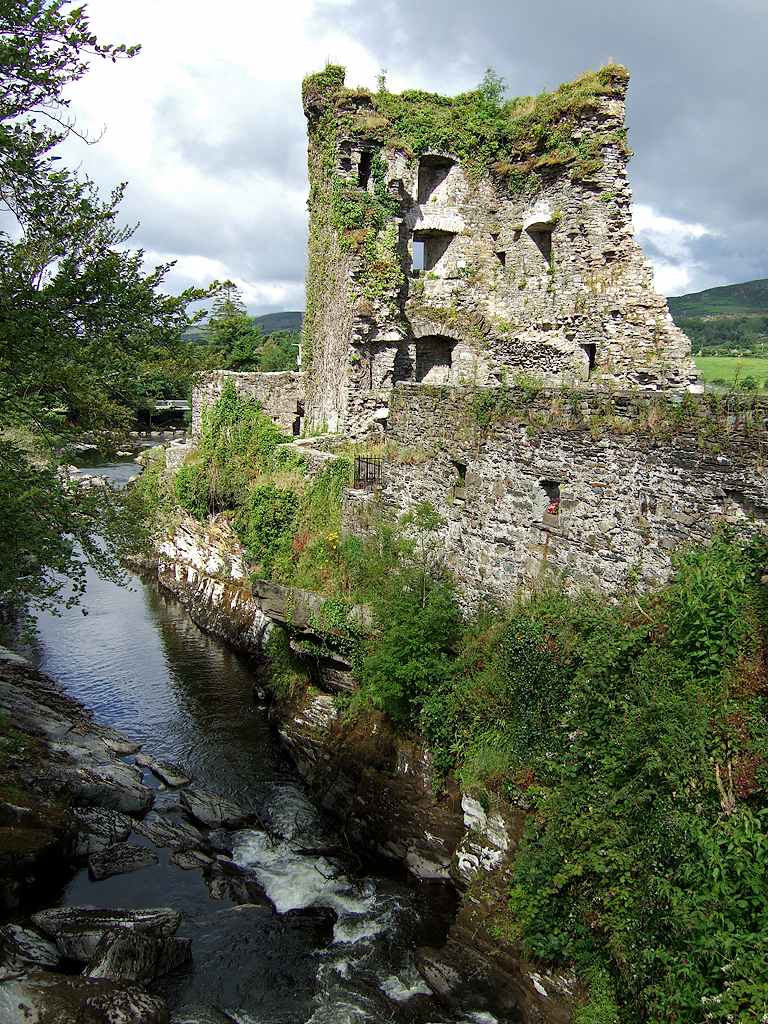
Perched on a large rock outcropping near the bank of the River Ilen, the tower rises approximately 60 feet tall. It was likely constructed or significantly enhanced by Donal of the Hides, Lord of Clancahill, who ruled from about 1560 until his death in 1584. His son, Donal II O'Donovan, undertook repairs or alterations decades later, although the family had by then moved to the Rahine Manor on the seacoast to protect their maritime interests, reflecting the shifting priorities of the clan in the early 17th century.
Architectural features and layout
Castle Donovan exemplifies the traditional Irish tower house design, characterized by a tall, narrow structure built for defense and residence. The tower’s base is formed by the natural rock outcrop, providing a sturdy foundation. The castle originally included a surrounding bawn (defensive wall) and outbuildings, which were still visible in the early 19th century but have since disappeared.
The tower’s masonry shows signs of high-quality stonework typical of the Renaissance period in Ireland, with thick walls designed to withstand sieges. Internally, the structure would have contained multiple floors with living quarters, storage rooms, and defensive features such as narrow windows and battlements. A notable architectural element is the spiral staircase located in the southwest corner, which remains intact despite the ruinous condition of the rest of the building.
Historical context and ownership
The castle served as the seat of the O'Donovan clan, a powerful Gaelic family in southwest Ireland. The clan’s history is intertwined with the turbulent political and military events of the 16th and 17th centuries, including the Elizabethan wars and the Irish Confederate Wars.
Donal of the Hides, credited with building or enhancing the tower, was a significant figure who consolidated O'Donovan power during a period of regional conflict. His son, Donal II, moved the family residence closer to the coast for strategic maritime reasons, marking a shift in the clan’s focus from inland defense to control of coastal trade and fishing rights.
Destruction and decline
The castle’s decline began in the mid-17th century during the Cromwellian conquest of Ireland. Tradition holds that Oliver Cromwell’s soldiers severely damaged the tower in the late 1640s, using gunpowder to blow up parts of the structure. This act was reportedly in retaliation for Donal III O'Donovan’s support of the Stuart cause and his involvement in the 1641 rebellion and associated massacres.
The explosion caused significant structural damage, including large cracks in the masonry and the eventual collapse of the western wall (except for the spiral staircase) and much of the southern wall. Since that time, the castle has remained uninhabited and gradually fell into ruin.
19th-century observations and preservation efforts
In 1828, the castle and its surrounding valley were documented by a visitor known as J. F. W., whose account was published in the Dublin Penny Journal in 1834. He described the area as wild and desolate, with the tower standing prominently in the center of the marshy valley beneath rocky hills. His drawing showed several outbuildings that no longer exist today.
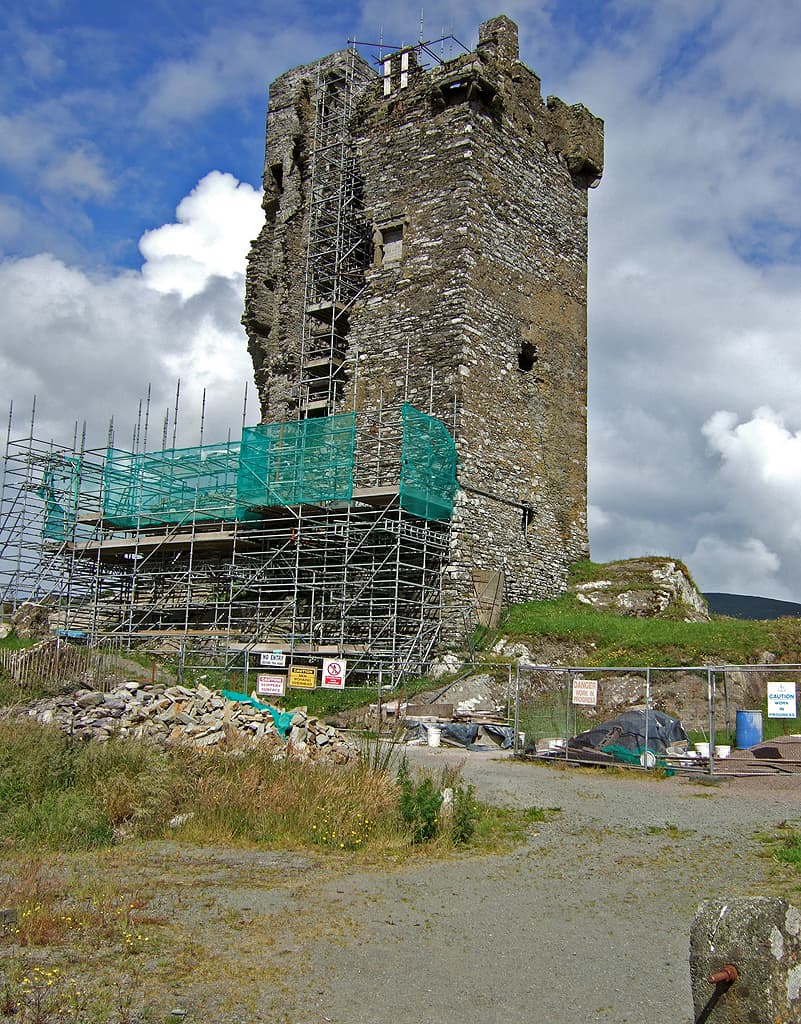
By the 21st century, the tower remained a ruin but retained over two-thirds of its original height. Conservation work was undertaken by the Office of Public Works between 2001 and 2014 to stabilize the structure and preserve it as a National Monument. Despite the damage, the tower’s spiral staircase and much of the masonry have survived, offering valuable insight into its original construction and defensive design.
Location and cultural significance
Castle Donovan is situated in a remote valley near the village of Drimoleague in County Cork, Ireland. Its position on a rocky outcrop beside the River Ilen provided natural defense and access to water. The castle’s association with the O'Donovan clan links it to the broader history of Gaelic Ireland and the complex social and political changes during the Renaissance and early modern periods.
Today, Castle Donovan is recognized as an important heritage site reflecting the architectural style of Irish tower houses and the historical narrative of Gaelic lordship in Munster. As of 2024, the castle was listed for sale, attracting interest from those wishing to preserve or study this evocative ruin.
Visiting and accessibility
While the castle is a ruin and access may be limited due to safety concerns, it remains a point of interest for historians, archaeologists, and visitors exploring the rich cultural landscape of southwest Ireland. The surrounding area offers scenic views and a glimpse into Ireland’s medieval past.
Frequently asked questions (FAQ)
- What is the historical significance of Castle Donovan?
- Castle Donovan, located in Drimoleague, Ireland, dates back to the 12th century and was an important stronghold for the local nobility. It played a crucial role in the region's defense and has witnessed many historical events, reflecting the turbulent history of Ireland.
- When was Castle Donovan built?
- Castle Donovan was constructed in the 12th century, making it one of the oldest castles in the area. Its architecture showcases the medieval styles of the time, and it has been preserved to highlight its historical importance.
- Is it possible to visit Castle Donovan?
- Yes, Castle Donovan is open to visitors who wish to explore its rich history and stunning architecture. Guided tours are available, providing insights into the castle's past and its role in Irish heritage.
- What are the opening hours for Castle Donovan?
- Castle Donovan is typically open to visitors from 10 AM to 5 PM, Tuesday through Sunday. It's advisable to check the official website or contact the castle directly for any seasonal changes to opening hours.
- Can I buy tickets online for Castle Donovan?
- Yes, tickets for Castle Donovan can be purchased online through the official website. This allows visitors to secure their spot and avoid any potential waiting times at the entrance.
- What is the best time to visit Castle Donovan?
- The best time to visit Castle Donovan is during the spring and summer months when the weather is more favorable, and outdoor activities can be enjoyed. Additionally, these seasons often feature special events and guided tours that enhance the visitor experience.
- How accessible is Castle Donovan for visitors with disabilities?
- Castle Donovan is committed to providing accessibility for all visitors. There are designated pathways and facilities to ensure that individuals with disabilities can explore the castle and its grounds comfortably.
- What nearby attractions can I visit while at Castle Donovan?
- While visiting Castle Donovan, you can explore other nearby attractions such as the picturesque village of Drimoleague and the scenic walking trails in the surrounding countryside. Additionally, the historic town of Skibbereen is just a short drive away, offering more cultural experiences.
- What type of architecture can I expect to see at Castle Donovan?
- Castle Donovan features classic medieval architecture, characterized by its stone walls, towers, and battlements. Visitors will appreciate the intricate details and construction techniques that exemplify the era in which it was built.
Photo gallery

Information
Loading map...
Visitor reviews
No reviews yet. Been here? Write the first review and help other travelers!
Write the first reviewVisited this castle? Share your experience
Your review helps other travelers and adds first-hand knowledge to our encyclopedia.