Carriganass Castle
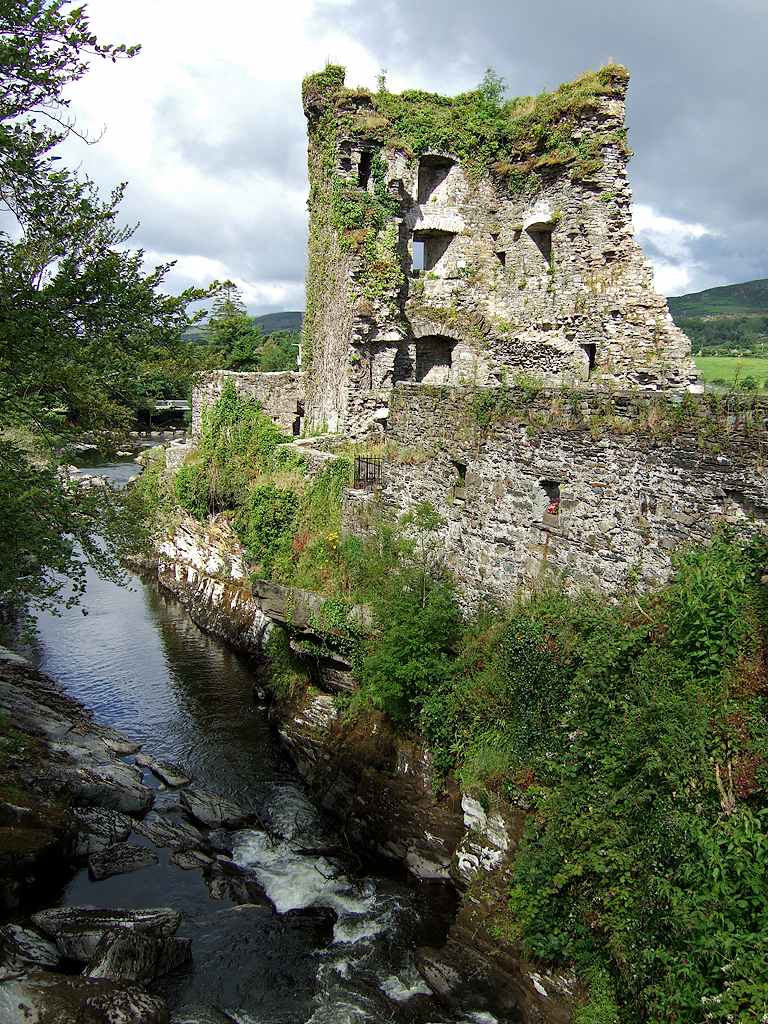
Carriganass Castle is a remarkable example of a 16th-century Irish tower house located in County Cork, Ireland. Built around 1541 by Dermot O'Sullivan Beare, the castle stands on a strategic rocky outcrop overlooking the Ouvane River. This location provided natural defense on one side and allowed the castle to serve both as a fortified residence and a military stronghold for the Gaelic Irish O'Sullivan Beare clan.
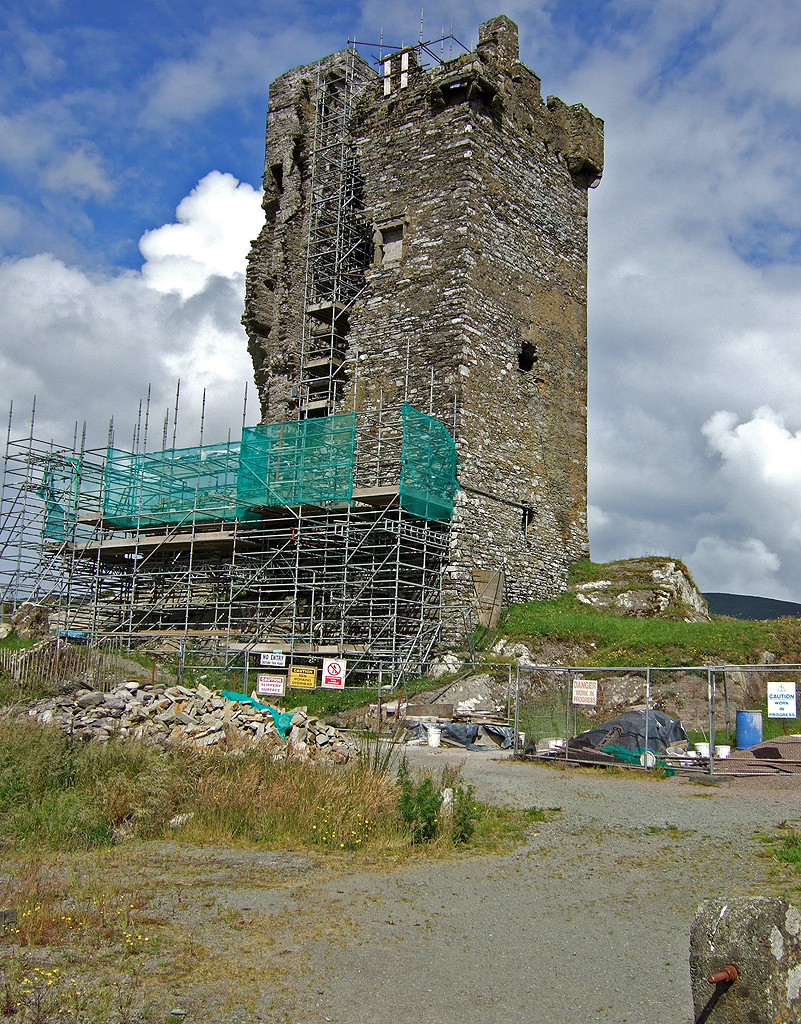
The castle's construction began in the mid-16th century, a period marked by intense clan rivalries and increasing English incursions into Irish territories. Dermot O'Sullivan Beare, as the clan chieftain, established Carriganass Castle at the eastern boundary of his clan's lands, asserting control and providing a defensive bastion. The castle's design embodies the typical features of an Irish tower house, with a four-story stone tower forming the core of the complex.
Architectural features and defensive structures
The main tower of Carriganass Castle is constructed from local stone and rises four stories high, featuring four corner turrets that project outward. These turrets likely served as lookout posts and defensive positions, allowing defenders to monitor the surrounding landscape and repel attackers. The tower's placement on a rocky outcrop enhanced its defensive capabilities, making direct assault difficult.
Surrounding the tower is a substantial bawn, a fortified courtyard enclosed by a curtain wall approximately 14 feet high. The bawn was added later, probably around 1580 by Owen O'Sullivan, possibly due to internal clan disputes and the need for enhanced defense. This outer enclosure includes four corner towers that reinforce the defensive perimeter. The main tower is integrated into the western section of the bawn's curtain wall, creating a cohesive defensive complex.
The entrance to the castle complex is controlled through a gate located in the northern wall of the bawn, allowing for guarded access and further protection against invaders. The combination of the tower and bawn exemplifies the defensive architecture typical of Irish tower houses during the turbulent Renaissance period.
Historical context and clan significance
Carriganass Castle was central to the power and territorial control of the O'Sullivan Beare clan, who dominated much of West Cork during the 16th century. The castle witnessed internal clan conflicts, such as the family dispute that led Owen O'Sullivan to strengthen the defenses by building the bawn. These disputes reflected the complex dynamics of Gaelic Irish clans during a time of increasing English influence.
In 1602, the castle played a dramatic role during the aftermath of the Nine Years' War, a major Irish rebellion against English rule. Donal Cam O'Sullivan Beare, the clan chieftain at the time, was a fugitive after the fall of Dunboy Castle, the clan's principal fortress. According to legend, Donal avenged the murder of his wife by an English military commander named St. Leger by disguising himself as a monk and killing St. Leger at Carriganass Castle. This event underscores the castle's significance as a site of resistance and clan loyalty during this turbulent period.
Following the defeat of Irish forces at the Battle of Kinsale in 1601, English troops led by Sir George Carew advanced into O'Sullivan territory. Carriganass Castle was captured with relative ease before the English laid siege to Dunboy Castle. Subsequently, the English dispossessed the O'Sullivan clan of Carriganass, granting ownership to the Barrett family. The Barretts held the property until the 1930s but preferred to reside in a modern house built nearby, leading to the castle's gradual abandonment and ruin.
Later history and preservation
In the late 19th century, stone from the castle's tower was repurposed to refurbish Bantry House, reflecting the castle's declining military and residential importance. The O'Sullivan family reacquired the castle in the 1930s and eventually donated it to the community in 2002, ensuring its preservation as a heritage site.
Today, Carriganass Castle stands as a partially ruined but significant monument to Ireland's turbulent history. It remains freely accessible during the daytime, attracting visitors interested in Gaelic history, castle architecture, and scenic walks along regional trails such as the Beara-Breifne Way, Sheep’s Head Way, and St. Finbarr’s Way.
Cultural and geographical importance
The castle's location at a crossroads of several historic routes highlights its longstanding strategic and cultural significance. It marks a key point along the path taken by the O'Sullivan Bere during the Nine Years' War and lies on the pilgrimage route of St. Finbarr’s Way, linking it to centuries of religious and cultural journeys in the region.
Carriganass Castle exemplifies the defensive architectural style of Irish tower houses, characterized by its sturdy stone construction, turrets, curtain walls, and bawn. Its history encapsulates the struggles of Gaelic clans against English conquest and the complex social dynamics of 16th and early 17th-century Ireland.
Frequently asked questions (FAQ)
- How do I visit Carriganass Castle?
- Carriganass Castle is freely accessible to the public during daytime hours. Visitors can explore the ruins and surrounding grounds at their own pace, with no entrance fee.
- What is the historical significance of Carriganass Castle?
- Carriganass Castle was a key stronghold of the O'Sullivan Beare clan in the 16th century and played a role in the Nine Years' War against English rule. It is associated with clan rivalries and legendary events involving Donal Cam O'Sullivan Beare.
- What architectural features define Carriganass Castle?
- The castle is a classic Irish tower house featuring a four-story stone tower with four corner turrets, surrounded by a fortified bawn with curtain walls and corner towers, exemplifying Renaissance defensive architecture.
- Is Carriganass Castle accessible for hiking and nearby trails?
- Yes, the castle is located near several regional walking routes including the Beara-Breifne Way, Sheep’s Head Way, and St. Finbarr’s Way, making it a popular stop for hikers and history enthusiasts.
- When was Carriganass Castle built?
- Carriganass Castle was constructed around 1541 by Dermot O'Sullivan Beare during the Renaissance period in Ireland.
Information
Sources & official resources
Verify the information above using these authoritative references.
Loading map...
Visitor reviews
No reviews yet. Been here? Write the first review and help other travelers!
Write the first reviewVisited this castle? Share your experience
Your review helps other travelers and adds first-hand knowledge to our encyclopedia.