Castle Caldwell
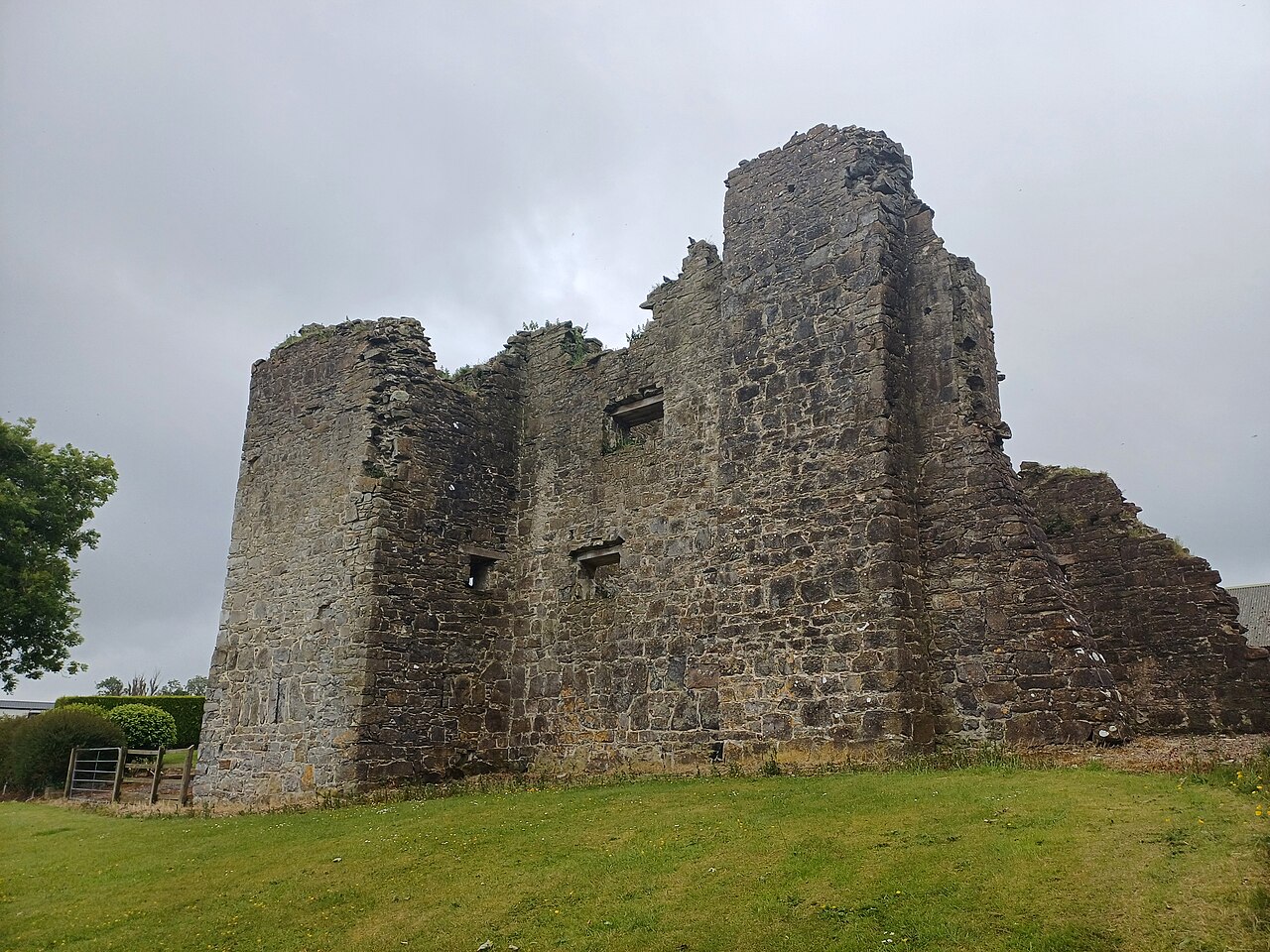
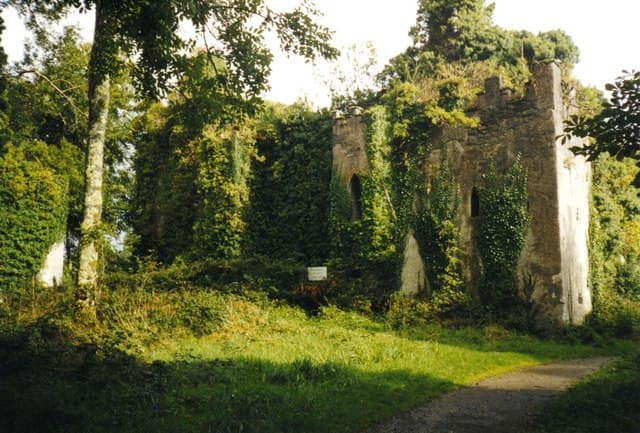
Castle Caldwell is a notable historic hill castle located in Castlecaldwell Forest Park, a serene nature reserve on a small peninsula at the western edge of Lower Lough Erne in County Fermanagh, Northern Ireland. This castle, now a picturesque ruin, reflects the turbulent history and architectural evolution of the region from the early 17th century onward.
Early history and plantation origins
The construction of Castle Caldwell began between 1612 and 1619, during the period of the Plantation of Ulster, a time when English and Scottish settlers were established in Ulster to consolidate control following the Nine Years' War. The castle was originally built by the Blennerhassett family, prominent planters who constructed it in a classic planter style. This design featured a bawn—a fortified enclosure—equipped with two semicircular projecting flanker towers for defense, enclosing a strong house within. The early name of the site was likely Hassett's Fort, reflecting the Blennerhassett family's influence.
Ownership by the caldwell family and baronetcy
In the 1660s, the Blennerhassetts leased the estate to the Caldwell family, wealthy merchants originally from Prestwick in Ayrshire who had settled in Enniskillen. The Caldwells purchased the estate around 1672. The family's prominence was cemented when the head of the Caldwell family was granted a hereditary baronetcy in 1683, the same year the estate was first referred to as Castle Caldwell. This marked the castle's transition from a purely defensive structure to a family residence with social status.
18th-century renovations and architectural changes
During the latter half of the 18th century, Castle Caldwell underwent several renovations. These changes altered the castle's appearance significantly, incorporating elements that have been described as a "pasteboard Gothic facade". While the original defensive features remained, the renovations introduced a more decorative and less militaristic aesthetic, reflecting the changing tastes and needs of the period. The castle's transformation during this time illustrates the shift from fortress to country house typical of many Ulster castles.
19th-century ownership and local significance
In the early 19th century, Castle Caldwell passed into the hands of the Bloomfield family through marriage. Mr. Bloomfield married a woman of Caldwell descent, and their son, John Caldwell Bloomfield, inherited the estate in 1849. John Caldwell Bloomfield is notable for founding the Belleek Pottery factory in the nearby village of Belleek, a significant local enterprise that contributed to the region's economic development.
Decline and current condition
The estate was sold at auction in November 1876, but the subsequent history of Castle Caldwell's decline into ruin is not well documented. Today, the castle stands as a ruined structure, admired for its romantic decay and historical ambiance. Although the castle itself is not accessible to visitors due to safety concerns, the surrounding Castle Caldwell Forest Park remains open to the public. The park offers scenic walks and panoramic views over Lower Lough Erne, enhancing the visitor experience.
Additional features in the park
Within the park grounds, there is also a ruined chapel accompanied by a small, overgrown graveyard. These features add to the historical depth of the site and provide further interest for visitors exploring the area.
Architectural significance and legacy
Castle Caldwell exemplifies the architectural characteristics of early 17th-century planter castles in Ulster, combining defensive elements such as bawns and flanker towers with later adaptations reflecting evolving residential needs. Its layered history—from a fortified planter stronghold to a genteel residence with Gothic influences—mirrors broader social and political changes in Northern Ireland over several centuries.
The castle's association with prominent families like the Blennerhassetts, Caldwells, and Bloomfields ties it to the region's colonial and economic history, including the significant cultural contribution of Belleek Pottery. Despite its ruinous state, Castle Caldwell remains a valuable heritage site, offering insights into the architectural and historical landscape of County Fermanagh.
Frequently asked questions (FAQ)
- How do I get to Castle Caldwell Forest Park?
- Castle Caldwell Forest Park is located on a peninsula at the west end of Lower Lough Erne in County Fermanagh. It is accessible by car via local roads from Enniskillen, with parking available near the park entrance.
- Can I enter Castle Caldwell?
- The castle itself is in a ruinous condition and is unsafe for entry. Visitors can explore the surrounding forest park but are advised to admire the castle from a safe distance.
- What is the historical significance of Castle Caldwell?
- Castle Caldwell was built during the Plantation of Ulster and reflects the planter style architecture of the early 17th century. It was owned by prominent families like the Blennerhassetts and Caldwells, linking it to important regional history.
- Are there other attractions near Castle Caldwell?
- Yes, the Castle Caldwell Forest Park features scenic walking trails and a ruined chapel with an overgrown graveyard, providing additional points of interest for visitors.
- When was Castle Caldwell built?
- Castle Caldwell was constructed between 1612 and 1619 during the early Plantation of Ulster period.
Photo gallery

Information
Address
Castlecaldwell Forest Park, County Fermanagh, Northern Ireland
Loading map...
Visitor reviews
No reviews yet. Been here? Write the first review and help other travelers!
Write the first reviewVisited this castle? Share your experience
Your review helps other travelers and adds first-hand knowledge to our encyclopedia.