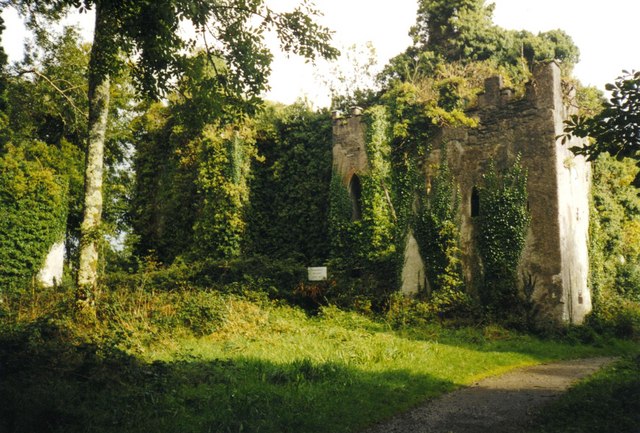
Belleek Fort
Belleek Fort, also locally known as The Battery, is situated on a prominent hill overlooking the River Erne near Ballyshannon in County Donegal, Ireland. Opposite the fort lies the village of Belleek in County Fermanagh, Northern Ireland, making the location strategically significant as it commands an important river crossing between two counties and jurisdictions.
The site’s military history dates back to the early 13th century, when the first fortification was established in 1211 by Gilbert de Costella. This initial structure was a wooden fort designed to control the river crossing but was destroyed by fire during an attack just a year later in 1212. About four decades later, the Normans rebuilt a replacement fortification, demonstrating the ongoing strategic importance of the site. However, this fort was destroyed around 1252 during conflict with the native O'Donnell clan, reflecting the turbulent nature of medieval Ireland and the contest for regional control.
18th-century construction and design
The present incarnation of Belleek Fort dates from approximately 1790, when it was constructed under the direction of English General Gerard Lake. This fortification was built in a distinctive pentagonal shape, a common design for late 18th-century military redoubts intended to maximize defensive coverage and minimize blind spots. It was known as The Belleek Redoubt.
Alongside the fort’s construction, the previous wooden bridge spanning the river below was replaced by a stone bridge featuring iron gates at both ends. These gates were manned by yeomen stationed at the fort, emphasizing the fort’s role in controlling movement across the river. This stone bridge was a key element of the fort’s defensive infrastructure until it was replaced by the current bridge in 1955.
Military use and historical significance
Belleek Fort served as a military garrison for English regiments from its construction until the early 20th century. With the establishment of the border between Northern Ireland and the Irish Free State in the early 1920s, the fort’s strategic importance shifted. In 1924, control of the fort was transferred to the Irish Free State military, marking a significant moment in the fort’s operational history.
Despite its military significance, the fort did not survive intact into the modern era. Around 1966, following its transfer into private ownership, Belleek Fort was largely demolished. The reasons for demolition likely included the high costs of maintenance and changes in military strategy that rendered such forts obsolete.
Later uses and current status
In more recent decades, Belleek Fort has seen varied use. At one point, it served as a bed and breakfast guest house, capitalizing on its scenic location overlooking the river. However, as of the latest observations, the fort remains private property and is undergoing significant rebuilding efforts, indicating ongoing restoration or redevelopment. Public access is currently restricted, and the fort is not open to visitors.
The surrounding area, including the nearby village of Belleek, is well known for its pottery industry, which adds cultural interest to the region. While Belleek Fort itself is not a castle in the traditional sense, its historical and architectural significance as a military fortification on a key river crossing makes it a notable landmark in the border region between Northern Ireland and the Republic of Ireland.
Architectural features and strategic location
The fort’s pentagonal design reflects military architectural trends of the late 18th century, emphasizing fields of fire and defensive angles. The location atop a hill overlooking the river provided natural defensive advantages and excellent visibility over the surrounding landscape, crucial for controlling movement along the river and nearby roads.
The integration of the fort’s defenses with the adjacent bridge, including the iron gates and yeoman guards, illustrates a comprehensive approach to controlling this vital crossing point. The replacement of earlier wooden structures with stone and iron elements demonstrates advancements in military engineering and the importance placed on durable, defensible infrastructure.
Historical context of the region
The area around Belleek has long been contested due to its position on the borderlands of Ulster. The early medieval fortifications reflect Norman attempts to establish control over Gaelic Irish territories. The destruction of the Norman fort by the O'Donnells in the mid-13th century highlights the resistance of native clans to foreign incursions.
By the late 18th century, the British military focus on securing Ireland’s borders and key transportation routes led to the construction of Belleek Fort as part of a broader network of defensive positions. The fort’s continued use into the 20th century underscores its enduring strategic value even as political control shifted.
Frequently asked questions (FAQ)
- How do I get to Belleek Fort?
- Belleek Fort is conveniently located near the N3 in the United Kingdom of Great Britain and Northern Ireland. You can reach it by car or via public transportation, with nearby bus stops providing access to the site. Ample parking is available for visitors arriving by vehicle.
- What is the historical significance of Belleek Fort?
- Belleek Fort dates back to the 17th century and played a vital role in the region's defense during tumultuous times. Its strategic location allowed it to serve as a stronghold against invasions. Today, it stands as a testament to the architectural and military history of the area.
- When was Belleek Fort built?
- Belleek Fort was constructed in the late 1600s, during a period marked by conflict and territorial disputes in Ireland. The fort was designed to protect the local population and assert control over the surrounding lands. Over the centuries, it has witnessed numerous historical events and transformations.
- Can I take guided tours of Belleek Fort?
- Yes, guided tours are available at Belleek Fort, allowing visitors to explore its rich history and architecture. Knowledgeable guides provide fascinating insights into the fort's past and its significance in the region. It is recommended to check the schedule and book in advance for a more enriching experience.
- Why is the architecture of Belleek Fort unique?
- The architecture of Belleek Fort is a blend of military functionality and local design influences, showcasing the craftsmanship of its era. Its robust stone walls and strategic layout are characteristic of 17th-century fortifications. Visitors can appreciate not only its defensive purpose but also the aesthetic qualities that make it a remarkable landmark.
- Is it possible to visit Belleek Fort year-round?
- Belleek Fort is open to visitors year-round, although opening hours may vary seasonally. It is advisable to check the official website or contact local tourism offices for the most up-to-date information on visiting hours. During peak tourist seasons, additional events and activities may also be available.
- What are the ticket prices for Belleek Fort?
- Ticket prices for Belleek Fort are generally affordable, with discounts available for children, seniors, and families. Admission fees help maintain the site and support its ongoing preservation. Visitors can purchase tickets at the entrance or online for convenience.
- What is the best time to visit Belleek Fort?
- The best time to visit Belleek Fort is during the spring and summer months when the weather is pleasant and conducive for exploring the grounds. This period also sees various events and activities that enhance the visitor experience. However, autumn can offer beautiful foliage and a quieter atmosphere for those seeking a more tranquil visit.
- Are there nearby attractions to explore after visiting Belleek Fort?
- Yes, there are several nearby attractions to explore after visiting Belleek Fort, including historical sites, scenic parks, and local cafes. The surrounding area is rich in natural beauty, making it ideal for outdoor activities. Be sure to check local guides for recommendations on other points of interest in the vicinity.
Loading map...
Visitor reviews
No reviews yet. Been here? Write the first review and help other travelers!
Write the first reviewVisited this castle? Share your experience
Your review helps other travelers and adds first-hand knowledge to our encyclopedia.