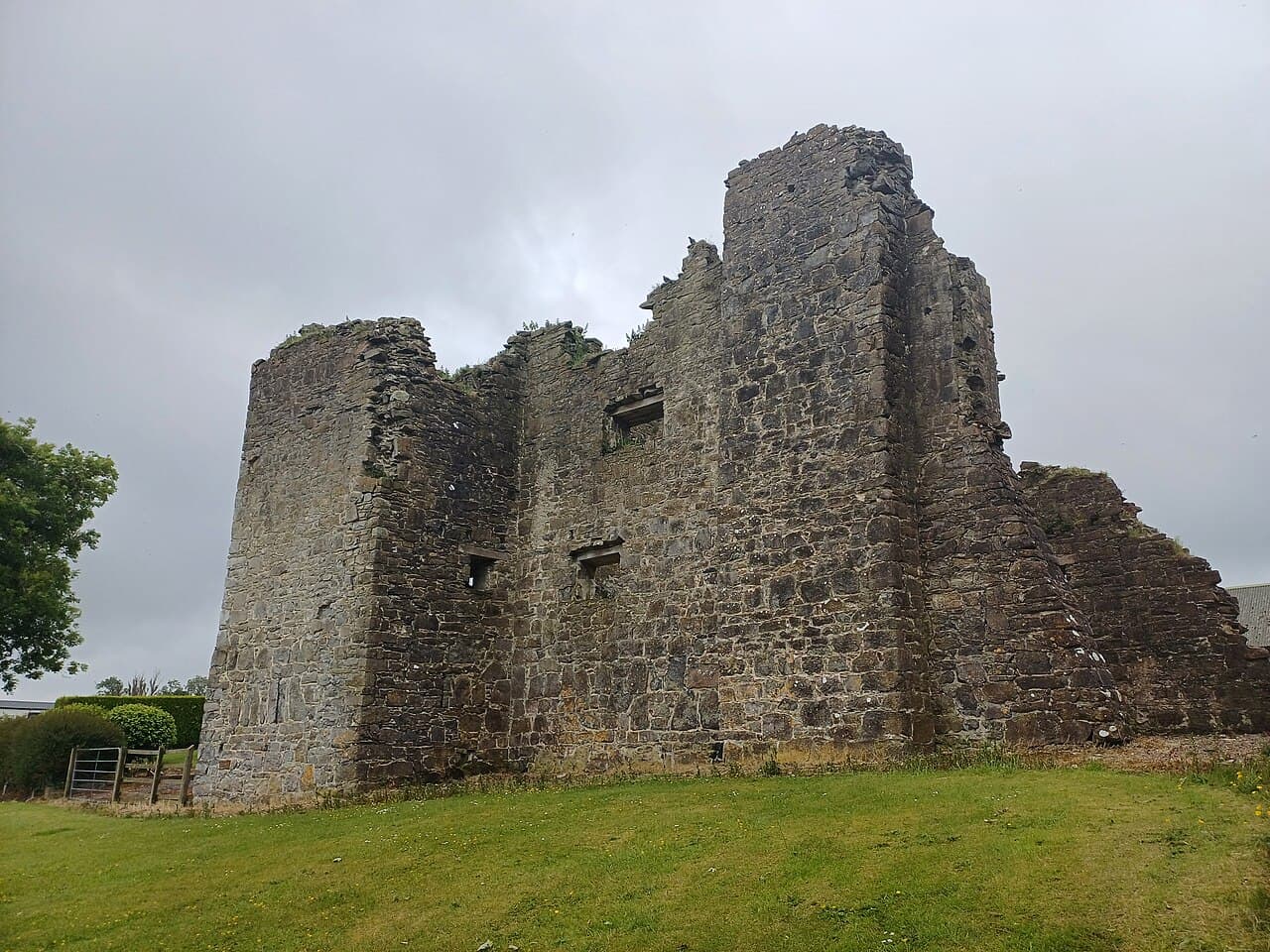
Crevenish Castle
Crevenish Castle is a significant early 17th-century fortified residence located on the east bank of Lough Erne, just west of the village of Kesh in County Fermanagh, Northern Ireland. Constructed around 1618 by Sir Thomas Blennerhassett, a settler from Norfolk, England, the castle originally bore the name Castlehassett or Castle Hassett. This historic site offers insight into the turbulent period of the early Stuart era and the complex landownership and political conflicts in Ulster during the early 1600s.
Historical context and ownership
The castle was built during the Plantation of Ulster, a period when English and Scottish settlers were granted lands confiscated from the native Irish. Sir Thomas Blennerhassett was among these settlers and established Crevenish Castle as a fortified home and symbol of his family's status in the region. His brother was responsible for building nearby Castle Caldwell, indicating the Blennerhassett family's significant presence in County Fermanagh.
After Sir Thomas, the castle passed to his eldest son, Sir Leonard Blennerhassett. The property later changed hands through marriage when Deborah Blennerhassett, Sir Leonard's widow, married Rory Maguire, a prominent Irish leader of the 1641 Rebellion in Fermanagh. Rory Maguire's involvement in the rebellion marks the castle’s connection to one of the most significant uprisings against English rule in Ireland. Following Rory's death in 1648, ownership reverted to the Blennerhassett family. However, by 1697, the castle was already described as ruinous, reflecting the impact of the mid-17th century conflicts and neglect.
Architectural features and layout
Though now in ruins, Crevenish Castle was originally a fortified manor house typical of early 17th-century Ulster architecture. It included a bawn, a defensive walled courtyard designed to protect inhabitants and livestock. The castle’s strategic position overlooking Lough Erne provided natural defense and control over the surrounding lands.
Details of the castle’s original architectural style are limited due to its ruinous state, but it likely featured elements common to Plantation castles such as thick stone walls, narrow windows for defense, and a tower house structure. The bawn walls would have included defensive features such as battlements and possibly corner towers or flanking turrets to repel attackers.
Later history and current condition
Following its decline after the 17th century, Crevenish Castle fell into disrepair and today remains a ruin. It is privately owned and situated within the grounds of a caravan park, which restricts public access. Despite this, the site offers picturesque views over Lough Erne and retains enough structural remains to convey its historic presence.
The castle’s ruinous condition is typical of many Plantation-era castles that suffered damage during the Irish Confederate Wars and were subsequently abandoned or repurposed. The site holds archaeological value as a representation of the early Stuart period fortifications in Northern Ireland.
Visiting information and accessibility
Crevenish Castle is not freely accessible to the public due to its private ownership and location within a caravan park. Visitors interested in viewing the ruins should respect private property restrictions and seek permission if necessary. The surrounding area near Kesh and Lough Erne offers other historic sites and natural attractions worth exploring.
Significance in Ulster's plantation heritage
Crevenish Castle exemplifies the architectural and historical legacy of the Ulster Plantation, a transformative period in Irish history. It reflects the attempts by English settlers to establish fortified homes that served both defensive and residential purposes in a contested frontier region. The castle’s association with key historical figures such as the Blennerhassett family and Rory Maguire connects it to the broader narrative of conflict and cultural change in 17th-century Ireland.
Its remains contribute to understanding the social and military strategies employed during the Plantation and the resistance faced by settlers from native Irish clans. As a ruin, Crevenish Castle stands as a tangible link to this complex period of Irish history.
Frequently asked questions (FAQ)
- What is the historical significance of Crevenish Castle?
- Crevenish Castle is a 17th-century structure located in Kesh, Northern Ireland. It is notable for its impressive architecture and its role in the region's history, particularly during the tumultuous periods of local conflicts. The castle provides insight into the defensive strategies and lifestyle of the time.
- When was Crevenish Castle built?
- Crevenish Castle was constructed in the early 1600s, with its foundation believed to be laid around 1610. The castle reflects the architectural styles of that era and has survived centuries of change, making it a fascinating site for history enthusiasts.
- Can I visit Crevenish Castle?
- Yes, visitors are welcome to explore the grounds of Crevenish Castle. While access to the interior may be limited, the exterior and surrounding areas are perfect for a leisurely stroll and photography.
- What are the opening hours for Crevenish Castle?
- Crevenish Castle is generally open to the public during daylight hours. However, it is advisable to check local resources or visitor information for any seasonal adjustments to opening times.
- Is it possible to access Crevenish Castle for those with mobility issues?
- The terrain around Crevenish Castle can be uneven, which may pose challenges for visitors with mobility issues. It is recommended to contact local visitor services for specific accessibility information and potential accommodations.
- What is the best time to visit Crevenish Castle?
- The best time to visit Crevenish Castle is during the spring and summer months when the weather is milder and the surrounding landscapes are in full bloom. This also allows for more comfortable outdoor exploration and photography opportunities.
- Are there any nearby attractions to Crevenish Castle?
- Yes, nearby attractions include Lough Erne, which offers beautiful scenic views and recreational activities. Additionally, the charming village of Kesh provides local shops and dining options, making it a great stop after your castle visit.
- What are the ticket prices for visiting Crevenish Castle?
- Crevenish Castle does not typically charge an entry fee, as it is an outdoor site. However, check for any special events or guided tours that may have associated costs.

Information
Loading map...
Visitor reviews
No reviews yet. Been here? Write the first review and help other travelers!
Write the first reviewVisited this castle? Share your experience
Your review helps other travelers and adds first-hand knowledge to our encyclopedia.



