Castilnovo Castle
Castilnovo castle, situated near the municipality of Segovia in Spain's Condado de Castilnovo, is a remarkable example of a high medieval hill castle with a rich history spanning several centuries. Although its origins are traditionally linked to the Muslim occupation of Spain between the 8th and 10th centuries, the earliest surviving structures date from the 12th century, reflecting the Christian reconquest and architectural styles of that period. The castle's evolution over time illustrates the complex cultural and political shifts in medieval and early modern Spain.
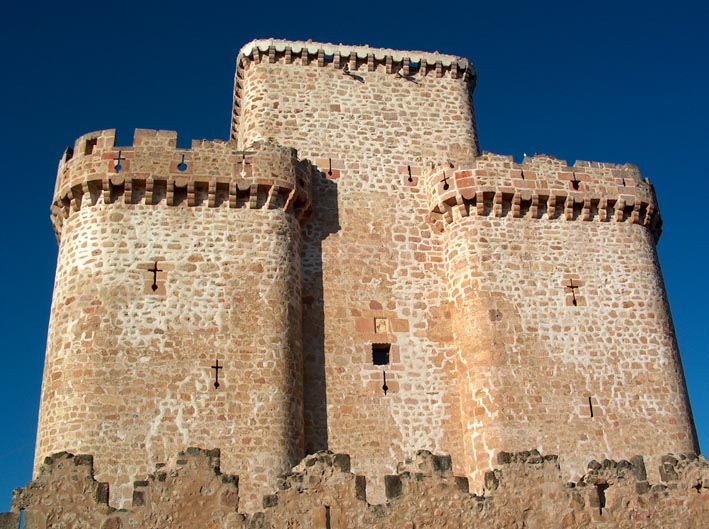
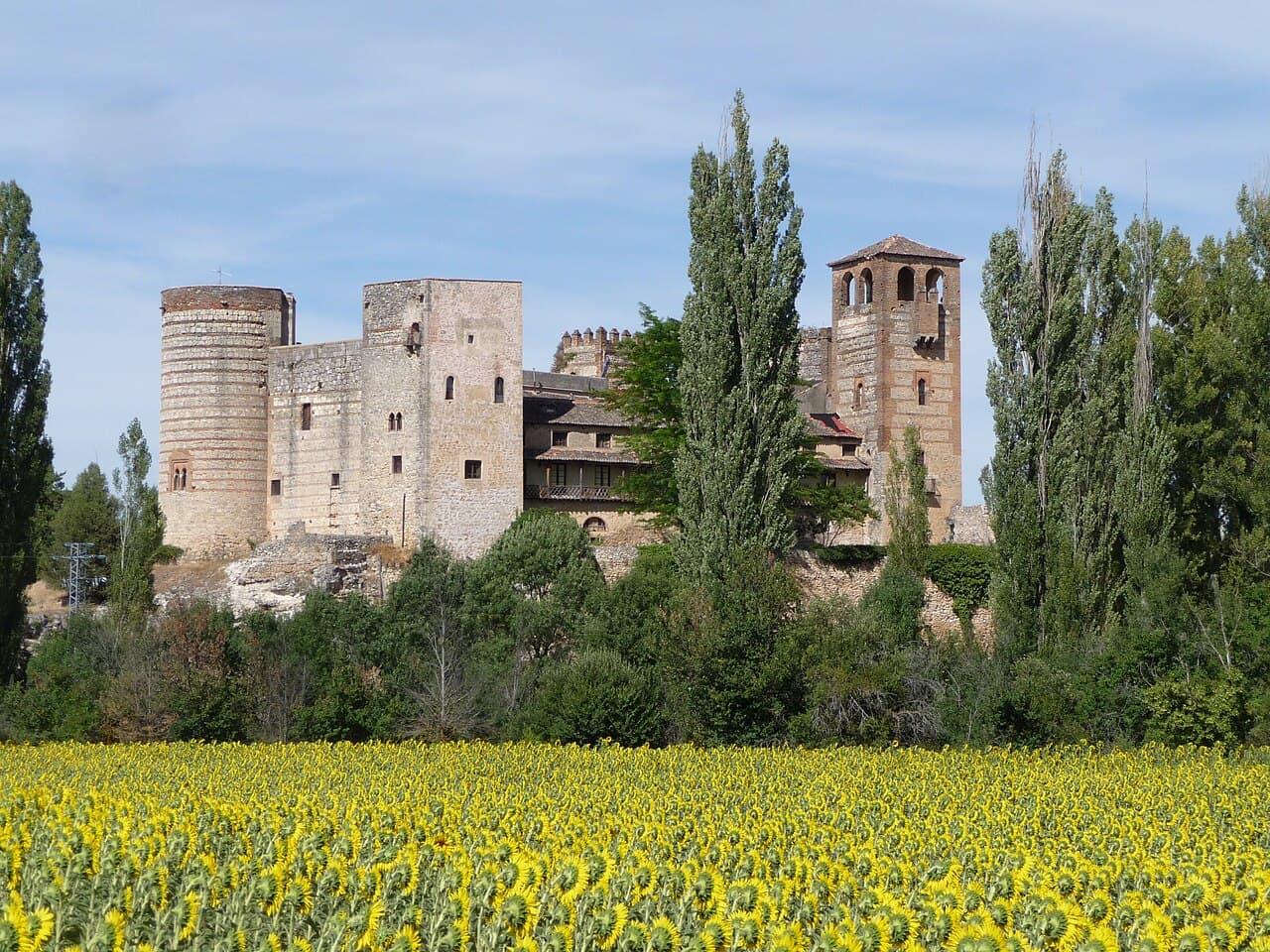
The castle was likely founded on a previous small fortress, with the current structure built primarily in the 12th century in the distinctive Mudéjar style, which blends Islamic artistic influences with Christian architectural traditions. This style is evident in the use of brickwork combined with ashlar stone masonry and decorative window arches, including alfiz, ajimez, horseshoe, conopial, and pointed arches. The castle's layout features a rectangular trapezoid ground plan with six towers of both round and square shapes constructed from brick and masonry, which were added and modified through the 14th to 16th centuries and again in the 19th and 20th centuries.
Historical significance and royal connections
The historical importance of Castilnovo castle is underscored by its association with notable figures and events in Spanish and European history. While local tradition attributes its original foundation to Abd-al Rahmán I or Almanzor during the Muslim period, there is no archaeological evidence to confirm structures from this era. The earliest confirmed phase of construction began in the 12th century during the Christian reconquest.
In the 14th century, the castle came under the possession of King Henry IV of Castile, marking its integration into the Christian royal domain. The fortress later served as a noble residence for powerful Castilian families such as the Velasco family, who held the title Counts of Castilnovo, and influential figures like Álvaro de Luna and Juan Pacheco, Marquis of Villena.
During the late 15th and early 16th centuries, the castle was part of a lordship granted by King Ferdinand the Catholic as a dowry to his daughter Juana of Aragon and her husband Bernardino Fernández de Velasco, the first Duke of Frías. The castle also functioned as a place of captivity, notably holding the sons of Francis I of France after the Treaty of Madrid in 1526, highlighting its strategic and political role.
Another significant occupant was Joanna the Mad, who is believed to have lived in the castle during the 16th century following the death of her husband, Philip the Handsome. Ownership later passed to a German prince from the house of Hozenholler until the castle's sale in 1859.
Architectural features and layout
Fortifications and towers
Castilnovo castle is perched on a natural rocky outcrop about 1000 meters above sea level, overlooking the San Juan River valley. Its defensive design includes six prominent towers—three prism-shaped named Solana, Puerta, and Vieja, and three cylindrical towers known as Moro, Caracol, and Álvaro de Luna. These towers feature a variety of window types and balconies framed by diverse arch forms, blending Mudéjar decorative motifs with later restoration elements.
The castle's walls combine ashlar stone with layers of brickwork and rubble masonry (locally called calicanto or cachotaría), illustrating a mix of construction techniques over centuries. Defensive features include towers with minimal window openings to protect against attack, contrasting with residential areas that have wooden balconies overlooking the landscape.
Interior and courtyard
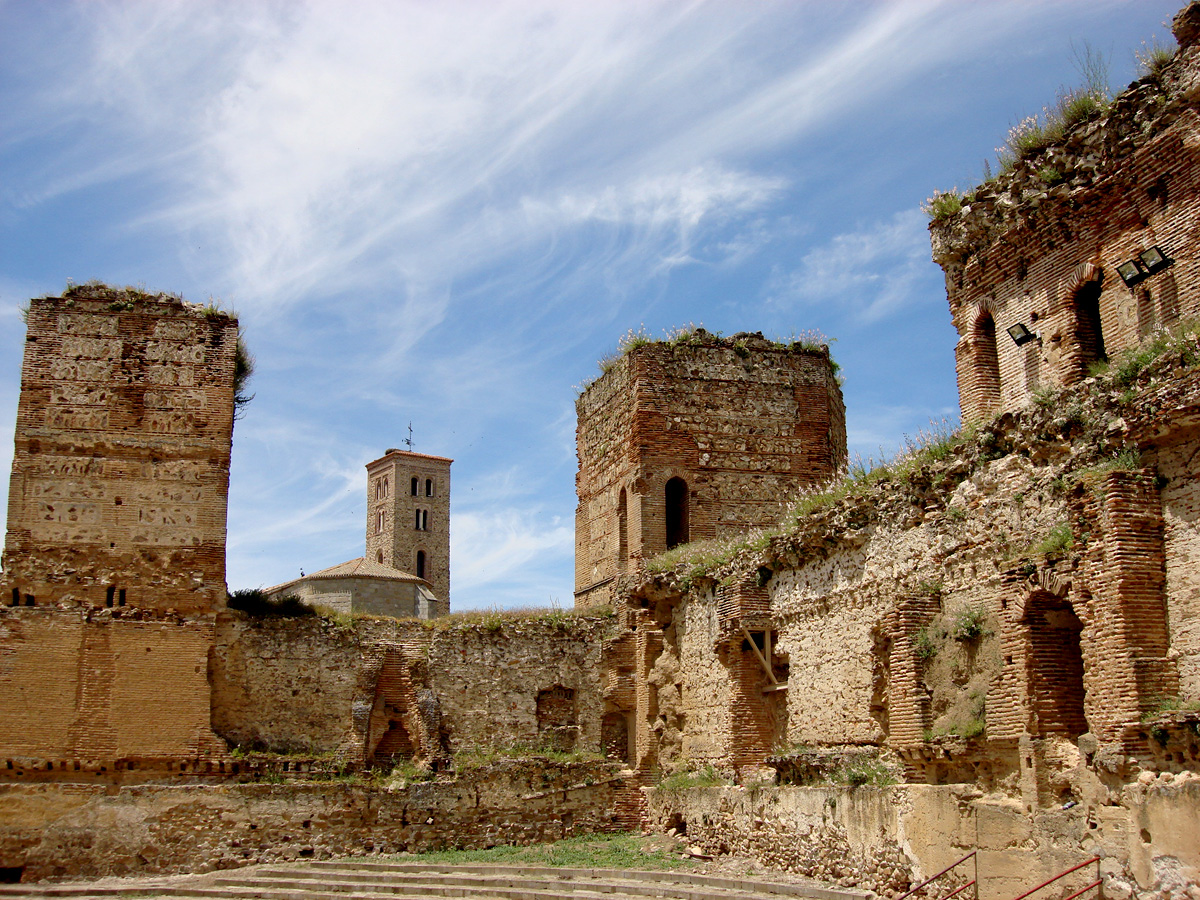
The heart of the castle is its central courtyard or patio de armas, which is surrounded by the main buildings. The western side of the courtyard retains some of the oldest masonry, including pointed arches dating from the 12th and 13th centuries. The interior spaces have been adapted over time, with several rooms now serving as museum areas and housing a library focused on Spanish-Mexican cultural relations, reflecting the castle's modern use.
The southern section of the castle features a wooden gallery dating from 1861, while the stone courtyard was constructed in the 20th century. These additions illustrate the castle's continuous adaptation from a medieval fortress to a noble residence and cultural site.
Modern history and cultural heritage
In the 19th century, José Galofré, court painter and secretary to Queen Isabel II of Spain, acquired the castle and undertook restoration works that shaped much of its current appearance. The Marquises of Quintanar later inherited the castle and added a rural wing inspired by traditional Segovian architecture.
The castle was declared a Cultural Heritage Site (Bien de Interés Cultural) in 1931, recognizing its architectural and historical significance. In the late 20th century, ownership passed to José Garate Murillo and the Castilnovo Mexican-Spanish Association, which used the castle as headquarters and a museum to promote cultural ties between Spain and Mexico.
A notable feature of the castle grounds is a camping area named after Hernán Cortés Cuauhtémoc, commemorating a summer camp program for Mexican and Spanish children organized by the association in the 1990s. The castle was offered for sale in 2016 but was withdrawn and made available for rent, continuing its role as a cultural and historical landmark.
Architectural style and preservation
Castilnovo castle exemplifies the Mudéjar architectural style combined with medieval fortress design. The mixture of ashlar stone, brickwork, and rubble masonry reflects the various construction phases from the 12th century through the Renaissance and later restorations.
The castle is well preserved, maintaining its structural integrity and many original features, including distinctive towers, arches, and the central courtyard. Restoration efforts in the 19th and 20th centuries have been sensitive to the historical character of the site, blending new elements such as the wooden gallery and stone courtyard with the medieval fabric.
The castle's combination of military fortification and residential comfort demonstrates its evolution from a strategic fortress to a noble palace and cultural center, making it a significant heritage site in the region.
Frequently asked questions (FAQ)
- What is the historical significance of Castilnovo Castle?
- Castilnovo Castle is a remarkable example of medieval architecture in Spain, dating back to the 15th century. It played a strategic role in the defense against invasions and has witnessed significant historical events. Today, it serves as a monument to the rich history of the region.
- When was Castilnovo Castle built?
- Construction of Castilnovo Castle began in the late 15th century, around 1490, and it was completed shortly thereafter. The castle was built during a time of political unrest and serves as a testament to the military architecture of the period. Its well-preserved structure allows visitors to glimpse the past.
- Can I visit Castilnovo Castle?
- Yes, Castilnovo Castle is open to visitors who wish to explore its historical grounds. Guided tours are often available, providing insight into the castle's history and architecture. It’s recommended to check the official website for current visiting hours and any special events.
- What are the opening hours for Castilnovo Castle?
- The opening hours for Castilnovo Castle may vary by season, typically opening from 10 AM to 6 PM, with extended hours during the summer months. It is advisable to verify the hours before visiting to ensure you have ample time to explore the site. Special events may also influence these hours.
- Is it possible to access Castilnovo Castle with a wheelchair?
- Accessibility at Castilnovo Castle can be challenging due to its historical architecture, which includes uneven surfaces and stairs. However, efforts have been made to accommodate visitors with mobility issues, so it is recommended to contact the site in advance for specific accessibility options. Planning ahead will ensure a smoother visit.
- When is the best time to visit Castilnovo Castle?
- The best time to visit Castilnovo Castle is during the spring and fall when the weather is mild and pleasant. These seasons offer the most comfortable conditions for exploring the castle and its surroundings. Additionally, visiting during local festivals can provide a unique cultural experience.
- What are some nearby attractions to Castilnovo Castle?
- Nearby attractions include the picturesque town of Sepúlveda and the stunning Hoces del Río Duratón Natural Park, both offering beautiful landscapes and additional historical sites. These locations provide a perfect complement to your visit to Castilnovo Castle. Exploring the area can enhance your understanding of the local culture and history.
- What are the ticket prices for Castilnovo Castle?
- Ticket prices for Castilnovo Castle are generally affordable, with discounts available for students and seniors. Adult tickets typically range around €5, while children may enter for a reduced fee or for free, depending on age. It’s best to check the castle's official website for the most current pricing and any special offers.

Information
Website
Visit websiteSources & official resources
Verify the information above using these authoritative references.
Loading map...
Visitor reviews
No reviews yet. Been here? Write the first review and help other travelers!
Write the first reviewVisited this castle? Share your experience
Your review helps other travelers and adds first-hand knowledge to our encyclopedia.