Castillo y murallas de Escamilla
The Castillo y murallas de Escamilla stands as a remarkable example of medieval military architecture located in the municipality of Escamilla, Spain. This hill castle was originally constructed in the 9th century during the period of Andalusian rule, serving as a strategic fortress to protect the fertile lands near the confluence of the Tajo and Guadiela rivers. Its position on elevated terrain provided commanding views of the surrounding landscape, a critical advantage for defense and surveillance in the turbulent early medieval period.
Historical evolution and ownership
The castle's history reflects the complex political and social changes in medieval Spain. Initially a purely military fortress, it underwent significant transformations during the late 14th and early 15th centuries. During this time, the castle was extensively reconstructed, transitioning from a defensive stronghold to a residence suitable for nobility. This evolution mirrored broader trends in castle architecture, where fortresses increasingly served as symbols of power and status as well as military bastions.
Ownership of the castle changed hands among several prominent figures, including Contesina de Luna, Enrique Enríquez de Mendoza, Álvaro de Luna, Pedro Gómez Manrique, and finally Juan de Silva y Meneses, the Count of Cifuentes. Around 1508, the Count initiated renovations that incorporated the Gothic architectural style, enhancing the castle's residential and aesthetic qualities. These modifications reflected the Renaissance influences that were beginning to permeate Spanish noble residences, blending defensive features with greater comfort and ornamentation.
Throughout the following centuries, the castle served as a temporary residence for the Counts of Cifuentes. It remained occupied until the 17th century, after which its strategic importance declined. The War of Spanish Succession in the early 18th century marked a turning point, leading to the castle's abandonment. Records from 1786 indicate that the castle was still habitable at that time, but subsequent neglect caused gradual deterioration.
Architectural features and layout
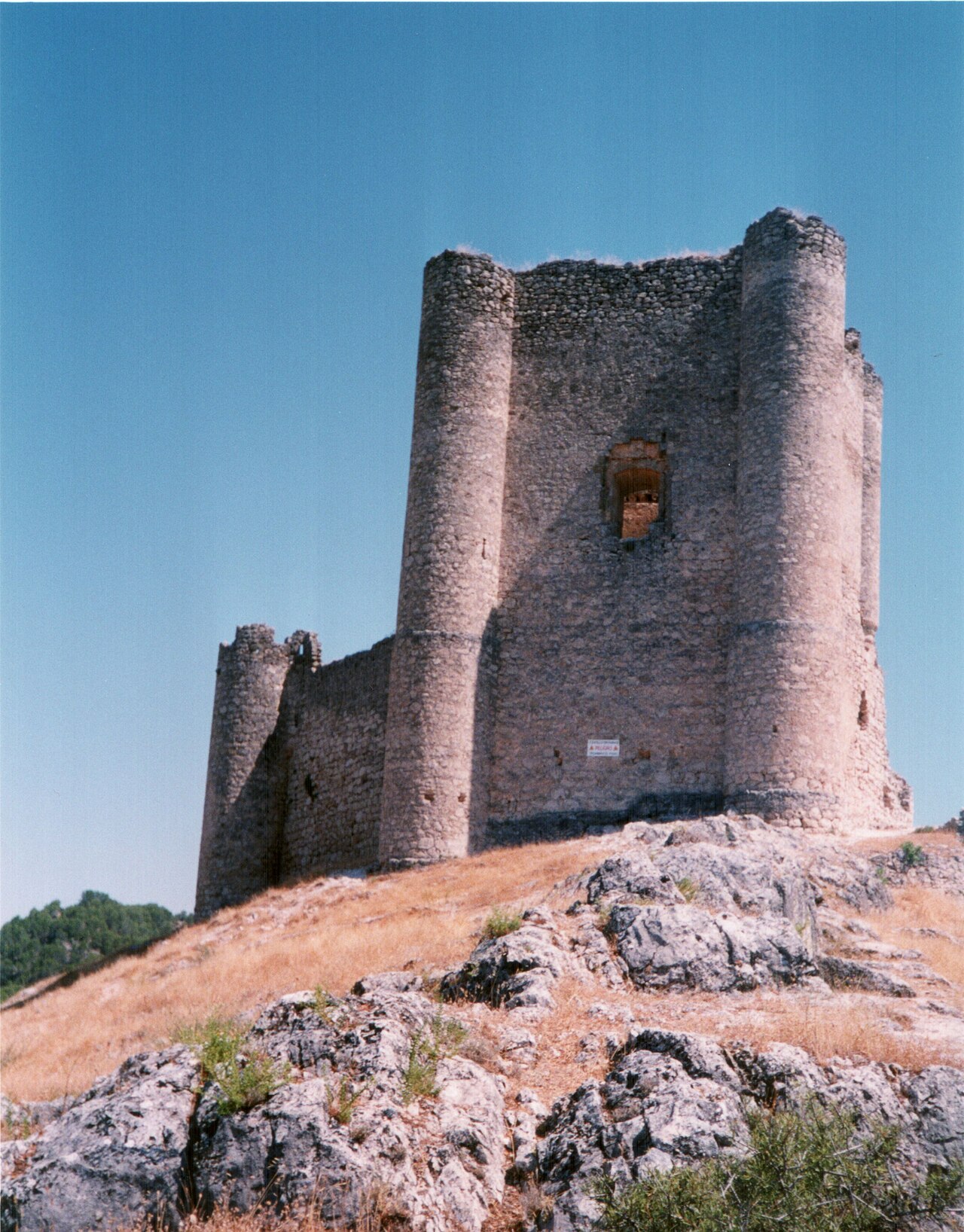
The castle is designed on a square layout, a common medieval plan that maximizes defensive coverage. It features three circular towers located at three of its corners, providing flanking fire and observation points. The fourth corner is occupied by a square keep facing south, which served as the main stronghold and residence within the castle complex.
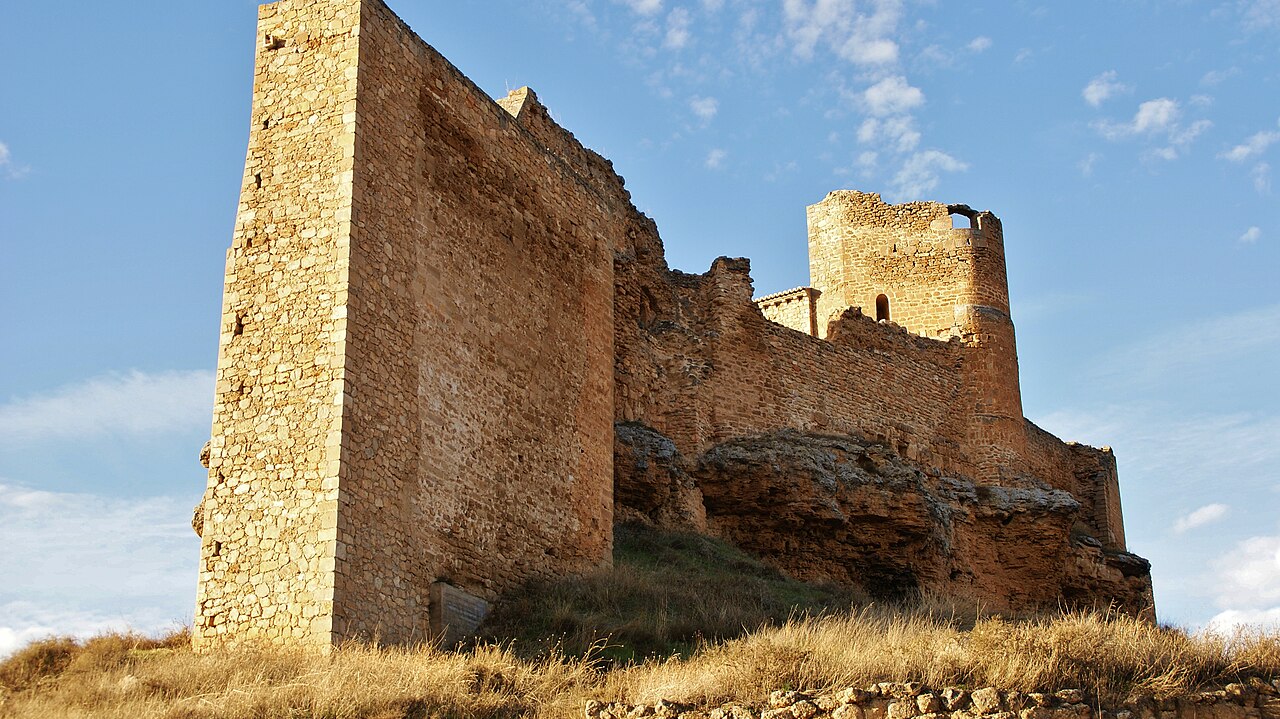
Constructed primarily from limestone ashlar blocks, the masonry demonstrates careful craftsmanship. Many of these stones were repurposed from the dismantling of the surrounding defensive walls, illustrating a practical reuse of materials common in later periods. The castle lacks a barbican, but historical evidence points to an outer wall situated between the keep and the larger western tower. This wall enclosed the main entrance near the keep and acted as an additional layer of defense before reaching the castle's main perimeter.
Over time, the square keep was adapted for use as a dovecote, a structure designed to house pigeons or doves, which were valued for both food and communication. This adaptive reuse reflects changing functions of the castle in its later history.
Condition and current use
Today, the Castillo y murallas de Escamilla stands in a state of gradual ruin. While much of the original structure remains visible, the castle has been repurposed for agricultural storage, a common fate for many historic fortifications that lost their military and residential functions. The preservation of its architectural elements, such as the towers and keep, allows visitors to appreciate its historical significance despite the decay.
Medieval town walls and urban defense
The castle was originally part of a broader defensive system that included the medieval town walls enclosing Escamilla. These walls extended in an elongated west-to-east direction, following the town's layout. Only fragmented sections survive today, as much of the stone was reused in the castle's construction and local buildings.
The fortifications included two main gates: the upper gate near the castle, and the lower gate close to what is now Granadas Street. Surrounding the walls was a moat, enhancing the defensive capabilities of the urban enclosure and deterring attackers. This integrated system highlights the strategic importance of Escamilla in controlling the fertile river valleys and protecting local inhabitants.
Architectural and cultural significance
The Castillo y murallas de Escamilla exemplify the evolution of medieval fortifications in Spain from purely military installations to noble residences incorporating Gothic stylistic elements. Its construction techniques, including the use of limestone ashlar masonry and the adaptation of the keep into a dovecote, reflect both practical and cultural aspects of castle life over several centuries.
Moreover, the castle's history of ownership by notable Spanish nobility connects it to broader political and social developments in the region. The presence of the town walls and moat demonstrates the integrated nature of urban and military defense during the medieval period.
Despite its current state of ruin, the castle remains a valuable heritage site that offers insights into the architectural, historical, and cultural landscape of medieval Spain. Its location in the province of Guadalajara situates it within a rich context of Iberian fortifications and noble estates.
Frequently asked questions (FAQ)
- When was the Castillo y murallas de Escamilla originally built?
- The Castillo y murallas de Escamilla was originally constructed in the 9th century during Andalusian rule as a defensive fortress.
- What architectural style characterizes the castle?
- The castle features Gothic architectural elements, especially following renovations around 1508 initiated by the Count of Cifuentes.
- Is the castle currently open to the public?
- There is no widely available information about public visiting hours, so visitors should check locally before planning a visit.
- What is the current condition of the castle?
- The castle is in a state of gradual ruin and has been repurposed for agricultural storage.
- What defensive features did the castle and town walls have?
- The castle included circular towers, a square keep, an outer wall near the entrance, and the town walls were surrounded by a moat with two main gates.
Information
Loading map...
Visitor reviews
No reviews yet. Been here? Write the first review and help other travelers!
Write the first reviewVisited this castle? Share your experience
Your review helps other travelers and adds first-hand knowledge to our encyclopedia.