Castillo Palacio Arzobispal
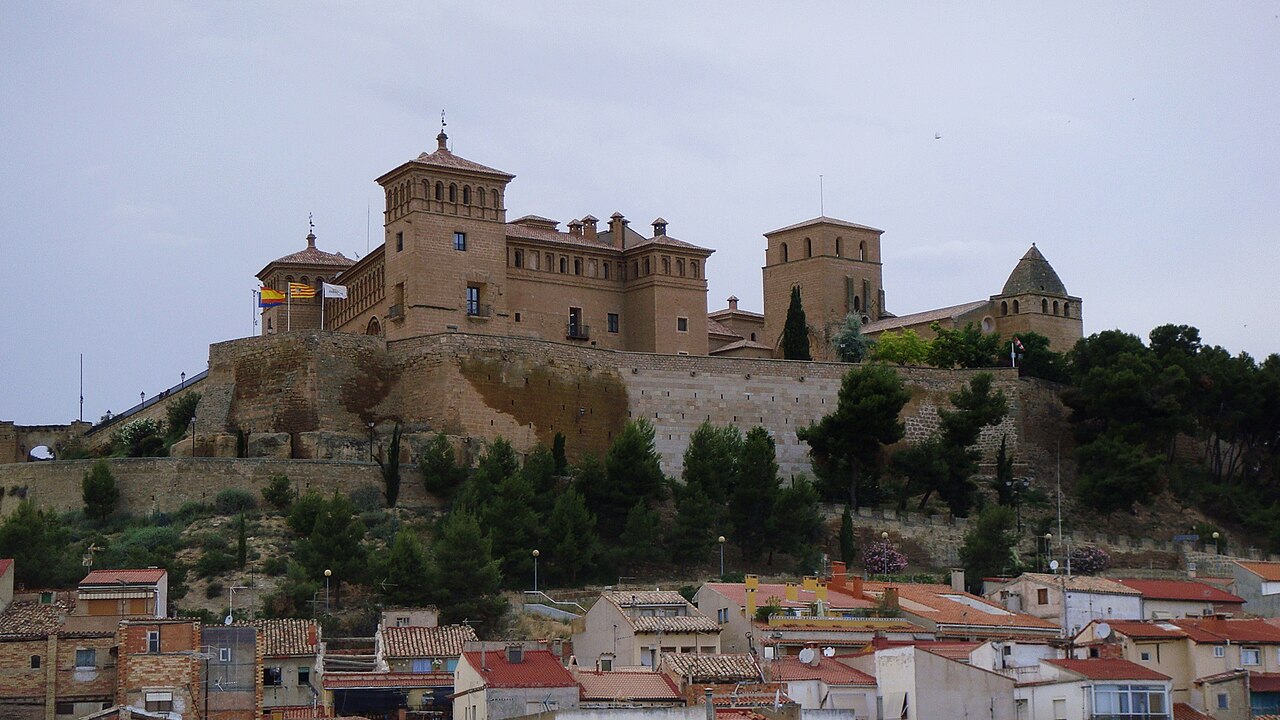
The Castillo Palacio Arzobispal, located in the town of Albalate del Arzobispo in Spain, stands as a remarkable example of a medieval hill castle that served both defensive and residential purposes. Its origins are deeply tied to the Christian reconquest of the region in the mid-12th century, specifically following the military campaigns led by Ramón Berenguer IV in 1149, which resulted in the capture of the territory from Muslim control. This strategic victory led to the establishment of Albalate as a domain under the jurisdiction of the Archbishopric of Zaragoza, which subsequently initiated the construction of the castle-palace to symbolize ecclesiastical authority and provide a fortified residence.
The earliest documented reference to the castle dates back to 1240, confirming its status as an established seat of power by the early 13th century. The structure underwent significant restoration and expansion during the late 13th and early 14th centuries under the guidance of Don Ximeno de Luna, who served as archbishop from 1296 to 1309. His legacy is immortalized in a historic coat of arms located at the original boundary of the palace, marking his contribution to the castle's development.
Architectural evolution and historical development
The castle-palace's construction reflects a layered history of architectural styles and functional adaptations. During the 15th century, further enhancements were made under the direction of Archbishop Dalmacio de Mur y Cervellón (1431–1456), a period believed to mark the completion of the castle's principal structures. The site was likely chosen for its strategic advantages, possibly replacing an earlier Muslim fortress or alcazaba, although no physical remnants of this predecessor survive to provide clear evidence of its design or layout.
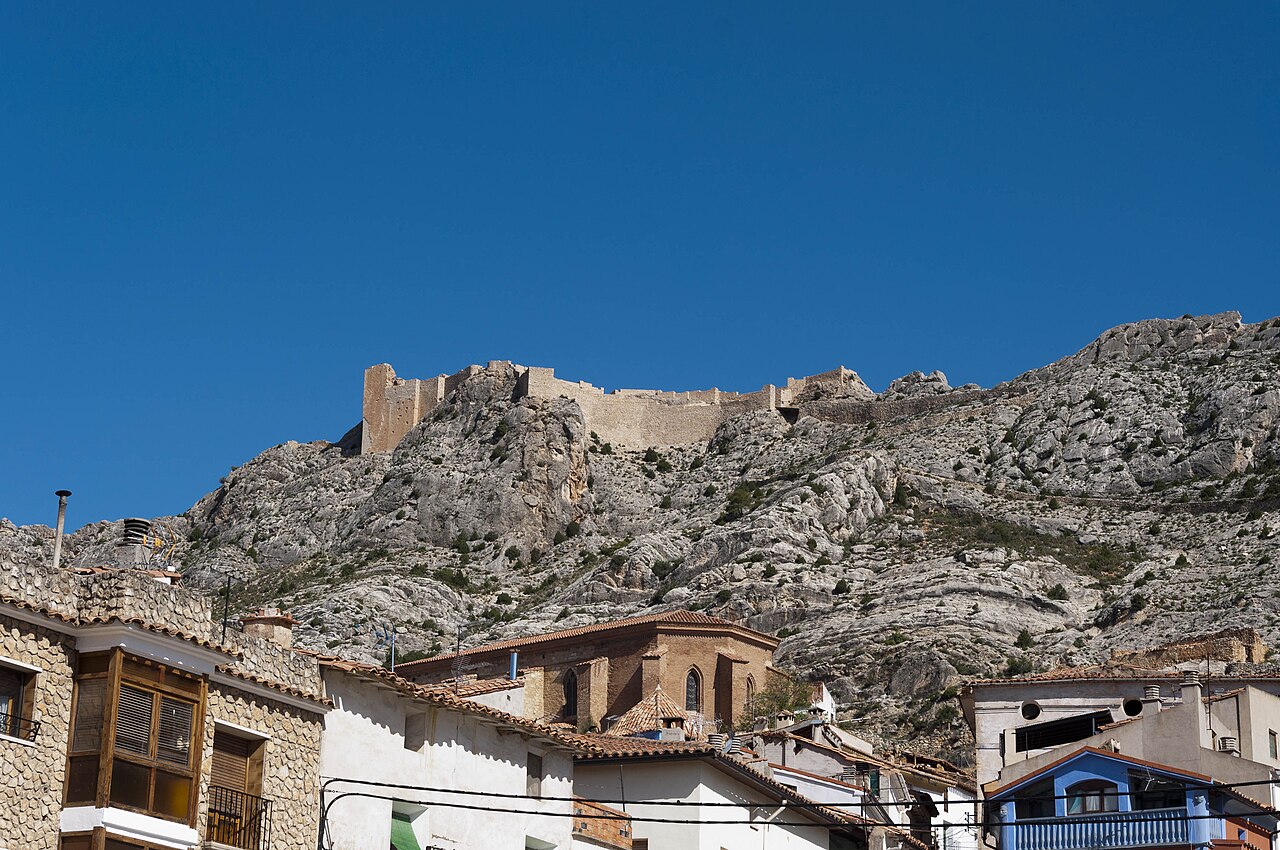
Throughout its history, the castle served as the central hub of the archbishopric's lordship in Albalate, combining military fortification with residential palace functions. The castle also played a critical role in the development of the surrounding town, positioned on a small plateau near the Martín River, which provided natural defenses and resources.
Structural layout and materials
The castle-palace occupies an elongated quadrilateral area atop its strategic hilltop. It is architecturally divided into distinct sections: the residential quarters located on the southern end and the outer courtyard, known as the patio de armas. The residential area features a quadrangular plan arranged around an open central courtyard, surrounded by various chambers. The southeastern wing houses the main lordly residence, while the other wings are primarily single-story constructions.
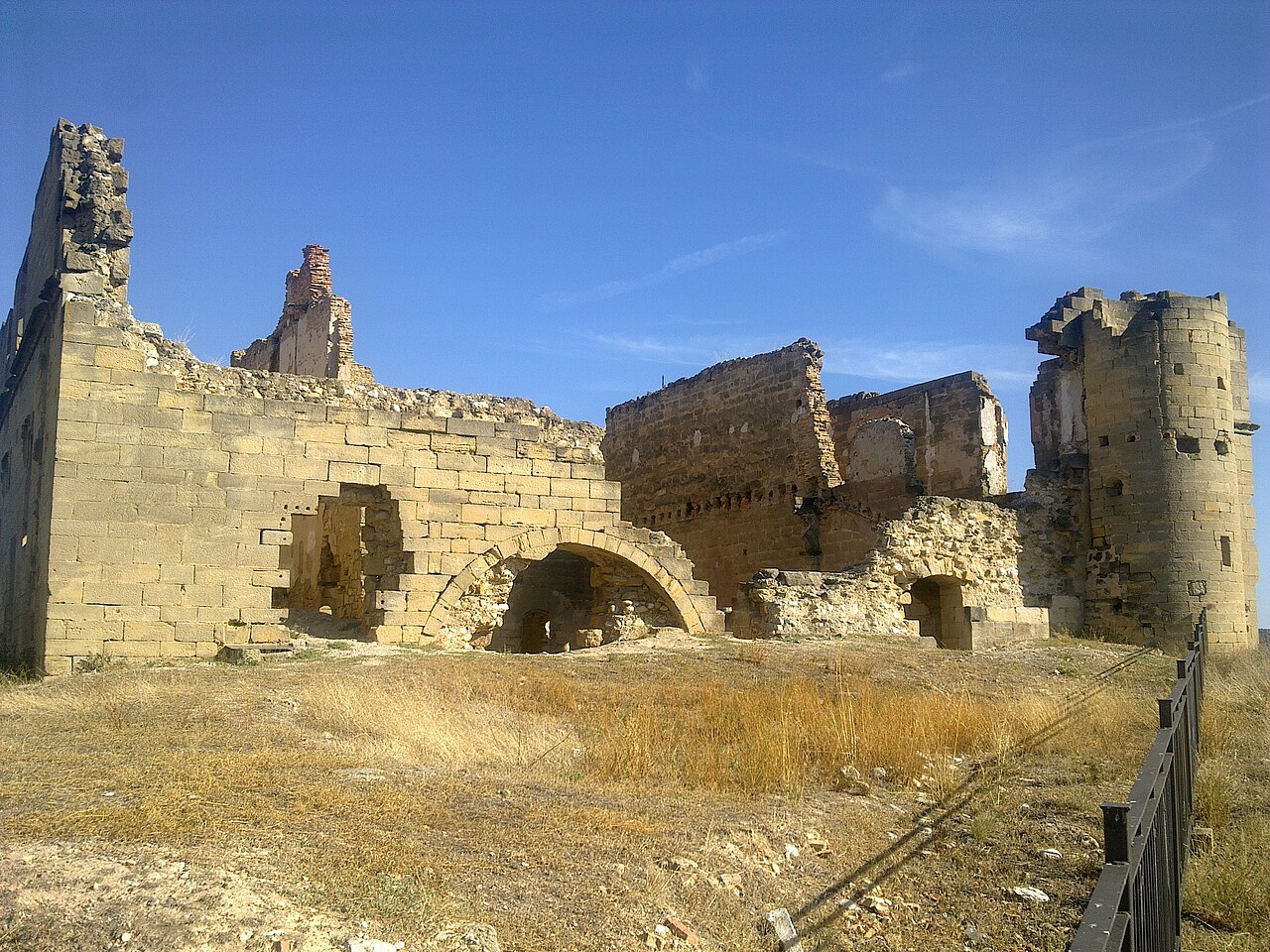
Construction materials are a combination of finely dressed ashlar stone and brick, with decorative ceramic elements enhancing specific areas, reflecting the artistic influences of the time. The castle walls underwent modifications and expansions in the 19th century, incorporating both new materials and recycled stones from earlier construction phases. Notably, the northwest buildings are positioned at a slightly different elevation and are connected by a large pointed barrel vault, a long arched ceiling characteristic of Gothic architecture. The southwest section retains a barrel vault roof supported by transverse arches, although only one arch remains fully intact today.
Interior features and religious significance
The palace consists of two floors, with the ground level featuring a large rectangular room covered by a pointed barrel vault. This room includes three narrow windows that splay outward toward the southeast, decorated with three-lobed tracery, a trefoil pattern ornamental stonework typical of Gothic design. Above, the upper floor houses the chapel, a trapezoidal room constructed between the 14th and 16th centuries in the Gothic style.
By around 1530, this space was definitively transformed into a chapel, adorned with ceramic decoration that enriches its interior. The chapel's architectural design includes six bays delineated by pointed arches with molded profiles. A polychromed wooden cornice runs along these arches, which rest upon supports decorated with polychrome shields.
Natural light enters through five large windows—two facing the inner courtyard and one oriented outward—each featuring two lights and trilobed tracery, accompanied by a narrow arrow slit piercing the exterior wall. Near this slit is a small pulpit supported by paired small columns and a pointed arch, with a conical base decorated with vegetal and geometric motifs.
The chapel floor is adorned with restored Mudéjar-style ceramic tiles in green and white, arranged in patterns featuring eight-pointed stars. These tiles, likely dating to the mid-14th century, exemplify the coexistence and fusion of Christian and Islamic artistic traditions in the region. The small presbytery, accessed through a depressed arch supported on pilasters, is covered by a star-shaped vault and may have been a later addition to the chapel.
The octagonal bell tower
At one corner of the chapel stands an octagonal bell tower, a later architectural addition combining ashlar stone at its base with brickwork styled in the Mudéjar tradition above. The tower's first level is solid with decorative corner bands, while the upper level features eight semicircular arched openings paired with decorative double arches and corner bands. A cornice crowns the tower, topped by a conical spire added in a subsequent period, showcasing the blend of functional and ornamental design elements.
Cultural heritage and preservation
The Castillo Palacio Arzobispal has been recognized for its significant historical and cultural value. In 2006, it was officially protected and catalogued as a Bien de Interés Cultural under Aragonese heritage law, ensuring its preservation as a monument of regional importance.
This designation highlights the castle-palace's role as a symbol of ecclesiastical power, its architectural uniqueness combining Gothic and Mudéjar elements, and its importance in the historical narrative of Albalate del Arzobispo and the broader region. The castle's layered construction history, blending military, residential, and religious functions, makes it a valuable site for understanding medieval and early modern Spanish architecture and society.
Today, the castle stands as a well-preserved example of a fortified palace that has adapted over centuries, offering insights into the complex interactions between Christian and Islamic cultures in medieval Spain. Its strategic location, architectural features, and historical associations continue to attract scholars, visitors, and heritage enthusiasts interested in Spain's rich medieval past.
Frequently asked questions (FAQ)
- What is Castillo Palacio Arzobispal?
- Castillo Palacio Arzobispal is a historic castle located in Albalate del Arzobispo, Spain. This impressive structure served as a residence for archbishops and reflects a blend of Gothic and Renaissance architectural styles, showcasing the rich history of the region.
- When was Castillo Palacio Arzobispal built?
- The construction of Castillo Palacio Arzobispal dates back to the late 15th century. It has undergone various renovations over the years, preserving its historical significance and architectural integrity.
- What are the opening hours for Castillo Palacio Arzobispal?
- The opening hours for Castillo Palacio Arzobispal vary by season, typically operating from 10 AM to 6 PM during the warmer months and limited hours in winter. It is advisable to check the official website for the most current visiting hours before planning your visit.
- Is it possible to take guided tours of the castle?
- Yes, guided tours are available at Castillo Palacio Arzobispal, allowing visitors to explore its rich history and architectural features. These tours are often conducted in multiple languages and provide deeper insights into the castle's significance.
- Can I visit Castillo Palacio Arzobispal with children?
- Absolutely, Castillo Palacio Arzobispal is family-friendly and welcomes visitors of all ages. There are educational aspects of the tour that can engage children and provide a fun learning experience about history and architecture.
- What is the best time to visit Castillo Palacio Arzobispal?
- The best time to visit Castillo Palacio Arzobispal is during the spring and fall months when the weather is mild and pleasant for outdoor exploration. Additionally, these seasons tend to attract fewer tourists, offering a more intimate experience.
- Are there any nearby attractions to visit?
- Yes, visitors to Castillo Palacio Arzobispal can explore several nearby attractions, including the local churches and museums that highlight the region's culture and history. The picturesque village of Albalate del Arzobispo itself also offers scenic views and charming architecture.
- What are the ticket prices for visiting the castle?
- Ticket prices for Castillo Palacio Arzobispal are generally affordable, with discounts available for children, students, and seniors. It is advisable to check the official website for the most accurate pricing and any special offers that may be available during your visit.
- How do I get to Castillo Palacio Arzobispal?
- Castillo Palacio Arzobispal is easily accessible by car, with ample parking available nearby. Public transportation options may also be available from larger cities, making it convenient for visitors to explore this historic site.
Information
Loading map...
Visitor reviews
No reviews yet. Been here? Write the first review and help other travelers!
Write the first reviewVisited this castle? Share your experience
Your review helps other travelers and adds first-hand knowledge to our encyclopedia.