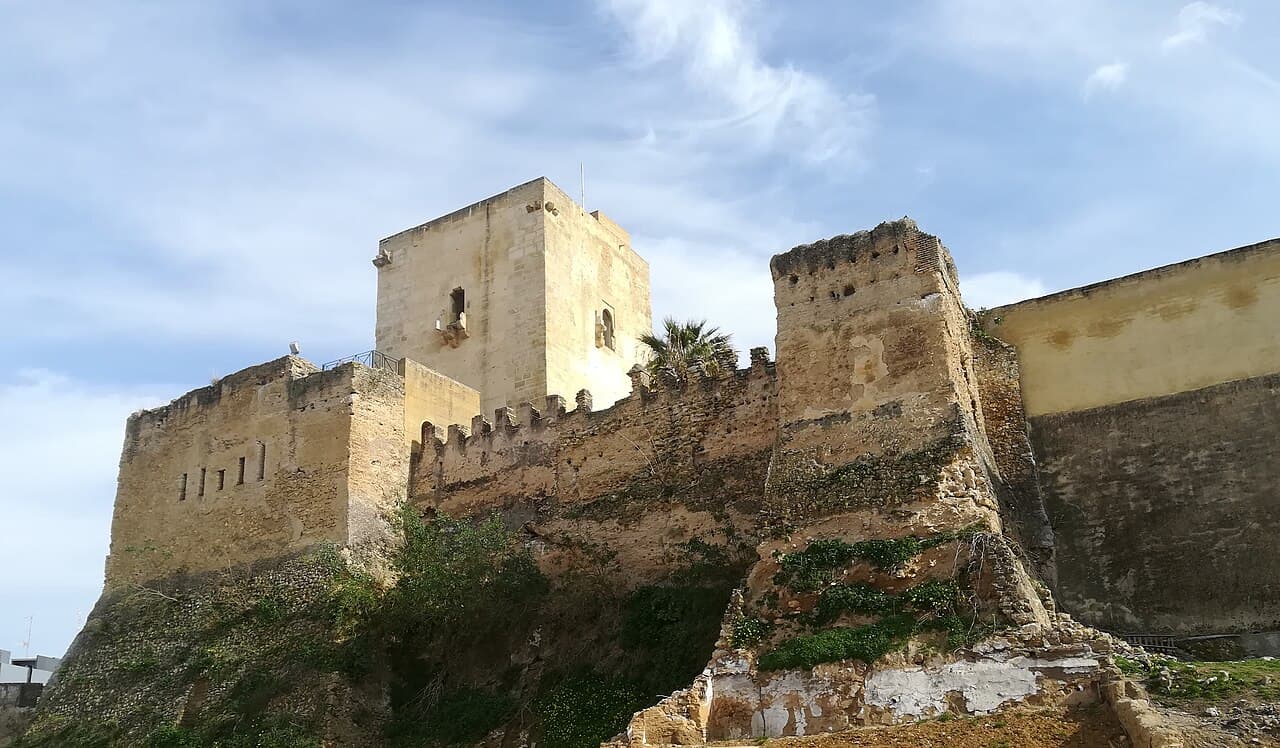
Castillo de Utrera — Spain castle

Castillo de Utrera

Castillo de Utrera: historic hilltop fortress in Spain
Utrera, Spain
High Medieval (11th–13th c.)
Partially Preserved

Castillo de Utrera is a prominent hill castle located in the province of Seville, Spain. This fortress occupies a strategic elevated position that historically provided a commanding view over the surrounding landscape, playing a crucial role in regional defense and control during the medieval period.

Historical background and significance

The origins of Castillo de Utrera date back to the Islamic period in the Iberian Peninsula, likely constructed during the 12th or 13th century when the region was under Moorish control. The castle was built as part of a network of fortifications designed to secure the territory and protect key routes in Andalusia. After the Christian Reconquest, the castle was integrated into the defensive system of the Kingdom of Castile, undergoing modifications to adapt to new military needs.

Architectural features and layout

The castle is characterized by its robust stone walls and rectangular towers that reinforce the perimeter. The main entrance is fortified with a and a , typical of medieval military architecture. Inside, the inner courtyard served as a central space for garrison activities and storage.

Defensive structures

The castle's defensive elements include merlons and battlements along the curtain walls, which provided cover for archers and soldiers. The elevation of the castle on a hill enhanced its defensive capabilities, making assaults difficult for attackers. The presence of a cistern ensured a water supply during sieges.

Construction materials and techniques

Constructed primarily from locally sourced stone and mortar, the castle exhibits the typical masonry techniques of the High to Late Medieval period. The walls are thick and designed to withstand artillery and siege engines of the time.

Role through the centuries

Throughout its history, Castillo de Utrera served as a military stronghold, administrative center, and refuge during conflicts. Its strategic location made it a focal point during various military campaigns in Andalusia. Over time, as warfare evolved and political boundaries shifted, the castle's military importance declined.

Current condition and preservation

Today, Castillo de Utrera remains partially preserved, with significant portions of its walls and towers intact. It stands as a historical monument reflecting the medieval military architecture of southern Spain. Conservation efforts have aimed to stabilize the ruins and make the site accessible to visitors interested in Spain's rich cultural heritage.

Visiting information

Visitors to Castillo de Utrera can explore the remains of the fortress and enjoy panoramic views from its elevated position. The site offers insight into the defensive strategies of the medieval period and the historical context of Andalusia's turbulent past. While facilities may be limited due to its ruinous state, the castle is a valuable destination for history enthusiasts and cultural tourists.

Frequently asked questions (FAQ)

What is the historical significance of Castillo de Utrera?
Castillo de Utrera is a significant historical monument dating back to the 12th century. It played a crucial role during the Reconquista, serving as a defensive stronghold against Moorish invasions and later as a royal residence.
When was Castillo de Utrera built?
The construction of Castillo de Utrera began in the late 12th century, with its strategic location helping to protect the region. It has undergone various renovations throughout the centuries, reflecting different architectural styles and historical periods.
Can I visit Castillo de Utrera?
Yes, Castillo de Utrera is open to visitors, allowing them to explore its rich history and stunning architecture. Guided tours are available, providing insights into the castle's past and its importance in Spanish history.
What are the opening hours for Castillo de Utrera?
The castle is typically open to visitors from 10 AM to 6 PM, but hours may vary depending on the season or special events. It's advisable to check the official website or contact local tourism offices for the most current information before your visit.
Is it possible to access Castillo de Utrera with a wheelchair?
While Castillo de Utrera has made efforts to improve accessibility, some areas may still present challenges due to the castle's historic structure. It's recommended to contact the site in advance to inquire about specific accessibility options and assistance available for visitors with mobility issues.
What is the best time to visit Castillo de Utrera?
The best time to visit Castillo de Utrera is during the spring and fall months when the weather is mild and pleasant for exploring. Consider visiting during weekdays to avoid larger crowds, especially in the peak tourist season.
Are there any nearby attractions to visit alongside Castillo de Utrera?
Yes, nearby attractions include the charming town of Utrera itself, known for its picturesque streets and traditional Andalusian culture. Additionally, visitors can explore other historical sites, parks, and local eateries that showcase the region's rich heritage.
What are the ticket prices for visiting Castillo de Utrera?
Ticket prices for Castillo de Utrera are generally affordable, with discounts available for students and seniors. It's best to check the official website for current pricing and any special offers that may be available during your visit.

Photo gallery

Castillo de Utrera
Click to view

Photo by CarlosVdeHabsburgo•CC BY-SA 4.0

1 photo • Click any image to view in full screen

Information

Hill Castle

Loading map...

Visitor reviews

No reviews yet. Been here? Write the first review and help other travelers!

Write the first review

Visited this castle? Share your experience

Your review helps other travelers and adds first-hand knowledge to our encyclopedia.

Write a review

(5/5)

0/2000 characters

Your review will be visible after admin approval

Nearby castles

15.8 km

Marchenilla Castle

Alcalá de Guadaíra, Spain

Marchenilla Castle stands prominently on a high promontory near Alcalá de Guadaíra in Spain, offering commanding views of the surrounding landscape. Its strategic location atop a hill that once hosted Bronze Age settlements underscores the site's long-standing importance for defense and control. The castle's origins trace back to the 11th and 12th centuries during the period of Muslim domination in the Iberian Peninsula, although its current form largely reflects modifications made after the Christian Reconquest by Ferdinand III. The castle's architectural evolution spans several centuries, with significant developments continuing into the late 15th and early 16th centuries. This prolonged period of construction and renovation reflects the castle's shifting role from a purely military fortress to a complex estate incorporating residential and religious functions. Historical context and strategic importance Originally constructed by Christian rulers at the end of the 13th century, Marchenilla Castle was built to defend against incursions by the Benimerines, a Muslim dynasty advancing from Ronda along the route known as the "camino de Morón." The castle’s initial design drew architectural inspiration from the nearby Alcalá de Guadaíra fortress, reflecting the military needs and styles of the time. During the Late Middle Ages, the castle became part of the lordship of Gandul and Marchenilla, under the authority of Arnao de Solier. In the 14th century, ownership passed to the Velasco family, who undertook extensive expansions and renovations. These changes likely included the addition of a second rectangular enclosure and enhancements characteristic of Gothic military architecture, such as machicolations and battlements. In the 17th century, the castle's function shifted as a chapel dedicated to San Isidro Labrador was constructed within its walls. A courtyard styled after a traditional Andalusian cortijo was also added, reflecting the castle’s adaptation to more residential and agricultural uses. The site is linked to the medieval landmark Calachibencarro, mentioned in a privilege issued by Alfonso X to define territorial borders near Carmona. Architectural features and layout The castle exhibits an almost square layout, typical of medieval fortifications, with robust corner towers and smaller sentry turrets positioned along the walls. The defensive walls and towers are topped with battlements designed to shield guards during attacks. Inside, several rooms feature ribbed vaults or crucería vaults, a hallmark of Gothic construction that combines structural strength with decorative elegance. The keep (torre del homenaje) A central feature of the castle is its keep, known as the torre del Homenaje. This tower has a rectangular base measuring approximately 8.60 by 7.10 meters. Its height is recorded as about 14.5 meters by Spanish sources, though some Catalan sources suggest a height up to 27 meters. The keep is constructed mainly from concrete reinforced with ashlar stone and brick. It rises over two floors and is crowned by a terrace. Entry to the keep is through a narrow doorway on the southern side. The first floor features a vaulted ceiling with continuous stone benches along two walls. A large arch-shaped niche on the northern wall is finished with late Gothic decorative plaster molding, illustrating the blend of military and artistic elements within the castle. Enclosures and defensive structures The original fortified enclosure likely corresponds to the section now housing the castle’s farmhouse rooms, chapel, and storage granaries. This area was protected by a strong tower at the northeast corner, whose main gate is believed to survive on its western face. Above this gate, defensive machicolations—openings between supporting corbels—allowed defenders to attack enemies below. The eastern boundary of the enclosure features a large courtyard enclosed by concrete walls reinforced with ashlar blocks, dating from later modifications. During the second half of the 15th century, probably under the Velasco family, a second rectangular enclosure was added to the north. This expansion includes two round towers at the corners, each topped with projecting machicolations supported by Gothic trilobed arches. Between these towers is a semicircular balcony or turret centered on the battlemented wall, serving defensive and observational roles. Religious and residential adaptations The chapel dedicated to San Isidro Labrador within the castle walls reflects the site's religious significance in the early modern period. It contains a notable painting of the Virgin of Guadalupe, underscoring the blending of military and spiritual functions. The courtyard styled as an Andalusian cortijo on the eastern side indicates the castle's adaptation to agricultural and residential uses. This transformation marks a departure from purely military purposes, highlighting the castle’s role as a multifaceted estate. Current condition and ownership Today, Marchenilla Castle remains privately owned. Its exterior has undergone significant alterations due to agricultural use and modifications to the walled enclosures and outer fortifications. Despite these changes, many original architectural elements survive, allowing visitors and historians to appreciate the castle's medieval military architecture and its evolution through centuries of Spanish history. The castle's hilltop location continues to dominate the landscape, preserving its strategic importance and historical ambiance. While not fully restored, the castle's partially preserved state offers valuable insights into the high medieval fortification techniques and the later adaptations that reflect changing social and military needs.

High Medieval (11th–13th c.)
Details
18.3 km

Alcalá de Guadaíra Castle

Alcalá de Guadaíra, Spain

Alcalá de Guadaíra Castle stands as a significant historical monument in southern Spain, embodying nearly 4,500 years of human occupation. Its origins trace back to the Bronze Age (2nd millennium BCE), when an early walled settlement was established on the eastern edge of the hill that now hosts the castle. This prehistoric village laid the groundwork for the site's enduring strategic importance. The current fortress's core was constructed during the Muslim domination of the Iberian Peninsula, specifically in the 11th and 12th centuries, reflecting the High Medieval period's architectural and military advancements. The castle was strategically positioned to control the Guadaíra River valley and protect the approaches to the city of Seville, serving as a key defensive stronghold in the region. Architectural evolution and strategic significance Following the Reconquest by Ferdinand III of Castile in the 13th century, the castle underwent substantial modifications that gave it the definitive layout visible today. The Christian rulers adapted and expanded the fortress to consolidate their control over the territory, integrating new defensive features suitable for the evolving military technology and tactics of the time. The castle's development continued into the late 15th and early 16th centuries, reflecting the transition from medieval to early modern fortification styles. This period saw the addition of bastions and other elements to withstand artillery, marking the castle's adaptation to the changing nature of warfare. Key architectural features Alcalá de Guadaíra Castle is classified as a hill castle, taking advantage of its elevated position for defense and surveillance. The fortress includes robust stone walls with battlements, towers for observation and defense, and a main gate designed to control access. Inside, the castle encompasses various chambers and courtyards that supported both military and residential functions. The castle's layout reflects a blend of Islamic and Christian architectural influences, visible in the design of its walls, gates, and internal structures. The defensive walls are punctuated by strategically placed towers that provided overlapping fields of fire, while the internal spaces were adapted over time to meet the needs of its occupants. Restoration and current status After a long period of abandonment starting in the 19th century, Alcalá de Guadaíra Castle has been carefully restored to preserve its historical and architectural value. The restoration efforts have focused on stabilizing the structure, repairing damaged sections, and making the site accessible to the public. Today, the castle serves as an important cultural and historical attraction, offering visitors insight into the region's complex past and the evolution of medieval fortifications in Andalusia. Its restoration allows for educational programs and tourism that highlight the castle's role in the military and social history of southern Spain. Historical context and legacy The castle's long history reflects the broader historical currents of the Iberian Peninsula, including prehistoric settlement, Islamic rule, Christian reconquest, and the transition to early modern Spain. Its strategic location near Seville made it a focal point in regional power struggles and military campaigns. As a monument, Alcalá de Guadaíra Castle illustrates the adaptation of fortification techniques over centuries, from Bronze Age defenses to medieval military architecture and Renaissance-era modifications. Its preservation today provides valuable insights into the cultural and historical layers that shaped Andalusia.

High Medieval (11th–13th c.)
Details
20 km

Aguzaderas Castle

El Coronil, Spain

Aguzaderas Castle is situated just outside the town of El Coronil in southern Spain. This late-medieval fortress is notable for its origins linked to the Moors, who constructed it primarily to protect a crucial water source—a spring that supplied the fountain of Las Aguzaderas. The castle's strategic location highlights the importance of securing water in a region that witnessed prolonged conflict between the Moors and the Christian kingdoms during the Reconquista. Historical context and significance The area around El Coronil was a contested frontier during the 14th century, a period marked by frequent skirmishes and sieges as Christian forces pushed to reclaim territory from Moorish control. Water sources like the spring defended by Aguzaderas Castle were vital for sustaining both local populations and military garrisons. The castle's initial construction reflects the military and logistical priorities of the time, emphasizing resource protection as well as territorial control. Historical records and archaeological evidence confirm that the castle was already established in the 14th century. Over the following centuries, particularly in the 15th and 16th centuries, the castle underwent modifications and reinforcements. These alterations likely correspond to changing military technologies and the evolving political landscape as Christian rule consolidated in the region. Architectural features and layout Aguzaderas Castle exemplifies the late-medieval military architecture typical of Moorish fortifications in Andalusia. The structure is primarily built from local stone, taking advantage of natural terrain features to enhance its defensive capabilities. Although much of the original construction remains, later adaptations introduced elements suited to the needs of its subsequent occupants. The castle's design centers around protecting the spring, which was enclosed within the fortress walls. Defensive features likely included thick curtain walls, battlements, and possibly a watchtower or keep to oversee the surrounding landscape. The placement of the castle near a water source is a distinctive characteristic, underscoring the dual role of fortresses as both military strongholds and protectors of essential resources. Modifications in the 15th and 16th centuries During the late medieval period, the castle was adapted to meet new military challenges. These changes may have included strengthening walls to resist artillery, reconfiguring internal spaces for improved garrison accommodation, and enhancing water storage and access systems. Such modifications reflect the castle's continued strategic importance even after the primary conflicts of the Reconquista had subsided. Role in regional conflicts Aguzaderas Castle was part of a network of fortifications that controlled access to the fertile lands and water resources of the region. Its presence helped secure the area against raids and incursions, contributing to the stability of Christian-held territories after the fall of the Nasrid Kingdom of Granada. The castle's military function diminished over time as political borders stabilized and centralized authority increased. Current condition and heritage value Today, Aguzaderas Castle remains a significant historical monument, although it exists primarily in a state of partial preservation. The ruins provide valuable insights into Moorish defensive architecture and the military history of Andalusia during the late medieval period. Preservation efforts aim to maintain the site as a cultural heritage landmark accessible to visitors interested in Spain's complex medieval past. The castle's location near El Coronil offers opportunities for historical tourism and education, highlighting the enduring legacy of the region's diverse cultural influences and the strategic importance of water in medieval warfare.

Late Medieval (14th–15th c.)
Details

