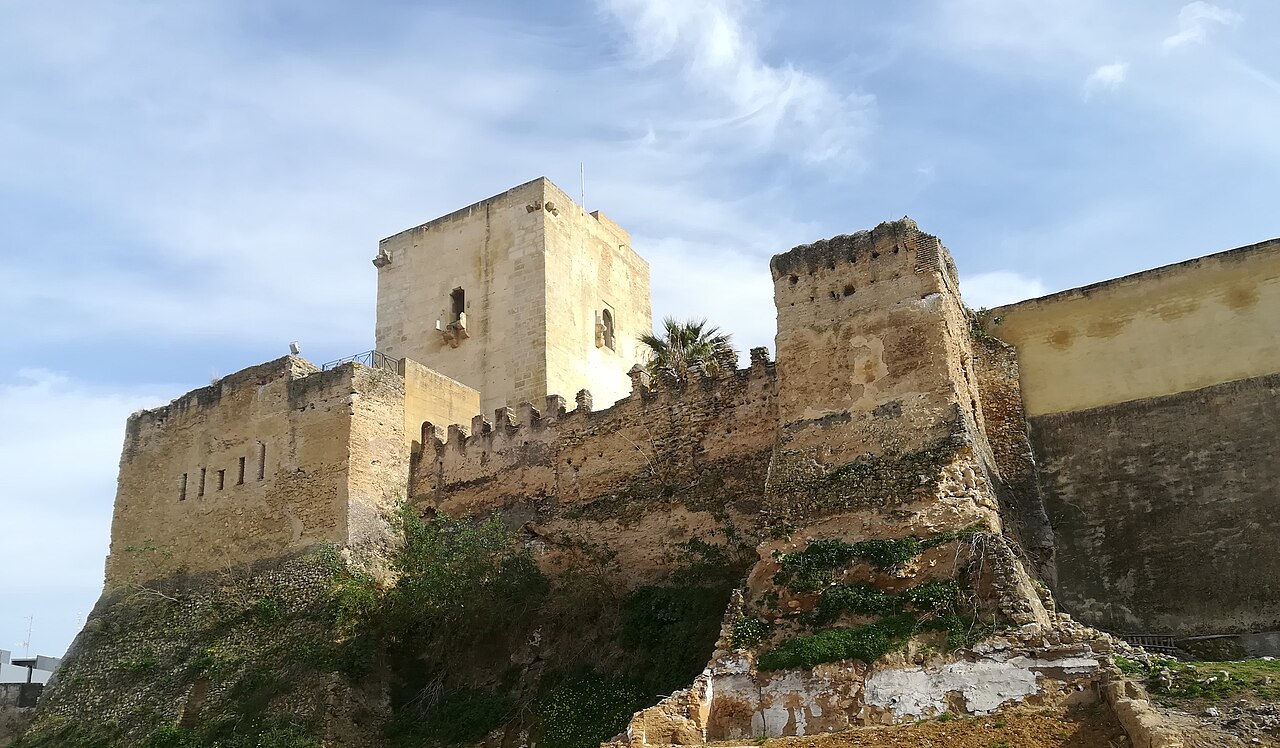
Aguzaderas Castle

Aguzaderas Castle in El Coronil, Spain
El Coronil, Spain
Late Medieval (14th–15th c.)
Partially Preserved

Aguzaderas Castle is situated just outside the town of El Coronil in southern Spain. This late-medieval fortress is notable for its origins linked to the Moors, who constructed it primarily to protect a crucial water source—a spring that supplied the fountain of Las Aguzaderas. The castle's strategic location highlights the importance of securing water in a region that witnessed prolonged conflict between the Moors and the Christian kingdoms during the Reconquista.

Historical context and significance

The area around El Coronil was a contested frontier during the 14th century, a period marked by frequent skirmishes and sieges as Christian forces pushed to reclaim territory from Moorish control. Water sources like the spring defended by Aguzaderas Castle were vital for sustaining both local populations and military garrisons. The castle's initial construction reflects the military and logistical priorities of the time, emphasizing resource protection as well as territorial control.

Historical records and archaeological evidence confirm that the castle was already established in the 14th century. Over the following centuries, particularly in the 15th and 16th centuries, the castle underwent modifications and reinforcements. These alterations likely correspond to changing military technologies and the evolving political landscape as Christian rule consolidated in the region.

Architectural features and layout

Aguzaderas Castle exemplifies the late-medieval military architecture typical of Moorish fortifications in Andalusia. The structure is primarily built from local stone, taking advantage of natural terrain features to enhance its defensive capabilities. Although much of the original construction remains, later adaptations introduced elements suited to the needs of its subsequent occupants.

The castle's design centers around protecting the spring, which was enclosed within the fortress walls. Defensive features likely included thick curtain walls, battlements, and possibly a watchtower or keep to oversee the surrounding landscape. The placement of the castle near a water source is a distinctive characteristic, underscoring the dual role of fortresses as both military strongholds and protectors of essential resources.

Modifications in the 15th and 16th centuries

During the late medieval period, the castle was adapted to meet new military challenges. These changes may have included strengthening walls to resist artillery, reconfiguring internal spaces for improved garrison accommodation, and enhancing water storage and access systems. Such modifications reflect the castle's continued strategic importance even after the primary conflicts of the Reconquista had subsided.

Role in regional conflicts

Aguzaderas Castle was part of a network of fortifications that controlled access to the fertile lands and water resources of the region. Its presence helped secure the area against raids and incursions, contributing to the stability of Christian-held territories after the fall of the Nasrid Kingdom of Granada. The castle's military function diminished over time as political borders stabilized and centralized authority increased.

Current condition and heritage value

Today, Aguzaderas Castle remains a significant historical monument, although it exists primarily in a state of partial preservation. The ruins provide valuable insights into Moorish defensive architecture and the military history of Andalusia during the late medieval period. Preservation efforts aim to maintain the site as a cultural heritage landmark accessible to visitors interested in Spain's complex medieval past.

The castle's location near El Coronil offers opportunities for historical tourism and education, highlighting the enduring legacy of the region's diverse cultural influences and the strategic importance of water in medieval warfare.

Frequently asked questions (FAQ)

What is the historical significance of Aguzaderas Castle?
Aguzaderas Castle was built by the Moors in the 14th century to protect a vital spring during prolonged conflicts between Moors and Christians in Andalusia.
Can visitors access Aguzaderas Castle today?
The castle is partially preserved and accessible to visitors, offering a glimpse into Moorish military architecture and medieval history near El Coronil.
When were the major modifications to the castle made?
Significant modifications were made in the 15th and 16th centuries to adapt the castle to changing military needs and technologies.
Why was the castle built near a spring?
The castle was strategically located to defend a spring that supplied water to the fountain of Las Aguzaderas, a crucial resource during medieval warfare.

Information

Hill Castle

Loading map...

Visitor reviews

No reviews yet. Been here? Write the first review and help other travelers!

Write the first review

Visited this castle? Share your experience

Your review helps other travelers and adds first-hand knowledge to our encyclopedia.

Write a review

(5/5)

0/2000 characters

Your review will be visible after admin approval

Nearby castles

17.4 km

Morón Castle

Morón de la Frontera, Spain

Morón Castle stands prominently on a commanding hilltop overlooking the town of Morón de la Frontera in southern Spain. This strategic vantage point offers sweeping views of the surrounding countryside and the Sierra Sevillana mountain range, underscoring its historical military importance. The site has a deep history of human settlement, with archaeological evidence of Tartessos and Roman communities predating the castle's construction. The castle's origins trace back to the 8th century AD, when the Arabs began fortifying the remnants of earlier Roman and Visigothic walls following the Islamic conquest of the Iberian Peninsula in 711. This early medieval fortress was part of a network of defensive structures securing the region during a period of political fragmentation and cultural transition. Historical development and significance During the 10th century, after the dissolution of the Caliphate of Córdoba, Morón became part of the Kingdom of Taifa. At this time, the castle reached its peak prominence as a fortified seat of power, reflecting the political and military turbulence of the era. The castle's fortifications were likely enhanced to withstand sieges and assert control over the surrounding territory. The Christian Reconquista brought significant change when King Fernando III of Castile, known as "The Saint", reconquered Morón and its castle in the 13th century. This marked the transition of the fortress from Islamic to Christian control, with subsequent modifications reflecting the new rulers' architectural and defensive needs. Architecture and structural features Morón Castle is classified as a hill castle, built to exploit the natural elevation for defense. Its construction incorporates elements from different periods, including Roman foundations, Visigothic masonry, and Islamic fortifications. The castle's walls are thick and robust, designed to resist attacks and provide vantage points for surveillance. The fortress likely included towers and battlements typical of medieval military architecture, though much of the original structure has been lost or altered over centuries. The castle's layout would have featured defensive walls enclosing a courtyard and essential facilities such as storage rooms and living quarters. Later modifications and residential use From the mid-16th century, Morón Castle transitioned from a purely military fortress to a noble residence. It was inhabited by prominent aristocratic families, including the Counts of Ureña and the Dukes of Osuna. During this period, the castle may have undergone adaptations to accommodate residential comforts while retaining its defensive character. Decline and preservation status The castle experienced significant decline during the 17th and 18th centuries, with abandonment leading to neglect and structural deterioration. This period was followed by episodes of ransacking and damage, culminating in substantial destruction by 1810, possibly related to the conflicts of the Napoleonic Wars in Spain. Today, Morón Castle remains a site of historical and archaeological interest. Although much of the original structure is no longer intact, the ruins provide valuable insight into the region's layered history from Roman times through the medieval Islamic period and the Christian Reconquista. Visiting Morón Castle Visitors to Morón de la Frontera can explore the castle ruins and enjoy panoramic views of the surrounding landscape. The site offers a tangible connection to the complex history of southern Spain, illustrating the cultural and military transformations over more than a millennium. The castle's elevated position makes it a notable landmark in the town, attracting tourists interested in medieval architecture, Spanish history, and archaeological heritage.

Early Medieval (5th–10th c.)
Details
20 km
Castillo de Utrera — Spain castle

Castillo de Utrera

Utrera, Spain

Castillo de Utrera is a prominent hill castle located in the province of Seville, Spain. This fortress occupies a strategic elevated position that historically provided a commanding view over the surrounding landscape, playing a crucial role in regional defense and control during the medieval period. Historical background and significance The origins of Castillo de Utrera date back to the Islamic period in the Iberian Peninsula, likely constructed during the 12th or 13th century when the region was under Moorish control. The castle was built as part of a network of fortifications designed to secure the territory and protect key routes in Andalusia. After the Christian Reconquest, the castle was integrated into the defensive system of the Kingdom of Castile, undergoing modifications to adapt to new military needs. Architectural features and layout The castle is characterized by its robust stone walls and rectangular towers that reinforce the perimeter. The main entrance is fortified with a and a , typical of medieval military architecture. Inside, the inner courtyard served as a central space for garrison activities and storage. Defensive structures The castle's defensive elements include merlons and battlements along the curtain walls, which provided cover for archers and soldiers. The elevation of the castle on a hill enhanced its defensive capabilities, making assaults difficult for attackers. The presence of a cistern ensured a water supply during sieges. Construction materials and techniques Constructed primarily from locally sourced stone and mortar, the castle exhibits the typical masonry techniques of the High to Late Medieval period. The walls are thick and designed to withstand artillery and siege engines of the time. Role through the centuries Throughout its history, Castillo de Utrera served as a military stronghold, administrative center, and refuge during conflicts. Its strategic location made it a focal point during various military campaigns in Andalusia. Over time, as warfare evolved and political boundaries shifted, the castle's military importance declined. Current condition and preservation Today, Castillo de Utrera remains partially preserved, with significant portions of its walls and towers intact. It stands as a historical monument reflecting the medieval military architecture of southern Spain. Conservation efforts have aimed to stabilize the ruins and make the site accessible to visitors interested in Spain's rich cultural heritage. Visiting information Visitors to Castillo de Utrera can explore the remains of the fortress and enjoy panoramic views from its elevated position. The site offers insight into the defensive strategies of the medieval period and the historical context of Andalusia's turbulent past. While facilities may be limited due to its ruinous state, the castle is a valuable destination for history enthusiasts and cultural tourists.

High Medieval (11th–13th c.)
Details
25.6 km

Fatetar Castle

Espera, Spain

Fatetar Castle is a historic fortress located on the summit of Monte Fatetar, the highest point in the town of Espera, Spain. This strategic position provides commanding views over the village and the surrounding landscape, highlighting its military significance throughout history. Constructed in 914 AD during the reign of Abderrahman III, the castle reflects the Islamic architectural and defensive techniques of the period, although its precise origins remain somewhat obscure. Historical significance and cultural layers The site of Fatetar Castle has witnessed a succession of cultures and civilizations, including the Romans, Visigoths, Arabs, Muslims, and Christians. Each group contributed to the castle's evolving structure and function. The castle's construction by Abderrahman III, the first Caliph of Córdoba, marks it as an important Islamic military fortress during the early medieval period. This era was characterized by the consolidation of Muslim rule in the Iberian Peninsula and the establishment of defensive sites to control territories and trade routes. Architectural features and remains Today, visitors can still observe the remains of Fatetar Castle's keep and portions of its defensive walls. The keep, typically the strongest and most fortified part of a castle, would have served as the last refuge during sieges. The surviving walls indicate the castle's robust construction, designed to withstand assaults and provide a vantage point for surveillance of the surrounding area. The chapel and religious significance Adjoining the castle's western angle is the Chapel of the Holy Christ of Antigua. This chapel forms an architectural unit with the castle and occupies a prominent position on the hill. It served as the primary place of worship for the local inhabitants until the early 17th century, when the Church of Our Lady of Grace was consecrated. The church's dedication to St. James, the patron saint of the Christian Reconquest, suggests that the chapel and castle were integrated into the Christian domain following the Reconquista. Transition from Muslim to Christian control The castle likely came under Christian control in the latter half of the 13th century, coinciding with the advances of Spanish forces during the Reconquista. The presence of the chapel and its religious function indicate the castle's adaptation from a Muslim fortress to a Christian stronghold. This transition reflects the broader historical shifts in Andalusia during the medieval period, where many Islamic fortifications were repurposed by Christian rulers. Strategic and cultural importance Fatetar Castle's location and enduring remains illustrate its role as a military and cultural landmark in the region. Its position atop Monte Fatetar allowed for effective control over the surrounding territory and communication with other fortifications. The castle and chapel together represent the layered history of Espera, embodying the complex interactions between different cultures and religions over centuries. Visiting Fatetar Castle today Visitors to Fatetar Castle can explore the ruins and enjoy panoramic views of Espera and its environs. The site offers a tangible connection to the region's medieval past and the architectural legacy of Islamic and Christian influences. Although only parts of the castle remain, the site provides valuable insight into the military architecture and historical transitions of southern Spain.

Early Medieval (5th–10th c.)
Details