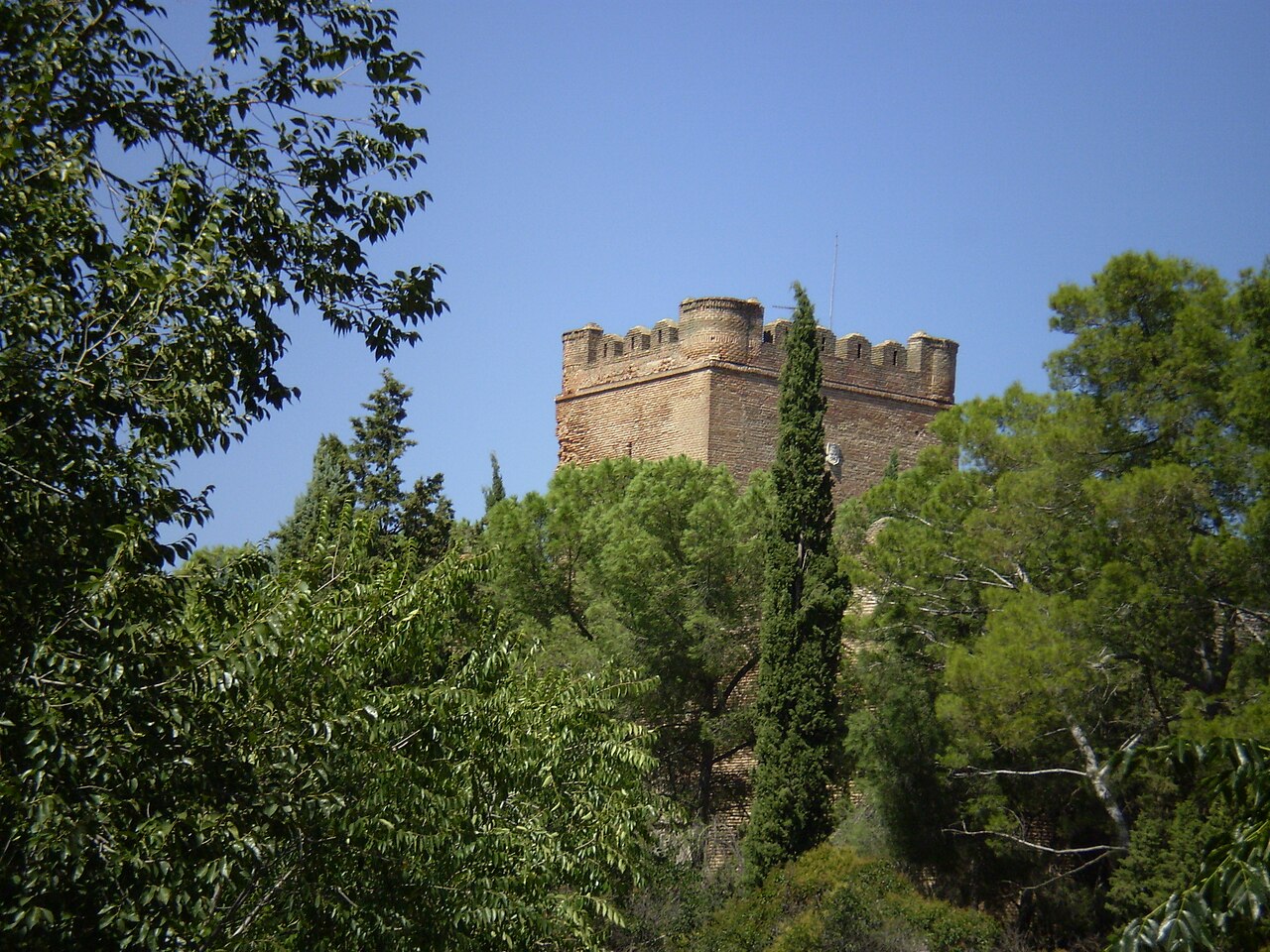
Castillo de Torrejón de Velasco
The Castillo de Torrejón de Velasco stands as a significant example of 15th-century military architecture in Spain, located in the town of Torrejón de Velasco. Erected during the late Middle Ages, this hill castle was constructed by the Christian kingdoms amidst the political and territorial consolidations of the period. Its origins trace back to an earlier structure mentioned in the 13th century, indicating the site's longstanding strategic importance.
Historical background and ownership
The castle's foundation is commonly attributed to Gutierre Gómez de Toledo, a nobleman affiliated with the House of Alba, which held sway over the region during the 1400s. Documentation from 1455 marks the castle's rising prominence, and by around 1465, ownership passed to Álvar Gómez, a relative of the founder and secretary to King Enrique IV of Castile. Political conflicts led to a royal siege commanded by Pedro Arias Dávila, lord of Puñonrostro, who seized the castle and incorporated it into his lordship.
Throughout the following centuries, the castle remained under the control of the lordship of Puñonrostro until the early 19th century. The Mendizábal Confiscation of church and noble properties in the 1830s resulted in the castle's permanent transfer from noble hands. Its military significance waned during the 16th century, transitioning into a prison for high-profile detainees from the royal court. Historical tradition connects the castle to notable figures such as Emperor Charles I of Spain and King Francis I of France, who reportedly rested there in 1526 en route to a royal marriage in Illescas. The castle also served as the final confinement for Nuño Beltrán de Guzmán, a controversial conquistador who died imprisoned there in 1544.
Architectural features and layout
Set on a rectangular plan approximately 37 meters long by 21 meters wide, the castle combines military defensive elements with later residential modifications that softened its fortress-like appearance. The primary construction material is rubble masonry, typical of the period, while the main entrance is crafted from sillarejo stone blocks. This entrance features a bent access passage topped by a pointed (ogival) arch, a defensive design intended to slow and expose attackers.
The defensive perimeter is reinforced by nine semicylindrical towers, known as cubos, spaced roughly seven meters apart. Four towers anchor each corner, while the remaining five line the longer sides, including a central tower on the northern façade. Inside these towers, remains of floors and partitions indicate they housed multiple stacked chambers, suggesting uses beyond mere defense, possibly including storage or living quarters.
The keep tower on the southwest side stands as the castle's main stronghold. Its size and fortification, including two small cylindrical turrets acting as buttresses, underscore its role as the last refuge during attacks. Surrounding the central courtyard are various rooms that likely served domestic or administrative functions, reflecting the castle's evolving role over time.
Notably, the castle retains an original water collection system, vital for sustaining inhabitants during sieges or droughts. This feature highlights the strategic planning embedded in the castle's design, ensuring self-sufficiency in times of conflict.
Later history and preservation efforts
By the 18th century, the castle had declined in military importance and was repurposed for industrial activities, including a soap factory and a wool spinning mill by 1775. The Peninsular War inflicted serious damage when French troops caused significant destruction. In the 20th century, the castle's function shifted again, serving as storage for farm equipment and as a stable.
Remaining in private ownership until 2002, the castle was then acquired by the local municipality. Recognized as endangered heritage by Hispania Nostra in 2006, restoration efforts have focused initially on stabilizing the central keep tower, with funding from the Community of Madrid. Conservation work has also included adaptations to support local wildlife, particularly nesting birds, carried out in partnership with the wildlife group GREFA.
Current condition and significance
Today, the castle's external walls are relatively well preserved compared to its interior, allowing visitors to appreciate the original fortified enclosure's scale and design. The blend of military architecture and later residential elements provides insight into the castle's transformation from a fortress to a noble residence and prison. Its historical associations with prominent figures and events add cultural depth to the site, making it a valuable heritage asset in the region.
Architectural details of note
The use of semicylindrical towers or cubos spaced regularly around the perimeter is a characteristic defensive feature designed to eliminate blind spots and allow for enfilading fire along the walls. The bent entrance passage with its ogival arch is a sophisticated defensive measure that forced attackers to navigate a narrow, angled approach, exposing them to defenders on the walls above.
The keep tower's buttresses are unusual for their small cylindrical form, providing both structural reinforcement and aesthetic distinction. The presence of multiple floors within the towers indicates a complex internal arrangement, possibly including guardrooms, storage spaces, and living quarters, reflecting the castle's multifunctional nature.
Historical context within the region
The castle's location in the Community of Madrid situates it within a historically contested borderland between Christian and Muslim territories during the Reconquista. Its construction during the 15th century aligns with the period of consolidation of Christian kingdoms in central Spain, serving both as a military stronghold and a symbol of noble authority.
Throughout its history, the castle's role shifted in response to broader political and social changes, from a defensive fortress to a noble residence, a prison, an industrial site, and finally a heritage monument. This evolution mirrors the wider historical transformations experienced across Spain from the late medieval period through the modern era.
Frequently asked questions (FAQ)
- How do I get to Castillo de Torrejón de Velasco?
- Castillo de Torrejón de Velasco is located in the town of Torrejón de Velasco, Spain. You can reach the castle by car, and there are parking facilities available nearby. Public transportation options may include local buses that connect to the town from larger cities.
- What is the historical significance of Castillo de Torrejón de Velasco?
- Castillo de Torrejón de Velasco dates back to the 15th century and served as a defensive structure during the Reconquista. It has witnessed various historical events, including conflicts between kingdoms. Today, it stands as a symbol of the area's rich medieval heritage.
- When was Castillo de Torrejón de Velasco built?
- The construction of Castillo de Torrejón de Velasco began in the late 1400s and was completed in the early 1500s. It was strategically built to protect the region from invasions during a turbulent period in Spanish history. Its architecture reflects the military needs of the time.
- Can I visit Castillo de Torrejón de Velasco?
- Yes, Castillo de Torrejón de Velasco is open to visitors. However, it is recommended to check the official website or local tourism information for any specific visiting guidelines or restrictions. Guided tours may be available to enhance your experience.
- Why is the architecture of Castillo de Torrejón de Velasco noteworthy?
- The architecture of Castillo de Torrejón de Velasco features a blend of Gothic and Renaissance styles, showcasing the evolution of military architecture in Spain. Its robust walls and strategic layout highlight its purpose as a fortress. Visitors can appreciate the intricate details and historical significance of its design.
- Is it possible to visit nearby attractions after seeing the castle?
- Absolutely! After visiting Castillo de Torrejón de Velasco, you can explore nearby attractions such as the scenic parks and local museums in the town. Additionally, the region offers other historical sites and charming villages that make for great day trips.
- What are the opening hours for Castillo de Torrejón de Velasco?
- Opening hours for Castillo de Torrejón de Velasco can vary depending on the season. Typically, the castle is open to visitors from late morning until early evening, but it's best to confirm the exact hours before your visit. Special events or holidays may also affect opening times.
- What are the ticket prices for visiting Castillo de Torrejón de Velasco?
- Ticket prices for Castillo de Torrejón de Velasco are generally affordable, with discounts available for children, seniors, and groups. Entry fees may vary based on guided tours or special events. Check the official website for the most current pricing information before your visit.
- When is the best time to visit Castillo de Torrejón de Velasco?
- The best time to visit Castillo de Torrejón de Velasco is during the spring and fall when the weather is mild and pleasant for outdoor exploration. Summer can be quite hot, while winter may bring chilly temperatures. Check local events as well, as they can enhance your visit.
Information
Loading map...
Visitor reviews
No reviews yet. Been here? Write the first review and help other travelers!
Write the first reviewVisited this castle? Share your experience
Your review helps other travelers and adds first-hand knowledge to our encyclopedia.