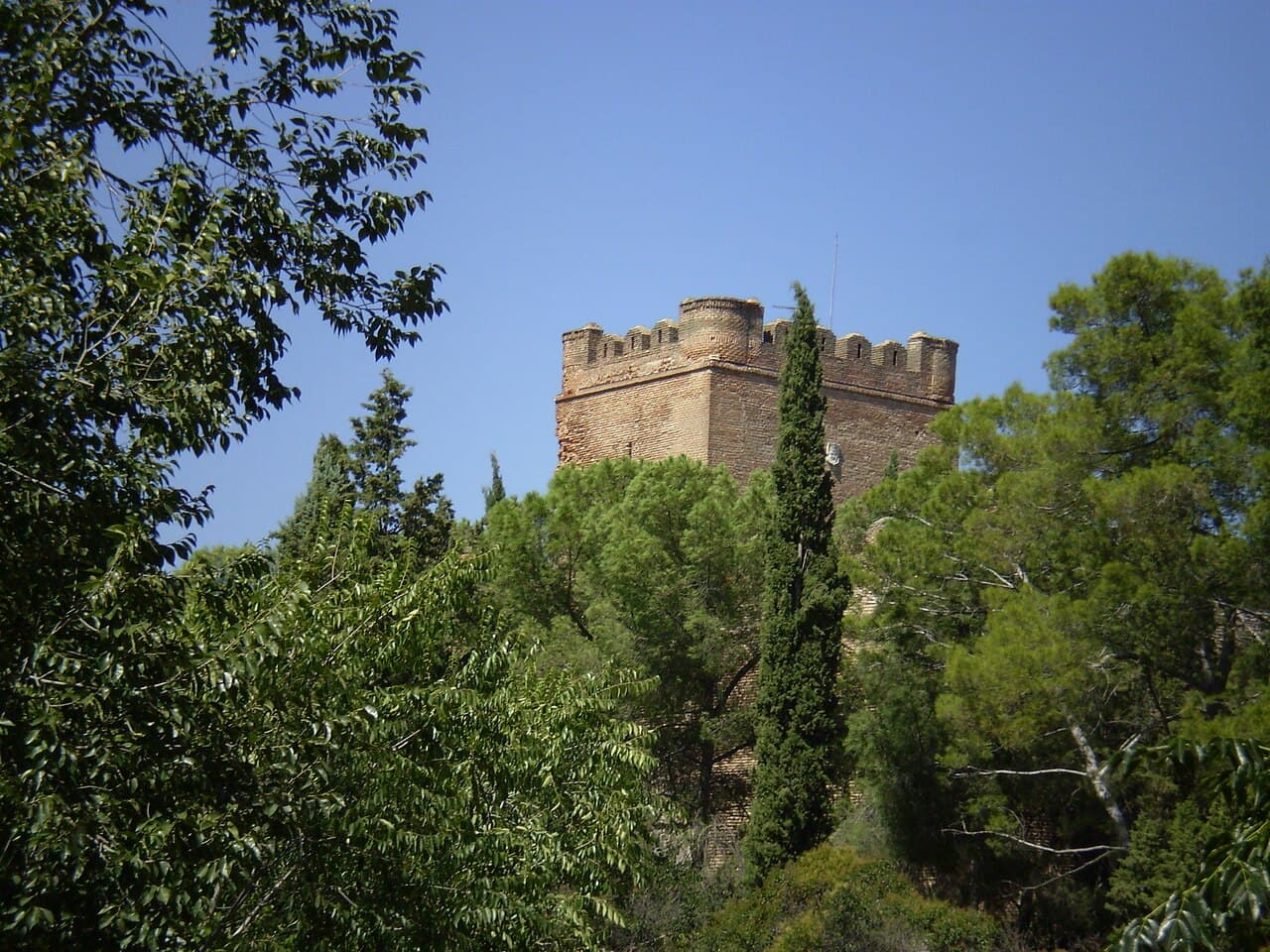
Batres Castle
Batres Castle is a distinguished late medieval hill castle located in the municipality of Batres, Spain. Constructed primarily in the 15th century, this fortress stands as a remarkable example of military and residential architecture from the transitional period between the Middle Ages and the Renaissance. Its strategic position atop a hill, surrounded by a natural moat formed by streams flowing into the nearby Guadarrama River, underscores its defensive purpose while offering commanding views of the surrounding landscape.
The castle's square floor plan is centered around the imposing Torre del Homenaje or keep, which rises to a height of 25 metres. This tower is not only the oldest part of the fortress but also its symbolic heart, projecting forward from the main building to serve both defensive and residential functions. The castle's walls are constructed from fired clay bricks laid on robust flint foundations, a typical material combination in the region during the late medieval period.
Architectural features and design
One of the castle's most distinctive architectural elements is the diamond-shaped pattern on the corners of its towers. These corners culminate in circular terraces at the top, an unusual feature that adds both aesthetic appeal and functional defensive advantages. The main entrance is marked by a Gothic-Isabelline portal, renowned for its intricate design and the display of two heraldic coats of arms belonging to the Laso de la Vega and Guzmán families. These symbols commemorate the union of two noble houses through marriage in the 15th century, linking the castle's history to prominent Spanish aristocracy.
Inside, the castle boasts a Renaissance courtyard with Plateresque galleries, characterized by richly decorated stonework that exemplifies the Spanish Renaissance style. The courtyard is surrounded by a double gallery supported by Toledan columns, typical of the architectural traditions of the Toledo region. A 16th-century iron balcony adds ornamental detail, while a Gothic-style well at the courtyard's center, originally used to supply water, remains preserved as a historical feature.
Historical significance and ownership
The castle was originally built as the fortified residence of the lords of Batres, serving both as a defensive stronghold and a noble palace. One of its most notable residents was Garcilaso de la Vega, a celebrated Spanish poet born around 1501 or 1503 in Toledo. He inherited the castle and lordship through his mother, Sancha de Guzmán, linking the estate to two influential noble families. The castle subsequently passed into the hands of the Counts of Oñate and later the Marquises of Riscal, reflecting its continued importance within Spanish aristocratic circles.
In the 20th century, the castle underwent significant restoration under the guidance of architect Luis Moreno de Cala y Torres, who acquired the property in the 1970s. His efforts preserved the castle's architectural integrity while adapting it for modern use as the School of Gardening and Landscaping Castillo de Batres. This adaptive reuse blended heritage conservation with educational purposes, ensuring the castle's ongoing relevance.
Surrounding landscape and additional structures
The castle's setting is enriched by Mediterranean vegetation, including holm oak, pine, and cypress trees, alongside cultivated garden plants. The natural moat created by surrounding streams enhances the defensive character of the site.
The castle complex includes several ancillary structures and features that contribute to its historical ensemble. These include the Fuente de Garcilaso, a fountain located under a brick arch and framed by marble plaques engraved with verses, possibly linked to the poet Garcilaso de la Vega or his family. The Huerta del Mirador garden area, a parish church serving the local community, an underground cellar for storage, and a bridge crossing the Sotillo stream are integral parts of the estate. Additional elements such as the Fuente del Chorro fountain, castle fences, a warehouse, the gardener's house, and a water dam further illustrate the castle's multifaceted role as a noble residence and functional estate.
Protection and cultural heritage
Batres Castle and its associated monuments were officially recognized as a Historic-Artistic Ensemble by the Spanish Ministry of Education and Science in 1970. This designation highlights the castle's architectural, historical, and cultural significance within Spain's heritage. Ongoing restoration and conservation efforts have maintained the castle's condition, allowing visitors to experience its historical ambiance and architectural features firsthand.
Today, Batres Castle remains a prominent landmark in the region, attracting visitors interested in medieval and Renaissance architecture, Spanish history, and noble heritage. Its combination of defensive features, artistic details, and historical associations make it a valuable site for both education and tourism.
Frequently asked questions (FAQ)
- How do I visit Batres Castle?
- Batres Castle is located in the town of Batres, Community of Madrid. Visitors should check local tourism websites or contact the School of Gardening and Landscaping Castillo de Batres for current visiting hours and tour availability.
- What architectural styles are present in Batres Castle?
- Batres Castle features a mix of late medieval military architecture and Renaissance elements, including a Gothic-Isabelline portal and Plateresque galleries in the courtyard.
- Who was Garcilaso de la Vega and what is his connection to Batres Castle?
- Garcilaso de la Vega was a renowned Spanish poet of the early 16th century who inherited Batres Castle through his mother, Sancha de Guzmán. His family ties link the castle to prominent noble houses.
- Is Batres Castle accessible for educational visits?
- Yes, the castle currently houses the School of Gardening and Landscaping Castillo de Batres, making it suitable for educational visits focused on heritage and landscape studies.
- What makes the towers of Batres Castle unique?
- The towers of Batres Castle are notable for their diamond-shaped corners that end in circular terraces, a distinctive architectural feature uncommon in Spanish castles.
Photo gallery

Information
Sources & official resources
Verify the information above using these authoritative references.
Loading map...
Visitor reviews
No reviews yet. Been here? Write the first review and help other travelers!
Write the first reviewVisited this castle? Share your experience
Your review helps other travelers and adds first-hand knowledge to our encyclopedia.



