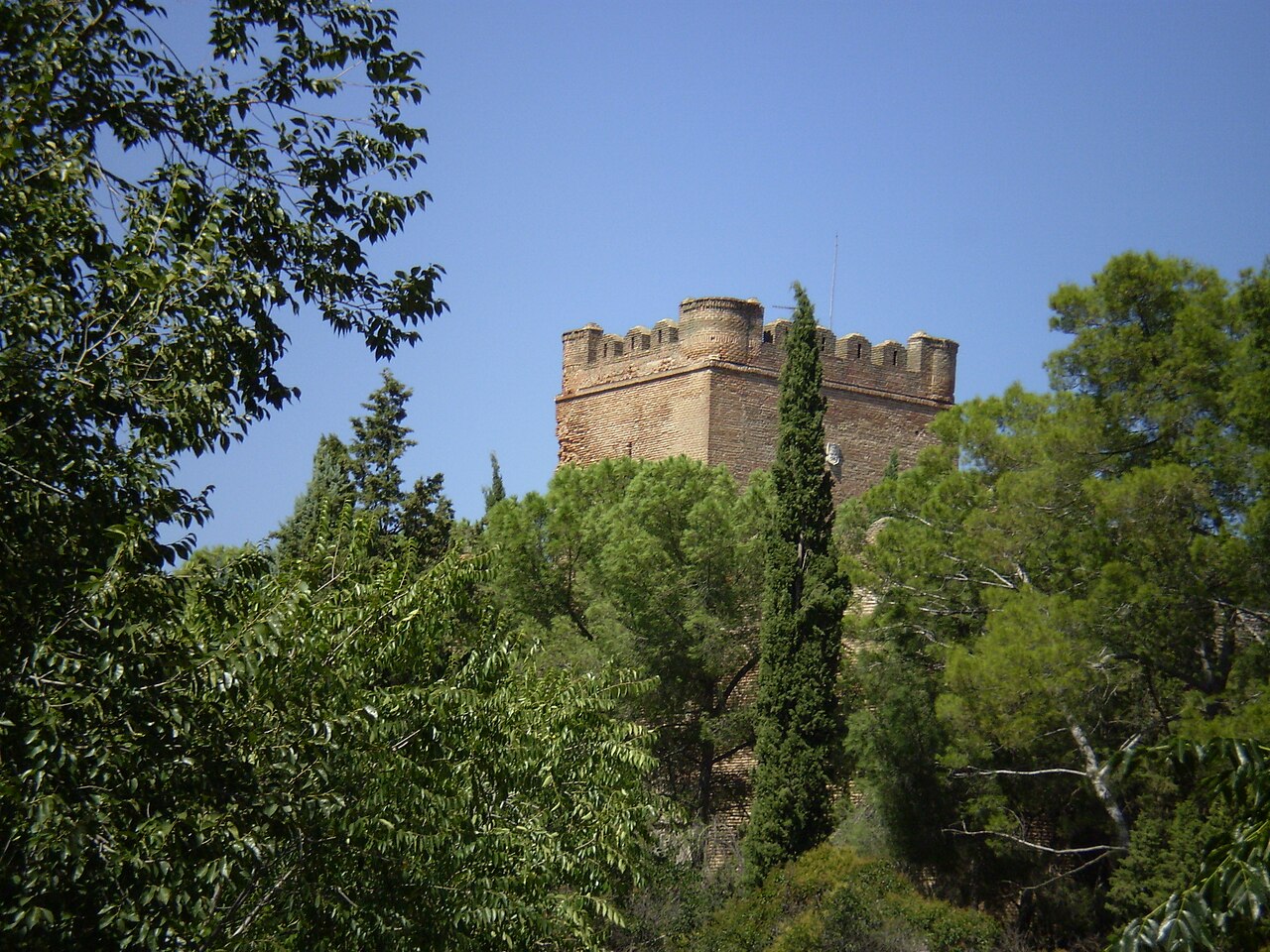
Puñoenrostro Castle
Puñoenrostro Castle, also known as Castillo de Puñoenrostro or Castillo de Seseña, is a significant late medieval fortress located near the town of Seseña in the province of Toledo, Spain. Constructed in the 14th century, this castle reflects the military architectural style typical of the period, combining defensive functionality with noble residence features.
Historical background and ownership
The castle's name originates from the Dukes of Puñoenrostro, a noble family of the Arias Dávila lineage. This family received the lands from the King of Castile and maintained ownership of the castle and its surrounding estates until the 19th century. The castle thus served as a symbol of feudal power and territorial control in this region of Castile during the late medieval period.
Architectural layout and defensive features
Puñoenrostro Castle is characterized by a simple square plan fortified by round towers at each of its four corners. This design was a common defensive strategy in medieval fortifications, allowing for overlapping fields of fire and reducing blind spots. The castle's keep follows the same square footprint and notably projects from the southern curtain wall, enhancing its defensive capability and providing a vantage point over the surrounding landscape.
The keep and machicolations
The keep is a prominent feature, crowned by a line of machicolations along its top. These openings allowed defenders to drop projectiles or boiling substances on attackers attempting to scale the walls, a standard medieval defensive element. The presence of machicolations indicates the castle's primary function as a military stronghold.
Curtain walls and towers
Originally, the castle was enclosed by a secondary curtain wall, smaller in scale and reinforced with smaller corner towers. This outer wall added an extra layer of protection, creating a defensive perimeter. Today, only fragments of this wall and three of its towers remain, illustrating the castle's gradual decline and partial ruin over centuries.
Gate and moat
The main entrance was strategically guarded by two of the smaller towers and accessed via a drawbridge spanning a dry moat. This combination of features was designed to impede enemy access and enhance the castle's defensibility.
Current condition and accessibility
At present, Puñoenrostro Castle appears to be privately owned and is not open to the public. The castle remains closed, limiting access to its interior spaces and detailed architectural features. Despite this, the visible remains offer valuable insight into 14th-century military architecture and the feudal history of the Toledo region.
Significance in medieval Spanish fortifications
Puñoenrostro Castle exemplifies the typical late medieval fortification style in central Spain, reflecting the transition from purely military structures to residences with defensive capabilities. Its square layout with corner towers and the projecting keep are characteristic of the period's castles built to withstand sieges and assert noble authority.
Though not as grand or extensively preserved as some other Spanish castles, Puñoenrostro's architectural features such as its machicolated keep and former curtain walls contribute to understanding the evolution of castle design in the Iberian Peninsula during the 14th century. Its association with the Arias Dávila family further anchors it within the socio-political fabric of medieval Castile.
Frequently asked questions (FAQ)
- What is the historical significance of Puñoenrostro Castle?
- Puñoenrostro Castle is a significant example of medieval military architecture in Spain, reflecting the region's turbulent history during the Reconquista. Built in the 15th century, it served as a defensive stronghold and played a crucial role in protecting the surrounding areas from invasions.
- When was Puñoenrostro Castle built?
- The construction of Puñoenrostro Castle dates back to the late 15th century, around 1470. It was strategically designed to serve as a fortress during a time of conflict, making it an important landmark in the history of Seseña and its surroundings.
- What are the opening hours for visiting Puñoenrostro Castle?
- Puñoenrostro Castle is open to visitors from 10 AM to 6 PM during the weekdays and from 10 AM to 8 PM on weekends. It is advisable to check for any seasonal changes in hours or special holiday openings before planning your visit.
- Can I take guided tours of Puñoenrostro Castle?
- Yes, guided tours are available at Puñoenrostro Castle, providing visitors with in-depth knowledge about its history and architecture. These tours usually last about an hour and are led by knowledgeable guides who can answer your questions and share fascinating stories about the castle.
- Is it possible to access Puñoenrostro Castle with a wheelchair?
- Puñoenrostro Castle has made efforts to improve accessibility for visitors with mobility challenges. While some areas may be difficult to navigate due to the castle's historical architecture, there are designated pathways and facilities to assist wheelchair users.
- What are the ticket prices for visiting Puñoenrostro Castle?
- The ticket prices for Puñoenrostro Castle are quite reasonable, with adult tickets priced at €5 and discounted tickets for students and seniors at €3. Children under the age of 12 can enter for free, making it an affordable option for families.
- When is the best time to visit Puñoenrostro Castle?
- The best time to visit Puñoenrostro Castle is during the spring and early autumn months when the weather is mild and pleasant. This allows visitors to enjoy the outdoor surroundings and the stunning views from the castle without the discomfort of extreme temperatures.
- What nearby attractions can I explore after visiting Puñoenrostro Castle?
- After visiting Puñoenrostro Castle, you can explore the charming town of Seseña, known for its beautiful parks and historical sites. Additionally, the nearby city of Toledo, famous for its rich history and cultural heritage, is just a short drive away and offers a wealth of attractions to discover.
Information
Address
Calle Puñoenrostro, Seseña, Toledo, Spain
Loading map...
Visitor reviews
No reviews yet. Been here? Write the first review and help other travelers!
Write the first reviewVisited this castle? Share your experience
Your review helps other travelers and adds first-hand knowledge to our encyclopedia.