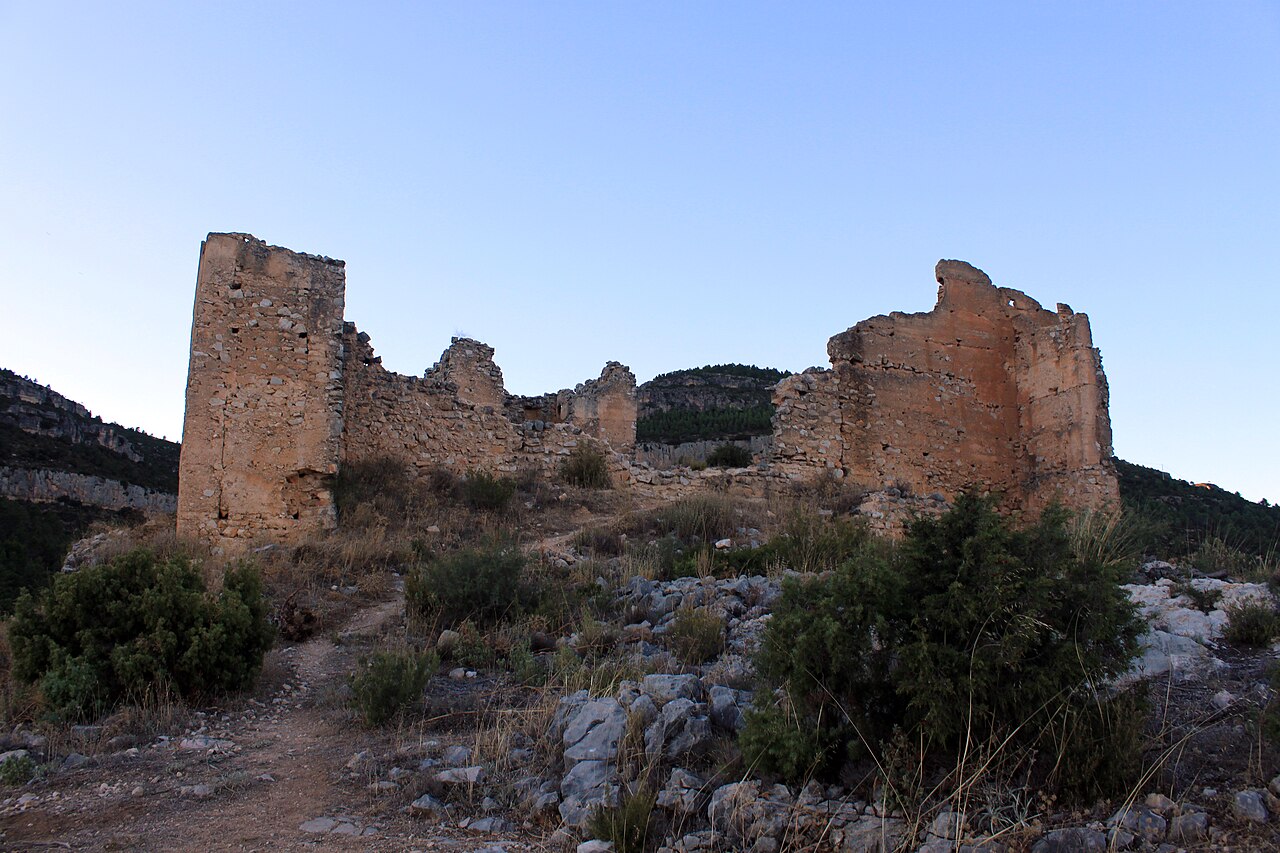
Castillo de Sot de Chera
The Castillo de Sot de Chera is a remarkable example of a hill castle located in the town of Sot de Chera, Spain. Constructed originally by Muslim builders during the Islamic period on the Iberian Peninsula, this fortress stands atop a rocky outcrop commanding views over the Sot River valley. Its strategic position enabled it to serve as a defensive stronghold protecting the surrounding settlement and controlling the vital landscape below.
Dating back to the High Medieval period, the castle reflects the complex history of Muslim occupation and later Christian influence in the region. The fortress is closely linked to the adjacent Arab neighborhood, which historically surrounded the castle and included a network of homes and structures. Archaeological evidence reveals that some of these houses incorporated underground tunnels and galleries that were contemporary with the castle's active use, indicating a sophisticated settlement pattern designed for both defense and community life.
Architectural features and construction
The most prominent surviving feature of the Castillo de Sot de Chera is its large square tower, often identified as the torre del homenaje or keep. This tower was constructed using tapial, a technique involving compacted earth combined with masonry, which was a common method in Islamic military architecture in Iberia. The tower's walls are notably thick at the base—measuring approximately 1.9 meters—and taper towards the top, a design that balances defensive strength with structural stability.
The tower originally comprised four floors separated by wooden beams, with sockets for these beams still visible in the walls. The ground floor likely served as a secure storage or refuge area during sieges, featuring remnants of a cistern designed to collect rainwater from the roof, ensuring self-sufficiency. The upper floors combined residential and defensive functions, with the top level possibly serving as a battlement walkway, protected by partially preserved almenas (battlements) that provided cover for defenders.
Surrounding the tower are the remains of defensive walls enclosing three sides of the fortress, while the western side benefits from a natural steep cliff, enhancing the castle's defensibility. The walls and tower are built directly on the natural rock outcrop, emphasizing the castle's integration with its terrain and strategic use of natural defenses.
Historical context and cultural significance
The Castillo de Sot de Chera occupies a significant place in the layered history of the region, illustrating the transition from Muslim to Christian control. While specific historical events or rulers associated with the castle are not well documented, the presence of an early Christian church ruin adjacent to the fortress indicates the area's later religious and cultural transformation following the Reconquista.
Archaeological excavations in the castle's vicinity have uncovered ceramic fragments from both the Iberian and Muslim periods, attesting to the continuity of habitation and cultural exchange over centuries. The castle and its neighborhood thus provide valuable insights into the daily life, defense strategies, and community organization during a turbulent era in Iberian history.
Preservation and restoration efforts
Recognized as a Bien de Interés Cultural monument in 2001, the Castillo de Sot de Chera has been the focus of conservation initiatives aimed at stabilizing and restoring its key structures. Local authorities have undertaken rehabilitation projects to preserve the square tower and the remaining defensive walls, ensuring that this historic site remains accessible and protected for future generations.
These efforts have included structural consolidation, archaeological study, and the safeguarding of the castle's unique architectural features, such as the tapial construction and wood beam sockets. The castle today stands as a testament to the region's rich medieval heritage and the enduring legacy of its Islamic and Christian past.
Exploring the castle and its surroundings
Visitors to the Castillo de Sot de Chera can explore the remains of the fortress, including the imposing square tower and fragments of the original defensive walls. The castle's elevated position offers panoramic views of the Sot River valley and the town below, providing a vivid sense of the strategic importance of the site.
The nearby ruins of the early church and the remnants of the historic Arab neighborhood add depth to the visitor experience, illustrating the cultural and historical layers that define Sot de Chera. Archaeological finds such as ceramic fragments and underground galleries enrich the narrative of the castle's role in the region's medieval society.
While the castle is partially preserved, ongoing conservation efforts continue to enhance its accessibility and interpretative potential, making it a valuable destination for those interested in medieval military architecture, Islamic heritage in Spain, and the complex history of the Iberian Peninsula.
Frequently asked questions (FAQ)
- What is the historical significance of Castillo de Sot de Chera?
- Castillo de Sot de Chera is a hilltop fortress built by Muslim builders during the Islamic period in Spain, illustrating the region's medieval Islamic heritage and later Christian influences.
- Can visitors explore the interior of the square tower?
- Visitors can explore the remains of the large square tower, including its four floors and defensive features, though access may be limited due to preservation efforts.
- When was the castle recognized as a cultural monument?
- The castle was declared a Bien de Interés Cultural monument in 2001, highlighting its importance and ensuring protection under Spanish heritage laws.
- Are there any archaeological findings around the castle?
- Yes, archaeological excavations have uncovered ceramic fragments from Iberian and Muslim periods, as well as underground tunnels and galleries associated with the historic Arab neighborhood.
- Is the castle easily accessible for visitors?
- The castle is located on a rocky hill overlooking Sot de Chera, which may require a moderate hike; visitors should wear appropriate footwear and check local access conditions.
Information
Website
Visit websiteSources & official resources
Verify the information above using these authoritative references.
Loading map...
Visitor reviews
No reviews yet. Been here? Write the first review and help other travelers!
Write the first reviewVisited this castle? Share your experience
Your review helps other travelers and adds first-hand knowledge to our encyclopedia.