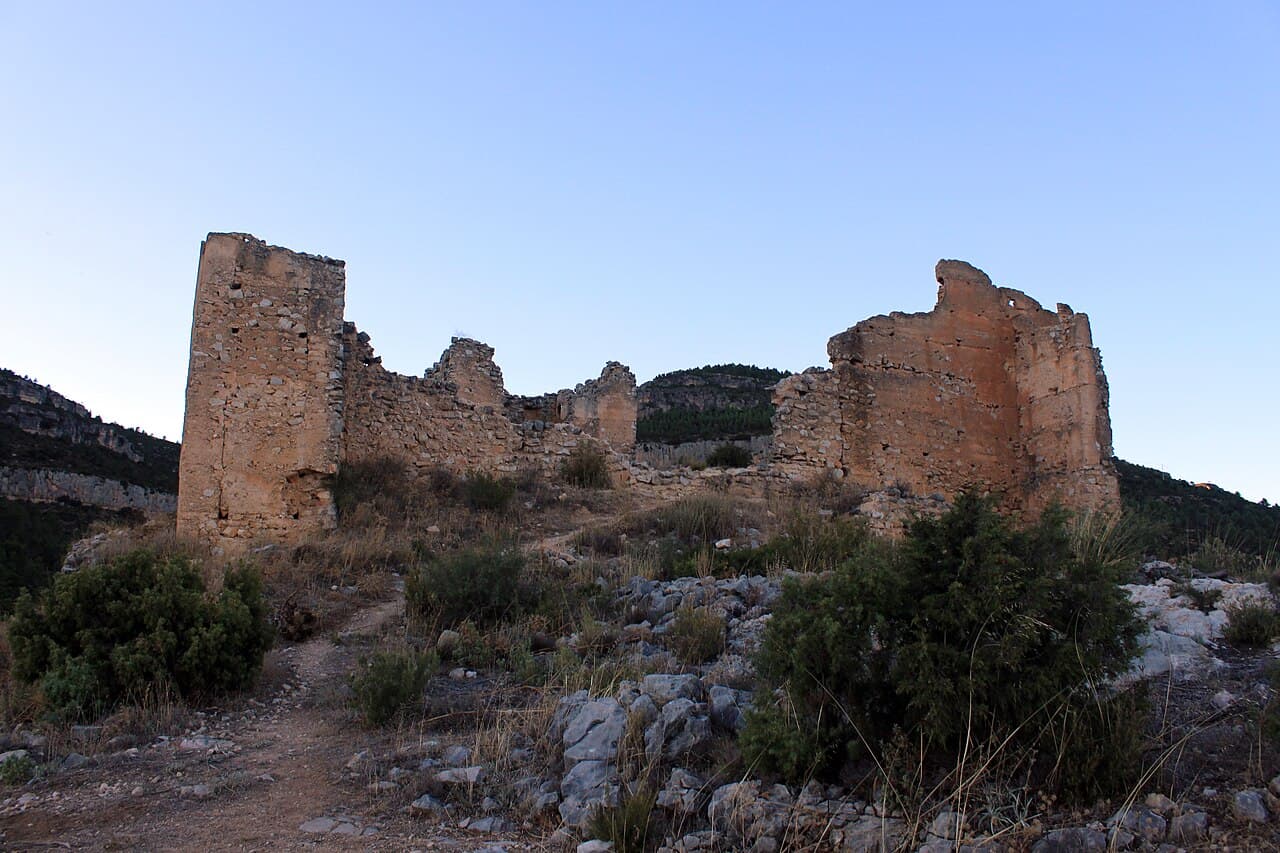
Castillo de Chera — Spain castle

Castillo de Chera

Castillo de Chera: 12th-century high medieval castle ruins in Valencia
Chera, Spain
High Medieval (11th–13th c.)
Ruins

Castillo de Chera is a historic castle ruin situated in the municipality of Chera within the Valencian Community of Spain. Dating back to the 12th century, this castle is a significant example of high medieval military architecture in the region. Though now in ruined condition, the remains of the castle offer valuable insight into the defensive structures and strategic importance of fortifications during the medieval period in Spain.

Historical background and strategic importance

The castle was originally constructed in the high medieval period, a time marked by frequent territorial conflicts and the consolidation of Christian kingdoms during the Reconquista. The location of Castillo de Chera was strategically chosen to oversee and control the surrounding valleys and routes, serving as a military stronghold to defend against invasions and raids.

Throughout its history, the castle played a role in regional power struggles and was part of the defensive network that protected the Kingdom of Valencia. Its position allowed for surveillance over key communication and trade paths, which was essential for maintaining control in the area.

Architectural features and layout

The surviving ruins reveal the castle was built primarily using local stone, typical of high medieval fortifications in Spain. The castle likely featured a keep or donjon as its central stronghold, surrounded by defensive walls and towers. Although much of the structure has deteriorated, remnants of the curtain walls and foundations of towers can still be discerned.

The castle's design would have included battlements and arrow slits for archers, allowing defenders to repel attackers effectively. Its elevated position on a hill provided natural defense advantages, complementing the man-made fortifications.

The castle's decline and current state

Over the centuries, Castillo de Chera fell into disuse and was eventually abandoned, leading to its current state as archaeological ruins. The ravages of time, weather, and possible conflicts contributed to the deterioration of the walls and structures.

Today, the site is recognized for its cultural and historical value, attracting visitors interested in medieval history and archaeology. Efforts to preserve and study the ruins help to maintain the legacy of the castle and provide educational opportunities about the region's medieval past.

Visiting Castillo de Chera

Visitors to the castle can explore the ruins and enjoy panoramic views of the surrounding landscape. The site offers a tangible connection to the medieval history of the Valencian Community and the broader historical narrative of Spain's Reconquista era.

Access to the ruins is generally open to the public, although facilities may be limited due to the site's condition. It is advisable to wear suitable footwear and prepare for uneven terrain when visiting.

Nearby attractions

The town of Chera itself provides additional cultural and historical points of interest, including traditional architecture and local festivals. The natural surroundings also offer opportunities for hiking and nature exploration, complementing a visit to the castle ruins.

Frequently asked questions (FAQ)

How do I get to Castillo de Chera?
Castillo de Chera is located in the picturesque village of Chera, Spain. You can reach it by car, with parking available nearby, or by taking public transport to Chera and walking to the castle. The surrounding scenery makes the journey worthwhile, offering beautiful views of the countryside.
What is the historical significance of Castillo de Chera?
Castillo de Chera dates back to the 13th century and played a crucial role in the defense of the region during the Reconquista. It is a testament to the strategic importance of the area and showcases the architectural styles of its time. The castle not only served as a military stronghold but also as a residence for local nobility.
When was Castillo de Chera built?
Construction of Castillo de Chera began in the early 13th century, specifically around the year 1238. Over the centuries, it has undergone various renovations and restorations to maintain its structure. Today, it stands as a remarkable example of medieval military architecture.
Can I visit Castillo de Chera year-round?
Yes, Castillo de Chera is open to visitors year-round, although specific opening hours may vary seasonally. It is advisable to check the official tourism website for the most current information on visiting times. Guided tours are often available to enhance your experience.
Why is Castillo de Chera a popular tourist attraction?
Castillo de Chera attracts visitors due to its rich history, stunning views, and well-preserved architecture. The panoramic vistas from the castle provide a breathtaking backdrop for photography and exploration. Additionally, its proximity to hiking trails and natural parks makes it a perfect destination for outdoor enthusiasts.
Is it possible to access the castle with limited mobility?
While Castillo de Chera has some areas that can be accessed by visitors with limited mobility, the terrain around the castle can be challenging. It is recommended to contact the local tourism office for detailed accessibility information and assistance. They can provide guidance on the best routes for those with mobility concerns.
What are the ticket prices for visiting Castillo de Chera?
Admission to Castillo de Chera is typically free, but there may be fees for guided tours or special events. It's best to check the official website for any updates on pricing and special offers. This makes it an affordable option for families and history enthusiasts alike.
What is the best time to visit Castillo de Chera?
The best time to visit Castillo de Chera is during the spring and fall when the weather is mild and the surroundings are particularly beautiful. Summer can be hot, while winter may bring colder temperatures. Visiting during the spring or fall allows you to enjoy the vibrant landscapes and comfortable temperatures.
What nearby attractions can I explore after visiting Castillo de Chera?
After exploring Castillo de Chera, you can visit the charming village of Chera, known for its traditional architecture and local cuisine. Additionally, the surrounding natural parks offer hiking and outdoor activities, making it an excellent opportunity to experience the beauty of the region. Don't miss the chance to explore the nearby towns that are rich in culture and history.

Photo gallery

Castillo de Chera
Click to view

Photo by Falconaumanni•CC BY-SA 3.0

1 photo • Click any image to view in full screen

Information

Archaeological Site / Ruins

Loading map...

Visitor reviews

No reviews yet. Been here? Write the first review and help other travelers!

Write the first review

Visited this castle? Share your experience

Your review helps other travelers and adds first-hand knowledge to our encyclopedia.

Write a review

(5/5)

0/2000 characters

Your review will be visible after admin approval

Nearby castles

7.6 km

Castillo de Sot de Chera

Sot de Chera, Spain

The Castillo de Sot de Chera is a remarkable example of a hill castle located in the town of Sot de Chera, Spain. Constructed originally by Muslim builders during the Islamic period on the Iberian Peninsula, this fortress stands atop a rocky outcrop commanding views over the Sot River valley. Its strategic position enabled it to serve as a defensive stronghold protecting the surrounding settlement and controlling the vital landscape below. Dating back to the High Medieval period, the castle reflects the complex history of Muslim occupation and later Christian influence in the region. The fortress is closely linked to the adjacent Arab neighborhood, which historically surrounded the castle and included a network of homes and structures. Archaeological evidence reveals that some of these houses incorporated underground tunnels and galleries that were contemporary with the castle's active use, indicating a sophisticated settlement pattern designed for both defense and community life. Architectural features and construction The most prominent surviving feature of the Castillo de Sot de Chera is its large square tower, often identified as the torre del homenaje or keep. This tower was constructed using tapial, a technique involving compacted earth combined with masonry, which was a common method in Islamic military architecture in Iberia. The tower's walls are notably thick at the base—measuring approximately 1.9 meters—and taper towards the top, a design that balances defensive strength with structural stability. The tower originally comprised four floors separated by wooden beams, with sockets for these beams still visible in the walls. The ground floor likely served as a secure storage or refuge area during sieges, featuring remnants of a cistern designed to collect rainwater from the roof, ensuring self-sufficiency. The upper floors combined residential and defensive functions, with the top level possibly serving as a battlement walkway, protected by partially preserved almenas (battlements) that provided cover for defenders. Surrounding the tower are the remains of defensive walls enclosing three sides of the fortress, while the western side benefits from a natural steep cliff, enhancing the castle's defensibility. The walls and tower are built directly on the natural rock outcrop, emphasizing the castle's integration with its terrain and strategic use of natural defenses. Historical context and cultural significance The Castillo de Sot de Chera occupies a significant place in the layered history of the region, illustrating the transition from Muslim to Christian control. While specific historical events or rulers associated with the castle are not well documented, the presence of an early Christian church ruin adjacent to the fortress indicates the area's later religious and cultural transformation following the Reconquista. Archaeological excavations in the castle's vicinity have uncovered ceramic fragments from both the Iberian and Muslim periods, attesting to the continuity of habitation and cultural exchange over centuries. The castle and its neighborhood thus provide valuable insights into the daily life, defense strategies, and community organization during a turbulent era in Iberian history. Preservation and restoration efforts Recognized as a Bien de Interés Cultural monument in 2001, the Castillo de Sot de Chera has been the focus of conservation initiatives aimed at stabilizing and restoring its key structures. Local authorities have undertaken rehabilitation projects to preserve the square tower and the remaining defensive walls, ensuring that this historic site remains accessible and protected for future generations. These efforts have included structural consolidation, archaeological study, and the safeguarding of the castle's unique architectural features, such as the tapial construction and wood beam sockets. The castle today stands as a testament to the region's rich medieval heritage and the enduring legacy of its Islamic and Christian past. Exploring the castle and its surroundings Visitors to the Castillo de Sot de Chera can explore the remains of the fortress, including the imposing square tower and fragments of the original defensive walls. The castle's elevated position offers panoramic views of the Sot River valley and the town below, providing a vivid sense of the strategic importance of the site. The nearby ruins of the early church and the remnants of the historic Arab neighborhood add depth to the visitor experience, illustrating the cultural and historical layers that define Sot de Chera. Archaeological finds such as ceramic fragments and underground galleries enrich the narrative of the castle's role in the region's medieval society. While the castle is partially preserved, ongoing conservation efforts continue to enhance its accessibility and interpretative potential, making it a valuable destination for those interested in medieval military architecture, Islamic heritage in Spain, and the complex history of the Iberian Peninsula.

High Medieval (11th–13th c.)
Details
10.9 km

Chulilla Castle

Chulilla, Spain

Chulilla Castle stands prominently on a hill overlooking the town of Chulilla in Spain, serving as the historic core and a striking landmark of the area. Its ruins preserve a layered history that spans from the Roman Age through the medieval period and into the 19th century, reflecting the strategic and cultural importance of this site over centuries. Roman origins and early fortifications The earliest known feature of the castle hill is a Roman-era cistern, indicating the site's longstanding use for water storage and settlement. This ancient infrastructure laid the groundwork for subsequent fortifications. The hill's natural elevation made it an ideal defensive position, utilized and expanded by later occupants. Muslim period and the hisn fortress During the Muslim period, the site was developed into a hisn, a type of fortress common in Islamic military architecture. This included a tower with a base cistern, masonry walls, and constructions made of rammed earth. The fortress was strategically placed to control communication routes through the valley, serving as a refuge for nearby villagers in times of conflict. Alongside the castle of Alpuente, Chulilla Castle was one of the most important fortifications in the region during this era. Christian conquest and medieval transformations Following the Christian conquest, Chulilla became part of the Crown of Aragon. From the 14th to the 16th centuries, the castle underwent significant reforms and expansions. A notable addition was the construction of a watchtower designed to oversee and control the southwestern territory. The castle's function evolved to include serving as a noble residence and later as a prison for clergy, reflecting its shifting role in regional governance and social order. Architectural features and layout The castle's remains reveal a complex defensive system. It includes an outer wall that enclosed the site, a barbican tower providing an additional line of defense, and a circular bastion designed to cover vulnerable approaches. Inside, there is a vaulted room, multiple corner towers, and the main enclosure which housed a prominent tower along with the remains of residential and auxiliary buildings. The castle also contained a chapel dedicated to Saint Michael and four cisterns for water supply. Throughout the site, visitors can observe various engravings similar to those found in Denia Castle, indicating cultural connections or shared artistic influences. Role in the Carlist Wars and decline In the 19th century, during the Carlist Wars, Chulilla Castle was strategically used as a fortification by the Carlist forces on three separate occasions. Its position made it valuable for controlling the surrounding territory. The castle endured a siege by governmental troops, which ultimately led to its ruin. Since then, the castle has remained in a state of ruins, preserving its historical footprint but no longer serving a military or residential function. Historical and cultural significance Chulilla Castle embodies a rich historical narrative that spans multiple cultural periods, from Roman engineering to Muslim military architecture and Christian medieval fortification. Its layered history offers insights into the military, social, and religious transformations of the region. The castle's ruins continue to attract visitors interested in medieval history, architecture, and the complex heritage of the Valencian Community. Visiting Chulilla Castle today Today, visitors to Chulilla can explore the castle ruins, which offer panoramic views of the surrounding valley and town. The site provides a tangible connection to the past, with visible remains such as the barbican tower, bastions, and cisterns illustrating the castle's defensive and residential functions. Interpretive signage and local guides help contextualize the castle's role throughout history, making it a valuable destination for cultural tourism.

Late Medieval (14th–15th c.)
Details
17.5 km

Chelva Castle

Chelva, Spain

Chelva Castle in Spain traces its origins back to the 11th century when the ruling Moors established a formidable fortress that formed the nucleus of the present-day town of Chelva. This high medieval fortress was strategically positioned to oversee and protect the settlement, which developed immediately adjacent to the castle walls. The castle's initial purpose was military defense, reflected in the encompassing stone walls fortified with four gates, one of which, the San Cristobal gate, remains visible today. These fortifications underscored Chelva's significance as a fortified town during the period of Muslim rule in the Iberian Peninsula. Medieval origins and moorish fortifications The castle's foundation during the 11th century corresponds with the era of Muslim dominance in the region, when such fortresses were vital for controlling territory and trade routes. The fortified walls and gates were designed not only for defense but also to regulate access to the town, highlighting Chelva’s role as a key stronghold. The layout of the original city center, enclosed within these walls, reflects typical medieval urban planning influenced by Islamic architectural and military principles. Architectural evolution and noble residence In the late 14th century, the castle underwent a significant transformation when it was converted into a palatial residence for the Viscount of Chelva. This change marked a shift from purely military use to a symbol of noble power and prestige. Architecturally, the castle evolved to include more refined living quarters and representative spaces, presiding over the Main Plaza of Chelva. This evolution likely incorporated elements of Gothic and late medieval styles, although specific stylistic details are less documented. The adaptation reflects the broader trend in medieval Spain where castles served dual roles as fortresses and noble homes. Archaeological discoveries and historical layers Recent archaeological work has revealed that the site of Chelva Castle has a much longer history of occupation. Evidence of an Iberian settlement dating back to the 4th century B.C. was uncovered, indicating the strategic importance of this location long before the medieval period. Furthermore, the discovery of the first Christian church within the castle walls, dating to the 13th century, sheds light on the religious and cultural transitions in the region following the Christian reconquest. Castle features and cultural significance The surviving elements of Chelva Castle, including the San Cristobal gate and sections of the original walls, offer valuable insights into medieval military architecture in the region. The castle’s position overlooking the town and the surrounding landscape emphasizes its role in both defense and governance. Today, Chelva Castle stands as a monument to the layered history of the area, from ancient Iberian roots through Islamic rule and Christian reconquest, reflecting the complex cultural heritage of the Valencian Community in Spain. Visiting chelva castle Visitors to Chelva can explore the remnants of the castle and its fortifications, gaining an understanding of its historical significance and architectural evolution. The castle's location near the Main Plaza makes it accessible for tourists interested in medieval history, archaeology, and Spanish heritage. While much of the original structure has not survived intact, the site remains a focal point for cultural tourism and local identity.

High Medieval (11th–13th c.)
Details

