Castillo de Salvatierra
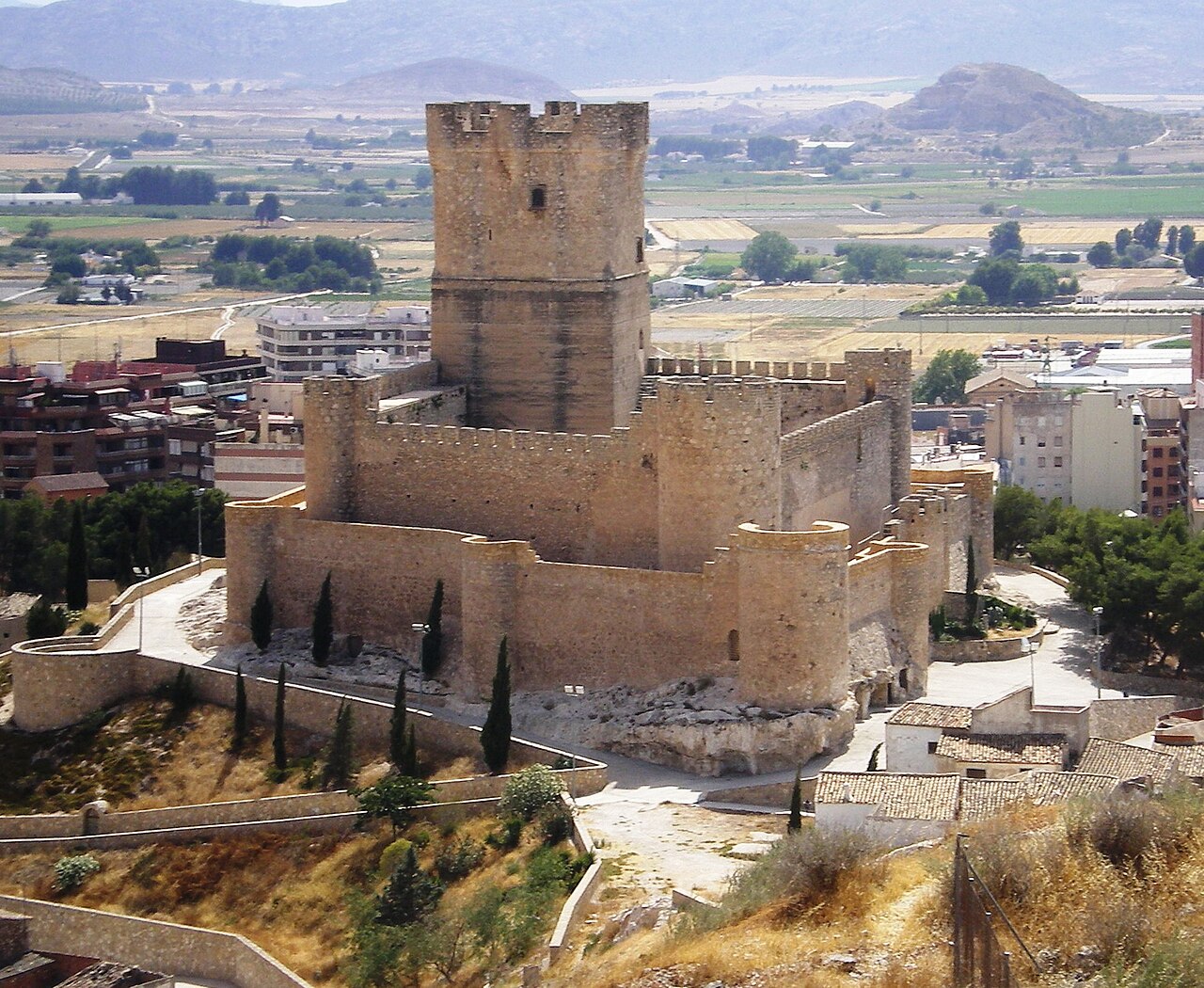
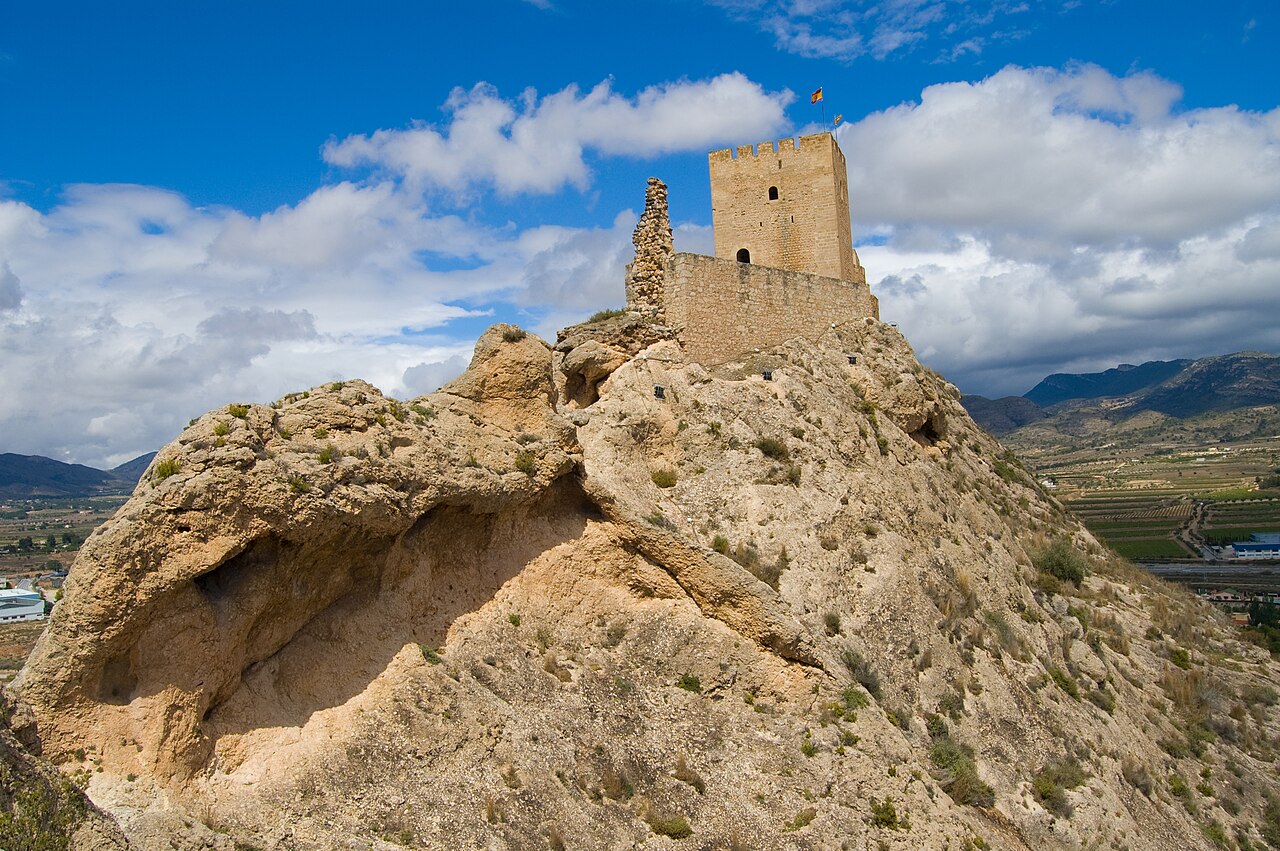
The Castillo de Salvatierra stands as a prominent hill castle in the municipality of Villena, Spain. This fortress, originally constructed in the 10th century during the Islamic Caliphate period, exemplifies the strategic military architecture of the time. Built by Islamic builders, the castle served as a vital defensive stronghold overseeing the Vinalopó region, a key corridor for controlling movement and trade routes.
Historical significance and timeline
The castle's history spans several significant eras, beginning with its foundation under Muslim rule. It remained an active military site through the Almohad period, reflecting the evolving political and military landscape of medieval Spain. Archaeological evidence indicates continuous occupation, highlighting the site's importance well into the Christian reconquest.
In the 13th century, the castle's ownership shifted following the marriage of Don Juan Manuel, Lord of Villena, to Infanta Isabel of Mallorca. This union brought the castle under Christian control when the Aragonese king, Isabel's father, granted it as part of her dowry. This transition marked the castle's integration into the Christian kingdoms' defensive network, where it maintained strategic value.
Throughout the Middle Ages, Castillo de Salvatierra played a crucial role in regional defense, overseeing the Vinalopó valley. It was actively used in military conflicts until the 14th century, when its importance waned in favor of the nearby Castillo de la Atalaya. However, its military relevance persisted, with involvement in later conflicts such as the Valencian agermanados uprising, the War of Succession, and the Peninsular War, underscoring its enduring strategic role in regional power struggles.
Beyond medieval times, the site reveals evidence of prehistoric and ancient human presence, emphasizing its long-standing significance as a defensible location. Since 1985, the castle has been protected as a cultural heritage monument, preserving its historical legacy for future generations.
Architectural features and layout
Fortress design and walls
The remains of Castillo de Salvatierra reveal a fortress with a rectangular layout approximately 50 meters in length and 5 meters in width. The enclosing walls are about 60 centimeters thick, constructed from medium-sized stones bonded with mortar. This robust masonry reflects the military purpose of the structure, designed to withstand sieges and attacks.
Towers and defensive structures
The fortress is distinguished by three prominent towers, each with unique architectural characteristics. The northern tower originally featured a circular base but was later modified to a rectangular shape, a change also seen in the central tower. These adaptations likely reflect evolving defensive needs and construction techniques over time.
The southern tower, often identified as the keep, is square and notably more massive, with walls up to three meters thick. This tower comprises four levels: the two lower floors built using the Almohad-style tapia (rammed earth technique), while the upper floors utilize traditional masonry. This combination of building methods illustrates the blend of Islamic and later Christian architectural influences.
Interior features and artistic elements
Inside the southern tower, an intriguing artistic feature is a carved Mancala game board etched into the rock. This game, of Muslim origin, provides insight into the leisure activities of the castle's historical inhabitants, connecting cultural practices with the fortress's military function.
Functional divisions and water management
The fortress is divided into two main functional areas: the alcazaba (upper stronghold) and the albacar (lower enclosure). The alcazaba served as the primary defensive core, while the albacar likely housed ancillary buildings and livestock. The eastern boundary of the albacar is defined by a long, straight masonry wall, emphasizing the controlled layout of the complex.
Water management was critical for the castle's sustainability, especially during sieges. A cistern (aljibe) was constructed to collect and store rainwater. Additionally, the site features various rock-cut stairways and water channels carved directly into the natural stone, demonstrating advanced engineering to support the fortress's inhabitants.
Preservation and cultural heritage
Today, Castillo de Salvatierra remains in a state of ruins, with significant portions of its walls and towers still standing. These remnants offer valuable insights into medieval military architecture and the cultural history of the region. The castle's designation as a protected cultural monument since 1985 ensures ongoing conservation efforts and recognition of its importance.
The site attracts historians, archaeologists, and visitors interested in Spain's Islamic and Christian medieval heritage. Its combination of architectural styles, historical layers, and strategic location make it a compelling example of the complex history of fortifications on the Iberian Peninsula.
Frequently asked questions (FAQ)
- What is the historical significance of Castillo de Salvatierra?
- Castillo de Salvatierra is a significant medieval fortress that dates back to the 12th century. It played a crucial role in the defense of the region during various conflicts, particularly during the Reconquista, and showcases the architectural styles of its time.
- When was Castillo de Salvatierra built?
- The construction of Castillo de Salvatierra began in the early 12th century, around the year 1130. It was built by the Moors and later modified by Christian forces, reflecting the historical transitions in the area.
- What are the opening hours for Castillo de Salvatierra?
- Castle visitors can explore Castillo de Salvatierra from 10 AM to 6 PM, with extended hours during the summer months. It is advisable to check the official website for any seasonal variations in opening times.
- Can I access Castillo de Salvatierra with a wheelchair?
- Accessibility at Castillo de Salvatierra is somewhat limited due to the castle's historical architecture and terrain. However, efforts have been made to facilitate access for visitors with mobility challenges in certain areas.
- What is the best time to visit Castillo de Salvatierra?
- The best time to visit Castillo de Salvatierra is during the spring and fall when the weather is mild and comfortable for exploring. Additionally, these seasons often feature fewer crowds, allowing for a more enjoyable experience.
- Are there any nearby attractions to visit while at Castillo de Salvatierra?
- Yes, nearby attractions include the charming town of Villena, where you can explore its local shops and restaurants, and the archaeological site of the "Cueva de la Luz." Both sites offer a deeper insight into the region's rich history.
- How much does it cost to enter Castillo de Salvatierra?
- The ticket price for Castillo de Salvatierra is quite affordable, typically around 5 euros for adults. Discounts may be available for students, seniors, and children, making it an accessible option for families.
Information
Website
Visit websiteSources & official resources
Verify the information above using these authoritative references.
Loading map...
Visitor reviews
No reviews yet. Been here? Write the first review and help other travelers!
Write the first reviewVisited this castle? Share your experience
Your review helps other travelers and adds first-hand knowledge to our encyclopedia.