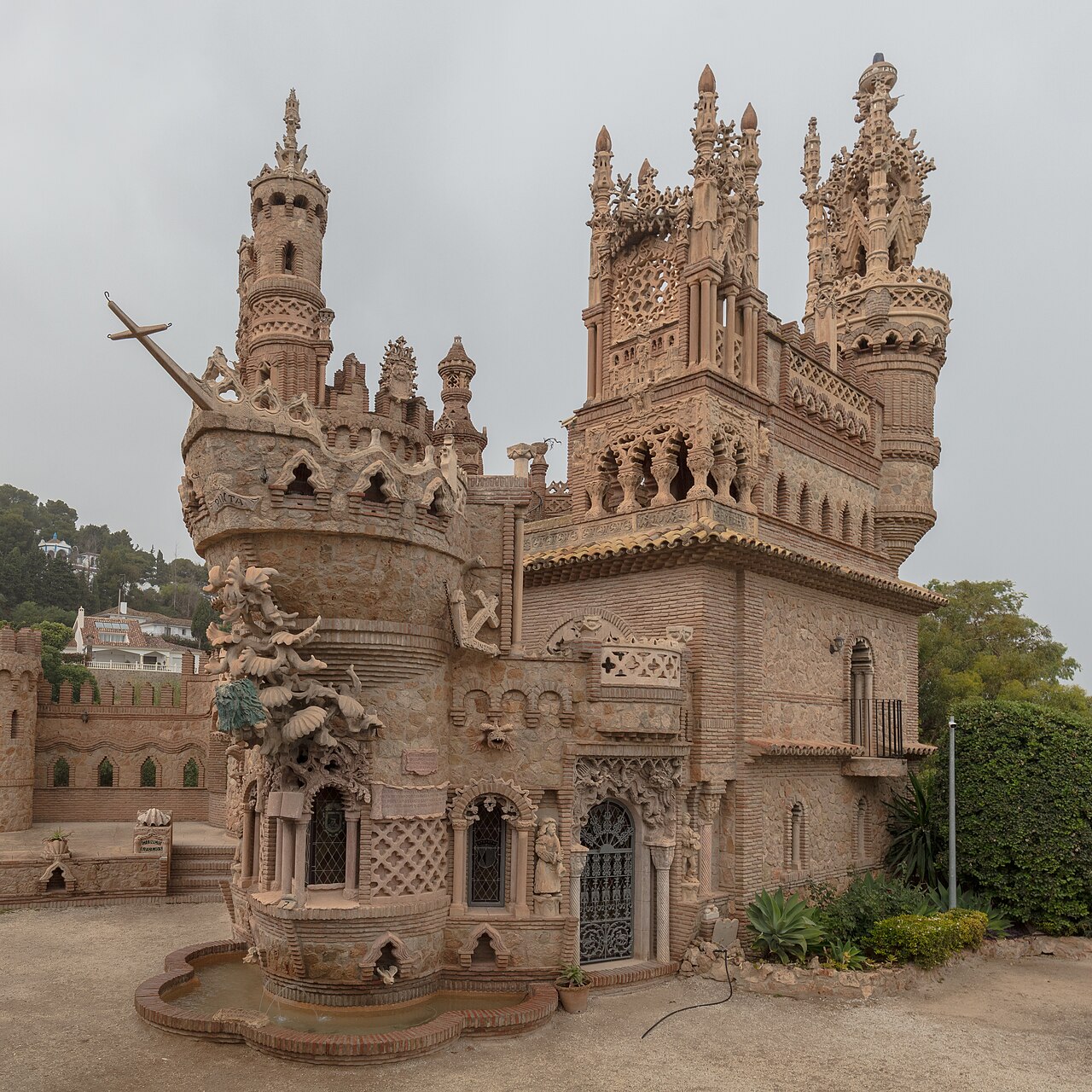
Cártama Castle
Cártama Castle, also known as Castillo de Cártama, is a historic fortress situated on the Monte de la Virgen overlooking the village of Cártama in the province of Málaga, Spain. This castle occupies a strategic hilltop site that has been fortified since ancient times, reflecting the region's layered history from the Phoenician era through Roman and Islamic periods to the late medieval Christian reconquest.
The origins of the settlement of Cártama date back to the Phoenicians, who named it Cartha. By 195 AD, under Roman rule, it became an important fortified town called Cartima. The Romans likely established strong defenses here, possibly including a fortification on the current castle site, taking advantage of the natural elevation for surveillance and protection.
Early medieval foundations and moorish construction
The castle as it stands today primarily reflects its early medieval origins, built by the Moors during their occupation of the Iberian Peninsula. During the turbulent period of the Mozarabic revolt led by Omar ibn Hafsun (881-914 AD), Cártama remained loyal to the Caliphate of Córdoba. This loyalty prompted significant strengthening of the castle's defenses to withstand rebel attacks, marking it as a key fortress in the region.
14th-century fortifications and architectural features
In the 14th century, as Christian forces advanced during the Reconquista, Cártama Castle underwent further fortification. Historical records suggest the castle featured a double curtain wall system and multiple defensive towers, enhancing its ability to resist sieges. This design was typical of late medieval military architecture in southern Spain, combining Moorish and Christian influences to adapt to evolving warfare techniques.
The castle's layout included a rectangular alcazaba—a fortified enclosure common in Moorish castles—surrounded by robust walls. Within the walls, a cistern was constructed to collect and store rainwater, a vital feature for sustaining the garrison during prolonged sieges.
Christian conquest and subsequent decline
In 1485, the castle was captured by Christian troops during the final stages of the Reconquista. Recognizing its strategic importance in the siege of the nearby city of Málaga, the Catholic Monarchs invested considerable resources between 1485 and 1487 to maintain and repair the fortress. This period marked the castle's last significant military use.
After the fall of Málaga in 1491, Cártama Castle lost its military relevance. Over time, it was abandoned and gradually dismantled, with local inhabitants using its stones as building material. This quarrying led to the castle's current state of ruin.
Current remains and visitor experience
Today, visitors to Cártama Castle can explore the scant remains of the rectangular alcazaba, including sections of the surrounding walls and the cistern. Although much of the original structure has been lost, the site offers impressive panoramic views of the surrounding Málaga countryside and the Guadalhorce valley.
The castle is freely accessible, located near the Hermitage of Nuestra Señora de los Remedios on the Monte de la Virgen. While the ruins themselves may be modest, the location's historical significance and scenic vistas make it a worthwhile visit for those interested in medieval fortifications and Andalusian history.
Historical significance and architectural legacy
Cártama Castle exemplifies the complex history of Andalusia, reflecting the successive cultural and military influences of Phoenician, Roman, Moorish, and Christian civilizations. Its architectural evolution from a Roman fortification to a Moorish alcazaba and finally a late medieval fortress illustrates the adaptive strategies employed in castle construction over centuries.
The castle's strategic placement and robust fortifications highlight its role in controlling the surrounding territory and protecting key routes during periods of conflict. Although only ruins remain, the site provides valuable insights into the military architecture of the late medieval period in southern Spain.
Frequently asked questions (FAQ)
- What is the historical significance of Cártama Castle?
- Cártama Castle, dating back to the 11th century, is a prominent example of Moorish architecture in Spain. It served as a strategic military fortification during the Reconquista, providing a vantage point to control the surrounding region.
- When was Cártama Castle built?
- Cártama Castle was constructed in the early 11th century, during the period of Muslim rule in the Iberian Peninsula. Its architecture reflects the defensive needs of the time, showcasing the intersection of military and cultural influences.
- What are the opening hours of Cártama Castle?
- Cártama Castle is open to visitors from 10 AM to 6 PM daily, with extended hours during the summer months. It is advisable to check the official website for any seasonal changes or special closures.
- Can I access Cártama Castle with a wheelchair?
- Cártama Castle has limited accessibility due to its historical structure and uneven terrain. Visitors with mobility challenges may find some areas difficult to navigate, so it's recommended to plan accordingly.
- What is the best time to visit Cártama Castle?
- The best time to visit Cártama Castle is during the spring and fall when temperatures are mild and the surrounding landscape is particularly beautiful. Visiting during these seasons also allows for a more comfortable exploration of the site.
- Are there any nearby attractions to Cártama Castle?
- Yes, nearby attractions include the charming town of Cártama itself, with its picturesque streets and local eateries. Additionally, the natural parks surrounding the area offer hiking trails and scenic views, making it a great destination for outdoor enthusiasts.
- What are the ticket prices for Cártama Castle?
- Entry to Cártama Castle is generally free, making it an accessible option for visitors. However, special guided tours or events may have associated costs, so it's wise to check in advance.
- How do I get to Cártama Castle?
- Cártama Castle is easily accessible by car, located just a short drive from Málaga. Public transportation options are also available, including trains and buses that connect to Cártama from nearby cities.
Information
Address
Near Calle Pilar Alto, Cártama, Málaga, Spain
Loading map...
Visitor reviews
No reviews yet. Been here? Write the first review and help other travelers!
Write the first reviewVisited this castle? Share your experience
Your review helps other travelers and adds first-hand knowledge to our encyclopedia.