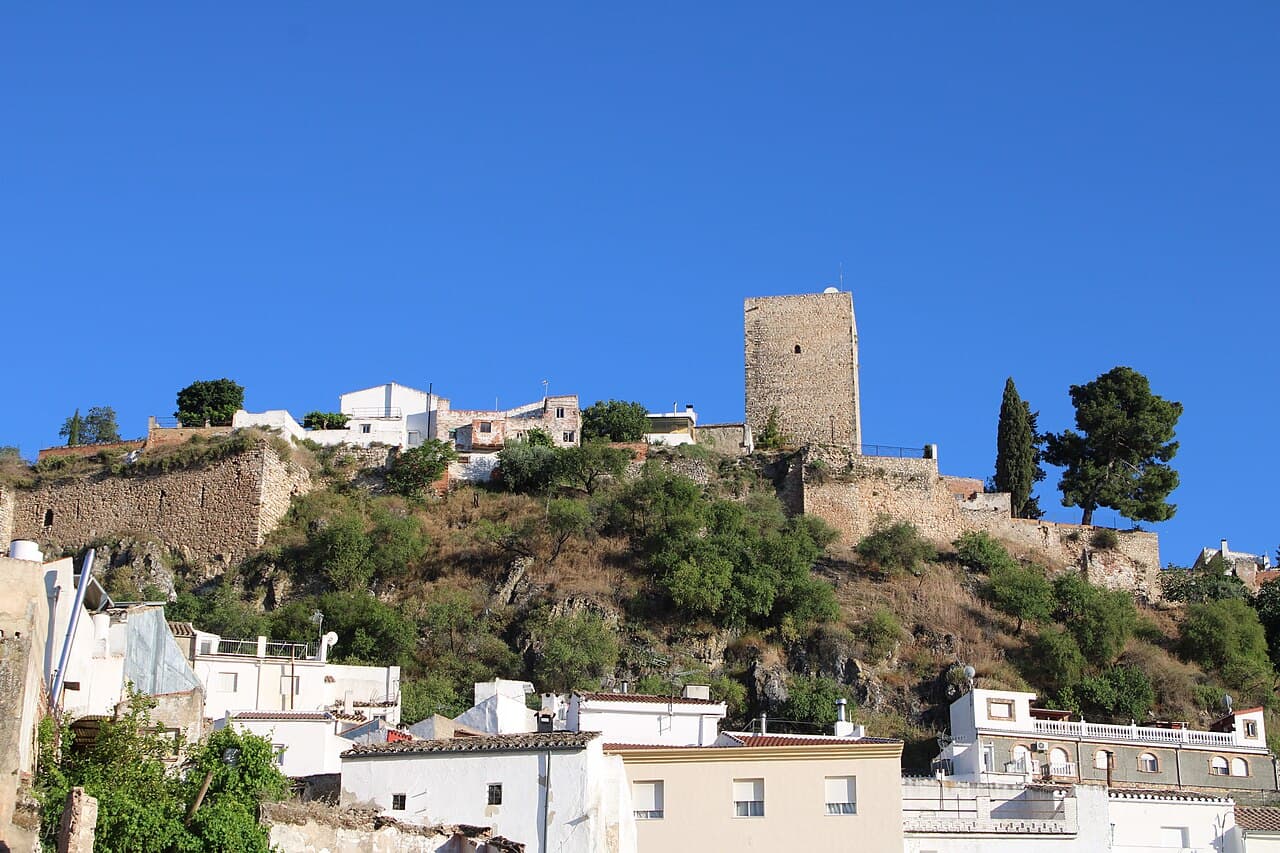
Castillo de la Villa
The Castillo de la Villa stands prominently in the town of Martos, Spain, perched atop a rocky hill at 738 meters above sea level. This commanding position not only offers strategic views over the surrounding landscape but also marks a site of continuous human occupation and fortification spanning several historical periods. Originally established as the acropolis of the ancient city of Tucci, the castle's location has witnessed a remarkable evolution from an Iberian-Roman fortified center to a medieval military stronghold.
The earliest phase of the site’s history is rooted in its role as an Iberian-Roman acropolis, serving as the fortified heart of Tucci. This ancient settlement utilized the natural rocky outcrop for defense, with construction techniques typical of Roman military architecture, including robust stone masonry and elevated platforms for surveillance and protection.
During the Islamic period on the Iberian Peninsula, the site was transformed into a hisn, a fortified castle adapted to the needs of Muslim rulers. This phase involved the modification and reinforcement of the existing Roman structures to meet the demands of frontier defense. The castle’s strategic position made it a key point of control along the volatile borderlands between Muslim and Christian territories, reflecting its military significance in the context of the Reconquista.
Christian reconquest and the Order of Calatrava
Following the Christian reconquest of Martos, the castle came under the control of the Order of Calatrava, a military-religious order instrumental in the ongoing campaigns against the Kingdom of Granada. This period saw extensive architectural modifications aimed at strengthening the fortress as a defensive bastion. The knights enhanced the castle’s fortifications by constructing new walls and multiple towers, the most notable being the Torre del Homenaje (Tower of Homage), which served both as a military keep and a symbol of feudal authority.
The Torre del Homenaje is a well-preserved square keep rising over three floors plus a basement. Its basement functioned as a cistern, ingeniously designed to collect rainwater from the roof, ensuring a reliable water supply during sieges. The middle floors feature stone barrel vaults, providing structural strength and fire resistance, while the top floor is covered by a distinctive brick dome supported by pendentives, architectural elements that allow the transition from a square base to the curved dome above. Access to the tower is gained through the middle floor by a staircase, and the rooftop platform remains accessible, now serving as a cultural and historical interpretation center.
Architectural features and defensive structures
The castle’s defensive system was comprehensive, enclosing the urban core of Martos and linking several towers by fortified walls. One of the most significant towers besides the Torre del Homenaje is the Torre Almedina, dating from the 13th century during the Calatrava period. This robust square tower stands approximately 25 meters tall and is constructed with rubble masonry reinforced by regular ashlar blocks at the corners for stability. It features three floors and is topped with a machicolation, a defensive architectural feature with openings through which defenders could drop projectiles or boiling substances on attackers below. The entrance to the Torre Almedina faces Primero de Mayo street, and historically, it was connected to the Torre del Homenaje by a wall, parts of which still survive.
Additional defensive elements include sections of fortified walls and towers around the site, such as the tower supporting the bell tower of the Sanctuary of Santa María de la Villa, which lies within the old fortress perimeter. These structures demonstrate the castle’s role as a comprehensive defensive complex designed to protect the town and its inhabitants from external threats.
Construction materials and techniques
The castle was primarily built using local materials, including rough stone masonry for the bulk of the walls and towers. Structural corners were reinforced with finely cut ashlar blocks, a technique that enhanced both stability and durability. The use of stone barrel vaults in the Torre del Homenaje’s middle floors and the brick dome with pendentives on the top floor reflect sophisticated medieval engineering practices aimed at combining strength with aesthetic form.
Historical significance and preservation efforts
The Castillo de la Villa played a pivotal role throughout its history as a military stronghold controlling access to the region and serving as a symbol of power for successive rulers. Its layered construction reflects the complex history of southern Spain, where Roman, Islamic, and Christian cultures intersected and left enduring architectural legacies.
In 1985, the castle and its associated structures were officially declared Historic Monuments, recognizing their cultural and historical importance. Since then, ongoing restoration efforts have focused on preserving key elements such as the Torre del Homenaje and the Torre Almedina. These projects aim to stabilize and rehabilitate the structures, allowing visitors to appreciate the castle’s architectural grandeur and historical context.
Today, the castle serves not only as a heritage site but also as a cultural venue, with the Torre del Homenaje functioning as an interpretation center that educates visitors about the castle’s multifaceted history. The preservation of the castle’s walls, towers, and other defensive features ensures that this remarkable example of medieval military architecture continues to inspire and inform future generations.
Visitor experience and cultural impact
Visitors to the Castillo de la Villa can explore the well-preserved towers and sections of the defensive walls, gaining insights into the strategic military design and the historical context of Martos. The castle’s elevated position offers panoramic views of the town and surrounding landscape, enhancing the visitor experience.
The site’s rich history, spanning from ancient Roman times through the Islamic period to the Christian reconquest, makes it a valuable destination for those interested in military history, architecture, and Spanish cultural heritage. Educational programs and interpretive displays in the Torre del Homenaje provide a deeper understanding of the castle’s significance and the broader historical narratives of the region.
Frequently asked questions (FAQ)
- What is the historical significance of Castillo de la Villa?
- Castillo de la Villa is historically significant as a strategic hill castle with layered influences from Roman, Islamic, and Christian periods, reflecting the complex history of southern Spain.
- Can I visit the Torre del Homenaje?
- Yes, the Torre del Homenaje is accessible to visitors and functions as a cultural and historical interpretation center, offering insights into the castle's history and architecture.
- What architectural features are notable in Castillo de la Villa?
- Notable features include the Torre del Homenaje with its stone barrel vaults and brick dome on pendentives, the Torre Almedina with machicolations, and the extensive defensive walls enclosing the urban core.
- Is the castle well preserved?
- The castle is partially restored, with key towers like the Torre del Homenaje and Torre Almedina preserved and ongoing restoration efforts to maintain the defensive walls and other structures.
- Where is Castillo de la Villa located?
- The castle is located in Martos, Spain, on a rocky hill that was historically the site of the ancient city of Tucci.

Information
Loading map...
Visitor reviews
No reviews yet. Been here? Write the first review and help other travelers!
Write the first reviewVisited this castle? Share your experience
Your review helps other travelers and adds first-hand knowledge to our encyclopedia.


