Castillo de Gauzón
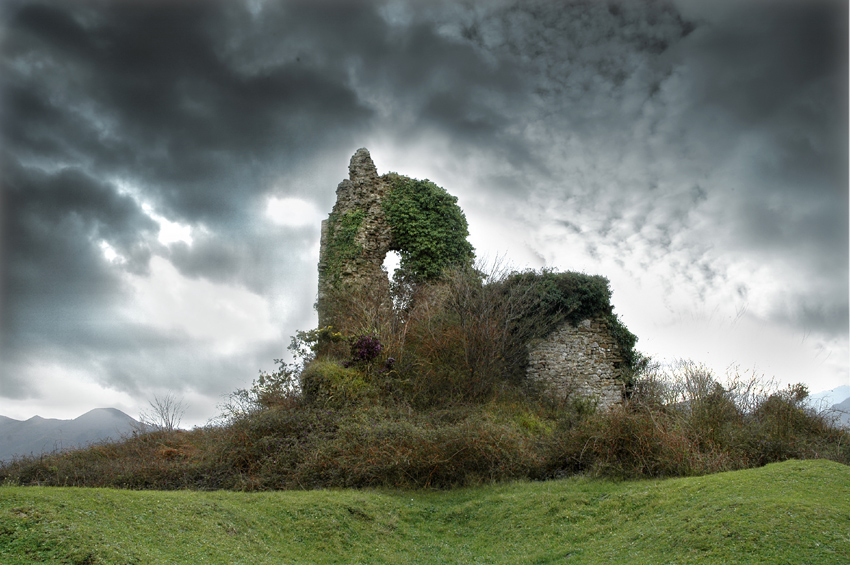
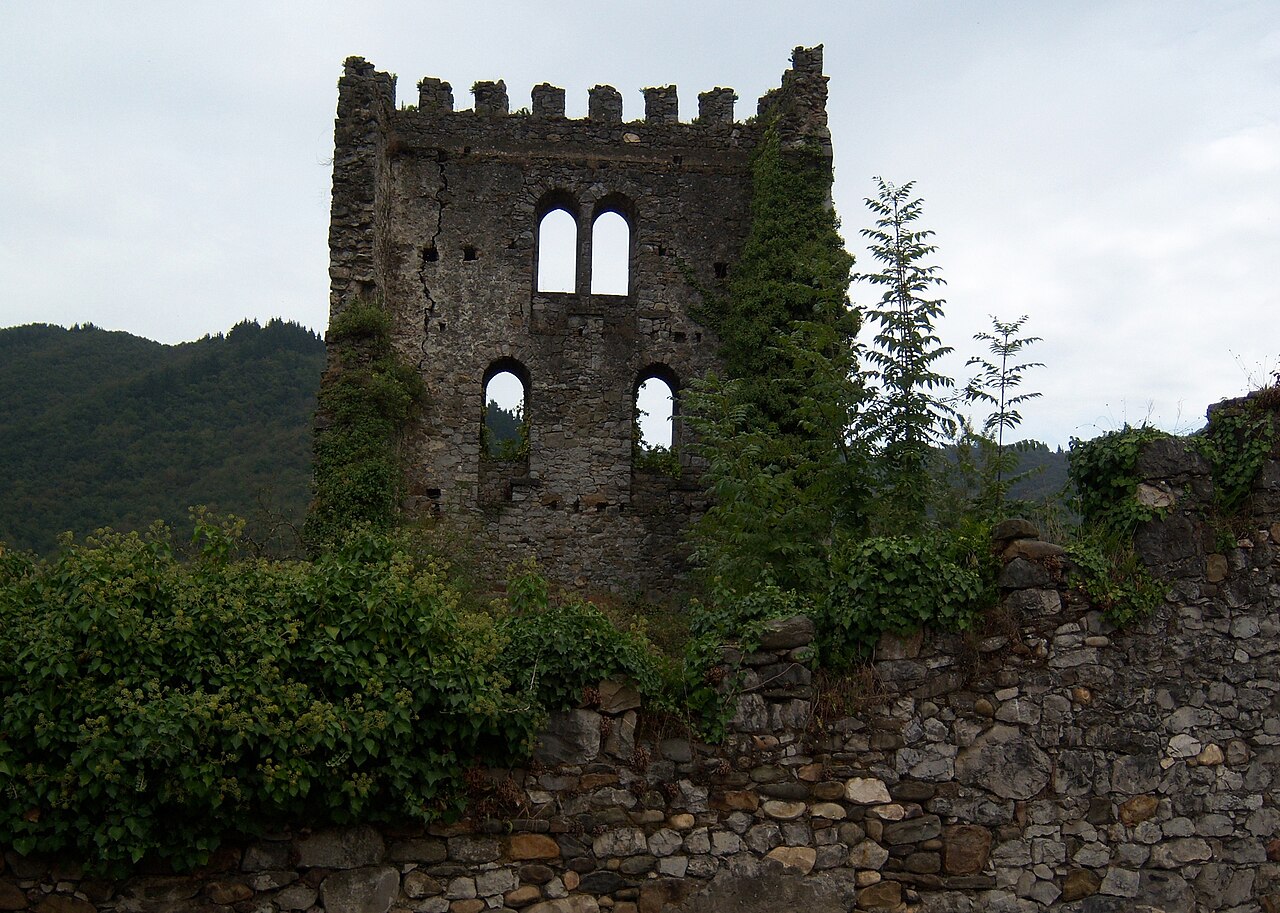
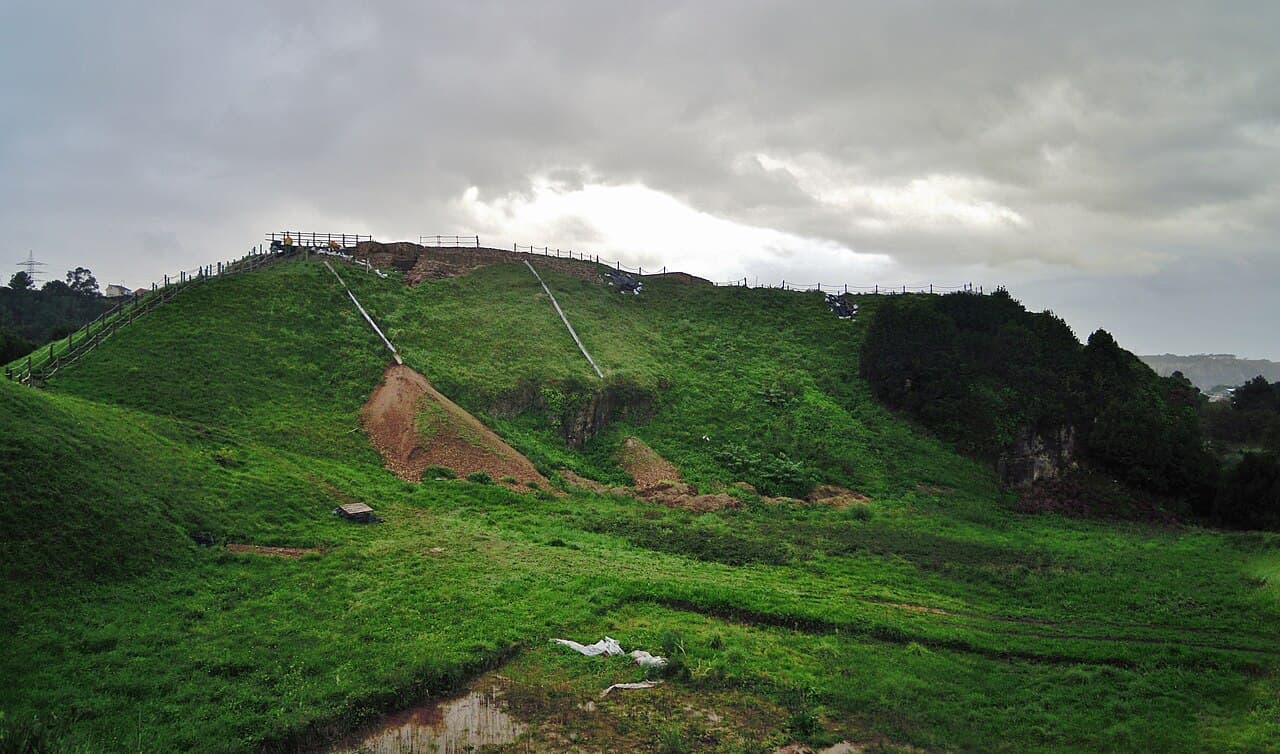
Castillo de Gauzón stands as a significant early medieval fortress located on the Peñón de Raíces promontory in Castrillón, Principality of Asturias, Spain. This strategic position allowed it to dominate the Avilés estuary and the surrounding coastline, which in earlier times extended to the foot of the promontory, with tides revealing extensive dunes and marshes. The castle's remains today are classified as archaeological ruins, reflecting centuries of historical transformations and partial destruction, including the removal of many of its stones by local inhabitants for construction purposes.
The fortress holds a special place in the history of Asturias as the site where the Cross of Victory, a revered symbol of the kingdom, was encrusted with precious stones. Initial archaeological interest began in the 1970s, led by Vicente José González García, with more systematic excavation projects commencing in 2007. Among the most remarkable finds is a 9th-century gold Visigothic coin minted under King Recaredo I, discovered in 2013. The coin, bearing a hole suggesting it was worn as a pendant, is now exhibited at the Archaeological Museum of Asturias.
The late antique settlement: origins of the Kingdom of Asturias
Excavations have revealed that the site of Castillo de Gauzón was originally occupied by a settlement dating from the 6th to 8th centuries AD. Stone and lime mortar walls, along with other occupation evidence, indicate the presence of a community linked to a powerful social class. This settlement likely played a crucial role in the early formation of the Kingdom of Asturias, providing a foundation for the later fortress.
Transformation into a royal fortress (8th–10th centuries)
During the 8th and 9th centuries, the kings of Asturias undertook significant architectural developments at the site, transforming it from a settlement into a monumental fortress. The construction featured complex foundations reinforced with wooden beams, some dating back to the 7th century. A prominent feature from this period is the fortress's monumental gate, designed with a distinctive U-shaped floor plan and flanked by two projecting walls or arms that served to protect the entrance. This defensive design reflects the military and political importance of the fortress in the kingdom's defense and administration.
The palatine complex: royal residential and religious spaces
At the heart of the fortress, a palatine area was constructed, mirroring the layout of royal palaces found at other Asturian seats of power. This complex is attributed to the reigns of Alfonso III and Queen Jimena (866–910). It included a private residential space centered around a room with a hearth, indicative of domestic use, and an adjoining chamber interpreted as a bathroom equipped with drainage channels. This level of architectural sophistication illustrates the dual military and residential function of the castle.
Additionally, the fortress housed the church of San Salvador, further emphasizing its role as a royal and religious center. The integration of ecclesiastical structures within the fortress reflects the close relationship between the monarchy and the church during this period in Asturias.
Archaeological significance and ongoing research
The site of Castillo de Gauzón continues to be a focus of archaeological study. Excavations have uncovered multiple layers of occupation and construction that illuminate the development of early medieval fortifications in northern Spain. The discovery of artifacts such as the Visigothic coin provides valuable insight into the cultural and economic connections of the Asturian kingdom with earlier Iberian traditions.
Restoration efforts aim to stabilize and partially reconstruct the ruins, allowing for better preservation and public access. These projects contribute to a deeper understanding of the castle's historical context and architectural evolution, offering visitors a tangible connection to the formative centuries of the Asturian monarchy.
Geographical and strategic context
The castle's location on a natural promontory overlooking the estuary provided significant defensive advantages. In the early medieval period, the proximity to the sea allowed for control over maritime routes and facilitated communication and trade. The surrounding landscape, including dunes and marshes exposed at low tide, added natural barriers against potential attackers.
Such a commanding position underscores the importance of Castillo de Gauzón not only as a military stronghold but also as a symbol of royal authority and territorial control in the Principality of Asturias.
Frequently asked questions (FAQ)
- How do I get to Castillo de Gauzón?
- Castillo de Gauzón is located in Castrillón, Spain, and can be reached by car or public transport. The nearest major city is Avilés, which is approximately 15 kilometers away, and local buses frequently run to Castrillón. Parking is available near the castle for those driving.
- What is the historical significance of Castillo de Gauzón?
- Castillo de Gauzón dates back to the 10th century and played a crucial role in the defense against Viking invasions. It is considered one of the most important medieval fortifications in the region, showcasing the architectural and military advancements of its time. The castle is a symbol of local heritage and resilience.
- When was Castillo de Gauzón built?
- Construction of Castillo de Gauzón began in the late 10th century, with subsequent renovations and expansions over the centuries. The castle reflects various architectural styles that evolved through its long history. Its strategic location has made it a significant military site throughout the ages.
- Can I visit Castillo de Gauzón year-round?
- Yes, Castillo de Gauzón is open to visitors throughout the year, although some areas may have restricted access in winter months due to weather conditions. It’s advisable to check the official website for any seasonal closures or special events. Guided tours are available to enhance your experience.
- Why is Castillo de Gauzón a popular tourist attraction?
- Castillo de Gauzón attracts visitors due to its rich history, stunning architecture, and picturesque views of the surrounding landscape. The castle offers a glimpse into medieval life and the strategic importance of fortifications in Spain. Its scenic location also makes it a great spot for photography and leisurely walks.
- Is it possible to take guided tours of Castillo de Gauzón?
- Yes, guided tours are available at Castillo de Gauzón, providing visitors with in-depth information about the castle's history and architecture. Tours are typically conducted in both Spanish and English, making it accessible for international tourists. It’s recommended to book in advance, especially during peak tourist seasons.
- What are the opening hours for Castillo de Gauzón?
- Castillo de Gauzón generally opens at 10 AM and closes at 6 PM, with extended hours during the summer months. Be sure to check for any changes in hours on the castle's official website, especially around holidays. Arriving early can help you avoid crowds and enjoy a more intimate experience.
- What are the ticket prices for visiting Castillo de Gauzón?
- Ticket prices for Castillo de Gauzón are typically affordable, with discounts available for students and seniors. Children under a certain age may enter for free. Exact prices may vary, so it's best to consult the official website for the latest information before your visit.
- What nearby attractions should I consider visiting?
- While visiting Castillo de Gauzón, consider exploring the nearby beaches of Castrillón, such as Playa de Salinas, known for its beautiful coastline and surfing opportunities. The town of Avilés, with its charming old town and modern cultural venues like the Oscar Niemeyer International Cultural Centre, is also a short drive away. These attractions complement your visit to the castle with diverse experiences.
Photo gallery

Information
Loading map...
Visitor reviews
No reviews yet. Been here? Write the first review and help other travelers!
Write the first reviewVisited this castle? Share your experience
Your review helps other travelers and adds first-hand knowledge to our encyclopedia.