Castillo de Cirat
The Castillo de Cirat stands as a notable example of a medieval Muslim fortress situated in the town of Cirat, Spain. Constructed during the 12th or 13th centuries, this hill castle was strategically positioned atop a rocky promontory overlooking the Mijares River, an important geographic feature that influenced its military and administrative significance. Its origins reflect the period when the Iberian Peninsula was under Islamic control, showcasing typical Muslim military architectural elements adapted to the natural terrain.
Historical background and ownership transitions
The castle was initially under the control of Zayd Abu Zayd, the last Moorish king of Valencia, who governed the surrounding territory. During the Reconquista, a period marked by Christian kingdoms reclaiming lands from Muslim rulers, the castle's ownership became a contested issue. Although Zayd Abu Zayd attempted to transfer the fortress to the bishop of Segorbe, this donation was later invalidated. Instead, on February 17, 1247, the castle was officially granted to the archbishop of Tarragona, illustrating the shifting religious and political power dynamics in the region during this era.
Following the Christian conquest, the area around the castle remained inhabited by Moriscos, Muslims who had converted to Christianity, until their expulsion in 1609. This demographic continuity underscores the complex cultural and religious interactions that persisted even after the military takeover.
Feudal integration and military significance
In 1628, during the reign of King Philip IV, the County of Cirat was established, incorporating the villages of Cirat, El Tormo, and Pandiel. The castle became part of this feudal domain, granted to Bernat de Vilarig Carroz y Pardo de la Casta, reflecting its integration into the administrative structure of the Spanish crown. This period marked the castle's transition from a purely military fortress to a symbol of feudal authority.
The fortress regained strategic importance during the Carlist Wars of the 19th century. Its commanding position overlooking the river and nearby routes made it a valuable defensive site amid the conflicts over the Spanish throne. The castle's role in these wars highlights its enduring military relevance well beyond the medieval period.
Architectural features and structural remains
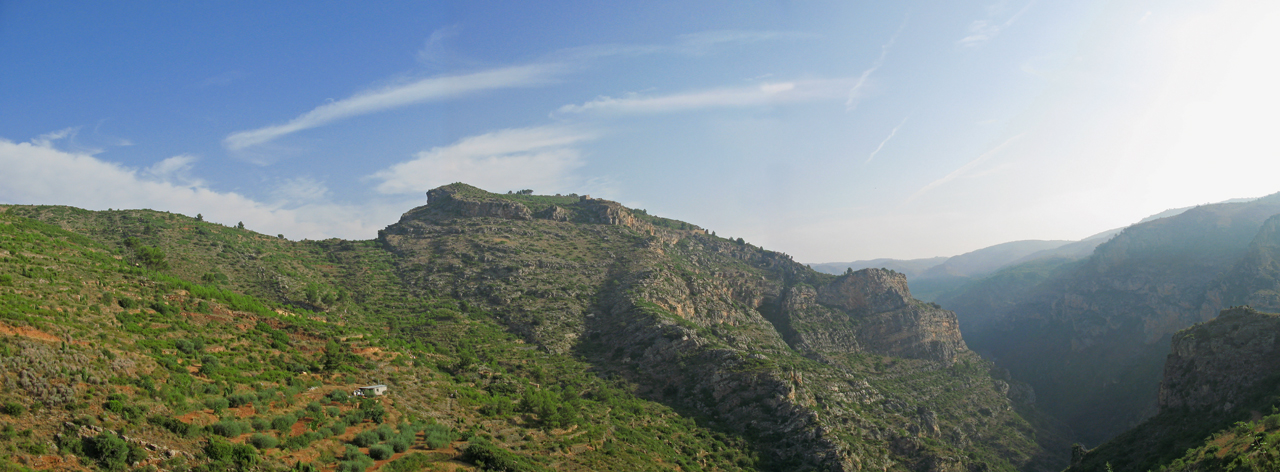
The Castillo de Cirat occupies an irregularly shaped plan divided into two fenced enclosures, although the boundaries between these sections are difficult to discern due to the uneven terrain and the castle's ruinous state. The fortress capitalized on the natural steep slopes of the rocky outcrop for defense, with man-made fortifications reinforcing the most vulnerable points.
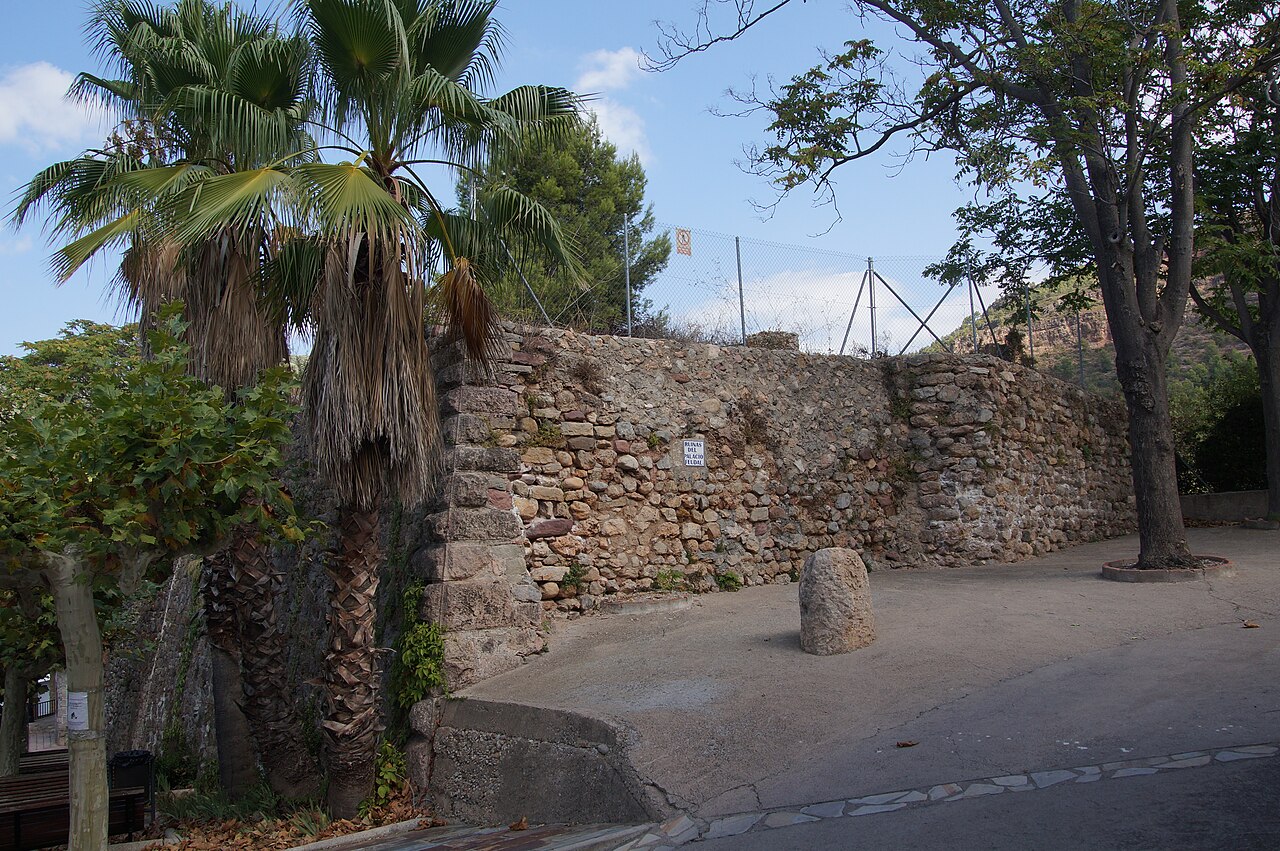
Among the surviving structures are the foundations of a semicircular tower and fragments of defensive walls strategically placed to protect weak areas. These elements are characteristic of medieval Muslim military architecture, which often integrated natural topography with constructed defenses.
A notable feature is an uncovered cistern (aljibe) that retains the springing points of its vaulted ceiling, although its roof is missing. The walls of the cistern were coated with a waterproof layer, indicating its critical function in securely storing water within the fortress, essential during sieges or dry periods.
Nearby stands a rectangular building constructed from regularly cut stone blocks. While its original purpose remains uncertain, the quality of masonry suggests it served an important role, potentially administrative or military in nature.
Archaeological findings and cultural significance
Excavations and surface discoveries around the castle have yielded Muslim-style ceramics, confirming the fortress's Islamic origins and providing valuable insights into the daily lives and culture of its former inhabitants. These artifacts contribute to understanding the cultural heritage embedded in the site.
Today, the Castillo de Cirat is recognized as a protected heritage site since 2004, preserving the legacy of its multifaceted history. Despite its partial ruin, the castle remains an important monument reflecting the historical layers of Muslim and Christian influence in this part of Spain.
Geographical context and strategic location
The castle's location on a rocky outcrop overlooking the Salinas ravine allows it to control a sharp bend in the Mijares River. This vantage point was crucial for monitoring and defending the surrounding territory. The natural steep slopes provided a strong defensive advantage, reducing the need for extensive man-made fortifications except at vulnerable points.
This strategic placement within the landscape illustrates the medieval military practice of utilizing natural topography to enhance defensive capabilities, a common feature of hill castles in the region.
Frequently asked questions (FAQ)
- When was Castillo de Cirat built and by whom?
- Castillo de Cirat was built during the 12th or 13th centuries under Muslim rule in the Iberian Peninsula, reflecting typical medieval Islamic military architecture.
- What is the historical significance of Castillo de Cirat?
- The castle illustrates the transition from Muslim to Christian control during the Reconquista and played roles in feudal administration and the 19th-century Carlist Wars.
- What remains can visitors see at Castillo de Cirat?
- Visitors can see the foundations of a semicircular tower, fragments of defensive walls, an uncovered cistern (aljibe), and a rectangular stone building among the ruins.
- Is Castillo de Cirat accessible to the public?
- The castle is a protected heritage site, but due to its ruinous condition and location on uneven terrain, accessibility may be limited and visitors should check local information before visiting.
- What architectural features characterize Castillo de Cirat?
- The castle features an irregular plan adapted to a rocky hilltop, semicircular towers, defensive walls, and a vaulted cistern with waterproof coatings typical of Muslim fortifications.
Information
Website
Visit websiteSources & official resources
Verify the information above using these authoritative references.
Loading map...
Visitor reviews
No reviews yet. Been here? Write the first review and help other travelers!
Write the first reviewVisited this castle? Share your experience
Your review helps other travelers and adds first-hand knowledge to our encyclopedia.