Castillo de Caudete
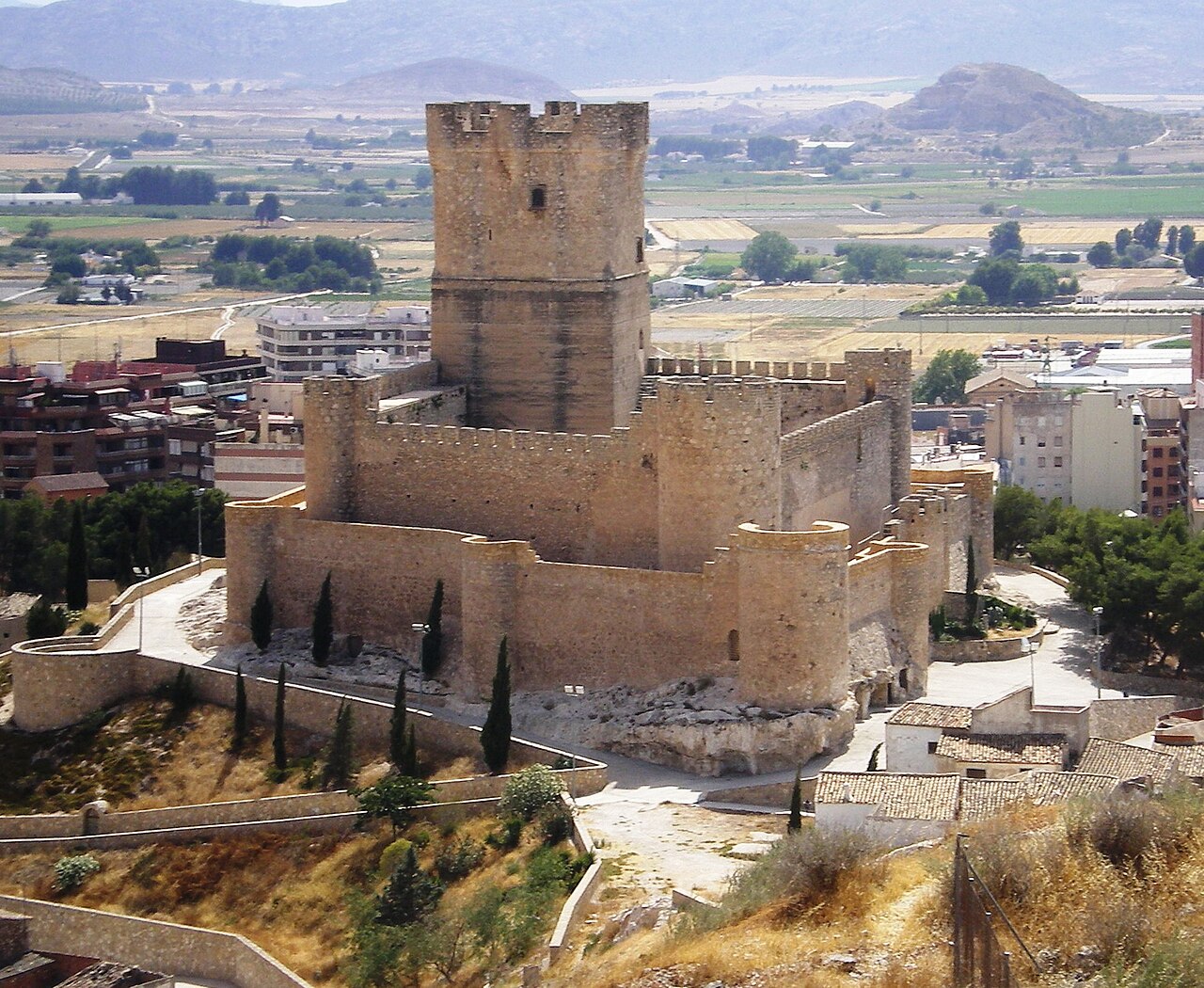
The Castillo de Caudete stands prominently on a hilltop in the town of Caudete, Spain, representing a significant example of medieval military architecture shaped by both Islamic and Christian influences. Originally constructed in the 12th century during the Almohad dynasty, the fortress was built atop earlier foundations possibly dating to the era of the second Taifa kingdoms. This strategic location allowed it to command the town center and control key routes, making it a vital defensive and administrative site throughout the medieval period.
The castle's early Islamic origins are evident in its foundational layout and construction techniques, which were later adapted and transformed following the Christian reconquest. Known historically as "El castell de Cabdet," the fortress served as both a military stronghold and the administrative hub for local governance. In 1244, King Alfonso X established the lordship of Caudete, granting it to Sancho Sánchez de Mazuelo and his descendants, who used the castle as their seat of power.
Medieval transformations and military significance
Throughout the Middle Ages, the castle was involved in regional conflicts, notably the War of the Two Peters (1356–1369), a war between the Kingdoms of Aragon and Castile. Its position near the contested border made it a focal point for military action. The castle sustained damage during this period, particularly to its original Andalusian architectural elements. Following Castilian victory, King Henry II financed extensive rebuilding efforts, resulting in the surviving 14th-century Christian-era structures that characterize the castle today.
In 1422, the lordship ended when Garcia Jofré de Lisón sold Caudete to King Alfonso V of Aragon. Although the castle ceased to function as a noble residence, it retained military importance until the dynastic union of Aragon and Castile in 1469 eliminated the frontier threat. This union led to a decline in the castle's strategic value and gradual abandonment.
Decline and later uses
By the 16th century, the castle was largely abandoned and recorded as a ruin by 1569. Between 1740 and 1870, the site was repurposed as the parish cemetery for the nearby Santa Catalina church, during which several burial niches were cut into the stone walls. Following this period, the castle fell into neglect until the early 20th century, when it was converted into a parish garden. To improve soil quality, earth was brought in from a nearby Iberian-Roman archaeological site, linking the castle grounds to the region's broader historical heritage.
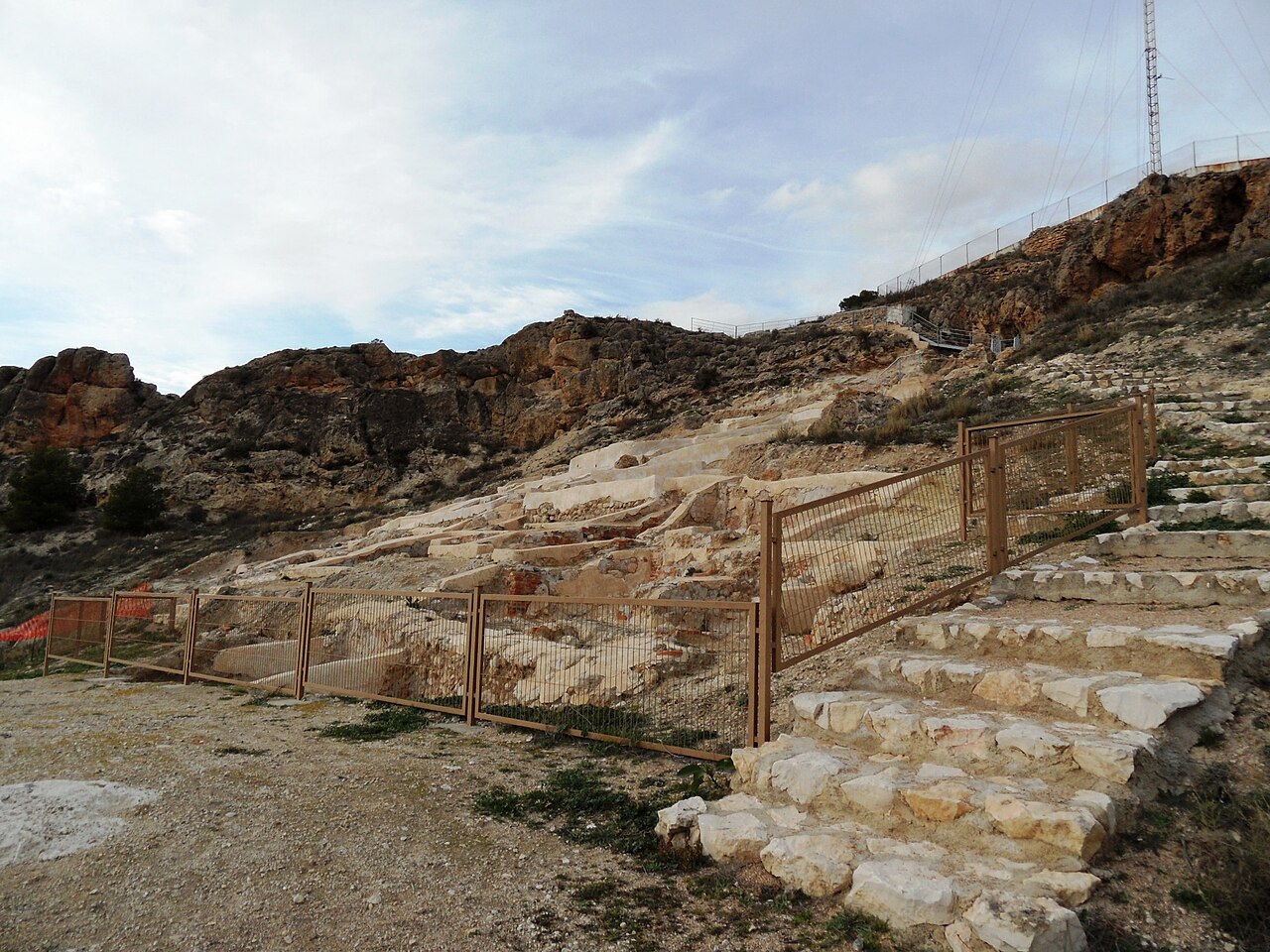
Throughout the 20th century, the castle suffered from deterioration and encroachment by modern housing developments. Since 1960, ownership has been held by the Diocese of Albacete, with stewardship transferred to the Caudete City Council until 2097. Archaeological excavations and restoration efforts began around the year 2000, revealing key structural elements and improving preservation. In 2004, the castle surroundings were enhanced with the creation of an Andalusian-style garden named Parque de los Reyes Católicos, also known as El Albacar.
Architectural features and layout
The Castillo de Caudete occupies a polygonal layout enclosing approximately 1,800 square meters on a hilltop overlooking the town center. Constructed mainly of masonry and stone, the fortress exhibits characteristics of medieval military architecture with clear influences from its Islamic origins and later Christian modifications.
A notable feature is the alambor, a sloping base along the southern parapet designed to reinforce the walls and deflect attacks at ground level. This element remains well-preserved and highlights the defensive engineering techniques employed during the castle's construction and subsequent modifications.
The battlements are topped by thirty-four square-shaped merlons, each capped with distinctive four-sided tiled roofs. These merlons are remarkably intact and contribute to the castle's imposing silhouette.
Within the enclosure, four masonry towers stand at the corners, whose foundations were uncovered through archaeological excavation. The eastern tower, known as the Levante tower or tower of homage, served as the main entrance defense. Its walls exceed one meter in thickness, underscoring its importance in controlling access. Excavations have also revealed the staircase leading to the main gate, which this tower guarded.
Additional uncovered features include the pas de ronda—the walkway behind the battlements used by defenders to patrol the walls—and the aljibe, a cistern historically used for water storage within the fortress. These elements remain visible and provide insight into the castle's defensive operations and daily life.
Restoration and preservation efforts
Since the early 2000s, restoration work has focused on stabilizing and conserving the southern and western retaining walls and part of the northern tower. These efforts have helped maintain the structural integrity of the remaining fortress sections. Archaeological documentation has also recorded burial niches from the cemetery period and garden beds from its later use as a parish garden.
The castle site remains mostly free of adjacent modern buildings, except for four houses constructed alongside the northern wall, marking the boundary between the historic structure and the town's urban environment. The landscaping project completed in 2004–2005 established a public garden that connects the castle to the nearby Plaza de la Iglesia via a pedestrian alley, enhancing public access while preserving the site's archaeological significance.
Today, Castillo de Caudete stands as a testament to the layered history of the region, reflecting centuries of military, political, and social change. Its combination of Islamic and Christian architectural elements, along with its varied uses over time, make it a valuable cultural heritage site in the province of Albacete.
Frequently asked questions (FAQ)
- How do I get to Castillo de Caudete?
- Castillo de Caudete is located in the town of Caudete, Spain. You can reach it by car or public transport from nearby cities such as Albacete or Murcia. There are also local buses that connect to Caudete, making it accessible for visitors without a vehicle.
- What is the historical significance of Castillo de Caudete?
- Castillo de Caudete dates back to the 14th century and played a crucial role in the defense of the region during the Middle Ages. Its strategic location allowed it to oversee the surrounding lands and protect against invasions. The castle features a blend of Moorish and Christian architectural styles, reflecting its rich history.
- When was Castillo de Caudete built?
- Construction of Castillo de Caudete began in the late 14th century, around 1390, during the Reconquista period. The castle was built to fortify the region against potential threats and has since been a significant historical landmark. Over the centuries, it has undergone various renovations that highlight its enduring legacy.
- Can I enter Castillo de Caudete?
- Yes, visitors can enter Castillo de Caudete and explore its grounds. There is an entrance fee which helps maintain the site for future generations. Guided tours are often available, providing insight into the castle's history and architecture.
- Why is Castillo de Caudete a popular tourist attraction?
- Castillo de Caudete is popular due to its stunning views of the surrounding landscape and its historical significance. Visitors appreciate the opportunity to explore the castle’s architecture and learn about its role in local history. The site also offers a peaceful atmosphere, making it a perfect spot for photography and leisurely walks.
- Is it possible to visit Castillo de Caudete year-round?
- Yes, Castillo de Caudete is open to visitors year-round, although hours may vary seasonally. It is advisable to check the official website or local tourism information for specific opening hours before your visit. The castle tends to be less crowded during the off-peak months, providing a more intimate experience.
- What are the opening hours for Castillo de Caudete?
- Typically, Castillo de Caudete is open from 10 AM to 6 PM, with extended hours during the summer months. It's recommended to verify the current hours before your visit, as they may change on holidays or due to special events. Always check for any updates on the castle's official website.
- What are some nearby attractions to Castillo de Caudete?
- In addition to Castillo de Caudete, visitors can explore the charming town of Caudete itself, known for its traditional Spanish architecture and local cuisine. Nearby, you can find the Church of Our Lady of Grace, which is worth a visit for its stunning interior. The scenic countryside around the castle also offers hiking trails and beautiful landscapes.
- What are the ticket prices for Castillo de Caudete?
- The entrance fee for Castillo de Caudete is quite reasonable, generally around €3 for adults, with discounts available for students and seniors. Children under a certain age may enter for free, making it an affordable option for families. It's advisable to check for any special promotions or group rates when planning your visit.
Information
Loading map...
Visitor reviews
No reviews yet. Been here? Write the first review and help other travelers!
Write the first reviewVisited this castle? Share your experience
Your review helps other travelers and adds first-hand knowledge to our encyclopedia.