Castillo de Boltaña
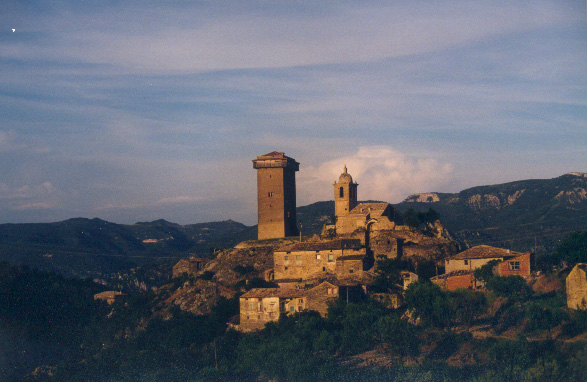
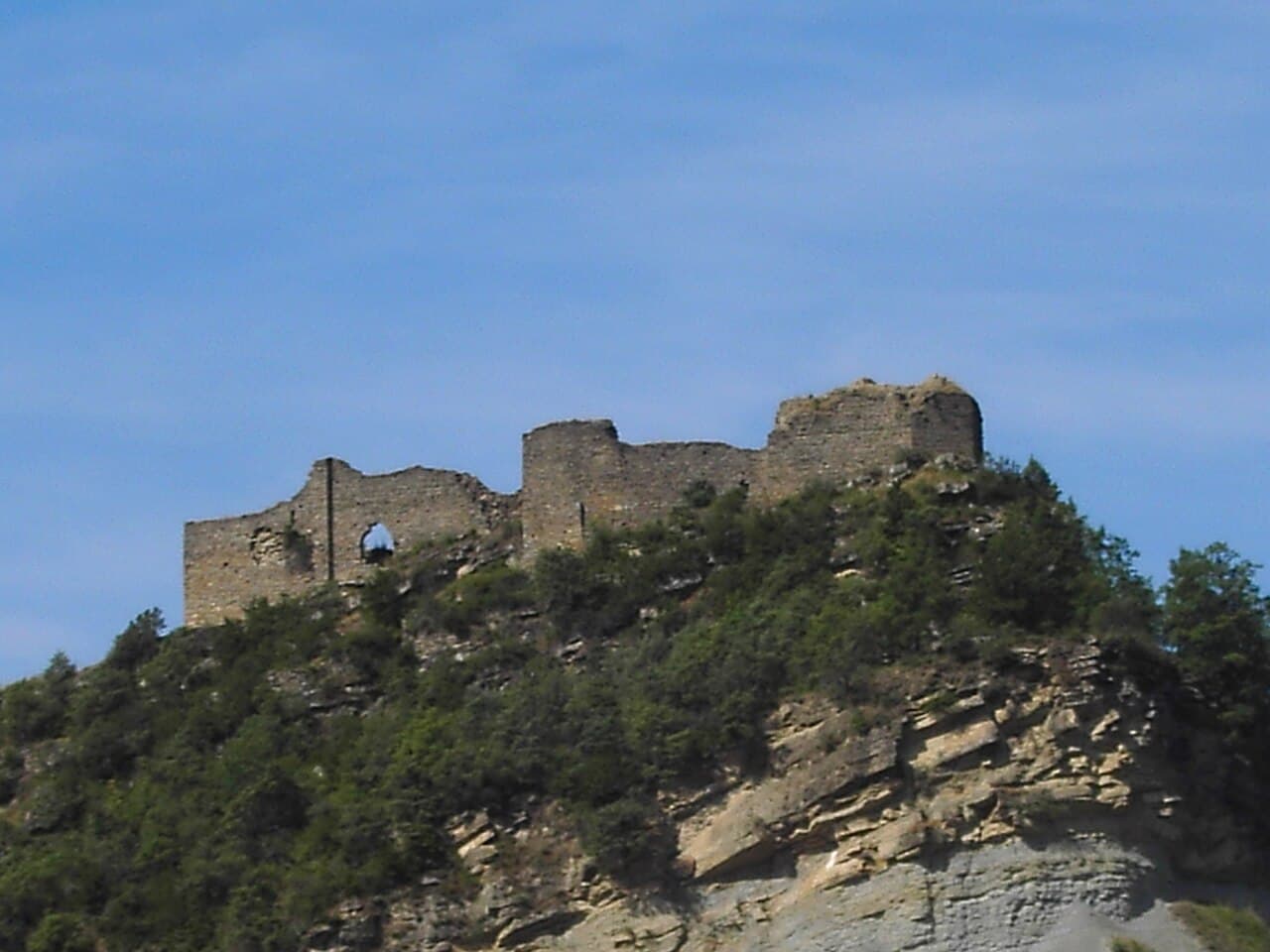
The Castillo de Boltaña is a prominent hill castle located in the municipality of Boltaña within the Sobrarbe region of northern Spain. This fortress occupies a commanding position atop a hill overlooking the Ara Valley, a strategic vantage point that provided control over important medieval routes and the surrounding landscape. The site itself has a deep history of human settlement dating back to Roman times, underscoring its long-standing significance in regional defense and communication.
Early history and muslim origins
Constructed originally by Muslim rulers during the period of Al-Ándalus, the castle was part of a defensive network intended to protect the Sobrarbe region from advancing Christian forces. During the 10th century, it played a crucial role as a frontier stronghold under the caliph Abd al-Rahman III, one of the most powerful rulers of the Umayyad Caliphate in Iberia. The appointment of Amrus ibn Muhammad as governor of the fortress highlights its military importance during this volatile period of the Reconquista, the centuries-long Christian effort to reclaim territories from Muslim control.
Transition to christian rule and medieval significance
By the year 941, the castle had shifted hands to Christian control under King García Sánchez I of Pamplona, reflecting the changing political landscape in northern Spain. Throughout the 11th century, the castle remained a key military post under the reigns of Navarrese and Aragonese monarchs such as Sancho III and Ramiro I. Governors including Gimeno Garcés and Sancho Galíndez managed the fortress between 1028 and 1080, overseeing its defenses amidst ongoing territorial conflicts and Christian expansion.
Decline and later history
In the 12th century, the strategic importance of Castillo de Boltaña diminished as the nearby town of Aínsa rose in prominence. This shift was formalized in 1124 when Alfonso I of Aragon, known as "the Battler," granted a charter to Aínsa, elevating it as a regional center and reducing Boltaña to village status without municipal privileges. Later, in the 15th century, the lordship of Boltaña passed to Juan de Bardají, but local noble resistance led King Alfonso V to revoke the town’s privileges and reaffirm royal authority over the area.
Architectural features and remains
The surviving ruins of Castillo de Boltaña reveal a pentagonal fortified enclosure designed to maximize defense from its elevated position. The roughly cut stone walls form a robust boundary around the castle, with a notable tower at the northern tip situated on the highest and narrowest terrain to command views of the surrounding landscape. This tower's unique design is particularly striking: it appears hexagonal from the exterior but is square on the interior, a feature that suggests complex construction techniques and strategic architectural planning.
Access to the castle is gained through an eastern gate, characterized by a semicircular arch, a typical element in medieval fortifications that facilitated controlled entry. Defensive features include two narrow arrow slits positioned in the eastern and southern walls, allowing defenders to launch arrows while minimizing exposure to attackers.
Although the northern tower is largely in ruins, its remaining structure, built with irregular stonework consistent with medieval construction methods, still conveys the castle’s military function as a lookout and stronghold. The overall layout and surviving architectural elements place Castillo de Boltaña within the broader context of medieval fortifications in northern Spain, reflecting the region's turbulent history of conquest and defense.
Cultural significance and preservation
Today, Castillo de Boltaña is recognized as a culturally significant heritage site in Spain. Its ruins serve as a tangible link to the complex history of the Sobrarbe region, encompassing periods of Muslim rule, Christian reconquest, and feudal governance. The castle's remains attract historians, archaeologists, and visitors interested in medieval military architecture and the historical dynamics of northern Spain.
The site is protected under Spanish heritage laws, ensuring the preservation of its structural remains and promoting awareness of its historical importance. While much of the castle is in a state of ruin, the visible features allow for a meaningful understanding of its original defensive functions and architectural design.
Visiting castillo de boltaña
Visitors to Castillo de Boltaña can explore the ruins and appreciate the strategic hilltop location that once made the fortress a key military asset. The site offers panoramic views of the Ara Valley and surrounding landscapes, providing context for its historical role. While facilities may be limited due to the castle's ruinous state, the location remains accessible for those interested in medieval history and architecture.
Frequently asked questions (FAQ)
- What is the historical significance of Castillo de Boltaña?
- Castillo de Boltaña was a strategic frontier fortress during the 10th century under Muslim rule and later a key military post in the Christian Reconquista of northern Spain.
- Can I visit Castillo de Boltaña year-round?
- The castle ruins are generally accessible year-round, but visitors should check local conditions as there may be seasonal restrictions or maintenance work.
- What architectural features remain at Castillo de Boltaña?
- Visitors can see the pentagonal stone walls, the northern tower with its unique hexagonal exterior and square interior, the semicircular arch gate, and arrow slits in the walls.
- Is Castillo de Boltaña wheelchair accessible?
- Due to its ruinous hilltop location and uneven terrain, Castillo de Boltaña is not wheelchair accessible.
- Why was Castillo de Boltaña important during the Reconquista?
- Its position overlooking the Ara Valley made it a critical defensive site for controlling movement and resisting Christian advances during the early Reconquista period.
Photo gallery

Information
Website
Visit websiteSources & official resources
Verify the information above using these authoritative references.
Loading map...
Visitor reviews
No reviews yet. Been here? Write the first review and help other travelers!
Write the first reviewVisited this castle? Share your experience
Your review helps other travelers and adds first-hand knowledge to our encyclopedia.