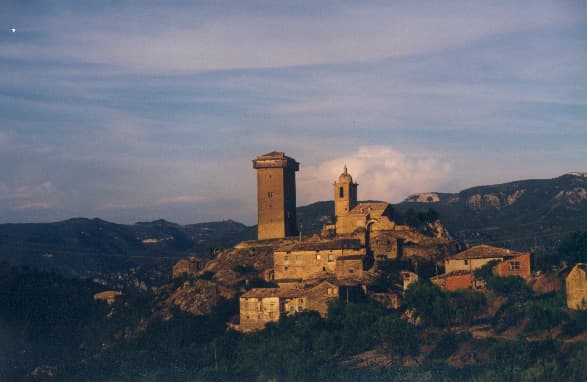
Abizanda Castle
Abizanda Castle is a notable example of a hill castle located in Spain, dating back to the 11th century during the High Medieval period. Perched strategically on elevated terrain, this fortress was constructed to oversee and control the surrounding landscape, a common defensive strategy of the era. Its position allowed for early detection of approaching enemies and provided a natural advantage in defense.
Historical context and significance
The castle was built during a time of frequent conflicts and territorial disputes in the Iberian Peninsula, a period marked by Christian reconquest efforts known as the Reconquista. Castles like Abizanda played a crucial role in securing borders and protecting local populations from invasions and raids. The 11th century saw many such fortifications erected across northern Spain as Christian kingdoms expanded southward.
Architectural features and layout
Abizanda Castle exemplifies typical High Medieval military architecture with its robust stone walls and defensive structures. The castle's design likely includes a keep or donjon as the main stronghold, surrounded by curtain walls and possibly a bailey or courtyard area. Its elevated location would have been enhanced by natural rock formations, integrating the castle's defenses with the hillside.
Defensive elements
The castle's fortifications probably feature battlements and arrow slits to enable defenders to repel attackers effectively. The entrance would have been fortified with a gatehouse, possibly including a portcullis and murder holes, standard features in medieval castles for controlling access and defending against siege attempts. While specific details about Abizanda Castle's towers or moat are scarce, its hilltop position itself served as a formidable defense.
Role in regional history
Abizanda Castle would have served as a military outpost and administrative center, overseeing local lands and routes. It helped secure the frontier regions during a volatile period of shifting power among Christian and Muslim territories. Its presence contributed to the stabilization and eventual expansion of Christian rule in the area.
Current condition and preservation
The castle remains a hill castle ruin, with portions of its stone walls and foundations still visible. Its preservation status allows visitors to appreciate the medieval construction techniques and the strategic importance of its location. The site offers insights into the military architecture of the High Medieval period in Spain.
Visiting abizanda castle
Visitors to Abizanda Castle can explore the ruins and enjoy panoramic views of the surrounding landscape. The castle is accessible by hiking trails that lead up the hill, providing an immersive experience of its historical setting. While facilities may be limited, the site remains a valuable destination for those interested in medieval history and architecture.
Frequently asked questions (FAQ)
- What is the historical significance of Abizanda Castle?
- Abizanda Castle was built in the 11th century during the High Medieval period to secure strategic hilltop positions in Spain during the Reconquista. It played a key role in regional defense and territorial control.
- Can I visit Abizanda Castle today?
- Yes, visitors can explore the ruins of Abizanda Castle. The site is accessible by hiking trails and offers panoramic views, though facilities may be limited.
- What architectural features does Abizanda Castle have?
- The castle features typical High Medieval defensive elements such as stone walls, a likely keep, curtain walls, battlements, and a fortified gatehouse, adapted to its hilltop location.
- Where is Abizanda Castle located?
- Abizanda Castle is located in the town of Abizanda, within the Aragon region of Spain, situated on a strategic hilltop overlooking the surrounding area.
- When was Abizanda Castle built?
- The castle was constructed in the 11th century, during the High Medieval period, a time of frequent military conflicts and territorial expansion in Spain.
Photo gallery

Information
Loading map...
Visitor reviews
No reviews yet. Been here? Write the first review and help other travelers!
Write the first reviewVisited this castle? Share your experience
Your review helps other travelers and adds first-hand knowledge to our encyclopedia.



