Castillo de Arteaga
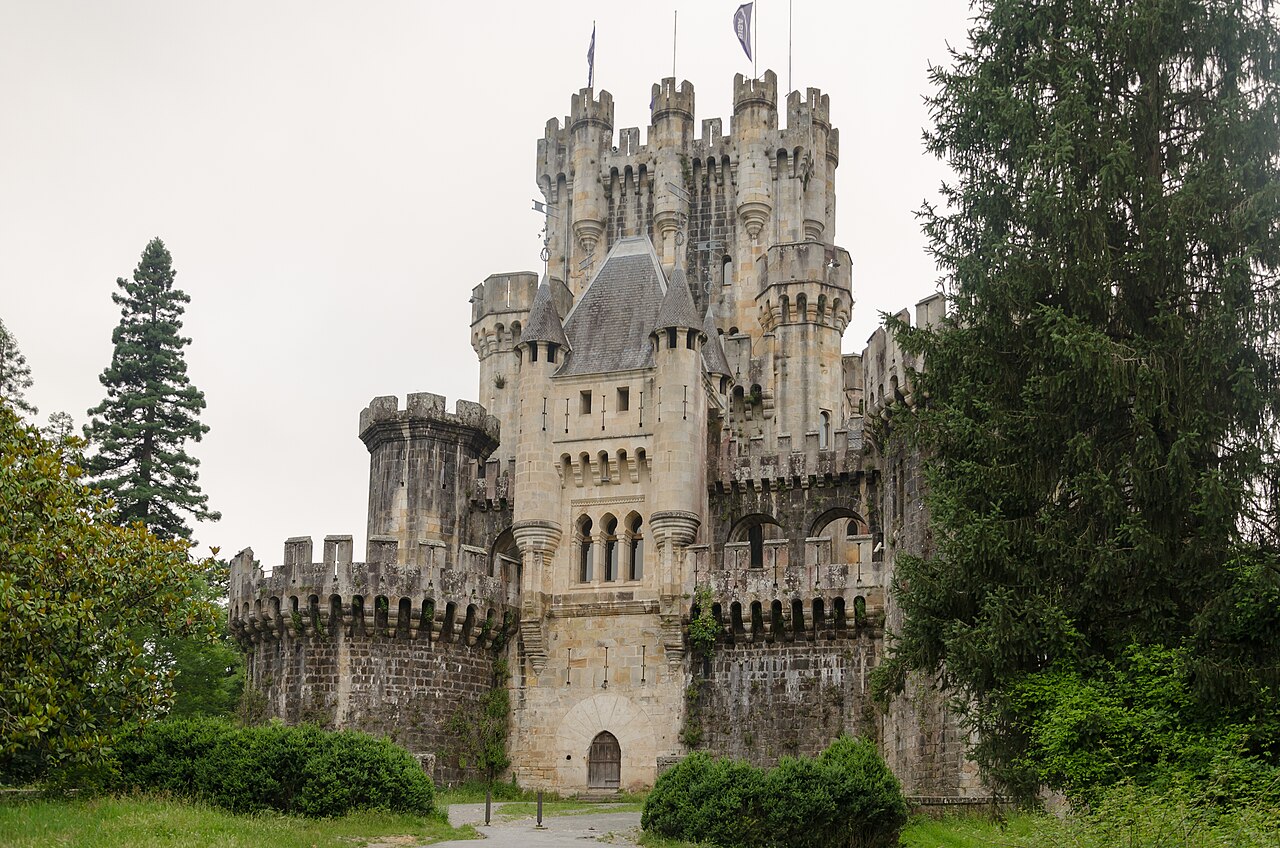
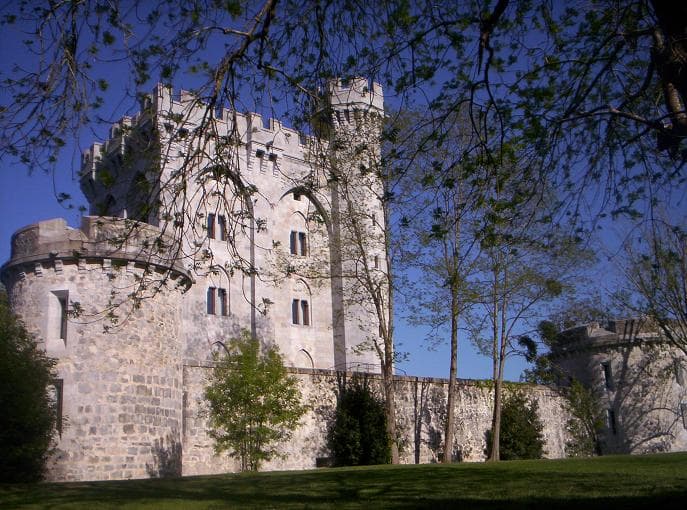
Castillo de Arteaga stands as a remarkable example of neo-Gothic architecture in northern Spain, located in the fertile plains of the Urdaibai river estuary near the historic town of Guernica and close to Bilbao. Unlike traditional Spanish castles, which were typically built on elevated ground for defense, this castle occupies a flat meadow surrounded by lush vegetation, evoking the style of French royal residences such as Fontainebleau Castle. This setting reflects its primary function not as a fortress but as a grand residence and symbol of prestige.
The castle's origins trace back to an original manor house reportedly constructed in the 8th century by Fortún Ortúnez and Sancho Gaúteguiz. This early structure underwent numerous destructions and reconstructions over the centuries. By the 15th century, a tower was documented on the site, serving as a defensive and residential stronghold for the Arteaga family, who were historically linked to the Montijo family. This connection would later prove significant due to the Montijos' relation to Empress Eugénie de Montijo, wife of Napoleon III of France.
By the 19th century, the original tower had fallen into disrepair and was being used as a farmhouse. However, the site gained renewed prominence when the Basque assembly in 1856 declared the newly born Prince Imperial a Viscayan noble, recognizing his descent from the lords of Arteaga and Montijo. This led to the decision to rebuild the castle as a grand residence befitting its imperial association.
Construction and architectural design
The reconstruction of the castle was commissioned by Empress Eugénie and overseen by architects sent by Napoleon III. The project was initially led by Louis-Auguste Couvrechef and later taken over by Gabriel-Auguste Ancelet, both prominent French architects of the period. The design embraced a medieval castle aesthetic, featuring four defensive walls with round towers, evoking the romanticized vision of a fortress rather than a purely functional stronghold.
The castle was built on the foundations of the previous tower, incorporating a rectangular central tower measuring approximately 17 by 12 meters, attached at an angle to an octagonal tower housing an internal staircase connecting all floors. The exterior is clad in gray marble with striking red jasper accents framing the arched windows. Each of the castle's four sides features two ogival arches rising from base to battlements, each arch containing four windows arranged over two floors.
Interior layout and decorative elements
The castle comprises five floors above a basement level, which contains the kitchen, wine cellar, and servant quarters. A grand marble staircase leads to the first floor, which houses a large, richly decorated hall with marquetry floors and intricately sculpted ceilings. Two rooms on this floor each feature monumental Gothic fireplaces made of gray marble and oak, emphasizing the castle's medieval revival style.
The second floor was reserved for the imperial couple, featuring private apartments and a small chapel adorned with exquisite stained glass windows. The upper floors accommodated higher-ranking servants, with an elliptical staircase inside the turret providing access to all levels.
Exterior fortifications and landscaping
The castle is enclosed by a small square courtyard, surrounded by high stone walls and four cylindrical corner towers constructed from a more modest, rough stone, contrasting with the refined marble of the main building. The main entrance is a single Gothic-style door, reinforcing the romantic medieval character of the complex.
Surrounding the castle, a carefully designed park was laid out, complementing the residence and enhancing its status as a noble estate rather than a military fortification. The landscaping reflects the 19th-century Romantic movement fascination with nature and picturesque settings.
Historical significance and legacy
The Castillo de Arteaga holds a unique place in Spanish and Basque history due to its connection to the Empress Eugénie de Montijo and the Second French Empire. The castle symbolizes the cultural and familial ties between the Basque nobility and European imperial circles. Its construction was a direct result of political and dynastic recognition by the Basque assembly, which acknowledged the imperial family's ancestral links to the region.
Although the castle was completed near the time of Napoleon III's death in 1873, it remains a testament to the 19th-century revivalist architecture and the romantic idealization of medieval castles during that era. Today, the castle has been transformed into an upscale hotel featuring 13 guest rooms and one suite, allowing visitors to experience its historic ambiance and architectural grandeur firsthand.
Architectural style and influences
The castle exemplifies the French Gothic revival style popular in the 19th century, characterized by ogival arches, gargoyles shaped like animals, double windows, and battlements. These elements were carefully designed by Gabriel-Auguste Ancelet, who also oversaw the interior decoration. The use of gray marble with red jasper accents adds a distinctive elegance to the facade, while the intricate interior details reflect the craftsmanship of French artisans, including painters and decorators from regions such as Bagnères-de-Luchon.
This stylistic approach aligns with the broader Romanticism movement in architecture, which sought to revive medieval forms and imbue buildings with a sense of history, mystery, and nobility. The castle's layout, combining defensive features with luxurious living spaces, illustrates this dual purpose.
Visitor experience and current use
Today, visitors to Castillo de Arteaga can explore its richly decorated halls, admire the stained glass windows of the chapel, and appreciate the architectural details that blend medieval inspiration with 19th-century artistry. The castle's conversion into a luxury hotel provides a unique opportunity to stay within a historic monument, offering modern comforts alongside its historic charm.
The surrounding park and the castle's setting in the Urdaibai estuary area also make it an attractive destination for those interested in nature, history, and architecture. Its proximity to Bilbao and Guernica adds cultural and historical context to visits, enriching the overall experience.
Frequently asked questions (FAQ)
- What is the historical significance of Castillo de Arteaga?
- Castillo de Arteaga is a 19th-century neo-Gothic castle that showcases the romantic architectural style of the era. It was built by the famous local architect, Francisco de Urquijo, and has served as a symbol of the region's aristocratic heritage. The castle is not only a stunning example of historical architecture but also an important cultural landmark in Arteaga.
- When was Castillo de Arteaga built?
- Construction of Castillo de Arteaga began in 1848 and was completed in 1852. The castle was commissioned by the Marquess of Arteaga, and its design reflects the romantic ideals that were prevalent during the 19th century. Today, it stands as a testament to the architectural innovation of its time.
- Can I visit Castillo de Arteaga?
- Yes, Castillo de Arteaga is open to visitors, allowing you to explore its beautiful architecture and grounds. Guided tours are available, providing insightful information about the castle’s history and significance. Be sure to check for any special events or exhibitions that may enhance your visit.
- What are the opening hours of Castillo de Arteaga?
- The castle is generally open to visitors from 10 AM to 6 PM, Tuesday through Sunday. However, it's advisable to check the official website or contact the visitor center for the most current opening hours and any seasonal changes. Planning your visit ahead of time ensures you don't miss out on exploring this magnificent site.
- Is it possible to access Castillo de Arteaga with mobility aids?
- Yes, Castillo de Arteaga offers accessibility options for visitors with mobility aids. The castle has made efforts to ensure that its grounds and certain areas are accessible to all guests. However, it is recommended to inquire in advance about specific accessibility features to ensure a smooth visit.
- What is the best time to visit Castillo de Arteaga?
- The best time to visit Castillo de Arteaga is during the spring and early autumn months when the weather is mild and pleasant. These seasons also allow you to enjoy the surrounding landscapes in full bloom. Additionally, visiting during weekdays may help you avoid larger crowds.
- Are there any nearby attractions to explore after visiting the castle?
- Yes, there are several nearby attractions worth exploring after your visit to Castillo de Arteaga. You can visit the picturesque town of Arteaga, which offers charming streets and local shops. Additionally, the beautiful parks and nature trails in the area provide a great opportunity for outdoor enthusiasts.
- What are the ticket prices for visiting Castillo de Arteaga?
- Ticket prices for Castillo de Arteaga are typically affordable, with discounts available for students, seniors, and children. Special rates may apply for guided tours or group visits. It's best to check the official website for the latest pricing information and any special offers available during your visit.

Information
Website
Visit websiteSources & official resources
Verify the information above using these authoritative references.
Loading map...
Visitor reviews
No reviews yet. Been here? Write the first review and help other travelers!
Write the first reviewVisited this castle? Share your experience
Your review helps other travelers and adds first-hand knowledge to our encyclopedia.