Castillo de Albarracín
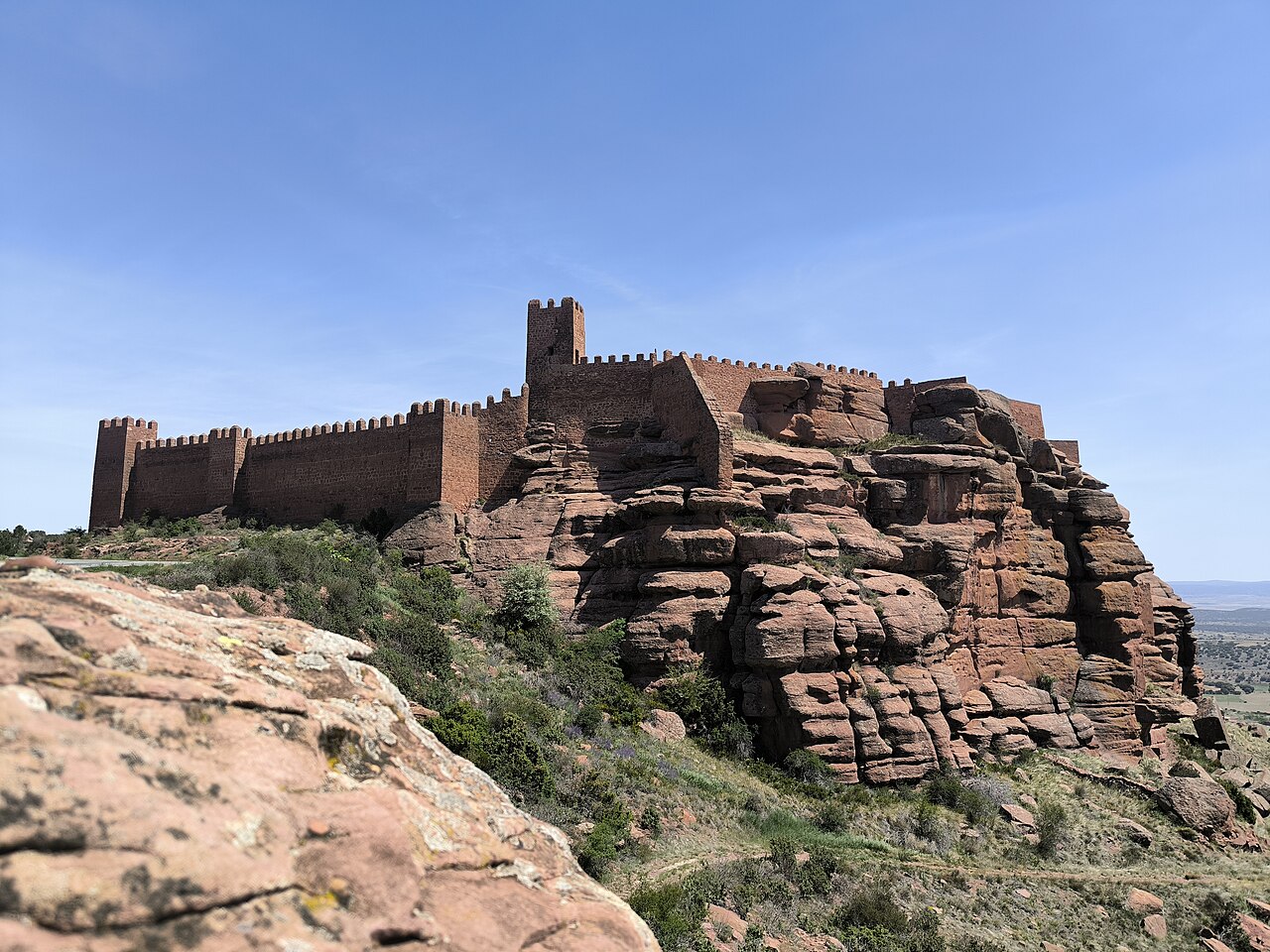
The Castillo de Albarracín stands as a remarkable example of a medieval hill castle in the historic town of Albarracín, Spain. Its origins trace back to the 10th century, when it was established by the Banu Razín clan as a strategic stronghold within the district of as-Sahla under the Caliphate of Córdoba. This fortress played a pivotal role in the region's military and political landscape, evolving through successive cultural and political changes over several centuries.
Initially constructed as an Islamic alcazaba, the castle later became the citadel of the independent Taifa of Albarracín following the fragmentation of the Caliphate in the early 11th century. Its commanding position atop a hill provided both defensive advantages and a symbol of local authority. The fortress witnessed significant architectural and functional developments reflecting the shifting powers from Islamic rulers to Christian feudal lords.
Historical evolution and political significance
During the late 11th century, the castle complex expanded with the addition of a palatial residential area on its southern slope. This section included three distinct houses and a granary, all arranged around paved patios with built-in benches, indicating the wealth and status of its occupants. The presence of such refined domestic architecture within a military fortress underscores the dual role of the castle as both a defensive site and a noble residence.
By the mid-12th century, parts of the castle were abandoned, likely due to changing political dynamics and population movements. However, the arrival of feudal settlers from the Kingdoms of Aragon and Navarre around 1170 revitalized the fortress. These new occupants adapted and altered the southern residential areas, marking a transition from Islamic to Christian feudal control.
The castle's military importance was reaffirmed following a decisive siege led by King Peter III of Aragon in the late 13th century. After the siege, the fortress underwent major reconstruction, including the demolition of earlier internal buildings to make way for two new rectangular structures along the western and southern walls. These served as quarters for a small garrison, reflecting the castle's continued strategic role under Aragonese rule.
The last recorded military use of the castle occurred in the late 16th century during the reign of Philip II. At this time, the fortress housed troops and underwent masonry repairs before gradually falling into neglect and disuse. Subsequent centuries saw the castle suffer from looting and deterioration, leaving it largely in ruins by the modern era.
Architectural features and layout
The Castillo de Albarracín is situated on an elevated hilltop, organized into three main sectors: the primary residence, an eastern building, and an enclosed inner area. The main residence is a trapezoidal structure centered around a large open courtyard, beneath which lie two rectangular aljibes (water storage tanks) crucial for the fortress’s water supply during sieges.
Palatial residential complex
On the southern slope, excavations revealed a palatial residential complex comprising three individual houses. Each house is arranged around paved patios with built-in benches, demonstrating sophisticated domestic planning. Notably, House II features a portico with three elegant arches, highlighting the architectural refinement achieved during the castle’s Islamic period.
This residential area also includes a hammam, or traditional hot bath, complete with an intricate hypocaust heating system. The hypocaust consists of a lower chamber for circulating hot air beneath the floors, a raised bathing room supported by small pillars, a fire chamber to generate heat, and an attached latrine. Such facilities illustrate the high status of the castle’s inhabitants and the cultural importance of bathing rituals in medieval Islamic society.
Defensive structures and military quarters
To the east, a rectangular building with notably thick walls forms part of the castle’s defensive layout. Military barracks were positioned near a defensive tower adjacent to the palatial residences, underscoring the integration of domestic and military functions within the fortress.
Following the 13th-century siege, two new rectangular structures were built along the western and southern perimeter walls to accommodate a small garrison. These additions reflect the castle’s adaptation to evolving military needs under Christian rule.
Archaeological discoveries and cultural heritage
Extensive archaeological excavations conducted in the late 20th and early 21st centuries have uncovered a wealth of medieval ceramics and structural remains. These findings have been instrumental in reconstructing the castle’s complex history and architectural evolution from an Islamic taifa fortress to a Christian feudal and royal military site.
The castle’s ceramic assemblage is among the richest medieval collections in the region, with many pieces preserved in local museums. These artifacts provide valuable insight into the material culture, trade connections, and daily life of the castle’s successive occupants.
Today, the Castillo de Albarracín stands as a partially preserved monument, showcasing architectural layers from the 11th to 16th centuries. Its ruins offer visitors a tangible connection to the region’s turbulent medieval past and the cultural interplay between Islamic and Christian civilizations in Spain.
Visiting the castle
Visitors to the castle can explore its extensive ruins, including the main trapezoidal residence, the palatial houses, and the remains of military quarters. The site’s elevated position provides panoramic views of the town of Albarracín and the surrounding landscape, enhancing its historical ambiance.
Interpretive signage and guided tours help illuminate the castle’s multifaceted history, architectural features, and archaeological significance. The castle is a key cultural landmark within the region, drawing history enthusiasts and tourists interested in medieval fortifications and Spanish heritage.
The castle in the context of spanish medieval fortifications
The Castillo de Albarracín exemplifies the complex layering of cultural influences typical of Spanish medieval fortifications. Its origins as a Muslim fortress, subsequent Christian adaptations, and continued military use reflect broader historical trends in the Iberian Peninsula during the Middle Ages.
The castle’s combination of residential palatial architecture with robust military defenses illustrates the dual needs of noble status and strategic security. Its preservation and archaeological study contribute significantly to understanding the region’s transition from Islamic to Christian rule and the evolution of feudal society in Spain.
Frequently asked questions (FAQ)
- When was Castillo de Albarracín originally built?
- The castle was originally constructed in the 10th century by the Banu Razín clan during the Caliphate of Córdoba.
- What architectural styles are visible in Castillo de Albarracín?
- The castle exhibits a mix of Islamic and Christian medieval architectural styles, reflecting its evolution from an Islamic alcazaba to a feudal fortress.
- Can visitors explore the remains of the palatial residential complex?
- Yes, visitors can see the remains of the palatial houses, including paved patios, a hammam with hypocaust heating, and other domestic structures.
- Is Castillo de Albarracín accessible year-round?
- Visiting hours may vary seasonally, so it is recommended to check locally before planning a visit.
- What are the key historical events associated with Castillo de Albarracín?
- Key events include its role as the Taifa of Albarracín's citadel, the 13th-century siege by King Peter III of Aragon, and its military use until the late 16th century.
Information
Website
Visit websiteSources & official resources
Verify the information above using these authoritative references.
Loading map...
Visitor reviews
No reviews yet. Been here? Write the first review and help other travelers!
Write the first reviewVisited this castle? Share your experience
Your review helps other travelers and adds first-hand knowledge to our encyclopedia.