Castelo de Palmela
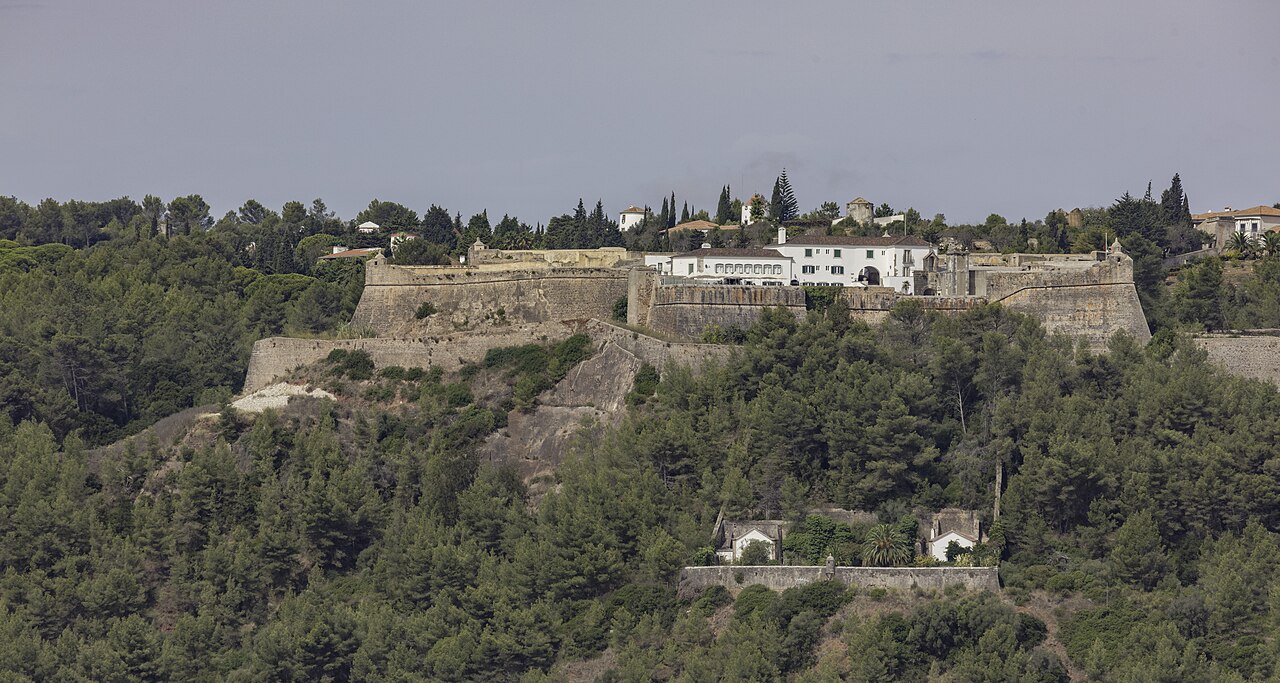
Castelo de Palmela stands as a remarkable example of a hill castle with a profound historical legacy in Setubal, Portugal. Situated strategically between the estuaries of the Rivers Tagus and Sado, near the mouth of the Sado, it forms part of the picturesque Costa Azul and lies within the boundaries of the Arrábida Natural Park. This location not only offered natural defensive advantages but also placed the castle at a crossroads of important maritime and land routes, enhancing its military and economic significance throughout history.
The origins of Castelo de Palmela trace back to the 8th and 9th centuries, when the Muslims constructed the initial fortifications. These early structures were expanded considerably between the 10th and 12th centuries, reflecting the castle's evolving role in regional defense and control. However, the site's occupation predates even these medieval developments. Archaeological evidence indicates that the hill was inhabited since the Neolithic period, with a fortified settlement established around 310 BCE. The Romans further fortified the site in 106 CE under the direction of the Lusitanian praetor Áulio Cornélio Palma, whose name is historically linked to the castle's early identity.
Early history and strategic importance
The castle's location on a prominent hill at approximately 240 meters above sea level on the eastern foothills of the Arrábida mountain range made it a natural stronghold. The elevated position allowed for expansive views over the surrounding territory, including the vital waterways of the Tagus and Sado estuaries. This vantage point was critical during various military campaigns, especially during the Christian Reconquista.
In 1147, Portuguese forces captured Palmela from Muslim control. The castle changed hands several times amid the turbulent conflicts of the period before being permanently secured by the Portuguese in 1165. From 1186, the castle and its lands were granted to the Order of Santiago, a military and religious order that established its headquarters there prior to 1210. This order played a significant role in the defense and administration of the region, contributing to the castle's fortification and expansion.
Medieval fortifications and architectural developments
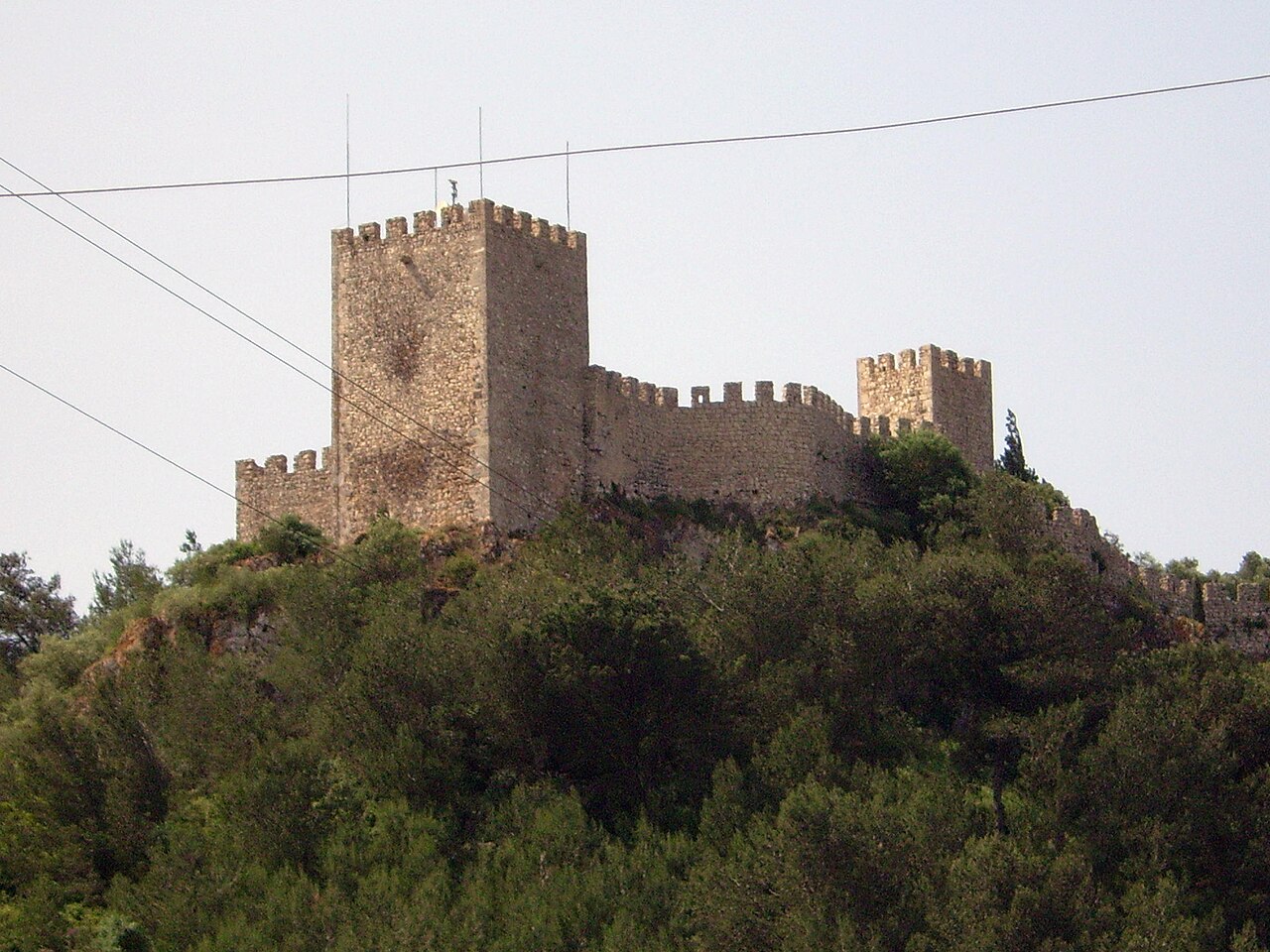
The castle endured serious damage during the Almohad attacks around 1190-1191, but subsequent Portuguese monarchs undertook extensive repairs and reinforcements. King Alfonso III confirmed the Order of Santiago’s domains in 1255, and under King Denis (reigned 1279–1325), the Gothic keep tower was likely constructed. This keep tower, a central defensive feature, was remodeled in the 14th century to include increased height, crenellations bearing initials, and a stone staircase connecting multiple floors, enhancing both its defensive capabilities and residential functions.
During the 1383-1385 crisis, the castle served a critical role as a signaling point during the 1384 siege of Lisbon, highlighting its continued military importance. Later, in 1423, King John I expanded and reinforced the castle, founding a church and convent for the Order of Santiago, which permanently settled there from 1443. These religious and military functions intertwined, with the castle serving as both fortress and monastic center.
Early modern adaptations and political significance
In 1484, the castle was the scene of a notable political event when Garcia de Meneses, bishop of Évora, was imprisoned and died in the castle’s cistern, underscoring its use as a place of detention and political intrigue. The town of Palmela received a new charter from King Manuel I in 1512, reflecting its administrative and strategic relevance.
During the War of Spanish Succession, King Peter II modernized the castle’s defenses by adding bastioned fortifications designed to withstand artillery attacks. These 17th-century adaptations included bastions, ravelins, and tenailles, marking a significant evolution in the castle's military architecture to meet the demands of gunpowder warfare.
Architectural layout and surviving structures
Castelo de Palmela is characterized by an irregular polygonal plan that conforms to the natural topography of the hill. Its defensive system comprises three successive lines of walls, reinforced by a combination of square and circular towers, but notably lacks moats.
Innermost line and keep tower
The oldest fortifications belong to the innermost line, dating from the 12th and 13th centuries. This section includes two cylindrical towers that support the defensive walls. The keep tower is a prominent feature here, containing a cistern essential for water supply during sieges. The 14th-century remodeling of the keep added significant height and crenellations, which bear the initials of the period’s rulers or builders, and a stone staircase that connects multiple floors, facilitating both defense and habitation.
Middle line and religious buildings
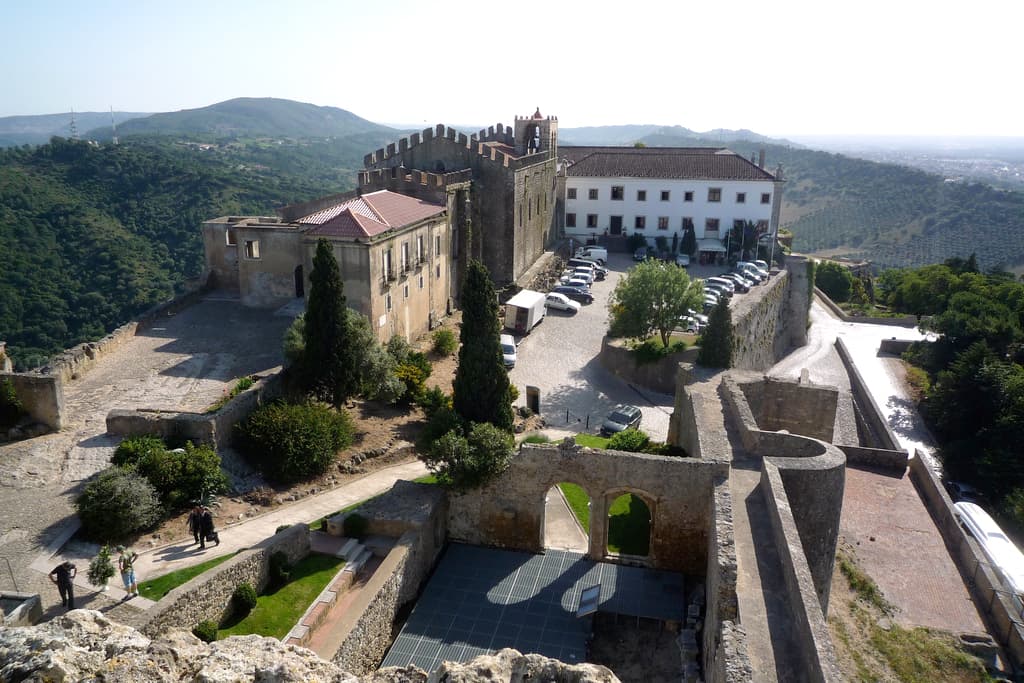
The middle line of fortifications, constructed in the 15th century, encloses the castle’s main square. Within this area stand several important buildings, including the Church of Santa Maria, originally built in the 12th century but extensively rebuilt during the Renaissance period. The convent and the Gothic Church of Santiago de Palmela also occupy this space, reflecting the castle’s dual military and religious functions.
Outermost line and artillery defenses
The outermost line of fortifications dates from the 17th century and features bastions, ravelins, and tenailles. These elements represent the castle’s adaptation to the era of artillery warfare, designed to absorb and deflect cannon fire and protect the inner defenses.
Modern history and preservation
The 1755 Lisbon earthquake caused significant damage to Castelo de Palmela, yet it remained occupied by the Order of Santiago until their dissolution in 1834. Following this, the castle served as a garrison for the Portuguese Army, maintaining its military relevance into the 19th century. Notably, the explorer Brito Capelo was born within the castle in 1841, adding to its historical significance.
Declared a National Monument in 1910, the castle underwent various restoration and archaeological efforts throughout the 20th century. From 1945, the former convent buildings were converted into a pousada, a historic inn, joining the Pousadas de Portugal network in the 1970s. This adaptive reuse has helped preserve the site while making it accessible to visitors.
Archaeological excavations in the late 20th century uncovered parts of the castle that now serve as museum spaces, service areas, and commercial zones. The castle’s walls, towers, and internal structures remain largely intact, offering a tangible narrative of centuries of architectural evolution, military history, and cultural heritage. It has also been used as a filming location for movies and television series, further cementing its place in contemporary cultural memory.
Frequently asked questions (FAQ)
- What is the historical significance of Castelo de Palmela?
- Castelo de Palmela is a historic castle that dates back to the 11th century and played a crucial role in the defense against Moorish invasions. It was strategically positioned to oversee the surrounding lands and served as a royal residence in later years, reflecting the region's turbulent history.
- When was Castelo de Palmela built?
- The construction of Castelo de Palmela began in the 11th century, with significant modifications made in the following centuries. The castle's architecture showcases a blend of Moorish and medieval styles, making it a fascinating site for history enthusiasts.
- Can I visit Castelo de Palmela?
- Yes, Castelo de Palmela is open to the public, allowing visitors to explore its impressive towers and enjoy panoramic views of the surrounding landscape. It’s a great destination for history lovers and those looking to immerse themselves in the local culture.
- What are the opening hours of Castelo de Palmela?
- Castelo de Palmela typically opens daily from 10 AM to 6 PM, with extended hours during the summer months. It is advisable to check the official website for any seasonal changes or special events that may affect visiting hours.
- Is it possible to access Castelo de Palmela by public transport?
- Yes, visitors can reach Castelo de Palmela using public transport, including buses that connect to the nearby town of Palmela. From there, it is a short walk uphill to the castle, making it accessible for those who prefer not to drive.
- What is the best time to visit Castelo de Palmela?
- The best time to visit Castelo de Palmela is during the spring (March to May) and fall (September to November) when the weather is mild and pleasant for outdoor exploration. These seasons also see fewer crowds, allowing for a more enjoyable experience.
- Are there any nearby attractions to visit along with Castelo de Palmela?
- Yes, nearby attractions include the stunning Arrábida Natural Park, known for its breathtaking landscapes and hiking trails, and the charming town of Palmela itself, which offers quaint streets and local cuisine. Exploring these areas can enhance your visit to the castle.
- What are the ticket prices for visiting Castelo de Palmela?
- Ticket prices for Castelo de Palmela are generally affordable, with discounts available for students and seniors. Children under a certain age often enter for free, making it an excellent family-friendly destination.
Photo gallery

Information
Website
Visit websiteSources & official resources
Verify the information above using these authoritative references.
Loading map...
Visitor reviews
No reviews yet. Been here? Write the first review and help other travelers!
Write the first reviewVisited this castle? Share your experience
Your review helps other travelers and adds first-hand knowledge to our encyclopedia.