Sesimbra Castle
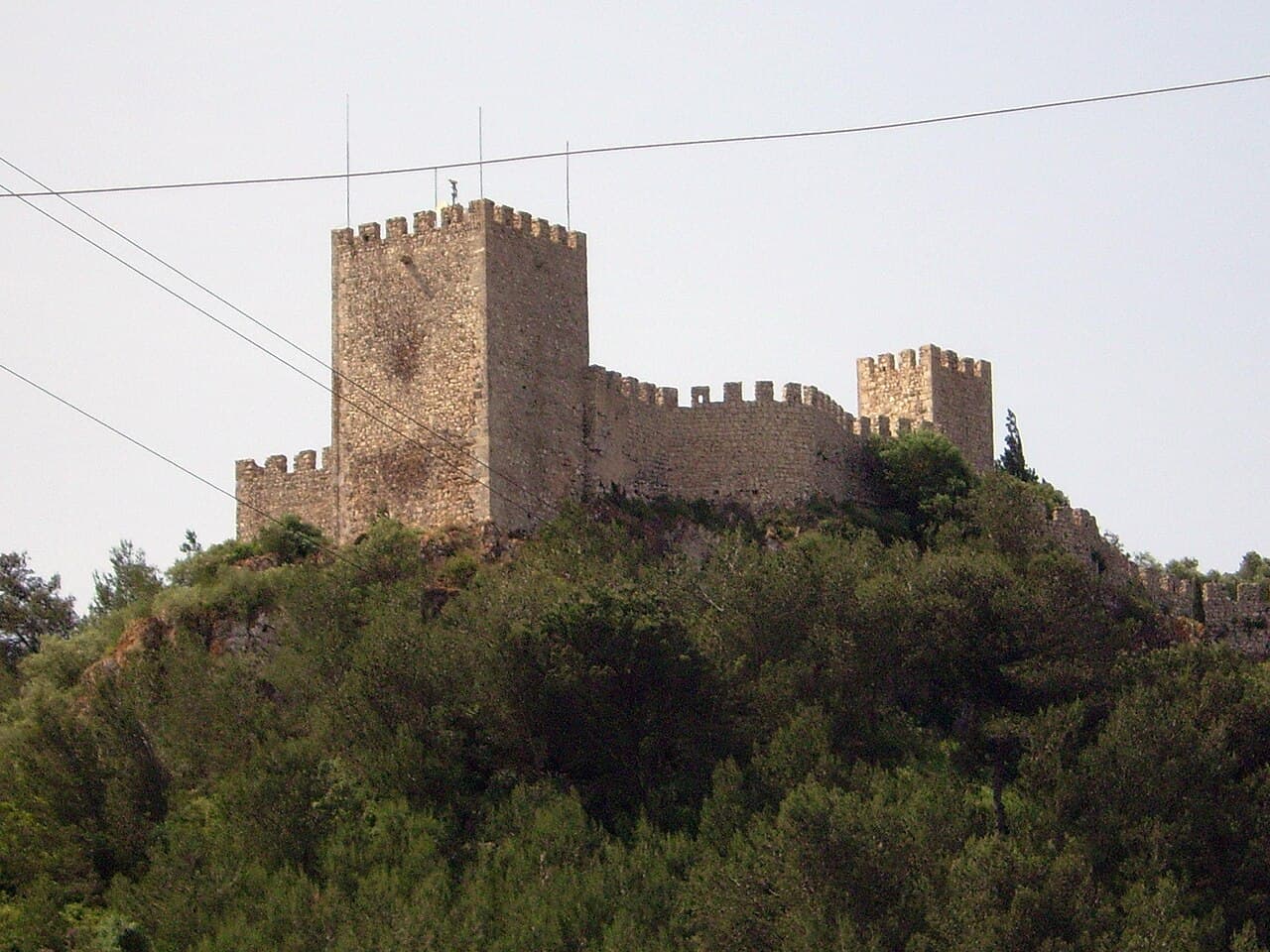
Sesimbra Castle, locally known as Castelo de Sesimbra, is a prominent hill castle perched 240 meters above the town of Sesimbra in the Setúbal Peninsula region of Portugal. Its strategic location atop a rocky outcrop overlooking a natural harbor has made it a key defensive site since prehistoric times.
The earliest known settlement on this site dates back to prehistoric periods, with the natural cove below providing an ideal harbor. In the 9th century, during the Early Medieval period, the site became a Muslim stronghold called Alcáçova. It likely featured a fortification on the highest cliff point, serving as a defensive and administrative center for the Muslim rulers of the Iberian Peninsula.
Medieval conquest and christian reconstruction
The castle's history is marked by a series of conquests and reconquests during the Christian Reconquista. In 1165, the fortification was captured by King Afonso I of Portugal, who repaired and strengthened the defenses. However, it was retaken and largely destroyed in 1191 by the Almohad caliph Yaqub al-Mansur. Around 1200, aided by Frankish crusaders, King Sancho I recaptured the castle and initiated a comprehensive rebuilding effort from its foundations.
To encourage repopulation and fortification, Sancho I granted the settlement its first charter in 1201. The castle and town were further strengthened under successive monarchs including Sancho II, who in 1236 granted the castle to the Order of Santiago. This military and religious order played a significant role in repopulating the area and enhancing the castle's defenses over the following century.
Architectural features and military adaptations
The castle's layout is elongated and irregular, aligned roughly from northeast to southwest along the cliff ridge. The inner castle or alcazaba occupies the northeastern end, featuring a quadrangular plan with two dominant towers: a square keep with a decorated coffered vault and a quadrangular watchtower at the southwestern end, built in 1323 as a lookout against Barbary pirate raids.
The crenellated defensive walls encompass the site, punctuated by battlements and four triangular bastions added in the 17th century to support artillery, reflecting adaptations during the Portuguese Restoration War. Two main gates, the Porta do Sol and Porta da Azóia, provide access to the castle grounds.
Within the walls stand several notable structures, including the Church of Nossa Senhora do Castelo, originally built in 1160 and restored in the early 18th century. Adjacent to one of three cisterns used for water storage are the ruins of the old town hall, emphasizing the castle's administrative importance.
Decline and modern preservation
From the 14th century onward, Sesimbra Castle's military importance declined as the nearby port settlement grew, especially during Portugal's Age of Maritime Exploration. By the 16th century, the fortified settlement was gradually abandoned in favor of the seaside town below. The castle was updated with artillery bastions in the 17th century, but the devastating 1755 Lisbon earthquake severely damaged the structure, leading to its ruinous state.
In the late 19th century, part of the outer castle was repurposed as a cemetery. Restoration efforts in the 20th century, particularly in the 1930s-40s and again in 1998, have stabilized and preserved much of the castle's walls and buildings. Today, Sesimbra Castle is a publicly accessible site serving as a public park, offering panoramic views and a tangible connection to Portugal's layered history.
Historical significance and cultural heritage
Sesimbra Castle stands as a testament to the complex history of the Iberian Peninsula, reflecting Islamic military architecture, the Christian Reconquista, and the evolution of fortifications through the medieval and early modern periods. Its association with the Order of Santiago highlights the role of military-religious orders in territorial defense and settlement repopulation.
The castle's strategic position guarding a natural harbor underscores its importance in maritime defense, especially against Barbary pirate threats during the late Middle Ages. Its layered construction phases illustrate the adaptation of medieval fortresses to the advent of artillery warfare in the 17th century.
Today, the castle is recognized as a National Monument of Portugal, protected and maintained by the municipality of Sesimbra. It remains a popular destination for visitors interested in history, architecture, and panoramic coastal landscapes.
Frequently asked questions (FAQ)
- How do I get to Sesimbra Castle?
- Sesimbra Castle is located in the town of Sesimbra, accessible by car or local bus from Lisbon and Setúbal. The castle sits atop a hill, so be prepared for a short uphill walk from the town center.
- What is the best time to visit Sesimbra Castle?
- The best time to visit Sesimbra Castle is during spring and autumn when the weather is mild and the crowds are smaller. Early mornings and late afternoons offer beautiful lighting for photography.
- Is Sesimbra Castle accessible for visitors with mobility issues?
- Due to its hilltop location and uneven terrain, Sesimbra Castle may be challenging for visitors with mobility impairments. There are some paved paths, but parts of the castle grounds involve steep or uneven surfaces.
- Can I enter the towers of Sesimbra Castle?
- Currently, the interior of the towers is closed to the public for safety reasons. Visitors can explore the castle walls, courtyards, and surrounding park areas freely.
- Are there any guided tours available at Sesimbra Castle?
- Guided tours may be available seasonally or by appointment through the municipality of Sesimbra. Visitors are advised to check local tourist information centers for current offerings.
Photo gallery

Photo by No machine-readable author provided. Sacavem assumed (based on copyright claims).•Public domain
Information
Opening hours
Open daily, sunrise to sunset
Ticket prices
Free
Current owner
Municipality of Sesimbra
Website
Visit websiteAddress
R. Nossa Sra. do Castelo, Sesimbra, Portugal
Sources & official resources
Verify the information above using these authoritative references.
Loading map...
Visitor reviews
No reviews yet. Been here? Write the first review and help other travelers!
Write the first reviewVisited this castle? Share your experience
Your review helps other travelers and adds first-hand knowledge to our encyclopedia.