Castelo da Sertã
Castelo da Sertã is a historic hill castle located in the municipality of Sertã, Portugal. This fortress, while modest in its surviving remains, holds a significant place in the region's medieval heritage and local cultural memory. Though its exact origins remain partially undocumented, the castle is traditionally linked to the early medieval period and has been shaped by centuries of military and administrative use.
The legend and early history of Castelo da Sertã
The origins of Castelo da Sertã are enveloped in both legend and historical conjecture. A popular local tradition connects the castle’s foundation to the Roman era, specifically to the figure of Sertório, a Roman military exile active around 80 BCE. According to a tale recorded by Father Lourenço Farinha in 1930, Sertório allied with the Lusitanian resistance against Roman rule. The legend recounts a dramatic siege where, following the death of Sertório, his wife Celinda defended the fortress by pouring boiling oil from a frying pan onto the besieging Roman forces. This act of defiance is commemorated in the town's coat of arms with the Latin motto “Sartago Sternit Sartagine Hostes”, meaning "The frying pan defeats enemies with a frying pan".
Despite the vividness of this legend, archaeological investigations conducted in the late 20th century have not uncovered Roman or Lusitanian artifacts at the site. The earliest documented references to the castle date from 1629, but historians generally agree that the original fortification was likely established during the 10th century, aligning with the early medieval period's defensive network in the region.
Medieval development and military significance
During the Christian Reconquista, the castle played a strategic role in the defense and repopulation of the region. Count Henrique de Borgonha (1095–1112) is credited with repopulating the Sertã area and reconstructing the castle, reinforcing its military and administrative importance. This reconstruction likely included strengthening the stone walls and towers to withstand attacks common during this turbulent period.
Following this, the castle and its surrounding lands came under the control of the Knights Templar, a powerful medieval religious and military order. After the Templars were dissolved in Portugal, their properties, including Castelo da Sertã, were transferred to the Order of the Hospital or Knights Hospitaller. This transition continued the castle’s role as a military stronghold and administrative center.
In 1455, the settlement around the castle was formally recognized with a Foral charter by King Afonso V, granting legal privileges and municipal status. This charter was later confirmed by King Manuel I in 1513, reinforcing Sertã's governance and development.
Architectural features and surviving remains
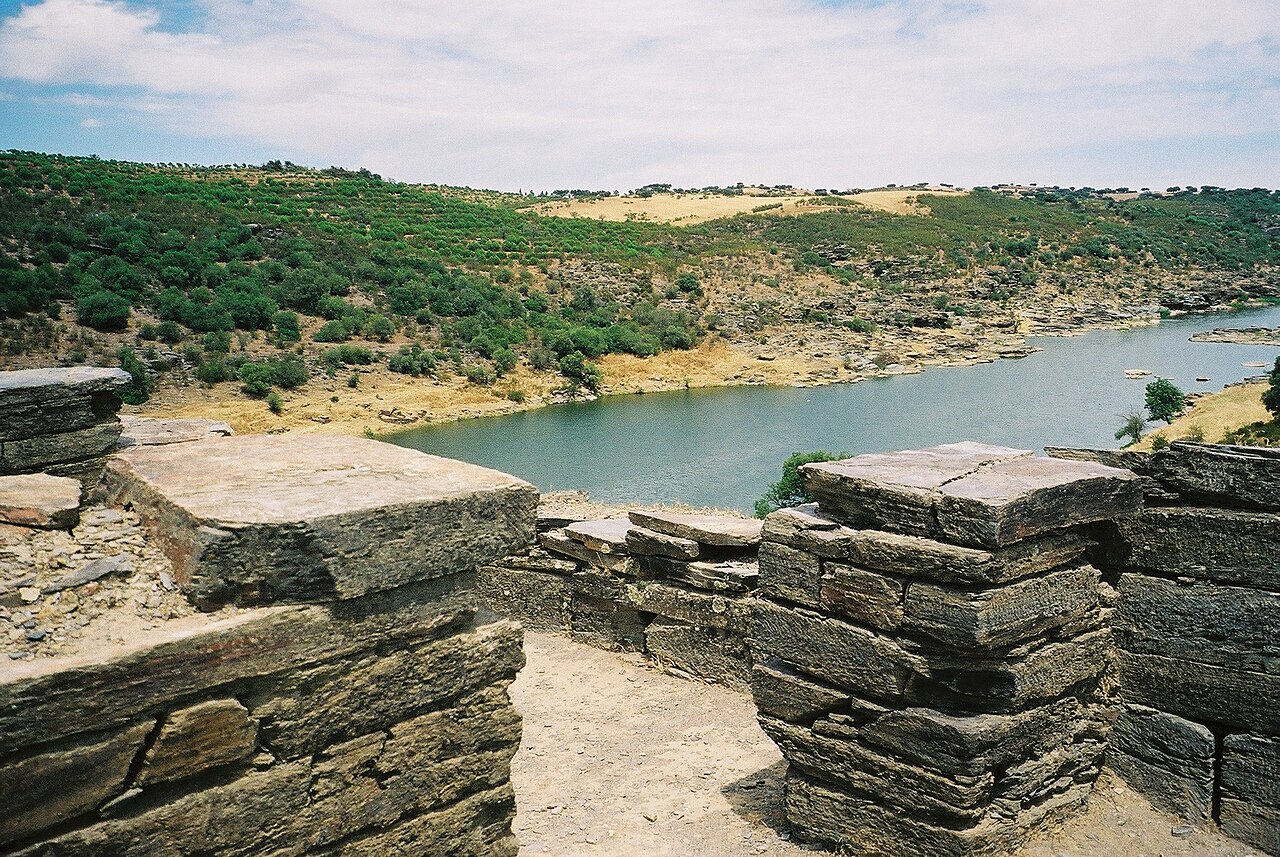
The surviving remains of Castelo da Sertã primarily consist of sections of medieval stone walls and a tower situated adjacent to a church. These remains are integrated into the fabric of the modern town, illustrating how the castle evolved from a standalone fortress into part of the urban landscape.
The castle’s walls reflect typical medieval defensive construction, built from local stone to form a protective barrier. The adjacent tower likely functioned as a lookout and stronghold, essential for surveillance and defense. Although the castle is now largely in ruins, these structural elements remain partially preserved and visible.
There is no evidence of decorative architectural features such as inscriptions, ornate gates, staircases, or mosaics at the site. The value of the remains lies in their representation of a medieval fortress and their connection to the historical narrative of Sertã.
Integration with the town
The castle’s position close to residential buildings and a church highlights its integration into the town’s development over centuries. As Sertã expanded, the castle transitioned from a military installation to a historical landmark embedded within the community.
Historical administration and later significance
In the mid-16th century, Vicente Caldeira served as Alcaide-mor, or chief governor, overseeing the castle’s defense and local administration. This role underscored the castle’s continued importance in regional governance and military affairs during that period.
By the 19th century, the castle had lost its military function but remained a notable landmark. An English travel guide from 1850 described it as “extremely picturesque,” reflecting its enduring presence in the Sertã landscape and its appeal to visitors interested in historical sites.
Preservation and cultural legacy
Today, the remains of Castelo da Sertã are recognized for their historical importance. Portuguese authorities are considering official heritage protection status to preserve the site for future generations. The castle’s ruins serve as a tangible link to Sertã’s medieval past and the broader history of Portuguese fortifications.
The oral tradition surrounding Celinda’s defense remains a vital cultural memory, symbolized in the town’s heraldry rather than marked by physical monuments at the site. This legend enriches the castle’s significance beyond its physical remains, connecting local identity with historical narrative.
While Castelo da Sertã no longer functions as a fortress, its partially preserved walls and tower provide valuable insight into the region’s medieval military architecture and settlement evolution. The site continues to invite scholarly study and public interest, emphasizing the importance of preserving Portugal’s medieval heritage.
Frequently asked questions (FAQ)
- When was Castelo da Sertã originally built?
- Castelo da Sertã was likely originally built during the 10th century as part of early medieval defensive efforts in the region.
- What is the legend associated with the castle?
- Local legend tells of Celinda, who defended the castle by pouring boiling oil from a frying pan onto Roman invaders, a story commemorated in the town's coat of arms.
- Who controlled the castle during the medieval period?
- The castle was controlled by Count Henrique de Borgonha during the Reconquista, later by the Knights Templar, and then the Knights Hospitaller after the Templars' dissolution.
- What remains of the castle can be seen today?
- Visitors can see sections of medieval stone walls and a tower adjacent to a church, reflecting typical medieval military architecture.
- Is Castelo da Sertã open to visitors?
- There is no specific information on visiting hours or ticket prices, so visitors should check locally for access details.
Information
Website
Visit websiteSources & official resources
Verify the information above using these authoritative references.
Loading map...
Visitor reviews
No reviews yet. Been here? Write the first review and help other travelers!
Write the first reviewVisited this castle? Share your experience
Your review helps other travelers and adds first-hand knowledge to our encyclopedia.