Castello Svevo
Castello Svevo, also known as the Schwabian castle, is a significant medieval fortress located in Augusta, on the eastern coast of Sicily, Italy. Originally constructed in 1232 by the Holy Roman Emperor Frederick II of Hohenstaufen, the castle was built upon the remains of an older Norman watchtower. Its strategic position on the peninsula known as "Terra vecchia" allowed it to guard the natural harbor of Augusta, a vital port for the export of agricultural goods during the High Medieval period. The castle's primary role was to protect the coastline and the economic interests of the region from frequent coastal raids, particularly during times of political instability.
Historical development and political significance
The foundation of Castello Svevo under Frederick II was part of a broader imperial strategy to secure Sicily and strengthen its maritime defenses. Frederick II renamed the settlement Augusta, emphasizing its importance as a fortified port. Following the decline of the Hohenstaufen dynasty, the castle came under the control of the Angevin rulers. However, in 1282 during the Sicilian Vespers uprising, the fortress was seized by Peter of Aragon, marking the beginning of a period of Aragonese dominance. The castle was managed by various Aragonese nobles who maintained its defenses amid the shifting political landscape of Sicily.
Spanish Habsburg fortifications and military actions
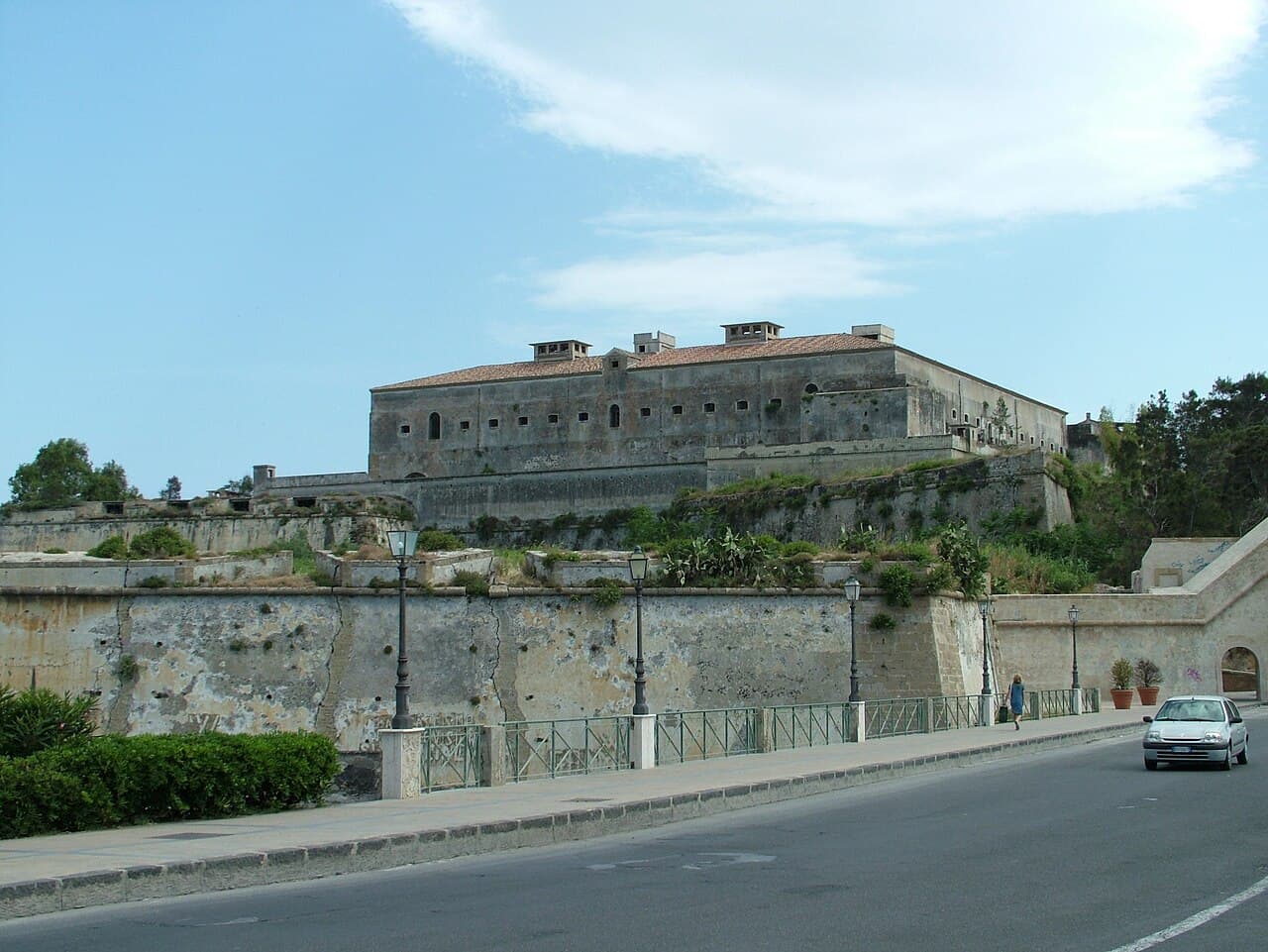
In response to increasing threats from Ottoman pirates and other maritime enemies during the 16th century, the Spanish Habsburg rulers, then sovereigns of Sicily, undertook extensive fortification works. These included the construction of bastions such as San Bartolomeo and Vigliena by the late 1500s, and later San Filippo and San Giacomo in the mid-1600s. These additions transformed the castle and its surroundings into a pentagonal fortress with four bastions connected by moats and defensive outworks, creating a star-shaped defensive system designed to withstand artillery attacks.
The castle was involved in military conflicts such as the Messina revolt (1674–1678), during which it was briefly occupied by a French fleet before being retaken by Spanish forces. Subsequent restoration and strengthening efforts were led by the Spanish military engineer Carlos de Grünenbergh between 1680 and 1682. The fortress suffered damage from a major earthquake in 1693, including an explosion in its gunpowder magazine, but repairs were completed by 1702.
Architectural features and layout
Castello Svevo is characterized by its roughly square plan, with each side measuring approximately 60 to 62 meters. The fortress is built from thick sandstone blocks known locally as "giuggiulena," reflecting regional construction materials and techniques of the 13th century. The walls are about 2.6 meters thick, providing robust protection against siege weaponry of the medieval period.
The castle's defensive system includes a total of eight towers of various shapes. Four large square towers anchor the center of each side, with the eastern and western towers rectangular in plan, while the northern and southern towers are polygonal. A notable feature is the pentagonal tower near the main entrance on the southern wall, which was originally octagonal but modified over time to enhance defense. Two additional rectangular towers are positioned midway along the east and west walls, contributing to a layered defense strategy.
Inside the walls, the fortress encloses a rectangular courtyard surrounded by architectural elements such as pointed arches and Gothic ribbed cross vaults. These features demonstrate the influence of Cistercian architecture, particularly reminiscent of the style of Clairvaux Abbey. This combination of military and monastic architectural elements is typical of Frederick II's constructions, blending functional defense with stylistic sophistication.
Later fortifications and star-shaped citadel
During the 16th and 17th centuries, the castle became the core of a larger fortified complex. The addition of four bastions—San Bartolomeo, Vigliena, San Filippo, and San Giacomo—created a pentagonal citadel with moats and ravelins, triangular outworks designed to protect the walls from artillery fire. This star-shaped defensive system was a response to evolving military technology and the need for stronger coastal defenses. Nearby forts such as Garcia and Vittoria complemented the castle's defenses, securing the harbor against naval threats.
Use as a prison and modern status
From 1890 to 1978, Castello Svevo was repurposed as a prison, which led to significant structural changes. New floors with prison cells were added above the original portico area, altering the interior layout. The ravelin zone was converted to house offices for the State Police Commissariat, reflecting the fortress's continued role in public security.
Restoration efforts in the late 20th century stabilized the structure, but the castle remains closed to the public due to safety concerns related to its age and structural condition. It is currently under the protection of the cultural heritage authorities of Syracuse and serves administrative functions for public entities such as the national police and prefecture.
Challenges in preservation
Despite stabilization work, Castello Svevo faces ongoing challenges from structural deterioration and legal issues concerning its conservation. The fortress's complex history and architectural evolution make it a valuable cultural asset, but also complicate restoration efforts. Its location on a peninsula exposed to coastal weathering further affects its preservation status.
Significance and legacy
Castello Svevo represents a remarkable example of High Medieval military architecture that evolved over centuries to meet changing defensive needs. Its blend of Gothic architectural elements with later Renaissance bastions illustrates the adaptation of medieval fortifications to early modern warfare. The castle's history reflects the turbulent political and military struggles in Sicily, from the Hohenstaufen era through Spanish rule and into the modern Italian state.
The fortress's role in controlling the harbor of Augusta underscores its strategic importance in Mediterranean maritime history. Although not currently open to the public, Castello Svevo remains an important monument for scholars and heritage professionals studying medieval and early modern fortifications in Italy.
Frequently asked questions (FAQ)
- How do I get to Castello Svevo?
- Castello Svevo is located in Augusta, Italy, and can be easily accessed by car or public transportation. If you're traveling by train, the nearest station is in Augusta, from where you can take a local bus or taxi to the castle.
- What is the historical significance of Castello Svevo?
- Castello Svevo, built in the 13th century, is a symbol of the city's rich history and strategic military importance. It served as a fortress for various rulers and has witnessed numerous historical events, making it a key site for understanding the region's past.
- When was Castello Svevo built?
- Construction of Castello Svevo began in the early 13th century and was completed in the late 13th century. The castle was commissioned by the Swabian Emperor Frederick II as a military stronghold to defend against maritime threats.
- Can I take guided tours of the castle?
- Yes, guided tours are available at Castello Svevo, offering visitors a deeper insight into its history and architecture. It’s recommended to book your tour in advance, especially during peak tourist seasons, to ensure availability.
- Why is the architecture of Castello Svevo unique?
- The architecture of Castello Svevo reflects a blend of medieval military design and later Renaissance influences. Its robust walls, towers, and strategic layout showcase the defensive capabilities of the era while also incorporating aesthetic elements typical of the time.
- Is it possible to visit Castello Svevo with children?
- Absolutely, Castello Svevo is family-friendly and offers engaging experiences for visitors of all ages. There are open spaces for children to explore, and the historical narratives can be fascinating for young minds.
- What are the opening hours for Castello Svevo?
- Castello Svevo is typically open to visitors from 9 AM to 7 PM, with extended hours during the summer months. It is advisable to check the official website for any seasonal changes or special closures.
- What are the ticket prices for visiting the castle?
- Ticket prices for Castello Svevo are generally affordable, with discounts available for students and seniors. Children under a certain age may enter for free, making it an accessible option for families.
- When is the best time to visit Castello Svevo?
- The best time to visit Castello Svevo is during the spring and fall when the weather is mild, and the tourist crowds are smaller. Visiting during these seasons allows for a more enjoyable experience while exploring the castle's grounds.
- Are there any nearby attractions to visit after Castello Svevo?
- Yes, after visiting Castello Svevo, you can explore nearby attractions such as the beautiful beaches of Augusta, the ancient ruins of Akrai, and the charming historic center of the town. Each site offers a unique glimpse into the culture and history of the region.
Photo gallery

Information
Website
Visit websiteSources & official resources
Verify the information above using these authoritative references.
Loading map...
Visitor reviews
No reviews yet. Been here? Write the first review and help other travelers!
Write the first reviewVisited this castle? Share your experience
Your review helps other travelers and adds first-hand knowledge to our encyclopedia.