Brucoli Castle
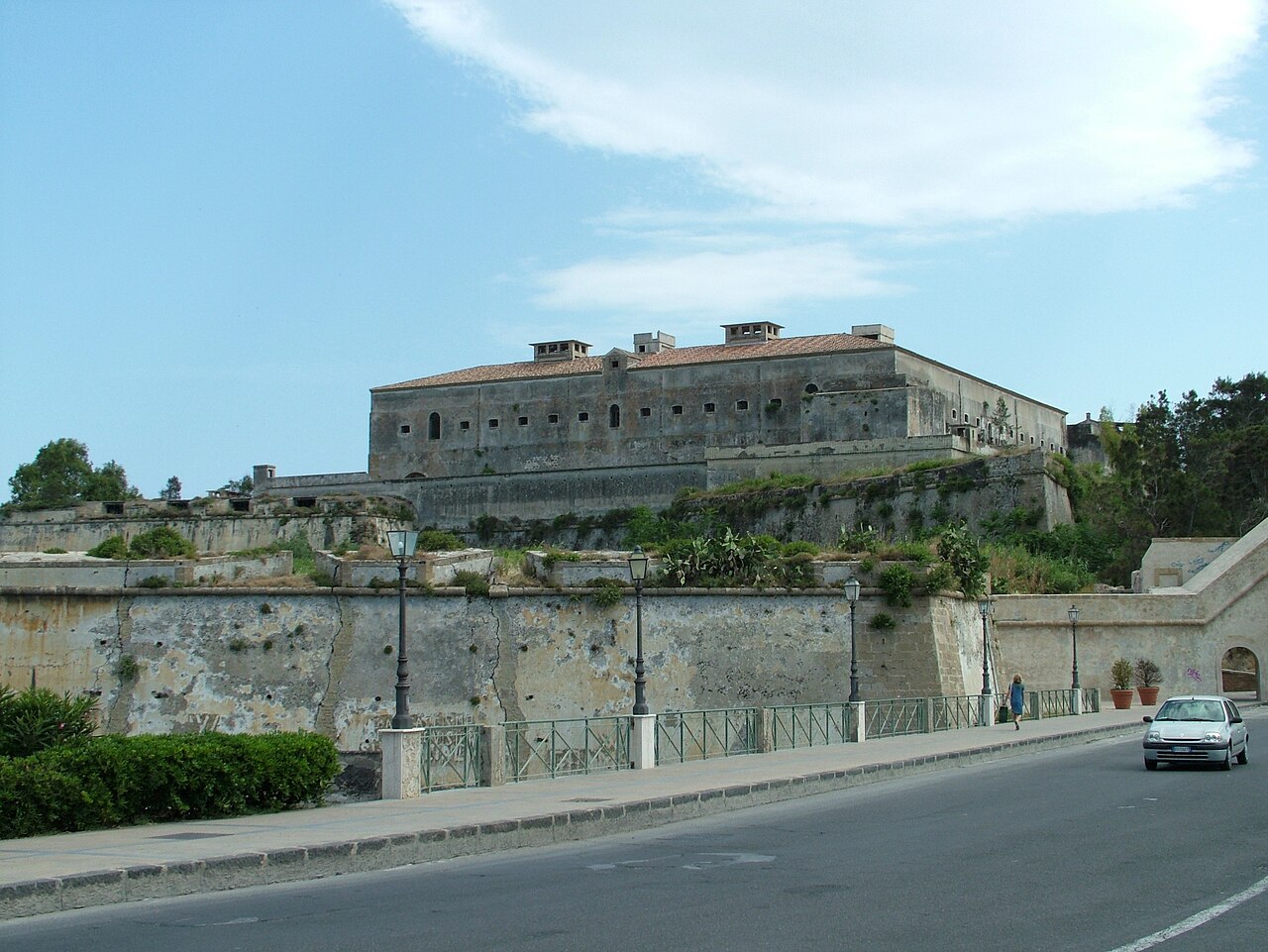
Brucoli Castle, also known as the Castello di Brucoli, is a 15th-century Aragonese fortress located in the coastal district of Brucoli within the municipality of Augusta, Sicily, Italy. Constructed in 1468 under the commission of Queen Giovanna Enríquez, the castle was built primarily as a watchtower and defensive stronghold against the frequent Turkish and Barbary pirate raids that threatened the Mediterranean shores during the Late Medieval period. Its strategic position commanding the entrance to the port canal and overlooking the Gulf of Catania made it a critical point for coastal defense and maritime control.
Historical context and construction
The foundation of Brucoli Castle is closely tied to the political and military ambitions of the Aragonese crown in Sicily during the 15th century. After receiving the territory as a gift from her husband, King John II of Aragon, Queen Giovanna Enríquez ordered the construction of the fortress to secure this valuable coastal area. The castle was originally named the Castle of La Bruca, reflecting its connection to the local settlement.
Its initial role was to serve as a coastal watchtower to monitor and protect against incursions by Ottoman Turkish forces expanding their influence in the Mediterranean, as well as to defend against the Barbary pirates who frequently raided the Sicilian coast. The religious veneration of Saint Nicholas of Bari in the region was intertwined with these maritime threats, as he was considered the protector against such dangers.
Governance of the castle was entrusted to trusted officials; notably, a concession for its construction and maintenance was granted to Giovanni Cabastida, a chamberlain from Barcelona, whose family managed the fortress for three generations, illustrating the close ties between the Aragonese monarchy and its appointed stewards.
Architectural features and modifications
Brucoli Castle is classified as a hill castle due to its elevated position overlooking the sea. It was built using traditional Aragonese masonry techniques, characterized by thick stone walls designed to withstand artillery and sieges. The fortress includes an outer defensive wall enclosing an internal courtyard, which served as a functional space for the garrison and operations.
One of the castle's most distinctive features is its angular tower, which rises prominently above the main structure. This tower is equipped with battlements—parapets with crenellations allowing defenders to observe and repel attackers—and a cammino di ronda (wall-walk) that enabled guards to patrol the perimeter continuously. The entrance portal is notable for its decorative corbels, stone supports that may have held wooden beams or ornamental elements, blending defensive utility with aesthetic detail.
During the 16th century, the castle underwent significant enhancements, including the addition of circular towers at the corners of the walls, which improved its defensive capabilities against evolving military technology and tactics.
Inscriptions and historical markers
Near the main entrance, visitors can still see inscriptions carved in stone that commemorate the castle's foundation and link it explicitly to its Aragonese origins. These epigraphs provide valuable historical documentation and affirm the fortress's role in the region's defense network.
Military role and later history
Throughout its history, Brucoli Castle served as a military garrison and a watch post overseeing the Gulf of Catania. In the 18th century, it was actively used to guard the port of Brucoli and the surrounding coast, often staffed by troops associated with the nearby fortress of Augusta.
The castle's strategic importance was reaffirmed in the early 20th century with the construction of the Brucoli Lighthouse in 1911. This lighthouse, situated on a narrow strip of land between the fortress and the sea, continued the site's long-standing function as a point of coastal surveillance and maritime navigation control.
Current condition and visitor experience
Despite the passage of centuries, Brucoli Castle remains in well-preserved condition. Its stone walls, towers, and interior spaces are intact enough to allow detailed study and photographic documentation. The fortress stands as a visible reminder of the Aragonese military architecture and the coastal defense systems that protected Sicily from external threats.
Today, the castle's location adjacent to the sea and near the lighthouse offers visitors a unique glimpse into the layered history of maritime defense. The site is accessible for exploration, providing insight into the construction techniques, defensive features, and historical significance of a Late Medieval hill castle that played a vital role in safeguarding the Sicilian coastline.
Frequently asked questions (FAQ)
- How do I get to Brucoli Castle?
- Brucoli Castle is located in the district of Brucoli within the municipality of Augusta, Sicily. It is accessible by road from the city of Augusta and nearby towns, with parking available in the vicinity.
- What is the historical significance of Brucoli Castle?
- Brucoli Castle was built in 1468 by the Aragonese as a coastal watchtower to defend against Turkish and Barbary pirate raids. It played a key role in protecting the Gulf of Catania and the port of Brucoli.
- Can I visit the interior of Brucoli Castle?
- The castle is well preserved and open to visitors. While some areas may be restricted for safety, tourists can explore the courtyard, walls, and towers to appreciate the medieval military architecture.
- When is the best time to visit Brucoli Castle?
- The best time to visit Brucoli Castle is during the spring and autumn months when the weather is mild and pleasant, allowing comfortable exploration of the outdoor areas and coastal views.
- Is Brucoli Castle suitable for families and children?
- Yes, Brucoli Castle is suitable for families. Children can enjoy learning about medieval history and exploring the castle grounds, but supervision is advised due to uneven surfaces and elevated areas.
Information
Loading map...
Visitor reviews
No reviews yet. Been here? Write the first review and help other travelers!
Write the first reviewVisited this castle? Share your experience
Your review helps other travelers and adds first-hand knowledge to our encyclopedia.