Castello Ruspoli
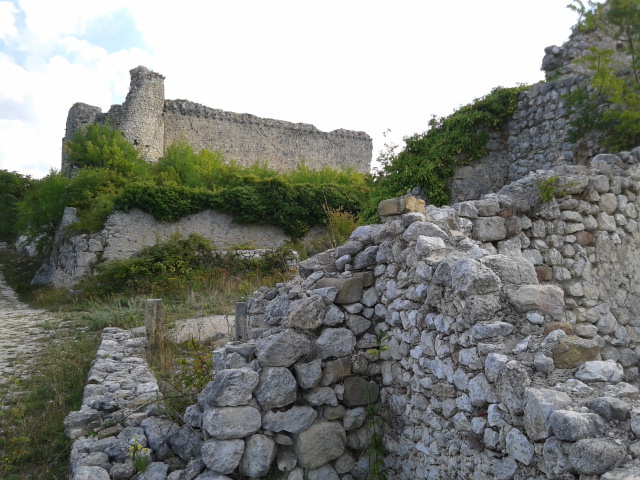
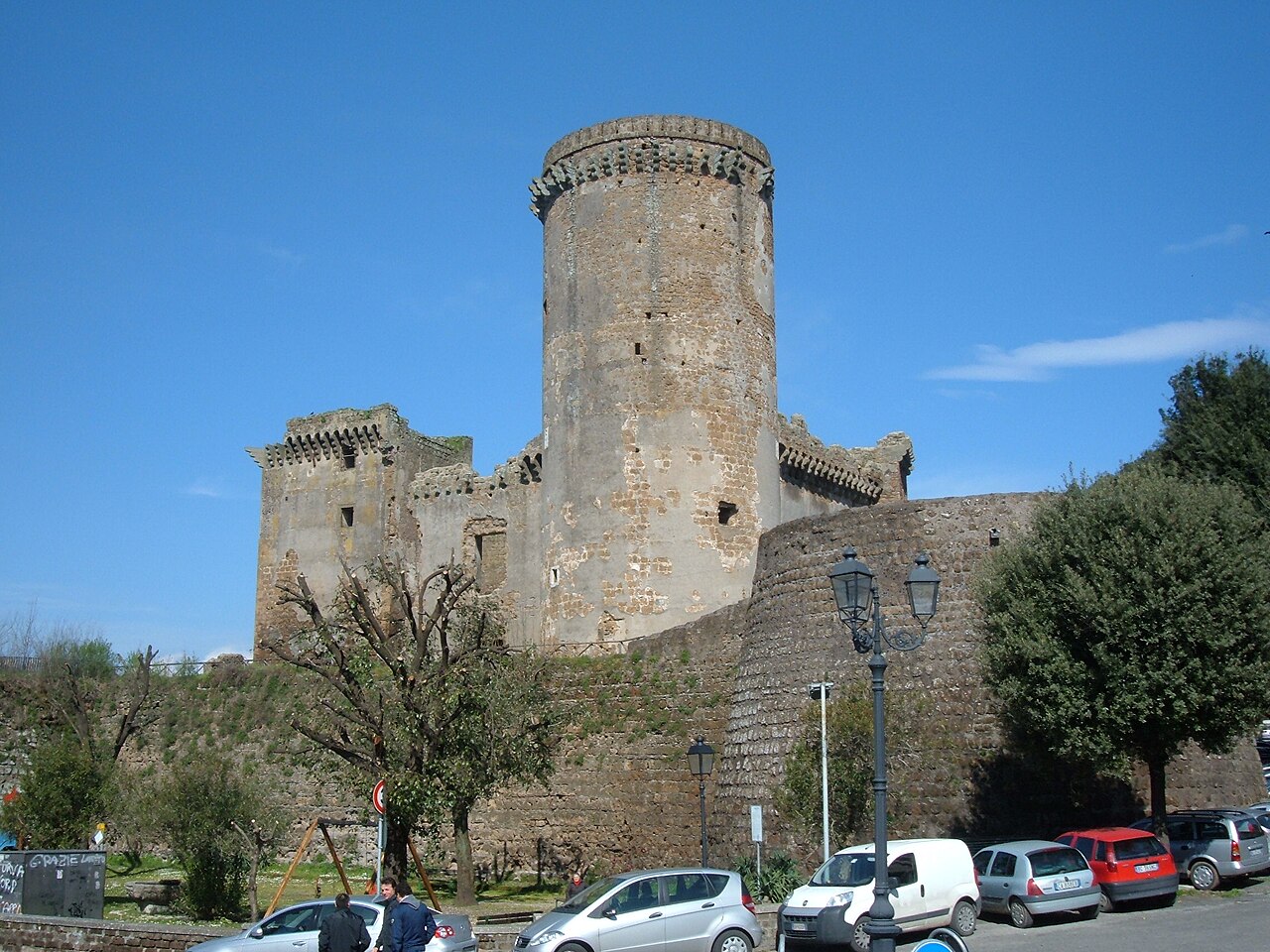
Castello Ruspoli stands as a remarkable example of a hill castle in the town of Vignanello, Italy. Its origins date back to the mid-9th century, with the earliest recorded mention in 847 when it functioned as a fortress. Initially serving a defensive military role during the early medieval period, the site was later converted into a Benedictine monastery by Pope Leo IV. This religious function continued until the late 11th century, around 1081, marking the castle’s early historical significance as both a fortress and a monastic residence.
During the 12th century, the fortress became part of the Free City of Viterbo under the authority of Emperor Frederick Barbarossa in 1169. The castle’s control shifted multiple times over subsequent centuries, reflecting the turbulent political landscape of central Italy. It was contested by powerful noble families including the Aldobrandini, Orsini, de Vico, and Borgia dynasties, as well as the Papacy. This history of contested ownership highlights the strategic importance of the castle and its surrounding lands.
Renaissance transformation and architectural evolution
The most significant architectural transformation occurred in the 16th century when Pope Clement VII granted the fief of Vignanello to Beatrice Farnese in 1531. The castle passed into the hands of the Marescotti family through the marriage of Beatrice’s daughter, Ortensia Farnese. Around 1574, Ortensia commissioned the renowned military architect Antonio da Sangallo the Younger to redesign the fortress into a more comfortable noble residence while retaining its defensive features. This redesign is characterized by robust masonry walls and a layout that balances military functionality with Renaissance aesthetics.
There is also evidence suggesting that Jacopo Barozzi da Vignola, one of the leading architects of the Renaissance, may have contributed to the castle’s external appearance. His influence would have introduced refined stylistic elements that softened the fortress’s military character, blending Renaissance architectural style with its original fortified structure.
Renaissance gardens and landscape design
In the early 17th century, Ottavia Orsini, wife of Marcantonio Marescotti and daughter of Vicino Orsini (creator of the famous Sacro Bosco in Bomarzo), undertook the creation of the castle’s gardens starting in 1610. These gardens exemplify the Italian Renaissance garden style, known as Giardino all’italiana, characterized by geometric order and symmetry.
The garden layout divides the space into twelve rectangular plots intersected by four walkways, originally bordered by rosemary hedges, now replaced by boxwood. At the center lies a decorative fountain adorned with four shell-shaped balustrades, a typical ornamental feature of Renaissance gardens. Beneath this main garden is the so-called "Secret Garden", which complements the formal geometry of the primary garden.
To the east of the gardens lie the former hunting grounds of the Ruspoli family, extending the estate beyond cultivated landscapes. The garden complex also includes a labyrinth, a symbolic and recreational element common in Renaissance aristocratic estates, reflecting both leisure and intellectual pursuits.
Interior features and religious significance
Inside the castle, the ground floor chapel is dedicated to Saint Giacinta Marescotti, a canonized member of the Marescotti family recognized by Pope Pius VII in 1807. This chapel remains a significant religious and historical feature, illustrating the family's enduring devotion and the castle's role as a noble residence with spiritual dimensions.
The castle’s interior combines elements of its defensive past with Renaissance residential comforts, preserving many original architectural details. The balance between fortress and palace is evident in its layout and decoration, reflecting the evolving needs and tastes of its noble occupants over centuries.
Ownership and preservation
Ownership of Castello Ruspoli remained with the Marescotti family until it was acquired by the Ruspoli family, notably Francesco Maria Ruspoli, the 6th Count of Vignanello and 1st Prince of Cerveteri, who elevated the estate’s status. Since then, the castle has remained a private residence under the Ruspoli family, who have continuously preserved and maintained the structure and its gardens.
Today, Castello Ruspoli is well-preserved, offering a comprehensive example of a Renaissance aristocratic estate that evolved from a medieval fortress. Its combination of fortified architecture, refined Renaissance design, and extensive gardens provides valuable insight into the social and cultural history of central Italy.
The castle and its grounds represent a significant cultural heritage site, illustrating the interplay between military necessity, noble residence, and landscape artistry over more than a millennium of history. Visitors and scholars alike can appreciate the castle’s architectural evolution, its role in regional politics, and the artistic achievements embodied in its gardens and interiors.
Frequently asked questions (FAQ)
- What is the historical significance of Castello Ruspoli?
- Castello Ruspoli has a rich history dating back to the 9th century, serving as a fortress, monastery, and noble residence. It reflects the political and architectural evolution of central Italy through medieval and Renaissance periods.
- Can visitors tour the Renaissance gardens at Castello Ruspoli?
- The Renaissance gardens, created in the early 17th century, are a highlight of the estate. While the castle is a private residence, the gardens are sometimes accessible during special events or guided tours.
- Who were the main architects involved in the castle's design?
- The castle’s major redesign was commissioned to Antonio da Sangallo the Younger around 1574, with possible contributions by Jacopo Barozzi da Vignola, blending military and Renaissance architectural styles.
- Is Castello Ruspoli open to the public?
- As a private residence owned by the Ruspoli family, Castello Ruspoli is generally not open to the public. Access may be limited to special occasions or private events.
- What are the notable features of the castle's architecture?
- Castello Ruspoli combines fortified masonry walls typical of a 16th-century fortress with Renaissance stylistic elements, including a chapel dedicated to Saint Giacinta Marescotti and extensive formal gardens.
Information
Sources & official resources
Verify the information above using these authoritative references.
Loading map...
Visitor reviews
No reviews yet. Been here? Write the first review and help other travelers!
Write the first reviewVisited this castle? Share your experience
Your review helps other travelers and adds first-hand knowledge to our encyclopedia.