Castello Orsini-Odescalchi
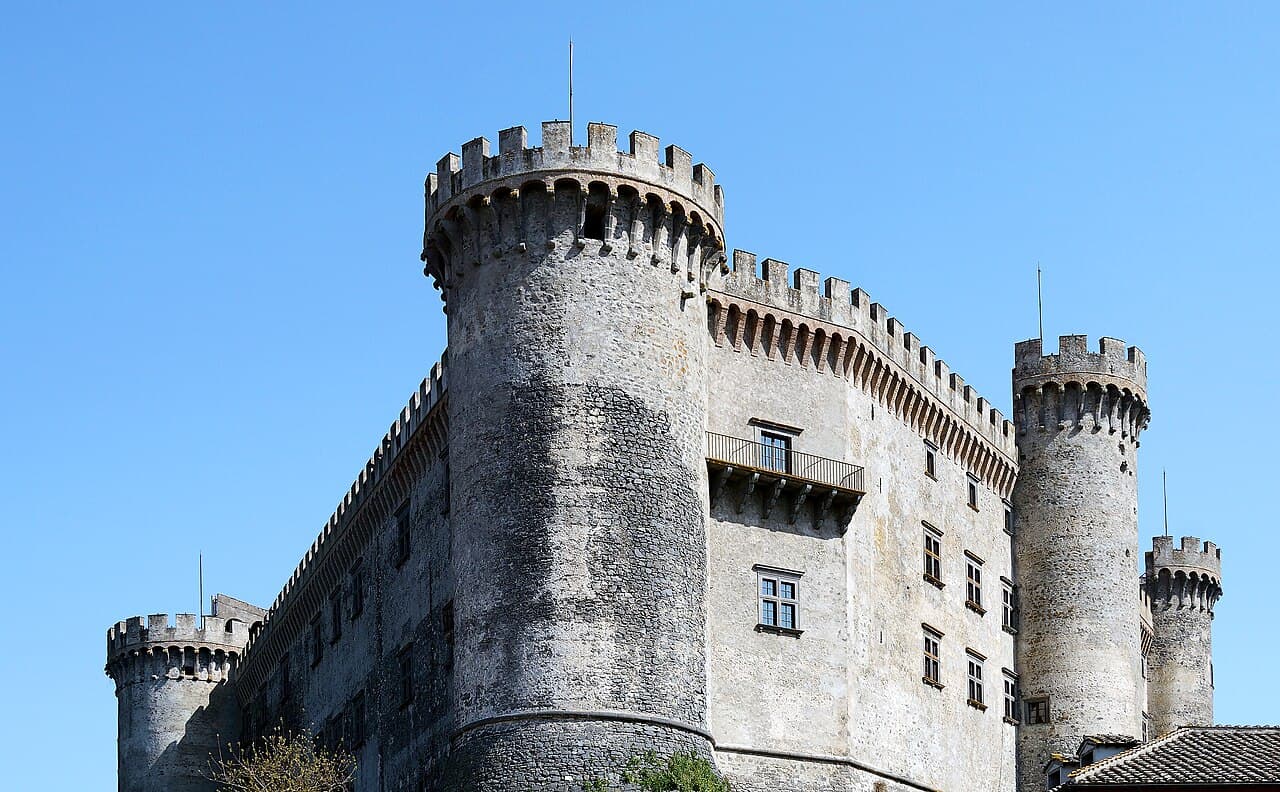
Castello Orsini-Odescalchi stands majestically on the southern shore of Lake Bracciano in Bracciano, Lazio, Italy. This imposing hill castle embodies the rich history and architectural evolution of Italian fortifications from the 10th century through the Late Medieval period and beyond. Originally established as a strategic watchtower against Saracen raids, the castle evolved into a formidable fortress and aristocratic residence, reflecting the power and prestige of its successive owners, notably the Orsini and Odescalchi families.
Early origins and medieval transformations
The site of Castello Orsini-Odescalchi began as a solitary stone tower in the 10th century, serving as a defensive refuge known as Castrum Brachiani. This early fortification was crucial during an era marked by frequent coastal incursions. In the 11th century, the di Vico family expanded the tower into a more substantial castle, establishing the foundations of the current complex.
By 1234, the castle came under the ownership of the Orsini family, a powerful noble house with close ties to the papacy. This transition marked the beginning of significant architectural and political developments. The castle's strategic importance increased, culminating in its acquisition as papal property in 1375. The Orsini were officially confirmed as lords of Bracciano by Pope Martin V in 1419, ushering in a period of prosperity and extensive rebuilding.
Renaissance reconstruction and military significance
Starting in 1470, Napoleone Orsini, a noted condottiero, initiated a comprehensive reconstruction of the castle, transforming it into a formidable fortress that combined military utility with noble residence. His son, Virginio Gentile Orsini, completed the work in 1485 with the assistance of the renowned architect Francesco di Giorgio Martini. This phase introduced advanced defensive features, including thick walls, multiple towers, and bastions designed to withstand artillery attacks.
The castle’s military role was underscored during turbulent episodes such as the refuge of Pope Sixtus IV in 1481 amid a plague outbreak in Rome. However, the fortress also faced assaults, notably the devastating attack by papal troops under Prospero Colonna in 1485, which prompted the addition of outer defensive walls to enhance protection.
Throughout the late 15th century, the castle was a focal point in the power struggles among prominent families like the Orsini, Colonna, and Borgia. It hosted significant figures such as King Charles VIII of France in 1494, whose presence led to political repercussions for the Orsini. Attempts to capture the castle by Giovanni Borgia and Cesare Borgia were unsuccessful, underscoring its formidable defenses.
Cultural zenith and architectural grandeur
The 16th century marked a cultural and social peak for Castello Orsini-Odescalchi. The marriage of Paolo Giordano I Orsini to Isabella de’ Medici in 1558 elevated the family’s status to Dukes of Bracciano. This alliance brought Renaissance artistic influences to the castle, visible in its frescoes, furnishings, and decorative elements.
The castle’s interiors feature exquisite frescoes by artists such as Antoniazzo Romano and the Zuccari brothers. Notable rooms include the Sala Papalina, where Pope Sixtus IV stayed, adorned with wedding-themed frescoes and astrological motifs related to the Orsini family. The Sala dei Cesari and the kitchens with their large fireplaces and copper cookware bear witness to the castle’s dual role as a residence and military stronghold.
Architectural details such as the five cylindrical towers at the corners of the outer walls, the central defensive tower on the southwest wall, and the two round towers guarding the main eastern gate exemplify the castle’s sophisticated fortification system. The late 16th-century entrance arch, designed by Jacopo del Duca, proudly displays the Orsini coat of arms, symbolizing the family’s enduring legacy.
Ownership transitions and modern restorations
Following financial difficulties, the Orsini sold the castle in 1696 to Livio Odescalchi, nephew of Pope Innocent XI. The Odescalchi family has preserved the castle ever since, maintaining its historical significance and architectural integrity.
The castle endured looting during the French occupation but was restored in the subsequent centuries. Early 20th-century restoration efforts led by Prince Baldassarre Odescalchi and architect Raffaello Ojetti revitalized the interiors and frescoes, ensuring the castle’s preservation as a cultural monument. The brief residence of King Umberto I in 1900 further highlights its prominence.
Since 1952, under Livio IV Odescalchi, the castle has operated as a museum and cultural venue, attracting visitors worldwide. Its collections include ancient Etruscan and Roman artifacts, a rich armory with weapons from the 14th century onward, Renaissance paintings, and Italian maiolica ceramics spanning several centuries.
Architectural features and interior highlights
The castle’s triangular layout encompasses a vast complex with a massive three-winged building surrounded by robust defensive walls. The interconnected six towers provide a continuous patrol walkway, stairs, corridors, and both covered and open loggias designed for defense and surveillance.
Inside, the castle houses significant artworks and furnishings, including a 17th-century Sicilian wrought iron bed and intricately decorated Renaissance wooden cassoni. Frescoes depict historical scenes such as the triumph of Gentile Virginio Orsini and his meeting with Piero de’ Medici, alongside classical themes like the Labors of Hercules.
The castle’s walls feature sculpted hunting scenes, decorative brickwork arches, and pilasters, reflecting the blend of military function and aristocratic elegance. The museum’s extensive collection of busts of the twelve Caesars carved from white marble and peperino stone, along with Renaissance paintings attributed to the school of Crivelli, enrich the cultural experience.
Museum collections and cultural significance
The museum exhibits a diverse array of artifacts spanning over six centuries, including ancient weapons, furniture, paintings, books, manuscripts, frescoes, and decorative arts. The presence of Etruscan and Roman relics connects visitors to the region’s deep historical roots.
The castle’s role as both a military fortress and noble residence is evident in its armory and furnishings, which illustrate the lifestyle and defense strategies of its inhabitants. The preservation of these collections offers invaluable insights into the social and political history of the Lazio region.
Events and contemporary use
Today, Castello Orsini-Odescalchi serves not only as a museum but also as a prestigious venue for cultural events and private celebrations. Its well-preserved state and historical ambiance have made it a favored location for high-profile weddings, including those of Hollywood celebrities such as Tom Cruise and Katie Holmes, as well as Petra Ecclestone and James Stunt.
These events highlight the castle’s ongoing relevance and appeal as a symbol of historical grandeur and architectural beauty in modern Italy.
Frequently asked questions (FAQ)
- How do I visit Castello Orsini-Odescalchi?
- Castello Orsini-Odescalchi is open to visitors as a museum and cultural venue. It is advisable to check the official website for current opening hours and ticket prices before planning your visit.
- What is the historical significance of Castello Orsini-Odescalchi?
- The castle is a prime example of a Late Medieval hill castle that played a key role in regional defense and noble residence. It reflects the history of the Orsini and Odescalchi families and their influence in Lazio.
- Can I attend events or weddings at the castle?
- Yes, the castle is a popular venue for private events, including weddings. Its historic ambiance and well-preserved architecture make it a sought-after location for high-profile celebrations.
- What architectural styles are represented in the castle?
- Castello Orsini-Odescalchi showcases a mix of architectural styles from its initial medieval fortifications to Renaissance and later restorations, combining military and residential elements.
- Is the castle accessible for visitors with mobility issues?
- While the castle is well-preserved, some areas may have limited accessibility due to historic staircases and uneven surfaces. Visitors with mobility concerns should inquire in advance to plan accordingly.
Photo gallery

Information
Sources & official resources
Verify the information above using these authoritative references.
Loading map...
Visitor reviews
No reviews yet. Been here? Write the first review and help other travelers!
Write the first reviewVisited this castle? Share your experience
Your review helps other travelers and adds first-hand knowledge to our encyclopedia.